What You Need Before You Begin
Setting up a Google Home or Nest speaker takes about 10 minutes from start to finish. Before you plug anything in, make sure you have a Google account, the Google Home app on your phone (available for both iOS and Android), and your Wi-Fi network name and password ready. Your phone and the device must be on the same Wi-Fi network during the process.
Google Home devices connect over Wi-Fi only. The standard models do not have an Ethernet port, with the Nest Hub Max being the one exception. If your Wi-Fi coverage is weak in the spot where you plan to place the speaker, address that first. A device that keeps dropping off the network will cause more headaches than convenience.
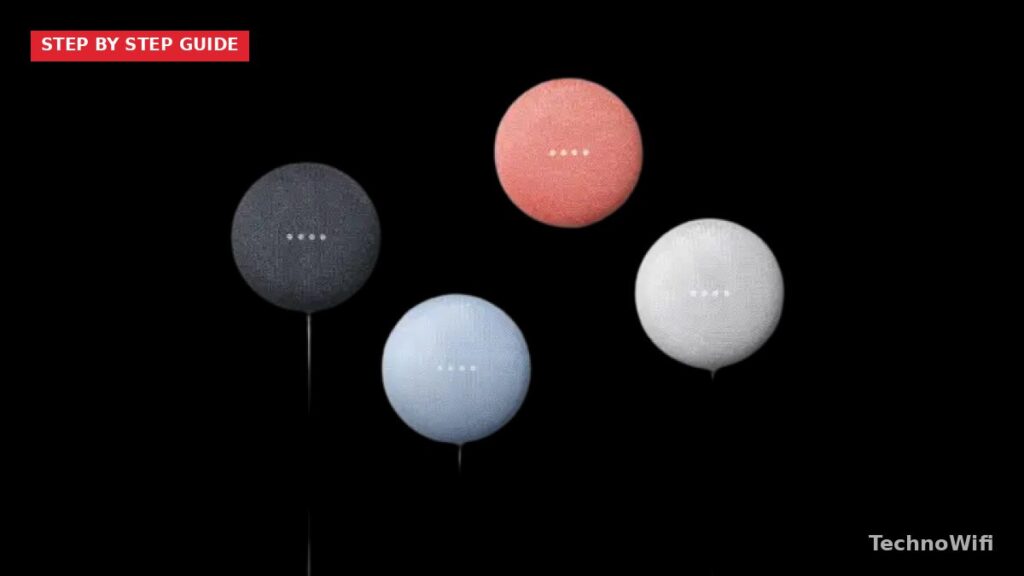
How to Set Up Google Home or Nest Mini
- Plug the Google Home or Nest Mini into a power outlet using the included cable and adapter.
- Wait about 30 seconds for the device to boot up. On Google Home, you will see spinning lights on top. On Nest Mini, the center LEDs will pulse.
- Open the Google Home app on your phone.
- Tap the “+” icon in the top left corner, then select “Set up device” followed by “New device.”
- The app scans for nearby devices. When your speaker appears, tap it to start pairing.
- A confirmation sound plays from the device. Tap “Yes” in the app when you hear it.
- Choose a room for the device (Kitchen, Bedroom, Living Room, and so on). This matters when you have multiple speakers and want to send commands to a specific one.
- Select your Wi-Fi network from the list and enter the password.
- The device connects and downloads any pending firmware updates. This may take a few minutes.
- Follow the remaining prompts to pick a default music service, link streaming accounts, and set your preferences.
When setup is done, say “Hey Google, what time is it?” to confirm the connection. If the device answers, you are good to go.
Apple user? Follow our HomeKit setup guide.
How to Set Up Google Nest Hub (Display Models)
The Nest Hub and Nest Hub Max follow the same general process as the speaker-only devices, with a few extras that take advantage of the screen. The display shows visual prompts at each step, which actually makes things easier than setting up a speaker.
- Plug in the Nest Hub. The screen walks you through the initial boot sequence and displays a QR code.
- Open the Google Home app, tap “+”, then “Set up device”, then “New device.”
- Point your phone’s camera at the QR code on the Nest Hub screen when prompted. This pairs the devices instantly.
- Complete the Wi-Fi connection, room assignment, and account linking steps described above.
- The Nest Hub asks if you want to turn on Photo Frame mode, which cycles through your Google Photos as a screensaver when the device is idle.
The Nest Hub Max also includes a camera for video calls and Nest Cam features. During setup, it asks whether you want to enable the camera for Face Match (which identifies household members) and video calling. You can skip both options and turn them on later through the settings menu.
Our Philips hue Google Home walkthrough covers this from a different angle.
Setting Up Voice Match
Voice Match trains Google Assistant to recognize your specific voice. This lets it pull personalized results from your account when you ask about your calendar, commute, or music preferences. Without Voice Match, the device treats every voice the same and gives generic answers.
- The app prompts you to set up Voice Match during initial setup. If you skip it, open the Google Home app later and go to Settings, then Google Assistant, then Voice Match.
- Say “Hey Google” and “OK Google” a few times when prompted so the device can record samples of your voice.
- Choose which personal results you want accessible by voice, such as calendar events, reminders, contacts, and commute info.
- Other household members can add their own Voice Match profiles by opening the Google Home app on their phones and repeating the same steps.
A single device supports up to six Voice Match profiles. Each person gets their own personalized responses based on who is speaking.
Connecting Smart Home Devices
Google Home works with thousands of smart home products, including lights, thermostats, plugs, cameras, locks, and more. Most of these connect through the Google Home app rather than through the speaker directly.
- Open the Google Home app and tap “+” then “Set up device.”
- Select “Works with Google” to browse a list of compatible brands.
- Find the brand of your smart device (Philips Hue, TP-Link, Ring, Ecobee, and others) and tap it.
- Sign in to that brand’s account to link it with Google Home.
- Your devices will appear in the Google Home app. Assign each one to a room so voice commands work correctly (“Hey Google, turn off the bedroom lights”).
Chromecast and Nest products link automatically since they are already part of the Google ecosystem. For third-party devices, you typically run initial setup through the manufacturer’s own app, then link the account to Google Home for voice control.
Creating Routines
Routines let you trigger multiple actions with one command. For example, a “Good morning” routine could turn on the kitchen lights, read the weather, list your calendar events, and start a news briefing. A “Bedtime” routine could lock the doors, dim the lights, and play sleep sounds.
Looking for more? We have a dedicated guide on Google assistant speakers.
- Open the Google Home app and tap “Automations” at the bottom of the screen.
- Tap “+” to create a new routine.
- Set a trigger: a voice command (“Hey Google, good morning”), a specific time, or a sunrise/sunset event.
- Add actions: control lights, play media, read information, adjust the thermostat, or broadcast a message to other speakers.
- Save the routine. It runs automatically whenever the trigger condition is met.
Google provides several pre-built routines (Good Morning, Bedtime, Leaving Home, I’m Home) that you can customize instead of building from scratch. These are a solid starting point if you are new to home automation.
Troubleshooting Common Setup Issues
| Problem | Fix |
|---|---|
| Device not found during setup | Make sure Bluetooth and Location are enabled on your phone. Restart the Google Home app. |
| Won’t connect to Wi-Fi | Confirm you are using the 2.4 GHz band (not 5 GHz) for initial setup. Double-check the password for typos. |
| App shows “Something went wrong” | Force close the Google Home app, reopen it, and try again. Clear the app cache if the error repeats. |
| “Could not communicate with your device” | Factory reset the device (hold the microphone mute button for 15 seconds) and start over. |
| Device keeps disconnecting | Move it closer to your router or add a Wi-Fi extender. Check for firmware updates. |
Wi-Fi problems are the most common source of setup failures. Google Home devices work best on 2.4 GHz networks during initial setup, and they can struggle with passwords that contain special characters or networks that require a login page (like hotel Wi-Fi). If your router broadcasts 2.4 GHz and 5 GHz as separate networks, connect the device to the 2.4 GHz one first. You can switch to 5 GHz later through the app settings.
Can I Use Google Home Without Wi-Fi?
Not really. Google Home needs an active internet connection for voice commands, music playback, and smart home control. Without Wi-Fi, the only thing you can do is stream audio from your phone to the speaker over Bluetooth. Voice Assistant features do not work offline.
Does Google Home Work with Alexa Devices?
Google Home and Alexa are separate ecosystems that do not directly talk to each other. However, many smart home products (like Philips Hue lights and Ecobee thermostats) work with both platforms. You can control the same smart bulb from a Google Home in one room and an Echo in another, since each platform connects to the device through the manufacturer’s cloud service independently.
How Do I Factory Reset a Google Home Device?
On the original Google Home, press and hold the microphone mute button on the back for about 15 seconds until the device confirms the reset. On Nest Mini, press and hold the center of the device (where the LEDs are) for roughly 15 seconds. On Nest Hub, press and hold both volume buttons at the same time for 10 seconds. A factory reset wipes all settings and returns the device to its out-of-box state, ready for fresh setup.
Sources
Want a security setup? Check our Google Home alarm system guide.
For a full comparison of the two biggest smart home ecosystems, check our Google Home vs Alexa guide.
Google – Set Up Google Home | Google – Voice Match Setup | Google – Google Nest Devices