What to Look for in a Travel Charger for Laptops
Keeping your laptop charged while traveling used to mean carrying a bulky adapter and hoping for a wall outlet. That has changed. Modern portable chargers are smaller, lighter, and more powerful than ever, making it easier to stay productive on the road.
Whether you travel for work or just want a reliable way to charge your laptop at a coffee shop, airport, or hotel, a good foldable charger for laptop use can save you space and frustration. Here is what matters when choosing one.
GaN Chargers: Smaller, Cooler, More Powerful
Traditional laptop chargers use silicon-based components, which generate heat and take up space. GaN (Gallium Nitride) chargers use a different semiconductor material that handles power more efficiently. The result is a charger that delivers the same wattage in a much smaller package.
GaN chargers run cooler, weigh less, and can often replace both your laptop charger and your phone charger in a single unit. Most quality GaN chargers in 2026 offer between 65W and 140W of power through a USB-C port, which is enough to charge almost any ultrabook or thin-and-light laptop at full speed.
Popular GaN charger brands include Anker, Ugreen, Baseus, and Apple (which uses GaN in its latest MacBook adapters). If you are shopping for a travel charger, GaN technology should be at the top of your list.
USB-C Power Delivery Standards Explained
USB-C Power Delivery (USB-C PD) is the charging standard that allows a single USB-C cable to deliver enough power for laptops, tablets, phones, and other devices. Understanding PD specs helps you pick the right charger.
Key PD Specifications
- Wattage: PD chargers are rated by their maximum power output. Common ratings are 30W, 45W, 65W, 100W, and 140W. Higher wattage means faster charging for larger devices.
- PD 3.1 and EPR: The latest revision of USB-C PD, called Extended Power Range (EPR), supports up to 240W. This allows even high-performance gaming laptops to charge over USB-C, though most mainstream laptops need 65W or less.
- Voltage negotiation: PD chargers automatically negotiate the correct voltage and amperage with your device. This means one PD charger can safely charge your laptop at 20V and your phone at 5V or 9V.
Always check your laptop’s charging requirements before buying. Most ultrabooks and business laptops need 45W to 65W. Larger workstations and gaming laptops may need 100W or more.
How Much Wattage Do You Actually Need?
Matching the charger’s wattage to your device matters. Here is a general breakdown:
- 30W: Enough for tablets, small Chromebooks, and phones. Not enough for most laptops.
- 45W: Works for ultrabooks like the Dell XPS 13, Lenovo ThinkPad X1 Nano, and MacBook Air.
- 65W: The sweet spot for most laptops. Handles 13 to 15 inch business laptops and ultrabooks comfortably.
- 100W: Good for larger laptops, 16-inch MacBook Pros, and devices that charge while running intensive tasks.
- 140W and above: Required for gaming laptops and high-performance workstations that support USB-C charging.
If a charger’s wattage is lower than what your laptop requires, the laptop will still charge, but it will do so slowly and may not charge at all while you are actively using it.
The Scosche PowerVault: A Compact Travel Option
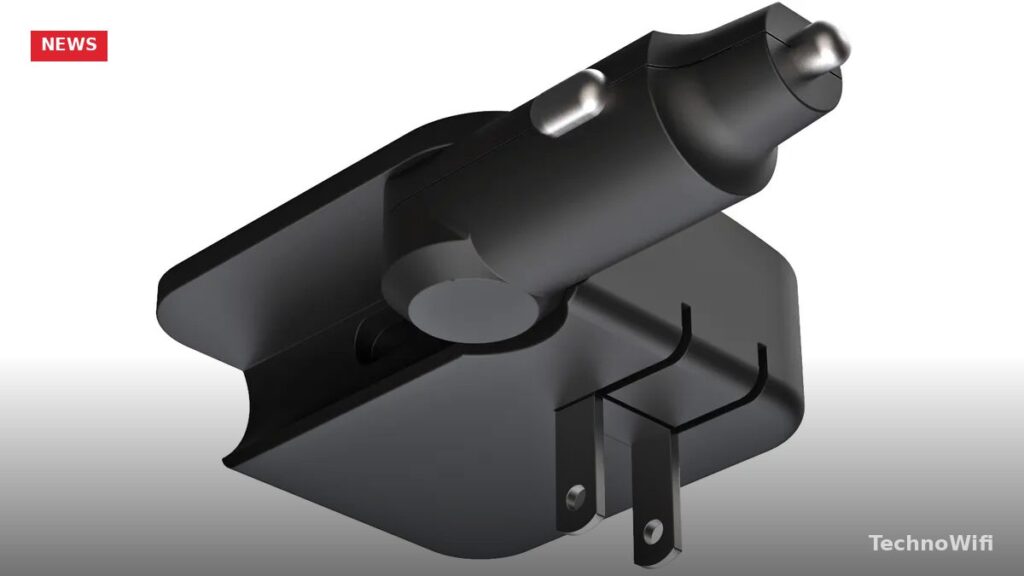
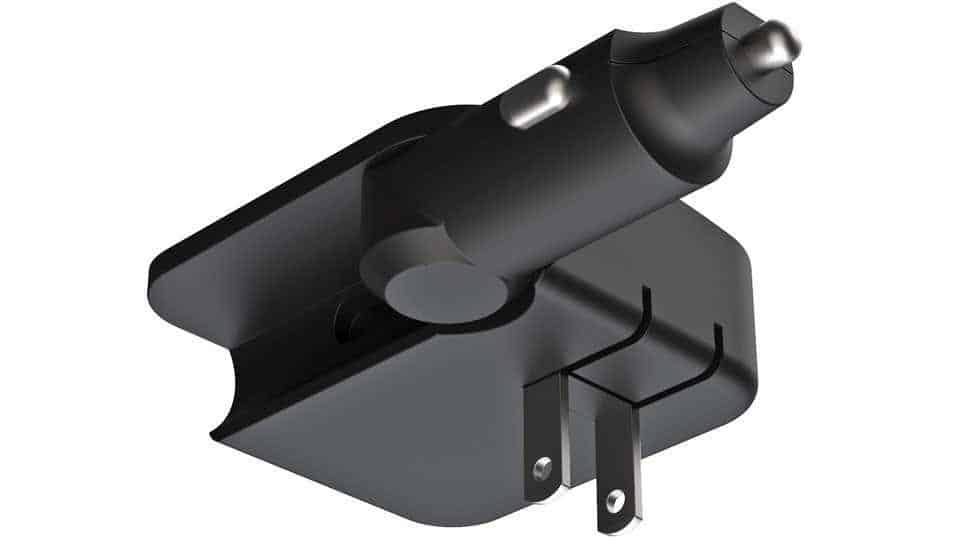
One product worth checking out is the Scosche PowerVault, a 30W Power Delivery AC-DC travel charger designed specifically for people on the move. It features a foldable design with flat prongs that tuck into the body of the charger, making it easy to slip into a laptop bag or travel pouch.
What sets the PowerVault apart from many travel chargers is its dual functionality. It works with standard 110V AC wall outlets and also includes a fold-out car adapter that plugs into your vehicle’s 12V power outlet. This means you can charge your devices from the car without needing a separate car charger.
At 30W, the Scosche PowerVault is best suited for tablets, Chromebooks, and smaller ultrabooks. If your laptop requires more power, pair it with a higher-wattage GaN charger for your primary setup and keep the PowerVault as a backup or car charging option.
Portability Features That Matter
Beyond wattage and charging standards, consider these practical details when choosing a travel charger:
- Foldable prongs: Chargers with fold-flat prongs take up less space and are less likely to snag on other items in your bag.
- Weight: A good 65W GaN charger weighs between 100 and 150 grams. Compare that to the 200+ gram bricks that came with older laptops.
- Multiple ports: Some travel chargers include two or three USB-C ports (plus a USB-A port) so you can charge multiple devices at once. Keep in mind that total wattage is split across ports when multiple devices are plugged in.
- International plug compatibility: If you travel internationally, look for a charger with a wide voltage range (100V to 240V input) and consider a plug adapter set.
- Cable quality: The charger is only half the equation. Pack a good quality USB-C cable rated for the wattage you need. Not all USB-C cables support high-wattage PD charging.
Picking the Right Portable Charger for Your Setup
The best foldable charger for laptop travel depends on your specific devices and how you travel. For everyday travelers with a single ultrabook, a 65W GaN charger with foldable prongs is all you need. Road warriors who split time between flights and car rides might appreciate a dual AC/DC option like the Scosche PowerVault alongside a higher-wattage primary charger.
Whatever you choose, prioritize USB-C PD compatibility, check your laptop’s wattage requirements, and go with a GaN-based charger for the best size-to-power ratio. Your laptop bag will thank you.