Photo editing demands more from a laptop than most tasks. You need accurate colors on a high-resolution display, a processor that does not choke when applying complex filters, enough RAM to handle multiple RAW files open at once, and a GPU that accelerates rendering in apps like Lightroom and Photoshop.
Whether you are a professional photographer editing client work on location, a hobbyist who likes working from a coffee shop, or a content creator who needs to process batches of images on the go, the right laptop makes your workflow noticeably faster and more enjoyable.
This guide covers what to look for in a photo editing laptop and reviews ten models that deliver the performance, display quality, and portability that photographers actually need. Some of these models feature older-generation specs and are available at reduced prices, while their product lines have continued with newer versions. We note those distinctions throughout.
What to Look for in a Photo Editing Laptop
Display Quality
The display is the most important component for photo editing. If your screen does not show colors accurately, every edit you make is based on a lie. Here is what to prioritize:
- Resolution: Full HD (1920×1080) is the minimum for basic editing. For serious work, especially with high-resolution cameras, a 4K (3840×2160) display lets you see fine detail without zooming in constantly. In 2026, many premium laptops offer 4K OLED or mini-LED panels with exceptional clarity.
- Color accuracy: Look for 100% sRGB coverage at minimum. For print work or professional use, 100% DCI-P3 or Adobe RGB coverage is even better. Pantone-validated displays come factory-calibrated for accurate colors out of the box.
- Brightness: At least 300 nits for indoor use. If you edit outdoors or in bright environments, 400 nits or higher makes a big difference. HDR-capable displays (1000+ nits peak) are increasingly common in 2026 and show highlight detail beautifully.
- Panel type: IPS panels offer wide viewing angles and good color accuracy. OLED panels deliver perfect blacks, infinite contrast, and vibrant colors but can suffer from burn-in with static UI elements over time. Mini-LED panels split the difference with excellent contrast and high brightness without the burn-in risk.
Graphics Card (GPU)
Photo editing is less GPU-dependent than video editing, but a dedicated GPU still helps. Lightroom Classic uses the GPU to accelerate image rendering and adjustments. Photoshop uses it for 3D features, filters, and neural network-based tools like generative fill.
- Integrated graphics (Intel Iris Xe, Apple’s built-in GPU, Intel Arc) handle basic editing fine, especially for JPEG workflows.
- Discrete GPUs (NVIDIA RTX series, AMD Radeon) are worth having if you work with RAW files, use GPU-accelerated plugins, do batch processing, or also dabble in video editing. In 2026, the NVIDIA RTX 40-series and 50-series laptop GPUs and AMD RDNA 3+ offer excellent performance-per-watt.
Processor (CPU)
The CPU handles the heavy lifting for most photo editing tasks: applying adjustments, exporting files, running batch operations, and managing large catalogs.
- For Mac: Apple’s M3, M3 Pro, M3 Max, and M4 chips dominate in 2026. Even the base M3 handles photo editing effortlessly, and the Pro/Max variants tear through batch processing. The M-series chips also deliver exceptional battery life.
- For Windows: Intel’s 14th Gen Core (Raptor Lake Refresh) and newer Core Ultra processors are the current standard. AMD’s Ryzen 7000 and 8000 series are equally competitive. For photo editing, an i7/Ryzen 7 or better is recommended. The i5/Ryzen 5 tier works fine for lighter workloads.
RAM
Photo editing is RAM-hungry, especially with large RAW files. Here is a practical guide:
- 8GB: Workable for JPEG editing and small catalogs. You will feel the limitations quickly.
- 16GB: The sweet spot for most photographers. Handles RAW editing, moderate multitasking, and catalogs with thousands of images.
- 32GB or more: Recommended for professional workflows, panorama stitching, HDR merging, or running Photoshop alongside Lightroom with dozens of browser tabs open.
Storage
An NVMe SSD is non-negotiable. It affects how fast your operating system boots, how quickly apps launch, and how long it takes to load and save large files. 512GB is a reasonable minimum, though 1TB is better if you keep your active photo library on the laptop. For bulk storage, an external SSD via USB-C or Thunderbolt is the way to go.
10 Best Laptops for Photo Editing
1. Acer ConceptD 7
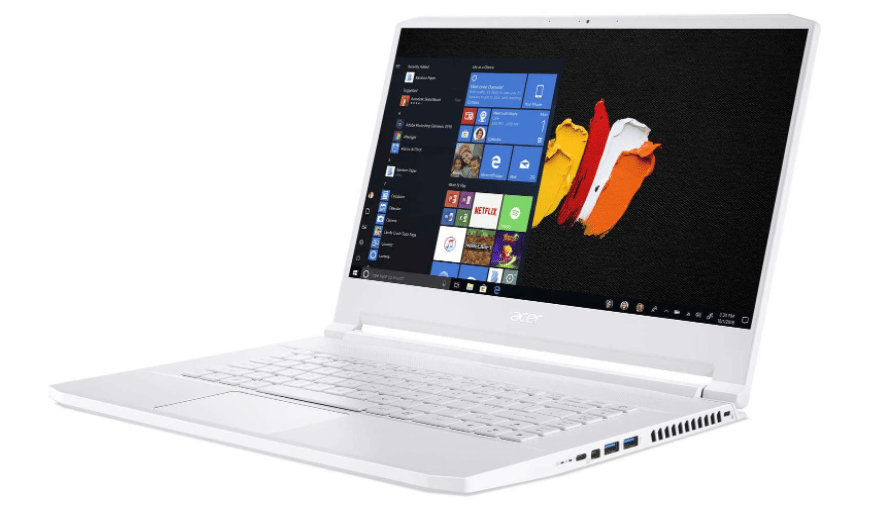
The Acer ConceptD line was built specifically for creative professionals, and the ConceptD 7 is the flagship of that lineup. Unlike Acer’s gaming laptops, the ConceptD 7 prioritizes color accuracy and quiet operation over flashy aesthetics and RGB lighting.
The version reviewed here features a 10th Gen Intel Core i7 with an RTX 2060 GPU. These are older-generation components, but they remain capable for photo editing. The ConceptD line has since been updated with newer hardware, so look for current-generation ConceptD models if you want the latest specs.
What makes the ConceptD 7 special for photographers is its Pantone-validated 4K touchscreen with Delta E < 2 color accuracy. That means the colors you see on screen are essentially identical to what you will get in print. The generous port selection makes it easy to connect cameras, SD cards, and external displays.
- Processor: 10th Gen Intel Core i7
- GPU: NVIDIA GeForce RTX 2060
- RAM: 32GB DDR4
- Display: 15.6-inch 4K Touchscreen (Pantone Validated)
- Storage: 1TB SSD
- Battery: Up to 7 hours
- Weight: 4.63 lbs
Bottom line: A creator-first laptop with a color-accurate 4K display. The reviewed model uses older internals, but the ConceptD line continues with updated specs.
2. ASUS ZenBook Pro Duo 15
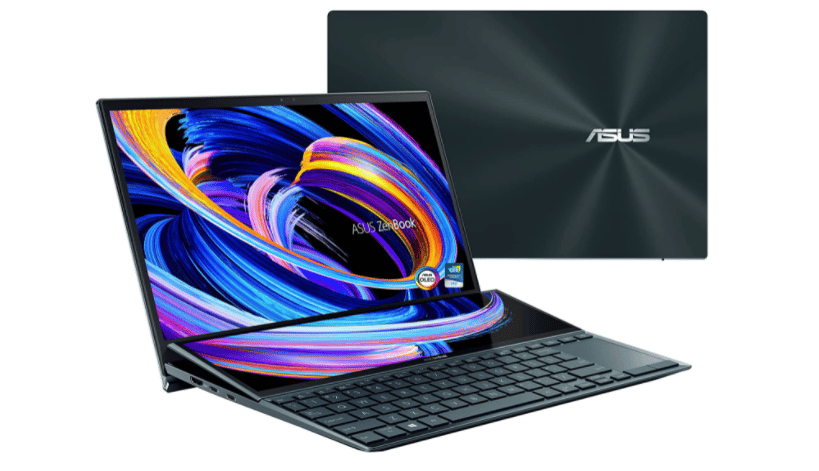
The ZenBook Pro Duo’s defining feature is its secondary display, which ASUS calls ScreenPad Plus. This is a full-width touchscreen above the keyboard that acts as a second monitor. For photo editing, this is genuinely useful: you can keep your Lightroom catalog or file browser on the lower screen while your main editing workspace fills the primary display.
You can also split the ScreenPad Plus into multiple zones, running different apps side by side. Photoshop tool palettes, a music player, reference images, and a chat window can all live on the secondary display without cluttering your main workspace.
The model reviewed here has a 10th Gen Intel Core i9 and RTX 3070. ASUS has continued the ZenBook Pro Duo line with newer processors and GPUs, including OLED main displays on recent versions.
- Processor: 10th Gen Intel Core i9
- GPU: NVIDIA GeForce RTX 3070
- RAM: 32GB DDR4
- Display: 15.6-inch FHD Touchscreen (primary) + 14-inch FHD Touchscreen (secondary)
- Storage: 1TB SSD
- Battery: Up to 7 hours
- Weight: 5.16 lbs
Bottom line: The dual-screen setup is a genuine productivity advantage for photo editing workflows. Heavier than average, but the extra screen real estate is worth it if you are stationary most of the time.
This topic ties into our mini laptop under 300 guide, which covers the next steps.
3. Dell XPS 15
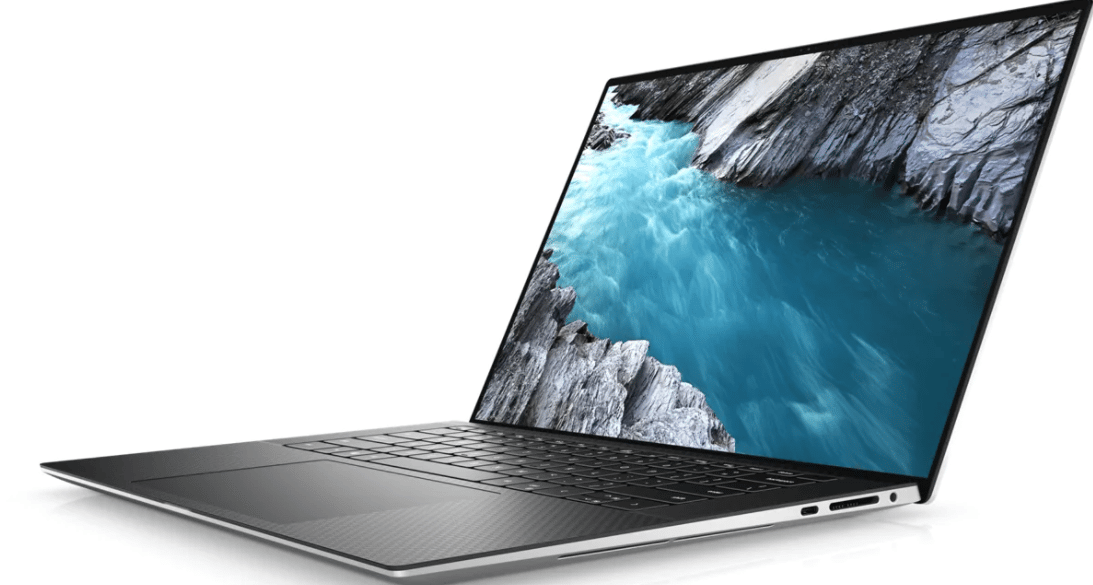
The Dell XPS 15 has been a go-to Windows laptop for creative professionals for years, and each generation refines the formula. It consistently offers one of the best display-to-body ratios in its class, beautiful build quality, and strong performance in a package that does not feel like a gaming laptop.
The model reviewed here shipped with a 10th Gen Intel Core i7 and GTX 1650 Ti. Dell has since updated the XPS 15 line significantly, with recent versions featuring Intel 13th and 14th Gen processors, NVIDIA RTX 40-series GPUs, and OLED display options. If buying new, look for the current-generation XPS 15 for substantially better performance.
What has stayed consistent across XPS generations is the gorgeous 4K+ touchscreen with excellent color accuracy, the thin-and-light aluminum and carbon fiber construction, and strong battery life that lets you edit away from an outlet for most of a workday.
- Processor: 10th Gen Intel Core i7
- GPU: NVIDIA GeForce GTX 1650 Ti
- RAM: 32GB DDR4
- Display: 15.6-inch 4K+ Touchscreen
- Storage: 1TB SSD
- Battery: Up to 12 hours
- Weight: 4.05 lbs
Bottom line: The XPS 15 is one of the most well-rounded Windows laptops for photo editing. Beautiful display, excellent build quality, and strong battery life. Current-gen models offer significantly better performance.
4. Gigabyte AERO 17
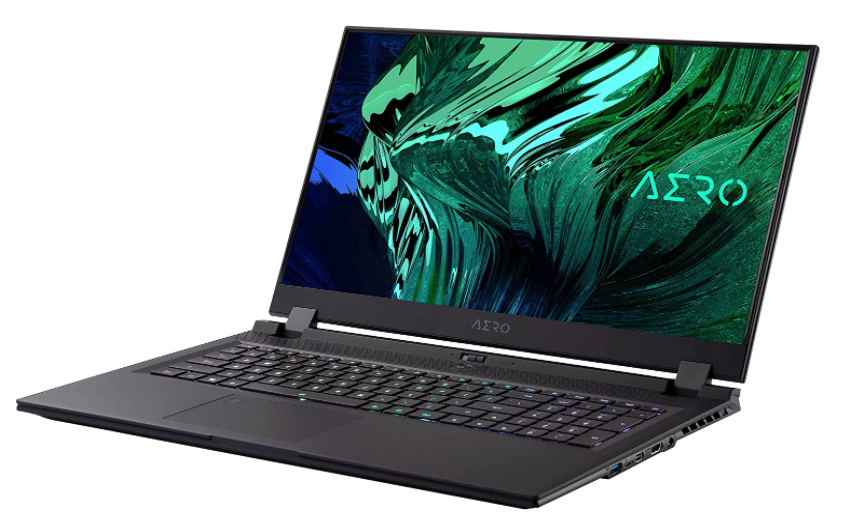
If you need a large screen for editing and serious processing power, the Gigabyte AERO 17 delivers both. The 17.3-inch 4K display is Pantone-certified with 100% sRGB coverage, giving you a massive, color-accurate canvas to work on. When you are editing landscape panoramas or high-resolution images, the extra screen real estate compared to a 15-inch laptop is noticeable.
The reviewed configuration features an 11th Gen Intel Core i9 paired with an RTX 3080, which is overkill for photo editing but means you have headroom for video editing, 3D rendering, or anything else you might throw at it. This laptop blurs the line between a creative workstation and a gaming powerhouse.
The trade-offs are weight (5.8 lbs) and battery life (around 6 hours). This is more of a desktop replacement that you carry between locations rather than a laptop you would take to a coffee shop.
- Processor: 11th Gen Intel Core i9
- GPU: NVIDIA GeForce RTX 3080
- RAM: 32GB DDR4
- Display: 17.3-inch 4K Touchscreen (Pantone Certified)
- Storage: 1TB SSD
- Battery: Up to 6 hours
- Weight: 5.8 lbs
Bottom line: A powerhouse for photographers who want maximum screen size and top-tier performance. Not the most portable, but the 17-inch Pantone-certified 4K display is hard to beat for on-screen editing.
5. HP Spectre x360
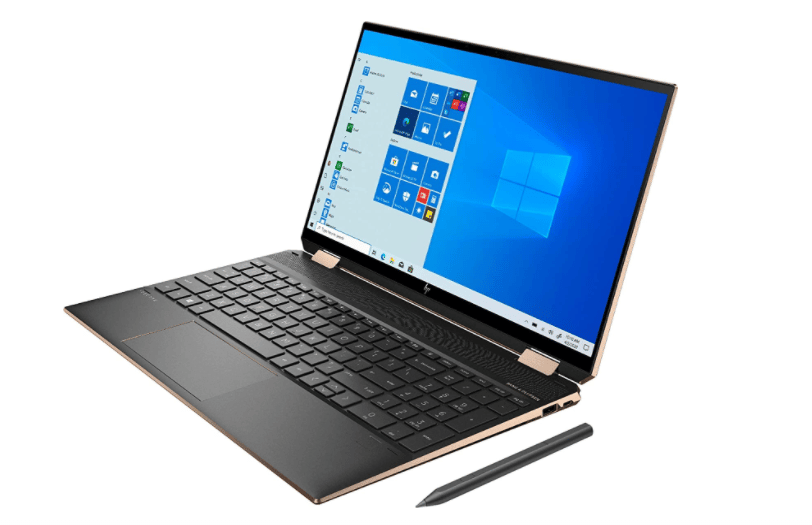
The Spectre x360 is HP’s premium 2-in-1 convertible, and its 360-degree hinge means you can use it as a traditional laptop, tent it for presentations, or fold it flat as a tablet. The tablet mode is particularly useful for photo editing when paired with the included stylus pen, letting you make precise selections and brush adjustments directly on the screen.
The 13.3-inch 4K OLED display on the reviewed model delivers stunning contrast and vivid colors. OLED screens have perfect blacks and essentially infinite contrast ratios, which makes photo editing on the Spectre feel immersive. The trade-off is the relatively small screen size, though the 4K resolution means you can still see plenty of detail.
At just 2.8 pounds, this is one of the most portable laptops on this list. It relies on Intel Iris Xe integrated graphics rather than a discrete GPU, which is fine for Lightroom and Photoshop but may feel limiting if you also do video work. HP continues to offer the Spectre x360 in updated versions with newer Intel and AMD processors.
- Processor: 11th Gen Intel Core i7
- GPU: Intel Iris Xe Graphics
- RAM: 16GB DDR4
- Display: 13.3-inch 4K OLED Touchscreen
- Storage: 1TB SSD
- Battery: Up to 11 hours
- Weight: 2.8 lbs
Bottom line: The best ultraportable option for photo editing. Gorgeous OLED display, pen support, and incredible battery life in a lightweight package. No discrete GPU, so not ideal for heavy batch processing.
6. HP ZBook Studio
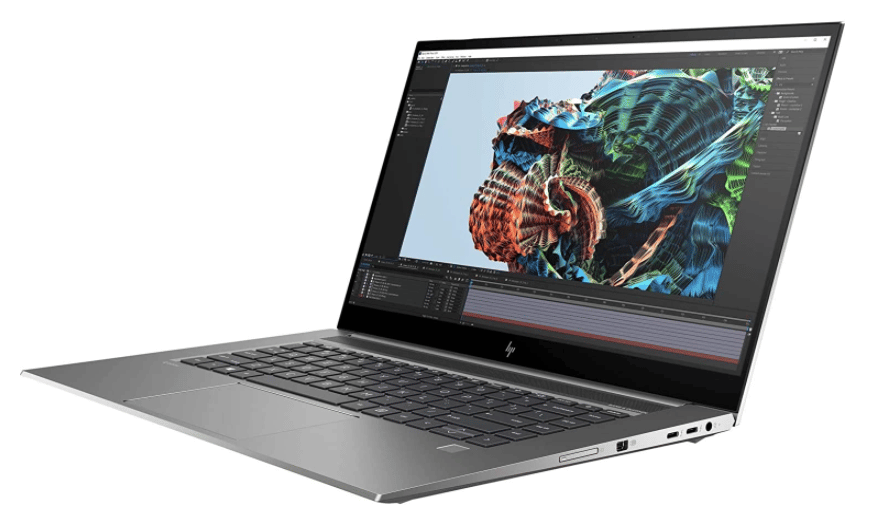
The ZBook Studio is HP’s professional mobile workstation aimed at creative professionals. Unlike consumer laptops, the ZBook line is built for ISV-certified reliability, meaning apps like Photoshop, Lightroom, and Capture One are tested and validated to run optimally on this hardware.
The reviewed model features an 11th Gen Core i7 with an RTX 3070 and a 15.6-inch 4K OLED touchscreen. That combination of a discrete GPU and OLED display makes this one of the most capable photo editing laptops in this roundup. The OLED panel delivers perfect blacks and wide color gamut coverage, while the RTX 3070 handles GPU-accelerated tasks without breaking a sweat.
Battery life is the main weakness at around 7 hours, which is understandable given the power-hungry components. If long battery life is critical, consider the Spectre x360 or MacBook options instead. HP has continued the ZBook Studio line with newer hardware.
Our guide on laptops for writers goes into more detail if you need it.
- Processor: 11th Gen Intel Core i7
- GPU: NVIDIA GeForce RTX 3070
- RAM: 32GB DDR4
- Display: 15.6-inch 4K OLED Touchscreen
- Storage: 1TB SSD
- Battery: Up to 7 hours
- Weight: 3.95 lbs
Bottom line: A professional workstation with ISV certification. Excellent 4K OLED display and discrete GPU. Battery life is the only significant trade-off.
7. Lenovo ThinkPad X1 Carbon
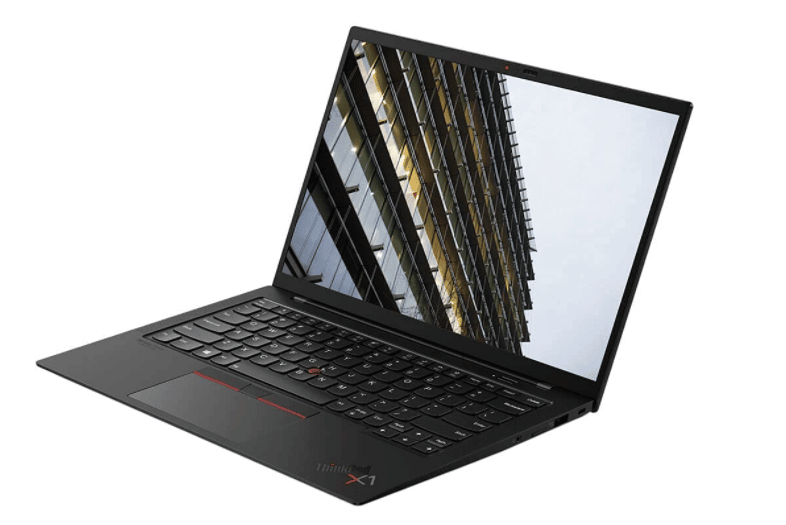
The ThinkPad X1 Carbon is a business ultrabook that doubles as an excellent photo editing machine. It has been one of the lightest 14-inch laptops on the market for years, and the latest generations continue that tradition while improving display quality significantly.
The model reviewed here features an 11th Gen Core i7, 32GB of RAM, and a 14-inch FHD+ IPS anti-glare display with 400 nits brightness and 100% sRGB color coverage. The anti-glare coating is a blessing if you edit in bright environments or near windows. Lenovo also offers 2.8K OLED and 4K display options on the X1 Carbon, which are worth the upgrade for color-critical work.
At just 2.5 pounds with up to 15 hours of battery life, this is the marathon runner of the group. You can edit all day on a single charge. The trade-off is integrated Intel graphics, so GPU-intensive tasks will be slower than on laptops with discrete GPUs. For Lightroom and Photoshop work, though, it handles everything smoothly.
- Processor: 11th Gen Intel Core i7
- GPU: Intel Iris Xe Graphics
- RAM: 32GB DDR4
- Display: 14-inch FHD+ IPS Anti-glare (400 nits, 100% sRGB)
- Storage: 512GB SSD
- Battery: Up to 15 hours
- Weight: 2.5 lbs
Bottom line: The best laptop for all-day editing without an outlet. Ultralight, marathon battery life, and a solid display. Best for photographers who prioritize portability over raw GPU power.
8. MacBook Air (M1, 2020)
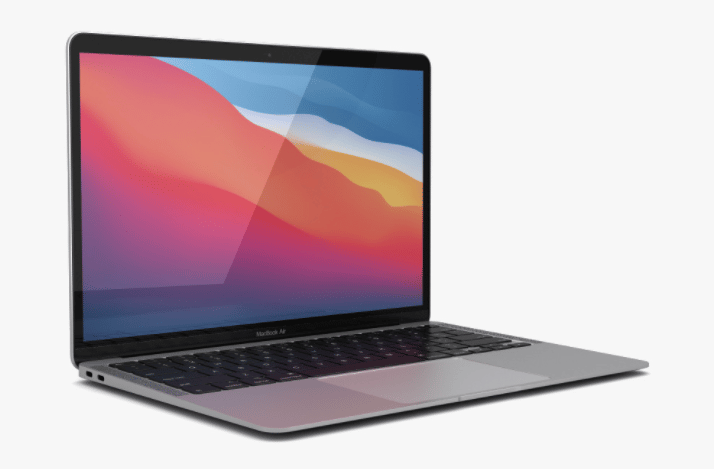
The M1 MacBook Air was a landmark product when it launched in 2020, proving that Apple’s own silicon could outperform Intel chips while using dramatically less power. Even in 2026, the M1 Air remains a surprisingly capable photo editing machine, and it is now available at significantly reduced prices.
For photographers on a budget, the M1 Air is one of the best values you can find. It handles Lightroom and Photoshop smoothly, exports files quickly, and the 13.3-inch Retina display with P3 wide color gamut reproduces colors accurately. The fanless design means it is completely silent during operation.
Apple has since released MacBook Air models with M2, M3, and M4 chips that offer better performance, a larger 15-inch display option, and updated designs. If you are buying new, those are the better choice. But if you can find an M1 Air used or refurbished, it remains excellent for photo editing at a fraction of the original cost.
- Processor: Apple M1 chip
- GPU: 7-core integrated GPU
- RAM: 16GB unified memory
- Display: 13.3-inch Retina IPS (P3 wide color)
- Storage: 512GB SSD
- Battery: Up to 14 hours
- Weight: 2.8 lbs
Bottom line: The best budget Mac option for photo editing. Still impressively capable despite being a few generations old. Look for refurbished deals or consider the newer M3/M4 Air for the latest features.
9. MacBook Pro (M1 Pro, 2021)
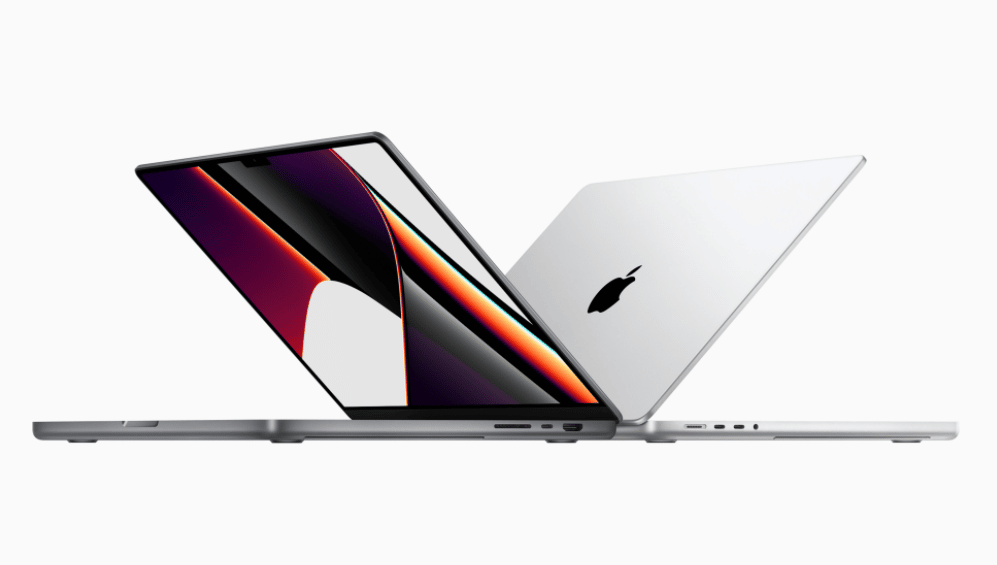
The 2021 MacBook Pro with M1 Pro chip was the laptop that made professional photographers seriously consider leaving their desktop editing stations behind. It combined desktop-class performance with a stunning 16-inch Liquid Retina XDR display that supports up to 1600 nits peak brightness for HDR content and 1000 nits sustained brightness for regular use.
For photo editing, the M1 Pro chip tears through RAW processing, panorama stitching, and batch exports with ease. The 16-core GPU handles GPU-accelerated effects and filters smoothly, and 16GB of unified memory (with 32GB and 64GB options) keeps everything responsive even with massive files open.
Apple has since released MacBook Pros with M2 Pro/Max, M3 Pro/Max, and M4 Pro/Max chips. Each generation brings meaningful performance improvements and better efficiency. If buying new, the current-generation MacBook Pro is the way to go. But the 2021 M1 Pro model remains a powerhouse and can be found at substantial discounts refurbished.
- Processor: Apple M1 Pro chip
- GPU: 16-core integrated GPU
- RAM: 16GB unified memory
- Display: 16-inch Liquid Retina XDR (1000 nits sustained, P3 wide color)
- Storage: 1TB SSD
- Battery: Up to 21 hours
- Weight: 4.7 lbs
Bottom line: The benchmark for professional photo editing laptops. Incredible display, all-day battery life, and desktop-class performance. Newer M3 Pro/Max and M4 Pro/Max models are even faster.
10. Microsoft Surface Laptop 4
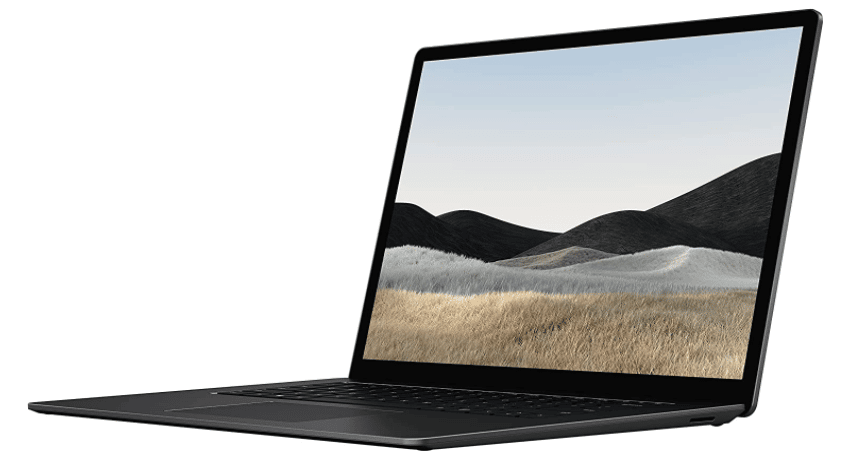
Microsoft’s Surface Laptop line has always excelled at display quality, and the Surface Laptop 4 continues that tradition. The 15-inch PixelSense touchscreen has a 3:2 aspect ratio, which gives you more vertical screen space compared to the standard 16:9 ratio found on most Windows laptops. For photo editing, that extra vertical space means less scrolling and more of your image visible at once.
The Surface Laptop 4 features an 11th Gen Intel Core i7 with Iris Xe integrated graphics and 32GB of RAM. Like several other laptops on this list, it lacks a discrete GPU, which is the main limitation for heavy workflows. But for Lightroom and Photoshop editing, it performs smoothly.
Microsoft has since released the Surface Laptop 5, 6, and 7 with updated processors and improved displays. The current generation Surface Laptops offer Snapdragon X Elite and latest Intel processors. If buying new, look at the latest models for better performance and modern connectivity.
- Processor: 11th Gen Intel Core i7
- GPU: Intel Iris Xe Graphics
- RAM: 32GB DDR4
- Display: 15-inch PixelSense Touchscreen (3:2 aspect ratio)
- Storage: 1TB SSD
- Battery: Up to 12 hours
- Weight: 3.4 lbs
Bottom line: The 3:2 aspect ratio display is ideal for photo editing. Solid build quality and good battery life. No discrete GPU, but integrated graphics handle standard editing workloads well. Current Surface Laptop models offer updated internals.
Which Laptop Should You Choose?
There is no single best laptop for every photographer. Here is a quick decision framework:
- Best overall for Mac users: MacBook Pro (M1 Pro or newer). The display, performance, and battery life set the standard.
- Best overall for Windows users: Dell XPS 15 (current generation). Balanced performance, gorgeous display, and portable.
- Best budget option: MacBook Air M1 (refurbished). Remarkable performance for the price.
- Best for portability: Lenovo ThinkPad X1 Carbon. 2.5 pounds and 15 hours of battery life.
- Best display: HP ZBook Studio or Gigabyte AERO 17 with their 4K OLED and Pantone-certified panels.
- Best for dual-screen workflow: ASUS ZenBook Pro Duo 15. Nothing else offers a built-in secondary display.
Whichever you choose, make sure to calibrate your display regularly with a hardware colorimeter for accurate edits. Even the best factory calibration drifts over time.