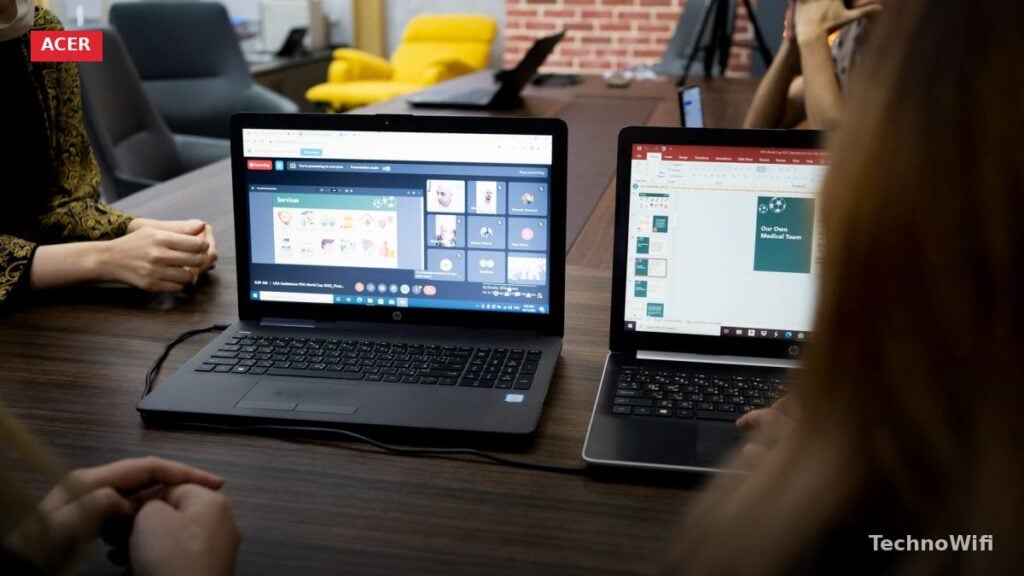
Acer and HP build some of the most popular Chromebooks available in 2026. Both manufacturers cover every price range, from budget models under $250 to premium convertibles near $800. Picking between them is not straightforward because each brand brings distinct strengths to the table.
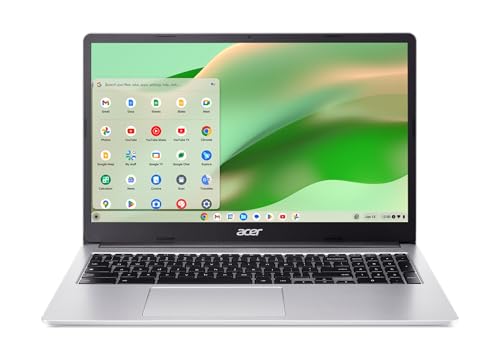
The better choice depends on what you plan to do with your Chromebook and how much you want to spend. A student working on essays has different priorities than a business professional running video calls all day. This acer vs hp chromebook comparison covers build quality, display options, keyboard feel, performance, battery life, ports, and pricing so you can make the right call for your situation in 2026.
Which has better build quality Acer or HP Chromebook?
HP tends to use more premium materials at the higher end of its Chromebook lineup. The HP Elite Dragonfly Chromebook features a magnesium alloy chassis that weighs just 2.8 lbs while passing MIL-STD-810H durability testing. It feels like a premium business laptop rather than a typical Chromebook. The HP Chromebook Plus x360 14c also offers solid construction with a metal-reinforced hinge that handles daily folding well.
Acer takes a different approach by using durable plastics and aluminum accents across most models. The Chromebook Plus Spin 714 stands out with its aluminum lid and a build quality that punches above its price point. Its 360-degree hinge moves smoothly and holds position at any angle without wobbling. The Chromebook Plus 516 GE uses a polycarbonate body that keeps weight down to 3.7 lbs despite the larger 16-inch frame.
At the budget tier, both brands rely on plastic construction. The Acer Chromebook 314 and HP Chromebook 14 feel similar in hand, though HP’s slightly thinner bezels give its entry-level models a more modern appearance. Neither will impress anyone who has handled a MacBook, but they hold up to everyday handling. For pure build quality, HP wins at the premium level while Acer delivers better value in the mid-range.
How do Acer and HP Chromebook displays compare?
Display quality varies significantly across both lineups. Acer offers standout options at the mid and upper tiers. The Chromebook Plus 516 GE features a 16-inch QHD+ panel (2560 x 1600) with a 120Hz refresh rate. That high refresh rate makes scrolling feel noticeably smoother and benefits cloud gaming through services like GeForce NOW. No HP Chromebook currently matches that refresh rate.
HP responds with strong panel quality in its premium models. The Elite Dragonfly Chromebook packs a 13.5-inch QHD+ display (2256 x 1504) with a 3:2 aspect ratio and 400 nits of brightness. That taller aspect ratio shows more vertical content per page, which is genuinely useful for document work, spreadsheets, and web browsing. The HP Chromebook Plus x360 14c offers a 2K resolution touchscreen with a 16:10 aspect ratio that strikes a similar balance.
Budget models from both brands share a common weakness. The HP Chromebook 14 ships with a 1366 x 768 HD panel, and older Acer Chromebook 314 configurations also default to HD resolution. At those low pixel counts, text looks fuzzy and the limited viewing angles make sharing your screen with someone sitting beside you frustrating. Spending an extra $50 to $100 for a Full HD model from either brand makes a significant difference in daily comfort.
Are Acer or HP Chromebook keyboards better?
Keyboard quality often separates a productive Chromebook from one that feels like a chore to type on. HP has invested heavily in its keyboard design across the entire lineup. Even the budget HP Chromebook 14 offers 1.5mm of key travel with crisp, consistent feedback. The Elite Dragonfly Chromebook takes it further with backlit keys and a typing feel that rivals many Windows business laptops.
Acer’s keyboards are functional but rarely exceptional. The Chromebook Plus 515 and 516 models provide comfortable typing for extended sessions, with adequate spacing and decent key stability. However, the keys sometimes feel slightly mushy compared to HP’s firmer switches. The Chromebook Plus Spin 714 improves on this with a backlit keyboard that offers better tactile response than Acer’s standard Chromebook keys.
Trackpads tell a similar story. HP’s higher-end Chromebooks feature smooth glass trackpads with accurate palm rejection and reliable multi-touch gesture support. The Elite Dragonfly even uses a haptic trackpad for precise click feedback. Acer’s OceanGlass trackpad, made from recycled ocean-bound plastics, appears on several models and performs well. It glides smoothly and registers gestures reliably, though it lacks the premium feel of HP’s glass surfaces. For heavy typists, HP holds an advantage across most price tiers.
What processors do Acer and HP Chromebooks use?
Processor selection plays a major role in how responsive a Chromebook feels during multitasking. Acer tends to equip its mid-range and premium models with stronger chips. The Chromebook Plus Spin 714 runs an Intel Core Ultra 5 115U, which handles demanding workloads like running multiple Android apps alongside 20 browser tabs without noticeable slowdown. The Chromebook Plus 516 GE uses an Intel Core 5 120U with 10 cores, making it one of the fastest Chromebooks available.
HP favors the Intel Core i3-N305 and Intel Processor N200 across much of its current lineup. The Core i3-N305 in the Chromebook Plus x360 14 delivers solid everyday performance with 8 cores running at 1.8 GHz base. It handles standard productivity tasks, video streaming, and light photo editing without issues. The N200 chip in the HP Chromebook 14 and Chromebook 15 is noticeably slower, best suited for basic browsing and document work.
Acer also offers the Intel Core i3-1215U and i3-1305U in the Chromebook Plus 515, both of which outperform the N305 in sustained workloads. When raw processing power matters, Acer’s lineup gives you access to faster chips at comparable price points. HP’s strength lies in consistent optimization between hardware and software, squeezing reliable performance from less powerful processors.
Which lasts longer on battery Acer or HP Chromebook?
Battery life is one of Acer’s strongest selling points in this comparison. The Chromebook Plus Spin 714 delivers up to 15 hours of rated battery life, with real-world testing showing 12 to nearly 16 hours depending on workload. That is enough to last through a full school day and an evening study session without reaching for the charger. The Chromebook Plus 516 models also impress with up to 12.5 hours of rated battery life.
HP Chromebooks generally land in the 10 to 12 hour range. The Chromebook Plus x360 14 offers approximately 10.25 hours, which is adequate for a workday but may require a top-up during longer sessions. The HP Chromebook 15 manages around 10 hours, and HP’s Fast Charge feature brings it from empty to 50% in about 45 minutes. That quick charge capability partially compensates for the shorter overall runtime.
We put together a full guide on mini laptop under 300 that pairs well with this.
Acer also supports fast charging across several models, reaching 50% in just 30 minutes on the Chromebook Plus 515. When comparing similar screen sizes and price brackets, Acer consistently delivers one to three hours more battery life than HP. If unplugged runtime is your top priority, Acer is the stronger pick.
How do the ports compare on Acer vs HP Chromebooks?
Port selection determines how easily you can connect external displays, storage, and peripherals without carrying dongles. Acer provides a more versatile port layout on most models. The Chromebook Plus 516 GE and standard 516 include USB-C, USB-A, and a full-size HDMI port. Having HDMI built in saves you from buying an adapter for conference room projectors or external monitors.
HP’s mid-range and premium Chromebooks typically rely on USB-C ports for display output and charging. The Elite Dragonfly Chromebook includes two Thunderbolt 4 ports alongside USB-A 3.2, which provides fast data transfer and support for dual 4K external displays. The HP Chromebook Plus x360 14c also features USB-C and USB-A connectivity. Budget HP models like the Chromebook 14 include USB-C, USB-A, and a microSD card slot, matching Acer’s entry-level port selection.
Both brands include headphone jacks and microSD card slots on most models. Acer earns a practical edge by including HDMI on more models, while HP’s Thunderbolt 4 support on premium devices appeals to power users who need bandwidth for docking stations and high-resolution external displays. Your port needs should factor into which specific model you choose.
Acer vs HP Chromebook specs comparison
Choosing between these two brands is easier when you compare specific models side by side. The following table lists popular current models from each brand with their key specifications and pricing as of 2026.
| Spec | Acer Chromebook 314 | HP Chromebook 14 | Acer Chromebook Plus 515 | HP Chromebook Plus x360 14 |
|---|---|---|---|---|
| Processor | Intel Core i3-N305 | Intel N200 | Intel Core i3-1215U | Intel Core i3-N305 |
| RAM | 8 GB LPDDR5 | 4 GB DDR5 | 8 GB LPDDR5X | 8 GB LPDDR5 |
| Storage | 64 GB eMMC | 128 GB UFS | 128 GB UFS | 128 GB UFS |
| Display | 14″ FHD IPS | 14″ HD (1366×768) | 15.6″ FHD IPS | 14″ FHD IPS Touch |
| Battery Life | Up to 11.5 hrs | Up to 10 hrs | Up to 10 hrs | Up to 10.25 hrs |
| Weight | 3.5 lbs | 3.2 lbs | 3.7 lbs | 3.44 lbs |
| Ports | USB-C, USB-A, HDMI | USB-C, USB-A, microSD | USB-C, USB-A, HDMI | USB-C, USB-A |
| 2-in-1 | No | No | No (touch optional) | Yes (360-degree) |
| Price | ~$249 | ~$229 | ~$399 | ~$449 |
| Spec | Acer CB Plus 516 GE | HP CB Plus x360 14c | Acer CB Plus Spin 714 | HP Elite Dragonfly CB |
|---|---|---|---|---|
| Processor | Intel Core 5 120U | Intel Core 3 (latest gen) | Intel Core Ultra 5 115U | Intel Core i5-1245U vPro |
| RAM | 8 GB LPDDR4X | 8 GB | 8 GB | Up to 16 GB |
| Storage | 256 GB SSD | 512 GB SSD | 256 GB SSD | Up to 256 GB NVMe SSD |
| Display | 16″ QHD+ 120Hz Touch | 14″ 2K IPS Touch | 14″ WUXGA IPS Touch | 13.5″ QHD+ 3:2 Touch |
| Battery Life | Up to 12.5 hrs | ~10 hrs | Up to 15 hrs | Up to 10 hrs |
| Weight | 3.7 lbs | 3.67 lbs | 3.2 lbs | 2.8 lbs |
| Ports | USB-C, USB-A, HDMI | USB-C, USB-A | USB-C, USB-A, HDMI | Thunderbolt 4, USB-A |
| 2-in-1 | No | Yes (360-degree) | Yes (360-degree) | Yes (360-degree) |
| Price | ~$649 (often ~$349) | ~$520 | ~$699 | ~$1,149 (refurb ~$450) |
Acer’s models generally offer larger displays and longer battery life at each price tier. HP counters with lighter builds, better keyboard quality, and more convertible options. The frequent sales on Acer’s higher-end models, particularly the 516 GE dropping to around $349, make them exceptional value when discounted.
Which Chromebook brand is best for students?
Students need a Chromebook that balances affordability, durability, battery life, and a screen large enough for comfortable reading. Acer wins this category for most student budgets. The Acer Chromebook 314 delivers a 14-inch Full HD display, 11.5 hours of battery life, and Intel Core i3 performance for around $249. That combination covers essay writing, research browsing, Google Classroom, and video streaming without compromise.
HP’s best student option is the Chromebook 14, starting near $229. It costs less than the Acer 314 but ships with a lower-resolution HD display and only 4 GB of RAM in the base configuration. Those trade-offs become noticeable when juggling multiple tabs or running Android apps alongside browser-based work. Upgrading to an 8 GB configuration brings the price closer to the Acer 314, which already includes 8 GB as standard.
For college students who need a convertible for note-taking with a stylus, the HP Chromebook Plus x360 14 provides a solid 2-in-1 option at around $449. The 360-degree hinge and responsive touchscreen work well for handwritten notes in apps like Google Cursive. However, the Acer Chromebook Plus Spin 714 offers stronger performance and significantly better battery life for $250 more, making it worth the stretch for students who can afford it.
Is Acer or HP Chromebook better for business use?
Business users prioritize security features, manageability, build quality, and a keyboard that can handle eight hours of typing without fatigue. HP holds a clear advantage here, primarily because of the Elite Dragonfly Chromebook. It includes Intel vPro for enterprise management, a fingerprint reader, an IR camera for facial recognition, and a chassis built to withstand the demands of daily travel.
The Elite Dragonfly also weighs just 2.8 lbs, making it one of the lightest Chromebooks available. Its Thunderbolt 4 ports support docking stations that connect multiple monitors, wired ethernet, and peripherals through a single cable. For IT departments deploying Chrome Enterprise, the Dragonfly integrates seamlessly with Google Admin Console for remote device management and policy enforcement.
Acer’s closest business competitor is the Chromebook Plus Spin 714. It offers strong performance from the Intel Core Ultra 5 processor and outstanding battery life that eliminates midday charging anxiety. However, it lacks vPro support and the enterprise-grade security features that corporate IT teams typically require. For small business owners or freelancers who manage their own devices, the Spin 714 provides more than enough capability. Larger organizations with dedicated IT infrastructure will find HP’s enterprise Chromebook options harder to match.
Which is the better casual Chromebook Acer or HP?
Casual users want a Chromebook that handles web browsing, streaming, video calls, and light productivity without costing a fortune. Both brands serve this audience well, but the best pick depends on how you plan to use the device at home.
For couch browsing and Netflix streaming, the HP Chromebook 15 offers a spacious 15.6-inch display and the comfort of a full-size keyboard with a number pad. It weighs 3.81 lbs, so it stays put on a lap without feeling flimsy. The 10-hour battery life is adequate for a full evening of use. Its main limitation is the HD resolution display, which looks noticeably less sharp than Full HD alternatives at this screen size.
Acer’s Chromebook Plus 516 GE is the better pick for casual users who also enjoy cloud gaming. Its 16-inch QHD+ display with 120Hz refresh rate makes games on GeForce NOW and Xbox Cloud Gaming look and feel smooth. The Intel Core 5 processor handles these streaming services without frame drops or input lag. With frequent sale prices around $349, this model delivers far more capability than its discounted price suggests.
For light, portable everyday use, either the Acer Chromebook 314 or HP Chromebook 14 handles the basics competently. Spending between $229 and $299 gets you a capable machine for email, social media, and streaming from either brand.
Our HP Chromebook wont turn walkthrough covers this from a different angle.
What are the pricing tiers for Acer and HP Chromebooks?
Both brands structure their Chromebook lineups across three broad pricing tiers. Understanding where each model falls helps you avoid overpaying for features you do not need or underspending on a machine that will frustrate you within months.
The budget tier runs from $199 to $299. Acer places the Chromebook 314 here, while HP offers the Chromebook 14 and Chromebook 15. These models handle basic web tasks and are adequate for users whose computing needs do not extend beyond browser-based work. Expect plastic builds, HD or basic FHD displays, and entry-level processors.
The mid-range tier spans $349 to $499. This is where both brands deliver their strongest value. Acer’s Chromebook Plus 515 and the frequently discounted Chromebook Plus 516 GE sit in this range. HP’s Chromebook Plus x360 14 competes here as well. You get better displays, faster processors, 8 GB of RAM, and enough performance for genuine multitasking.
Premium models start at $500 and reach above $1,000. The Acer Chromebook Plus Spin 714 at $699 and HP’s Chromebook Plus x360 14c around $520 anchor this tier. The HP Elite Dragonfly Chromebook sits at the top with its enterprise focus and premium build. At this level, both brands deliver hardware that competes with mid-range Windows laptops in daily usability.
Frequently Asked Questions
Is Acer or HP Chromebook more reliable in 2026?
Both brands produce reliable Chromebooks when cared for properly. HP’s premium models use more durable materials like magnesium alloy, which resists dents and flex better than Acer’s polycarbonate shells. Acer’s hinges and build quality have improved across the 2025 and 2026 lineup. ChromeOS itself requires minimal maintenance on either brand, with automatic updates and built-in security. For education environments where rough handling is common, both manufacturers offer ruggedized models designed specifically for that use case.
Do Acer and HP Chromebooks get the same software updates?
Yes. Google determines the ChromeOS update schedule based on the device’s hardware platform, not the manufacturer. Both Acer and HP Chromebooks receive automatic updates directly from Google. Most current models from both brands have auto-update expiration dates extending into 2032 or 2033, giving you at least six years of guaranteed security patches and feature updates from the date of purchase.
Can I run Android apps on both Acer and HP Chromebooks?
All current Acer and HP Chromebooks support Android apps through the Google Play Store. Performance varies based on the processor and RAM in your specific model. Chromebook Plus certified models from both brands guarantee smoother Android app performance because Google sets minimum hardware requirements for that certification. Models with 8 GB of RAM handle multiple Android apps alongside browser tabs more effectively than 4 GB configurations.
Which brand offers better Chromebook deals?
Acer’s higher-end Chromebooks see more dramatic price drops during sales events. The Chromebook Plus 516 GE frequently drops from $649 to around $329 to $349 at retailers like Best Buy. HP offers steady discounts on its Chromebook Plus x360 models, with the 14c occasionally dropping from $780 to the $380 to $520 range. Both brands offer competitive back-to-school pricing. Acer typically provides better value when you buy during a sale.
Should I buy a Chromebook Plus model from Acer or HP?
Chromebook Plus certification from Google guarantees minimum specs including 8 GB of RAM, 128 GB of storage, a Full HD IPS display, and an Intel Core i3 or better processor. Both Acer and HP offer strong Chromebook Plus options. Acer’s Plus models tend to offer larger screens, longer battery life, and built-in HDMI. HP’s Plus models lean toward convertible designs with better keyboards and lighter builds. Choose Acer for performance per dollar and HP for build quality and typing comfort.
Sources:
Acer – Chromebook Plus 515 Specifications. acer.com
Acer – Chromebook Plus 516 GE Specifications. acer.com
Acer – Chromebook Plus Spin 714 Specifications. acer.com
Acer – Chromebook 314 Specifications. acer.com
HP – Chromebook Plus x360 14c Specifications. hp.com
HP – Elite Dragonfly Chromebook Review. hp.com
HP – Chromebook 14 Specifications. hp.com
Laptop Mag – Acer Chromebook Plus Spin 714 Review. laptopmag.com
Tom’s Guide – Acer Chromebook Plus 515 Review. tomsguide.com
TechnoWifi is reader-supported. When you buy through links on our site, we may earn an affiliate commission. Product specifications and prices are accurate as of the date of publication and may change. Always verify current details with the manufacturer or retailer before purchasing.