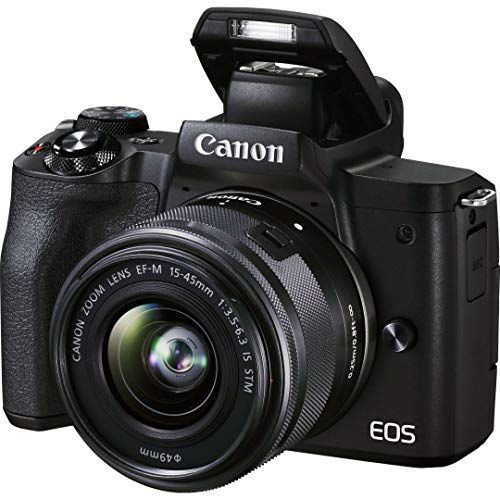
The Canon EOS M50 was one of the most popular mirrorless cameras ever made, and it’s easy to see why. When it launched in 2018, it offered a compact body, a fully articulating flip screen, 4K video capability, Dual Pixel autofocus, and Canon’s reliable color science, all at a price that didn’t require a second mortgage. Vloggers, content creators, and casual photographers loved it.
But here’s the thing you need to know in 2026: Canon has discontinued the EF-M mount. No new EF-M lenses are coming, no new EF-M camera bodies are in development, and Canon’s entire focus has shifted to the RF-mount mirrorless system. The M50 (and its successor, the M50 Mark II) are still widely available new and used, but buying one today means buying into a dead-end system.
Does that make it a bad camera? Not at all. But it changes the conversation around whether you should buy one. Let’s get into the details.
What Makes the Canon EOS M50 Good
The M50 was built around Canon’s 24.1MP APS-C sensor paired with the DIGIC 8 processor, and the results were impressive for its price range. Photos are sharp, colors are vibrant and natural, and Canon’s Auto White Balance is among the best in the business, the camera just gets the colors right without much fuss.
Image Quality
The 24.1MP sensor hits a sweet spot, high enough resolution for detailed images and moderate cropping, but not so high that file sizes become unwieldy or that noise becomes a problem at moderate ISO settings. In good light, the M50 produces images that are genuinely hard to distinguish from those taken with cameras costing two or three times as much.
Low-light performance is decent up to about ISO 3200. Beyond that, noise starts to creep in, and detail drops off. The DIGIC 8 processor does a reasonable job with in-camera noise reduction, but it’s not in the same league as current-generation processors. If you shoot in RAW (which you should for serious work), there’s good latitude for adjusting exposure and recovering shadow detail in post.
The Dual Pixel CMOS AF system covers about 88% of the frame horizontally and 100% vertically, with 143 AF points in most modes. It’s fast and reliable for single subjects, portraits, product photos, stationary subjects, and the eye detection AF works well for people photography. Tracking moving subjects is where it shows its limitations; newer cameras with deep-learning AF systems are significantly better at following erratic movement.
Video Performance
The M50 was Canon’s first mirrorless camera with 4K video capability, and it shows, the implementation comes with some significant caveats. In 4K mode, the frame rate is limited to 24fps, there’s a heavy crop applied to the image (roughly 1.7x on top of the existing 1.6x APS-C crop), and Dual Pixel AF is disabled, forcing the camera to use slower contrast-detect autofocus.
That sounds rough, and honestly, it was the M50’s biggest weakness. The 4K mode is usable for locked-off shots with manual focus, but it’s not practical for run-and-gun vlogging or any situation where you need autofocus.
The good news is that 1080p mode is where the M50 really shines for video. At 1080p, you get the full sensor readout without a severe crop, Dual Pixel AF works perfectly, and you can shoot at 24, 30, or 60fps. There’s even a 720p 120fps mode for slow motion, though the quality drop is noticeable. For YouTube, social media, and general vlogging at 1080p, the M50 produces clean, attractive footage with smooth, reliable autofocus.
The flip screen is one of the M50’s best features for video work. The 3-inch vari-angle touchscreen flips all the way forward for self-recording, responds to touch for focus pulling, and folds against the body for protection during transport. Combined with the micro HDMI output for external monitors and a 3.5mm mic input, the M50 has the essentials covered for solo content creation.
Design and Handling
At just 387 grams with the battery and card, the M50 is remarkably compact. It’s small enough to toss in a bag without thinking twice, and the ergonomics are surprisingly good for such a tiny body. The grip is shallow but usable, and the combination of the rear dial, top dial, and touchscreen gives you enough control surfaces to adjust settings without diving through menus constantly.
Canon’s menu system on the M50 includes a guided mode that presents settings in plain language, helpful for beginners who aren’t familiar with terms like aperture, shutter speed, and ISO. You can turn this off once you’ve learned the basics, but it’s a thoughtful inclusion that made the M50 appealing to first-time camera buyers.
Connectivity
The M50 supports Wi-Fi, Bluetooth, and NFC for wireless image transfer through the Canon Camera Connect app. The connection to smartphones works well for transferring JPEGs, though RAW transfer isn’t supported wirelessly, which means you’ll still need a card reader for your full-resolution files.
Bluetooth maintains a low-power connection to your phone even when the camera is off, allowing automatic background transfer of images as you shoot. It’s a convenience feature that works better in practice than you might expect.
The EF-M Mount Situation
This is the elephant in the room. Canon launched the EF-M mount in 2012 with the original EOS M, and over the following years released a small but well-curated selection of EF-M lenses. The M50 was the most popular camera in the system and brought a lot of people into the Canon mirrorless ecosystem.
Then Canon launched the RF mount in 2018, and gradually made it clear that the EF-M mount had no future. Canon stopped releasing new EF-M lenses, the RF-mount camera lineup expanded to cover every market segment the M-series used to serve, and in 2025 Canon officially confirmed what everyone already knew. EF-M is done.
What this means practically:
- The existing EF-M lenses still work perfectly fine on the M50
- You can use Canon EF and EF-S lenses with the EF-EOS M adapter
- No new native lenses will be made for the system
- There will be no successor to the M50 Mark II
- Third-party lens support is also winding down
If you already own the M50 and a collection of EF-M lenses, there’s no urgent reason to switch, your gear still works exactly as it always has. But if you’re buying in fresh, you need to accept that this is a closed system with a fixed lens selection.
Who Should Still Consider the Canon EOS M50?
Despite the discontinued mount, there are situations where the M50 still makes sense in 2026:
Budget-conscious beginners. The M50 can be found used at extremely low prices. If you need a capable camera for learning photography and don’t want to spend much, it delivers great image quality, intuitive controls, and a useful flip screen.
Casual vloggers shooting 1080p. If your content is primarily for social media and you’re comfortable with 1080p resolution, the M50’s combination of compact size, flip screen, Dual Pixel AF, and mic input makes it a solid vlogging setup at a rock-bottom price.
Travel photographers who prioritize size. The M50 with a pancake lens (like the EF-M 22mm f/2) is pocketable. For travel photography where size and weight matter more than having the latest tech, it’s hard to beat.
People who already own EF-M lenses. If you’re invested in the system, the M50 is still a capable body. There’s no reason to abandon working gear just because Canon has moved on, cameras don’t stop working when the manufacturer stops making new models.
The Upgrade Path
If you love the M50 but want something newer, Canon’s RF-mount lineup has direct successors:
Canon EOS R50 ($679). This is essentially the spiritual successor to the M50. Same 24.2MP APS-C sensor class, similar compact body, same fully articulating flip screen, but with a much more advanced autofocus system and access to the growing RF/RF-S lens lineup. It’s the most natural upgrade from the M50.
Canon EOS R10 ($879). A step up from the R50 with faster burst shooting (23fps), more physical controls, and a more advanced AF system with deep-learning subject detection. If you outgrew the M50 and want more capability, the R10 is a meaningful upgrade.
Both cameras accept your EF and EF-S lenses via the EF-EOS R adapter (not the EF-EOS M adapter, different mount). Your EF-M lenses unfortunately cannot be adapted to RF-mount cameras.
M50 vs. M50 Mark II: What’s the Difference?
Canon released the M50 Mark II in late 2020 with relatively minor updates. The sensor, processor, and body design are essentially identical. The Mark II adds improved eye-detect AF performance, upgraded video AF tracking, support for vertical video, and improved livestreaming capabilities via the Canon Camera Connect app and EOS Webcam Utility.
If you’re choosing between the two on the used market, the Mark II is worth a small premium for the AF improvements alone. But the differences are subtle enough that either version will serve you well.
Battery Life
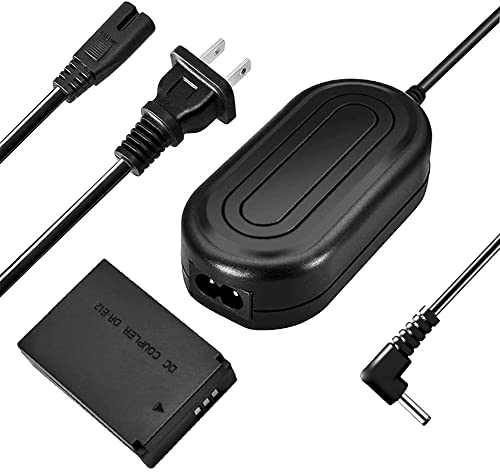
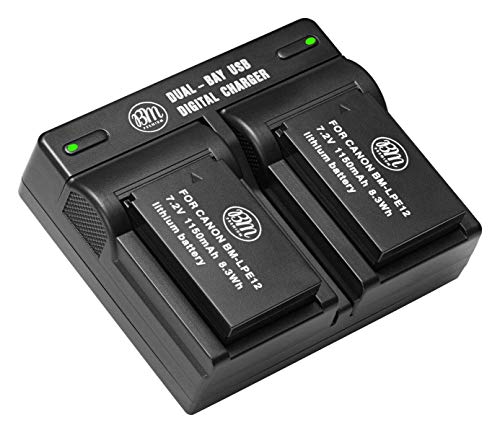
The M50 uses the LP-E12 battery, rated for approximately 235 shots per charge via the LCD or EVF. That’s modest by any standard and can be a limiting factor during long shooting sessions. The battery can’t be charged in-body. Canon includes a wall charger, which means carrying spare batteries is essential if you plan to shoot all day.
For video work, expect roughly 60-70 minutes of continuous recording before the battery dies. If you’re vlogging, pick up at least two spare LP-E12 batteries. They’re small, inexpensive, and widely available from both Canon and third-party manufacturers.
The Bottom Line
The Canon EOS M50 is a camera that delivered exceptional value when it launched and continues to be a capable tool in 2026. The 24.1MP sensor produces great images, the Dual Pixel AF is reliable for most situations, the flip screen and compact body make it ideal for vlogging and travel, and the video quality at 1080p is genuinely good.
The discontinued EF-M mount is the only real asterisk. If you’re buying used at a steep discount and you’re comfortable with a fixed lens ecosystem, the M50 remains a smart purchase. If you’re buying your first camera and want the flexibility to grow, Canon’s RF-mount system (starting with the EOS R50) is the better long-term play.
How we verify what we publishLast checked October 10, 2026Report an error