When you purchase through links on our site, we may earn an affiliate commission. Here’s how it works.
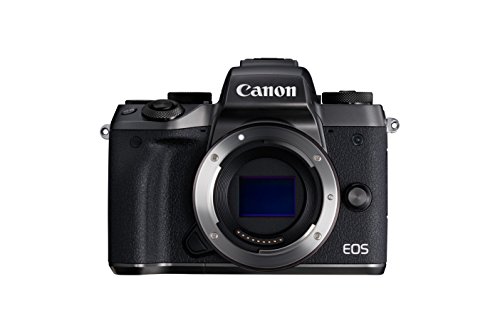
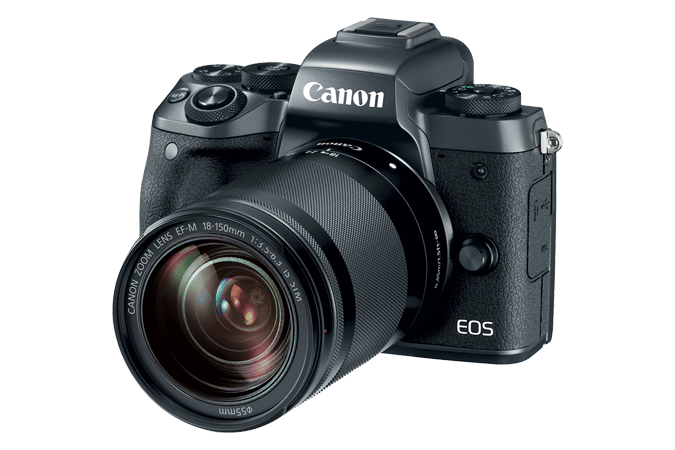
When Canon released the EOS M5 in late 2016, it was their first real attempt at a “serious” mirrorless camera. Previous EF-M mount bodies felt like afterthoughts, stripped-down compacts that couldn’t compete with Sony or Fujifilm. The M5 changed that with a built-in electronic viewfinder, a solid grip, and the same Dual Pixel CMOS AF that made Canon’s DSLRs so popular.
Fast forward to 2026, and the EOS M5 sits in an interesting spot. Canon officially discontinued the EF-M mount, so there won’t be new lenses or bodies. But used M5 prices have dropped dramatically, making it one of the cheapest ways to get into a capable mirrorless system. Is it still worth picking up? Let’s find out.
canon eos m5 review and price
Canon EOS M5 Specifications
Here are the core specs at a glance:
For the full range, check our Canon DSLR lineup overview.
- Sensor: 24.2 MP APS-C CMOS
- Autofocus: Dual Pixel CMOS AF, 49 points
- Viewfinder: Electronic (EVF), 2.36 million dots
- Burst speed: 9 fps (7 fps with continuous AF)
- Video: 1080p at 60fps (no 4K)
- Screen: 3.2-inch tilting touchscreen
- Connectivity: WiFi, Bluetooth, NFC
- ISO range: 100–25,600
- Battery life: ~295 shots per charge (CIPA)
- Weight: 427g (body only)
- Lens mount: Canon EF-M (discontinued)
Image Quality
The M5 shares essentially the same 24.2 MP APS-C sensor found in the EOS 80D, and the results are comparable. Colors are rich and accurate with Canon’s signature warm tone, dynamic range is solid for an APS-C sensor, and JPEGs look good straight out of the camera without heavy editing.
ISO performance tops out at usable quality around ISO 3200–6400. Beyond that, noise reduction starts smearing fine detail. For a camera you can pick up for a couple hundred dollars used, though, the image quality punches well above its price class. RAW files have enough latitude for meaningful shadow recovery and highlight pulling in Lightroom or similar editors.
Autofocus Performance
Dual Pixel CMOS AF was Canon’s big differentiator in 2016, and on the M5 it works exactly as you’d expect, smooth, confident focus acquisition across most of the frame. The 49 AF points cover a reasonable portion of the sensor, and touch-to-focus on the rear screen is responsive and intuitive.
Face detection works reliably for portraits and casual shooting. There’s no eye-detect AF, that came with later Canon cameras, but the face tracking is good enough for most portrait situations where your subject isn’t rapidly moving.
Where the M5 shows its age is in continuous tracking of fast, erratic subjects. It can handle a jogger or a pet walking toward you, but birds in flight or motorsports will overwhelm the system. That’s a fair trade-off at this price point.
Design and Handling
canon eos m5 review and price
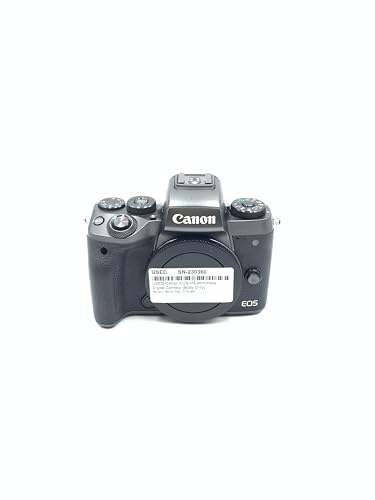
One thing that immediately sets the M5 apart from other EF-M bodies is its design. Canon gave it a pronounced grip, a built-in EVF with a comfortable eyecup, and a control layout that feels more like a shrunken DSLR than a point-and-shoot. There’s a mode dial on top, a rear command dial, and enough buttons that you won’t constantly be diving into menus.
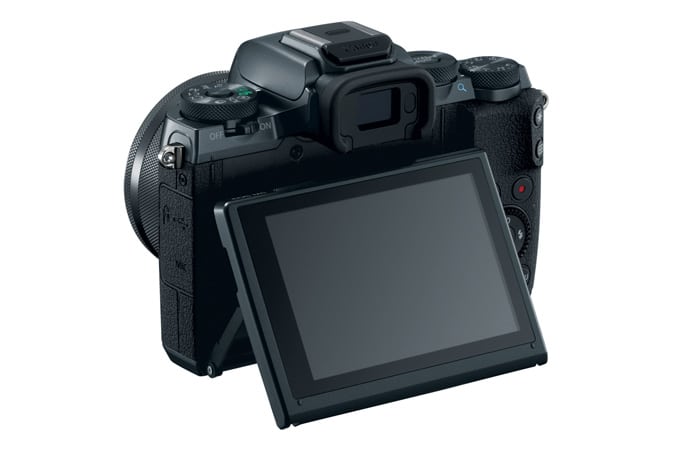
The tilting touchscreen moves up about 85 degrees and down about 180 degrees for selfies, though the selfie position blocks the EVF, which isn’t ideal. It doesn’t fully articulate like the flip screens on newer Canon cameras, so odd-angle shooting is more limited.
At 427 grams body-only, the M5 is noticeably lighter than a DSLR but not as featherweight as some modern mirrorless cameras. The build feels solid in hand, with a polycarbonate body that can handle everyday bumps without issue. There’s no weather sealing, though, so keep it away from rain.
Video Performance
Like the 80D, the M5 maxes out at 1080p 60fps, no 4K recording. The footage is clean and well-exposed, and Dual Pixel AF provides smooth focus transitions during recording. There’s a built-in stereo microphone and a 3.5mm external mic input, but no headphone jack for monitoring audio.
The 1080p limitation is the biggest drawback for video creators in 2026. If you’re posting to YouTube or Instagram where 4K is increasingly expected, this camera will feel dated. For casual video, behind-the-scenes clips, or situations where 1080p is perfectly acceptable, the M5 still delivers decent results.
The EF-M Lens Situation
Here’s the elephant in the room: Canon stopped making EF-M lenses and has fully committed to the RF mount for mirrorless cameras going forward. The EF-M lens lineup was always limited, around a dozen native lenses total, and no new options are coming.
The good news is that used EF-M lenses are cheap and readily available. The 22mm f/2 pancake is an excellent street photography lens, the 11-22mm f/4-5.6 is a solid ultrawide, and the 18-150mm f/3.5-6.3 covers a wide range for travel. You can also use an EF-EOS M adapter to mount any Canon EF or EF-S lens, though that adds bulk and partially defeats the purpose of going mirrorless.
Just understand that buying into EF-M in 2026 means buying into a system with a finite future. There’s nothing wrong with that, the lenses and bodies available today will keep working indefinitely, but you won’t have the option to upgrade within the same mount system down the road.
Canon EOS M5 Price in 2026
New M5 bodies are essentially impossible to find at retail since Canon discontinued them years ago. On the used market, expect to pay roughly $200 to $350 for a body in good condition, depending on shutter count and cosmetic wear. Kit bundles with the 15-45mm lens typically run $250 to $400.
At those prices, the M5 is genuinely hard to beat for what you get. A 24.2 MP sensor, Dual Pixel AF, electronic viewfinder, and compact form factor for under $300 is an exceptional value, assuming you’re okay with the EF-M mount limitations.
Who Should Buy the Canon EOS M5?
Great for: Budget-conscious photographers who want a compact mirrorless camera with good autofocus and image quality. Travel photographers who value portability. Anyone who already owns EF-M lenses. Beginners learning photography fundamentals without a big investment.
Skip it if: You need 4K video. You want a system you can grow with long-term (go RF mount instead). You shoot fast action or wildlife regularly. You need weather sealing.
If you want a Canon mirrorless camera with more modern features, the Canon EOS M50 added 4K (with a crop) and improved autofocus. For a DSLR alternative, the Canon cameras with flip screens guide covers the full current lineup. And if you want to explore your options beyond Canon, check out our best DSLR cameras for beginners guide.
The Bottom Line
The Canon EOS M5 was Canon’s first genuinely good mirrorless camera, and in 2026 it’s one of the best budget camera deals around. The image quality holds up, the Dual Pixel AF still feels responsive, and the DSLR-like handling makes it enjoyable to shoot with. Just go in with your eyes open about the EF-M mount’s discontinued status and the lack of 4K video, and you’ll find a lot to like about this little camera.
For the full-frame flagship, read our Canon 5D Mark IV review.
For the full Canon mirrorless lineup, see our best Canon mirrorless cameras guide.
For more options, browse our external camera screen recommendations or learn how to connect Canon cameras to your iPhone. You can also check out our best HDMI splitters for dual monitors if you’re setting up an editing station.
- Canon Cameras With Flip Screen
- Canon EOS M50 Review
- How to Connect Canon EOS M50 to iPhone
- Best External Camera Screens
- Best HDMI Splitters for Dual Monitors
- Best DSLR Cameras for Beginners