When you purchase through links on our site, we may earn an affiliate commission. Here’s how it works.
The Canon M50 remains one of the most popular budget cameras for cinematic video in 2026, and dialing in the right Canon M50 cinematic settings is what separates flat-looking clips from footage that actually feels like a film. It’s a mirrorless camera with a 24.1 MP APS-C sensor, Dual Pixel autofocus, a flip-out touchscreen, and 4K recording. For the price, it punches well above its weight for filmmaking. But the default settings are designed for casual shooting, not cinematic footage.
Getting a cinematic look from the M50 takes specific Canon M50 cinematic settings changes. You need the right frame rate, the correct shutter speed, a flattened image profile for color grading, and a clear understanding of the camera’s limitations – particularly the 4K crop. This guide covers the exact settings to dial in for cinematic results.
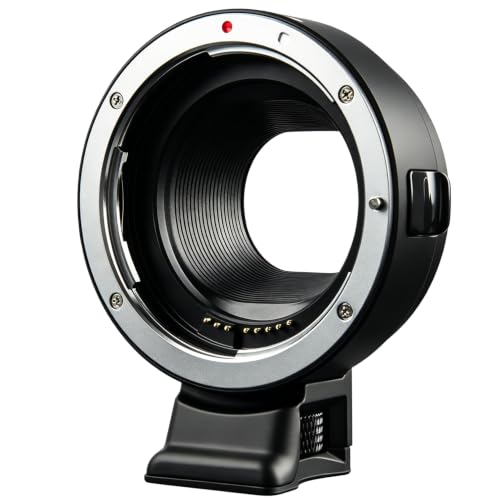
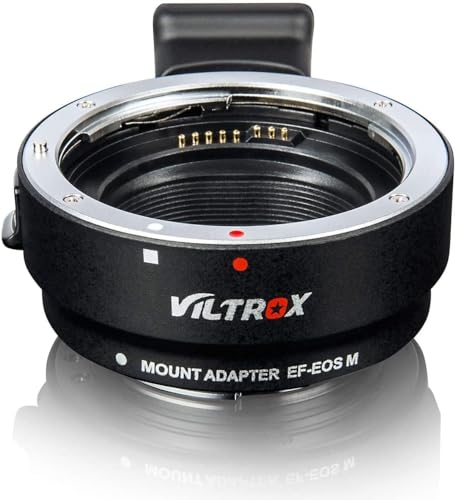
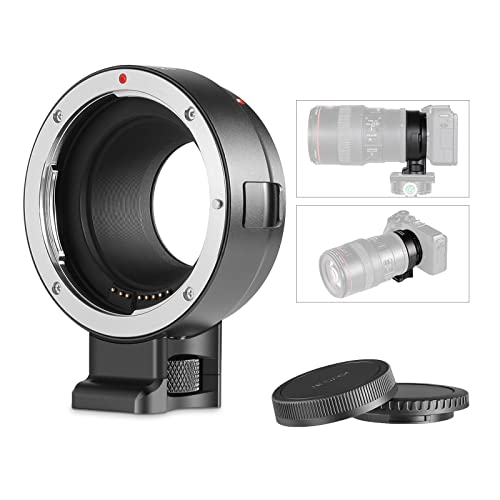
One thing to keep in mind: Canon discontinued the EOS M lens mount in 2022 and shifted development to the RF mount. No new EOS M lenses are in the pipeline. But the M50 and M50 Mark II are still excellent cameras, and millions of them are in active use today. Adapted EF and EF-S lenses work perfectly through the Canon EF-M to EF adapter, so the available lens selection is huge.
Best Canon M50 Video Settings for Cinematic Look
Cinematic video starts with three settings: frame rate, shutter speed, and resolution. Get these right and your footage already looks different from standard video.
Frame rate: 24fps. Movies are shot at 24 frames per second. This frame rate creates natural motion blur that looks filmic rather than smooth and “video-like.” On the M50, set your movie recording quality to 1080p at 23.98fps (the camera labels this as 24p). Avoid 30fps and 60fps for your main cinematic footage. 60fps is useful for slow-motion B-roll, but your primary footage should be 24fps.
Shutter speed: 1/50. The 180-degree shutter rule says your shutter speed should be roughly double your frame rate. At 24fps, that’s 1/48 – and since the M50 doesn’t offer 1/48, use 1/50. This creates the amount of motion blur that looks natural to human eyes. Faster shutter speeds (1/200, 1/500) make movement look jittery and sharp. Slower shutter speeds create too much blur. Stick to 1/50 for cinematic footage at 24fps.
Resolution: shoot 1080p, not 4K. The M50 technically records 4K, but with two major penalties. First, 4K mode applies a heavy 1.7x crop on top of the existing 1.6x APS-C crop, giving you an effective 2.7x crop factor. A 22mm lens suddenly acts like a 60mm. Second, 4K mode disables Dual Pixel autofocus – the M50’s best feature for video. You’re stuck with slower contrast-detect AF that hunts. For cinematic work, 1080p at 24fps gives you the full sensor width, fast Dual Pixel AF, and plenty of resolution for YouTube and web delivery.
How to Set Up Canon M50 for Manual Video Mode
Cinematic shooting requires manual control over exposure. Auto exposure shifts brightness between shots, which ruins continuity and makes color grading difficult. Switch to manual mode for consistent, professional results.
- Turn the mode dial to Movie mode (the camera icon). Then press the Menu button and go to Shooting Menu > Movie Rec Quality. Set it to FHD 23.98p IPB (this is 1080p at 24fps). IPB compression is the M50’s only option here – it doesn’t offer ALL-I compression like higher-end Canon cameras.
- Next, go to Shooting Menu > Movie Exposure Mode. Change this from Auto to Manual. This gives you direct control over aperture, shutter speed, and ISO while recording video.
- Set your shutter speed to 1/50 using the main dial. Set your aperture based on how much background blur you want – f/2 to f/4 for shallow depth of field, f/5.6 to f/8 for deeper focus. Adjust ISO last to get the correct exposure. The M50 handles ISO well up to about 3200 for video. Above that, grain becomes noticeable.
One challenge with manual mode at 1/50 shutter speed: shooting outdoors in bright light. At f/2 and ISO 100, your footage will be overexposed in sunlight because the shutter is locked at 1/50. The solution is an ND filter – a darkened glass filter that screws onto your lens. Think of it like sunglasses for your camera. A variable ND filter (ND2-ND400) lets you dial in exactly the right amount of light reduction without changing your shutter speed or aperture.
Canon M50 Picture Style Settings for Cinematic Video
Picture styles control how the M50 processes color, contrast, and saturation in your footage. The default “Standard” style applies heavy contrast and saturation that looks punchy on the camera screen but leaves little room for color grading in post-production.
For cinematic work, you want the flattest possible image straight out of camera. Flat footage looks washed out and dull on the LCD, but it preserves more detail in highlights and shadows. This gives you maximum flexibility when you color grade in editing software like DaVinci Resolve or Premiere Pro.
The M50 does not have C-Log or any LOG recording profile – that’s reserved for Canon’s Cinema line and higher-end mirrorless cameras like the R6 and R5. But you can get a reasonably flat image by tweaking the built-in picture styles.
Go to Shooting Menu > Picture Style. Select “Neutral” and then press the INFO button to customize it. Set Sharpness to 0, Contrast to -4 (all the way down), Saturation to -2, and Color Tone to 0. This gives you the flattest image the M50 can produce without a custom picture profile.
Some videographers prefer the “Faithful” style as their starting point instead of Neutral. Faithful reproduces colors more accurately under daylight white balance. Try both with the same reduced contrast/saturation settings and see which one grades better with your editing workflow.
| Picture Style Setting | Default Value | Cinematic Value | Why |
|---|---|---|---|
| Base Style | Standard | Neutral or Faithful | Less processing applied to footage |
| Sharpness | 4 | 0 | Add sharpness in post – over-sharpened footage can’t be fixed |
| Contrast | 0 | -4 (minimum) | Preserves highlight and shadow detail for color grading |
| Saturation | 0 | -2 | Gives more control over color intensity in post |
| Color Tone | 0 | 0 | Neutral starting point – adjust skin tones in editing |
Best White Balance Settings for Cinematic Video on Canon M50
Auto White Balance (AWB) is convenient for photos, but it causes problems in video. AWB shifts color temperature between shots and sometimes mid-shot, creating inconsistent footage that’s hard to color grade. Skin tones shift from warm to cool randomly.
For cinematic work, set your white balance manually. The M50 lets you set white balance in Kelvin (color temperature numbers). Press the Q button to access quick settings, select White Balance, and choose the Kelvin option (the “K” icon). Use the dial to set a specific temperature.
Here are practical starting points. Indoor tungsten lighting: 3200K. Daylight: 5600K. Cloudy or shade: 6500K. Mixed lighting (common at events and in homes): 4500-5000K as a compromise. If the scene has consistent lighting, you can also use a gray card to set a custom white balance for perfect accuracy.
The key rule: pick a white balance and leave it for the entire scene. If the lighting changes between locations, set a new white balance for the new location. But never let the camera shift white balance within a scene – it creates color jumps that are tedious to fix in editing.
Canon M50 Autofocus Settings for Video
The M50’s Dual Pixel autofocus is one of its strongest features for video. It tracks subjects smoothly across the frame, which is important for solo filmmaking where you can’t pull focus manually while also performing on camera. But the default AF settings are tuned for speed, not cinematic smoothness.
- Go to Shooting Menu > Movie Servo AF. Make sure this is set to Enable. This keeps the autofocus active during recording. Then access the AF speed and tracking sensitivity settings through the AF menu.
- Set AF Speed to -3 or -4 (the slowest setting). This makes focus transitions smooth and gradual rather than snapping instantly from one subject to another. Fast AF looks robotic on screen. Slow, deliberate focus pulls look cinematic. Watch any movie – focus doesn’t snap. It glides.
- Set AF Tracking Sensitivity to -2 (Locked On). This prevents the autofocus from jumping to background objects when something briefly passes between the camera and your subject. A higher sensitivity means the AF is more easily distracted. Locked On keeps it committed to whatever it’s currently tracking.
- Enable Face Detection + Tracking AF. The M50’s face tracking is reliable and keeps focus on your subject’s eyes in most lighting conditions. This is the best AF mode for interviews, vlogs, and narrative work where people are the primary subject.
For shots where you want manual focus control – racking focus between a foreground object and a background subject, for example – switch to Manual Focus (MF) and use the focus ring on your lens. The M50 offers focus peaking in MF mode, which highlights the edges of whatever is in focus with a colored outline on the LCD. This makes manual focus pulls much easier to nail.
Best Lenses for Cinematic Video on Canon M50
The lens affects cinematic quality more than any camera setting. A fast lens with a wide aperture (f/1.4 to f/2) gives you shallow depth of field – that blurred background look that instantly makes footage look professional. The M50’s kit lens (EF-M 15-45mm f/3.5-6.3) is too slow for cinematic work in most situations.
| Lens | Focal Length | Max Aperture | Mount | Best For | Price Range |
|---|---|---|---|---|---|
| Canon EF-M 22mm f/2 STM | 22mm (35mm equiv) | f/2 | Native EF-M | Run-and-gun, vlogging, street | $200-250 |
| Sigma 16mm f/1.4 DC DN | 16mm (26mm equiv) | f/1.4 | Native EF-M | Wide cinematic shots, low light | $350-400 |
| Sigma 30mm f/1.4 DC DN | 30mm (48mm equiv) | f/1.4 | Native EF-M | Interviews, narrative, general | $280-330 |
| Sigma 56mm f/1.4 DC DN | 56mm (90mm equiv) | f/1.4 | Native EF-M | Portraits, compressed backgrounds | $400-450 |
| Canon EF 50mm f/1.8 STM | 50mm (80mm equiv) | f/1.8 | EF (needs adapter) | Portrait, interview, budget bokeh | $100-130 |
| Viltrox 23mm f/1.4 STM | 23mm (37mm equiv) | f/1.4 | Native EF-M | General purpose, budget cinematic | $140-170 |
The Sigma 16mm f/1.4 is probably the single best cinematic lens for the M50. It’s wide enough for establishing shots and interior scenes, fast enough for shallow depth of field and low-light shooting, and the autofocus works well with the M50’s Dual Pixel system. If you buy one lens for cinematic work, this is the one.
For adapted EF lenses, you need the Canon EF-EOS M adapter (or a third-party equivalent). Autofocus with adapted lenses is slightly slower than native EF-M lenses, but still usable for video. Manual focus vintage lenses (old Pentax, Minolta, Canon FD) also adapt to the M50 through cheap adapters and give your footage a distinctly analog character.
Canon M50 Audio Settings for Cinematic Video
The M50’s built-in microphone picks up handling noise, autofocus motor sounds, and room echo. For any cinematic work, you need an external microphone plugged into the 3.5mm mic input on the left side of the camera body.
A shotgun microphone like the Rode VideoMicro or VideoMic GO II mounts on the hot shoe and captures directional audio that rejects off-axis noise. For interviews, a lavalier microphone (Rode Wireless GO, Hollyland Lark) clips to the subject and captures clean dialogue regardless of distance from the camera.
In the camera’s audio settings (Shooting Menu > Sound Recording), switch from Auto to Manual. Set the recording level so that normal speech peaks around -12dB on the on-screen meter. This leaves headroom for louder moments without clipping (distorting). The M50 does not have a headphone jack for monitoring audio while recording – this is one of its limitations. Listen back after each take to verify audio quality.
If you’re serious about audio, record sound separately on a dedicated audio recorder (Zoom H1n, Tascam DR-10L) and sync in post-production. This gives you better audio quality and monitoring options. Most editing software can sync audio automatically using the waveform from the camera’s built-in mic as a reference.
Canon M50 vs M50 Mark II for Cinematic Video
Canon released the M50 Mark II in late 2020. The differences are minor. The Mark II added Eye Detection AF in video mode (the original M50 only has it in photo mode), vertical video recording for social media, and clean HDMI output for live streaming. The sensor, processor, image quality, and video capabilities are identical.
For cinematic work, the Eye AF in video is the most useful upgrade. It keeps focus locked on your subject’s eyes during movement, which reduces the need to manually adjust focus tracking. If you’re choosing between the two and the price difference is small, get the Mark II. If you already own the original M50, there’s no reason to upgrade just for video.
Neither camera records 4K at 60fps, 10-bit color, or LOG profiles. If you need those features, you’ve outgrown the M50 platform entirely. The Canon EOS R50, Sony ZV-E10 II, or Fujifilm X-S20 are the logical next steps up while staying in the APS-C mirrorless category.
Canon M50 Cinematic Settings FAQs
Should I shoot 4K or 1080p on the Canon M50?
Shoot 1080p for cinematic work. The M50’s 4K mode applies a 1.7x crop that dramatically narrows your field of view and disables Dual Pixel autofocus. You lose the M50’s best video feature (fast, reliable AF) and your wide-angle lenses become standard or telephoto. 1080p at 24fps uses the full sensor width, gives you Dual Pixel AF, and looks excellent for YouTube, social media, and web delivery. The only reason to use 4K is if you need to crop into footage in post and are willing to use manual focus.
What frame rate should I use for cinematic video?
24fps (labeled as 23.98p on the M50). This is the standard frame rate used in movies and creates natural-looking motion blur. Use 60fps only when you plan to slow the footage down to 40% speed in editing for slow-motion B-roll – set the timeline to 24fps and drop in your 60fps clips for smooth slow motion. Never mix 24fps and 30fps footage in the same project – the motion cadence looks inconsistent.
Do I need an ND filter for the Canon M50?
Yes, if you shoot outdoors. With the shutter locked at 1/50 for cinematic motion blur, you can’t use faster shutter speeds to reduce light. On a bright day, even ISO 100 at f/8 may overexpose. An ND filter darkens the image optically so you can shoot at wide apertures (f/1.4 to f/2.8) for shallow depth of field in daylight while keeping the shutter at 1/50. A variable ND filter (ND2-ND400) gives the most flexibility for around $30-80 depending on the filter diameter.
Can I color grade Canon M50 footage?
Yes, but with limits. The M50 records 8-bit 4:2:0 video, which is less flexible for grading than the 10-bit 4:2:2 footage from higher-end cameras. Aggressive color grading can introduce banding (visible steps in gradients). The key is shooting with a flat picture style (Neutral with reduced contrast and saturation) to preserve as much dynamic range as possible. Apply subtle grades rather than extreme looks. DaVinci Resolve’s free version handles M50 footage well and offers professional color correction tools.
What is the best stabilization setting for cinematic video on the M50?
The M50 has Movie Digital IS, which applies electronic stabilization by slightly cropping the sensor. It works reasonably well for handheld walking shots. Enable it in the Shooting Menu under Movie Digital IS. The “Enhanced” mode adds more stabilization but crops more aggressively. For the smoothest cinematic results, use a gimbal stabilizer (like the DJI RS series or Zhiyun Crane) instead of digital IS – mechanical stabilization produces smoother movement without the resolution loss from cropping.
Is the Canon M50 still worth buying for video in 2026?
For beginners and budget filmmakers, yes. The M50 and M50 Mark II still produce excellent 1080p footage with fast, reliable autofocus and good low-light performance. You can find used M50 bodies for $250-350 and pair them with affordable Sigma or Viltrox lenses for a capable cinematic setup under $600 total. The main downside is the discontinued EOS M mount – no new native lenses are coming. But the existing lens selection plus EF adapter compatibility means the system still has plenty of life in it for video work.