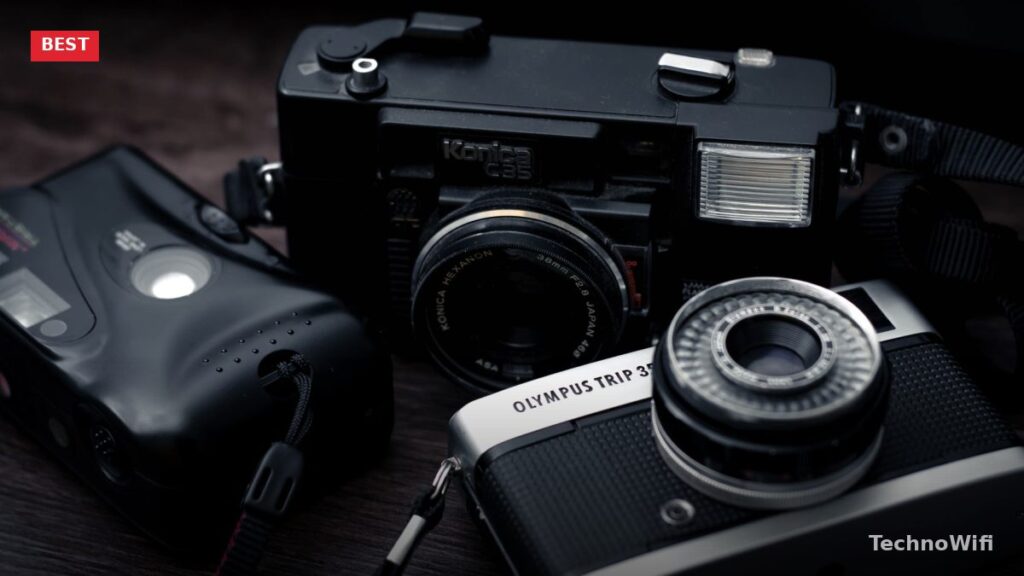
Best Vintage Cameras
Digital cameras dominate the market, but film photography never really went away. Vintage cameras have actually grown more popular in recent years, with photographers of all levels picking up classic bodies for their unique character and hands-on shooting experience.
Professional photographers still use some of these cameras for wedding photography and portraiture. The images they produce have a look that’s difficult to replicate digitally, even with filters and presets. You can’t upload photos from a vintage camera straight to your phone, but these cameras are built like tanks and produce genuinely interesting images.
If you want the best of the best, SLR and rangefinder cameras from before the early 1990s are where to look. The models below may not have all the shooting modes found in today’s cameras, but they’re popular for good reason and can hold their own against modern gear in terms of image quality.
| Best Vintage Camera | Dimensions | Weight | Camera Type | Shutter Speed |
|---|---|---|---|---|
| Leica M6 TTL | 5.43×3.03×1.32 inches | 585g | RangeFinder | 1/1000s – 1s |
| Canon AE-1 | 11 x 4.2 x 4 inches | 1.8 Pounds | SLR | 2 s to 1/1000 s |
| Nikon F2 | 8.7 x 8.07 x 7.17 inches | 3.83 Pounds | SLR | Between 1/90 and 1/2,000 |
| Pentax K1000 | 7.72 x 4.29 x 4.29 inches | 1.65 Pounds | SLR | 1/1000 seconds |
| Minolta X-700 | 10.63 x 5.39 x 4.29 inches | 1.59 pounds | SLR | 1/1000 to 4 seconds |
1. Leica M6 TTL 35mm RangeFinder Camera Body
The M6 is one of Leica’s finest mechanical film cameras, and it’s still highly sought after. Six lenses in the 28-135mm range are compatible with the 0.72x viewfinder, giving you plenty of options for different shooting situations.
The large shutter dial and smooth film advance make shooting feel natural and stress-free. The M6 works with practically any Leica M-mount lens, and the rangefinder focusing system lets you compose photos using frame lines instead of looking through the lens itself. TTL (Through the Lens) metering gives you precise exposure readings without an external meter.
The body is made from zinc and brass, so it’s both sturdy and good-looking. It’s not a cheap camera even by vintage standards, and Leica M-mount lenses carry their own premium. But if you want one of the most refined film shooting experiences available, the M6 is hard to top.
Key Specifications
- Dimensions: 5.43×3.03×1.32 inches
- Weight: 585g
- Camera type: RangeFinder
- Sutter speed: 1/1000s – 1s
2. Canon AE-1

The Canon AE-1 changed photography when it first launched. It made film cameras accessible to everyday people by including a full-program auto mode. Point, focus, press the shutter. That was it. For its time, that level of simplicity was a big deal.
Canon also built out a solid ecosystem of accessories and lenses for this camera. FD-mount lenses like the 50mm f/1.8 are still widely available and affordable, which keeps the AE-1 popular with photographers today. If you want to learn the basics of film photography without spending a fortune, this is one of the best places to start.
Key Specifications
- Dimensions: 11 x 4.2 x 4 inches
- Weight: 1.8 pounds
- Camera type: SLR
- Shutter speed: 2 s to 1/1000 s
3. Nikon F2
The Nikon F2 dates back to 1971, arriving 12 years after the legendary Nikon F. The two cameras look nearly identical on the outside, but the F2 packed significant improvements under the skin. The maximum shutter speed bumped up to 1/2000, and a new hinged swing film door made loading film much easier.
What makes the F2 special is its accessory system. You can swap out focal panels, prisms, and motor drives. There are 250-frame cassettes for extended shooting and the DS-1 automatic aperture mechanism. It’s a modular system that lets you configure the camera for just about any shooting situation. The Nikon F lens mount means you have access to decades of compatible glass too.
Key Specifications
- Dimensions: 8.7 x 8.07 x 7.17 inches
- Weight: 3.83 Pounds
- Camera type: SLR
- Shutter speed: Between 1/90 and 1/2,000
4. Pentax K1000
The Pentax K1000 might be the best entry-level film camera ever made. Photography students love it, professionals respect it, and hobbyists keep coming back to it. It’s affordable, well-built, and simple enough that you can focus on learning photography rather than fighting with controls.
The design is genuinely attractive too, with chrome and leather accents that give it real character. The K1000 uses a split-image viewfinder for manual focus, which takes some practice if you’re new to film. You need to align two halves of the image to get sharp focus. Pentax makes several lenses for this camera, including popular 31mm, 43mm, and 71mm options.
Key Specifications
- Dimensions: 7.72 x 4.29 x 4.29 inches
- Weight: 1.65 Pounds
- Camera type: SLR
- Shutter speed: 1/1000 seconds
5. Minolta X-700
The Minolta X-700 proves that this company knew how to build cameras. Released in 1981, it remains one of Minolta’s best manual SLR cameras. Its design borrows from earlier X-series models like the XG-M, but the X-700 set itself apart with a groundbreaking programmed auto-exposure mode.
Versatility is a strong point here. The camera shoots in three distinct modes. In manual, you have full control over shutter speed and aperture. The auto modes let the camera handle settings when you want to shoot faster. This mix of manual control and automation made it popular with beginners and experienced shooters alike.
Key Specifications
- Dimensions: 10.63 x 5.39 x 4.29 inches
- Weight: 1.59 pounds
- Camera type: SLR
- Shutter speed: 1/1000 to 4 seconds
Final Thoughts
At its core, a vintage camera works on the same principles as a digital one. Light enters the lens, hits a recording surface, and creates an image. The difference is that a vintage camera strips away all the automatic features and puts you in direct control of every decision.
That’s exactly why people love them. They’re great teaching tools that show you the fundamentals of exposure, focus, and composition without any digital shortcuts. And the images they produce have a warmth and texture that digital cameras still struggle to replicate.
See Also
Best DSLR Camera for Filmmaking