8K video captures roughly 33 million pixels per frame, four times the detail of 4K and sixteen times Full HD. In 2026, 8K cameras are no longer exotic prototypes. Several models from Canon, Sony, Nikon, Blackmagic, and RED shoot 8K internally, and prices range from around $2,500 for a hybrid mirrorless body to well over $20,000 for a dedicated cinema rig. Whether you are a filmmaker who wants maximum flexibility in post-production or a photographer who occasionally needs to pull stills from video, there is an 8K camera that fits the job.




This guide covers the best 8K cameras you can buy right now, with honest takes on what each one does well and where it falls short.
What to Consider Before Buying an 8K Camera
Before diving into individual models, there are a few practical realities of 8K that every buyer should understand:
- Storage: 8K video files are enormous. Shooting 8K raw at 30fps can produce 2 to 4 GB per minute depending on the codec. You will need fast CFexpress Type B cards and multiple terabytes of hard drive storage for any serious project.
- Editing hardware: Your computer needs to keep up. Editing 8K footage requires a fast CPU, 64 GB or more of RAM, and a capable GPU. Proxy workflows (editing lower-resolution copies and re-linking to the 8K originals for final export) are standard practice.
- Heat management: Cramming an 8K sensor and fast readout into a compact camera body generates significant heat. Some cameras have recording time limits or will shut down if they overheat. Cinema cameras with active cooling handle this better than compact mirrorless bodies.
- Lenses matter: 8K is only as sharp as the glass in front of the sensor. Older or lower-quality lenses may not resolve enough detail to take full advantage of an 8K sensor. Budget for high-quality lenses if you want to see the full benefit of the resolution.
- Delivery format: Almost nobody delivers final content in 8K. The value of shooting 8K is the flexibility it gives you in post: cropping, reframing, stabilizing, and pulling high-resolution stills from video. Your final export will usually be 4K or even 1080p.
Best 8K Cameras for 2026
1. Canon EOS R5 II
The Canon EOS R5 II is the best all-around 8K camera for hybrid shooters who need both excellent stills and high-resolution video. Canon addressed the biggest complaint about the original R5 (overheating during 8K recording) with an improved cooling system and more efficient processing pipeline. The R5 II shoots 8K raw video at up to 60fps internally to CFexpress Type B cards, with substantially longer recording times than its predecessor.
The 45-megapixel full-frame sensor delivers outstanding still image quality, and the Dual Pixel CMOS AF II autofocus system is among the best in the industry for tracking subjects. Eye AF works reliably on people, animals, and vehicles. For photographers who also shoot video, the R5 II is hard to beat.
- Sensor: 45 MP full-frame CMOS
- Video: 8K 60fps raw internal, 4K 120fps
- Autofocus: Dual Pixel CMOS AF II with deep learning subject detection
- Stabilization: In-body image stabilization (up to 8.5 stops with compatible lenses)
- Card slots: CFexpress Type B + SD UHS-II
- Weight: Approx. 1.6 lbs (body only)
- Best for: Hybrid photo/video shooters who want maximum resolution in a compact body
2. Sony A1
The Sony A1 was the first camera to combine 50-megapixel stills with 8K 30fps video recording, and it remains a top performer in 2026. Sony built the A1 as a do-everything flagship: sports photography at 30fps burst shooting, studio-quality portraits at 50 megapixels, and 8K video when you need it. The Exmor RS stacked CMOS sensor reads out fast enough to minimize rolling shutter artifacts even at 8K.
The A1 shoots 8K 30fps in 4:2:0 10-bit XAVC HS internally. It also delivers excellent 4K by oversampling from the full 8K readout, which produces very clean, detailed 4K footage. Autofocus is superb, with real-time tracking and eye AF for humans, animals, and birds.
- Sensor: 50.1 MP full-frame stacked CMOS
- Video: 8K 30fps 10-bit internal, 4K 120fps
- Autofocus: 759-point phase detection with real-time tracking
- Stabilization: 5-axis in-body (up to 5.5 stops)
- Card slots: Dual CFexpress Type A / SD combo slots
- Weight: Approx. 1.6 lbs (body only)
- Best for: Sports and wildlife photographers who also need 8K video
3. Nikon Z8
The Nikon Z8 packs the same 45.7-megapixel stacked CMOS sensor as the flagship Z9 into a smaller, lighter body without the integrated vertical grip. It shoots 8K 60fps raw video internally and delivers the same video performance as the Z9 at a lower price point and in a more portable form factor.
The Z8 is an exceptional value in the 8K camera market. Its autofocus system uses subject detection for nine different categories including people, animals, birds, cars, motorcycles, bicycles, trains, and airplanes. Video quality is outstanding, with N-Raw and ProRes RAW HQ internal recording options.
- Sensor: 45.7 MP full-frame stacked CMOS
- Video: 8K 60fps raw internal, 4K 120fps
- Autofocus: 493-point hybrid AF with 3D tracking and subject detection
- Stabilization: 5-axis in-body (up to 6 stops)
- Card slots: CFexpress Type B + SD UHS-II
- Weight: Approx. 2.0 lbs (body only)
- Best for: Filmmakers and photographers who want pro-level 8K in a mid-size body
4. Nikon Z9
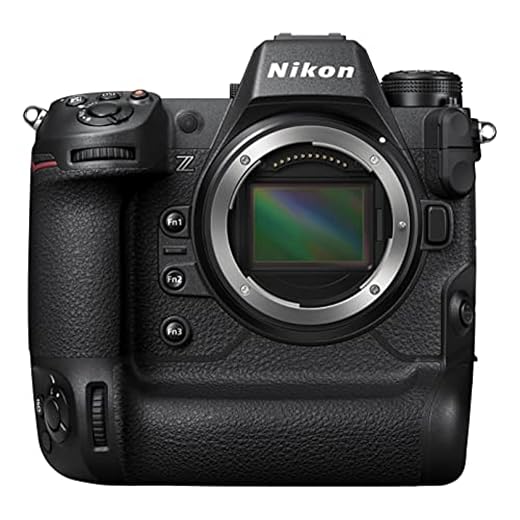
The Nikon Z9 is Nikon’s flagship professional camera, built for news photographers, sports shooters, and filmmakers who need a rugged, reliable tool. It uses the same 45.7-megapixel stacked sensor as the Z8 and shoots 8K 60fps raw internally. The integrated vertical grip adds battery capacity and ergonomic controls for portrait-orientation shooting.
Nikon has aggressively updated the Z9 through firmware updates since launch, adding features like 8K 60fps raw recording, improved autofocus algorithms, and expanded video codec options post-release. The camera is weather-sealed to professional standards and built to survive harsh shooting conditions.
- Sensor: 45.7 MP full-frame stacked CMOS
- Video: 8K 60fps raw internal, 4K 120fps
- Autofocus: 493-point hybrid AF with 3D tracking
- Stabilization: 5-axis in-body (up to 6 stops)
- Card slots: Dual CFexpress Type B
- Weight: Approx. 2.9 lbs (body only, with battery)
- Best for: Professional photographers who need a rugged flagship with 8K video capability
5. Canon EOS R5
The original Canon EOS R5, released in 2020, was the camera that brought 8K video to the consumer mirrorless market. It shoots 8K 30fps raw internally with its 45-megapixel CMOS sensor. The R5 earned both praise and criticism at launch: praise for the sheer ambition of putting 8K in a compact mirrorless body, and criticism for the overheating issues that limited continuous 8K recording time to roughly 20 minutes.
In 2026, the R5 is still a capable camera and can be found at reduced prices since the R5 II took over as Canon’s flagship. If you need 8K for short clips rather than long continuous takes, the original R5 remains a strong option at a more accessible price.
- Sensor: 45 MP full-frame CMOS
- Video: 8K 30fps raw internal (with recording time limits), 4K 120fps
- Autofocus: Dual Pixel CMOS AF II with subject detection
- Stabilization: 5-axis in-body (up to 8 stops)
- Card slots: CFexpress Type B + SD UHS-II
- Weight: Approx. 1.6 lbs (body only)
- Best for: Budget-conscious shooters who want 8K capability in a proven body
6. Fujifilm GFX100 II
The Fujifilm GFX100 II is the only medium format camera on this list, and it brings something unique to the table: a sensor that is physically 1.7 times larger than full-frame. The 102-megapixel sensor delivers extraordinary detail in stills, and the camera shoots 8K video at up to 30fps. The larger sensor produces a distinct look with shallower depth of field and smoother tonal gradation that full-frame cameras cannot replicate.
The GFX100 II is not a sports or action camera. It is a studio and landscape tool that happens to shoot 8K video. Autofocus is capable but not as fast as the Sony A1 or Canon R5 II for tracking moving subjects. If your priority is image quality above all else, the GFX100 II stands apart from everything else on this list.
- Sensor: 102 MP medium format (43.8 x 32.9 mm)
- Video: 8K 30fps internal, 4K 60fps
- Autofocus: Phase detection with subject tracking
- Stabilization: 5-axis in-body (up to 8 stops)
- Card slots: CFexpress Type B + SD UHS-II
- Weight: Approx. 2.1 lbs (body only)
- Best for: Studio, portrait, and landscape shooters who want the largest sensor with 8K video
7. Blackmagic URSA Mini Pro 12K
The Blackmagic URSA Mini Pro 12K is a dedicated cinema camera designed for professional film and commercial production. Its 80-megapixel sensor captures up to 12K resolution, and it shoots 8K at 60fps in Blackmagic RAW. The 12K mode lets filmmakers capture more than enough resolution for any delivery format, with massive room for reframing and cropping in post.
Blackmagic includes a full copy of DaVinci Resolve Studio with the camera, which is a significant value add since Resolve is a professional-grade editing, color grading, and VFX application. The camera uses standard PL or EF lens mounts and records to fast internal CFAST 2.0 or external USB-C drives.
- Sensor: 79.6 MP Super 35
- Video: 12K 60fps, 8K 60fps, 4K 110fps (all in Blackmagic RAW)
- Autofocus: Manual focus (cinema-style)
- Stabilization: None (use external gimbal or tripod)
- Media: CFAST 2.0 + USB-C external recording
- Weight: Approx. 5.1 lbs (body only)
- Best for: Independent filmmakers and commercial productions on a moderate budget
8. RED V-Raptor
The RED V-Raptor sits at the high end of the 8K cinema camera market. With a VV (VistaVision, larger than Super 35) sensor shooting 8K at up to 120fps in REDCODE RAW, it delivers the image quality and dynamic range that Hollywood productions demand. RED cameras are used on major feature films, streaming series, and high-end commercials worldwide.
The V-Raptor is significantly more expensive than consumer mirrorless cameras, and the DSMC3 ecosystem requires RED-specific accessories and media. But for productions that need the absolute best image quality, color science, and dynamic range, RED remains the industry benchmark. Since Nikon’s acquisition of RED, there are growing ties between RED cinema and Nikon’s Z-mount lens ecosystem.
- Sensor: 35.4 MP VV (VistaVision) global shutter CMOS
- Video: 8K 120fps REDCODE RAW, 4K 240fps
- Autofocus: Phase detection AF (with compatible lenses)
- Stabilization: None (use external support)
- Media: RED Mini-Mag / CFast 2.0
- Weight: Approx. 4.0 lbs (brain only)
- Best for: High-end film, TV, and commercial productions that need top-tier image quality
8K Camera Comparison
| Camera | Sensor Size | Resolution | Max 8K FPS | AF Type | Approx. Body Price |
|---|---|---|---|---|---|
| Canon EOS R5 II | Full-frame | 45 MP | 60fps | Dual Pixel CMOS AF II | $4,300 |
| Sony A1 | Full-frame | 50.1 MP | 30fps | 759-point phase detection | $6,500 |
| Nikon Z8 | Full-frame | 45.7 MP | 60fps | 493-point hybrid AF | $4,000 |
| Nikon Z9 | Full-frame | 45.7 MP | 60fps | 493-point hybrid AF | $5,500 |
| Canon EOS R5 | Full-frame | 45 MP | 30fps | Dual Pixel CMOS AF II | $2,500 (used/discounted) |
| Fujifilm GFX100 II | Medium format | 102 MP | 30fps | Phase detection | $7,500 |
| Blackmagic URSA Mini Pro 12K | Super 35 | 79.6 MP | 60fps | Manual focus | $6,000 |
| RED V-Raptor | VistaVision | 35.4 MP | 120fps | Phase detection | $24,500+ |
How to Choose the Right 8K Camera
For hybrid photo and video work, the Canon EOS R5 II and Nikon Z8 are the strongest picks. Both offer excellent stills, fast autofocus, and reliable 8K video in a portable mirrorless body. The Canon edges ahead in autofocus speed and lens selection, while the Nikon offers 8K 60fps raw at a lower price.
For sports and wildlife photography with occasional 8K video, the Sony A1 is hard to beat. Its 30fps burst shooting and outstanding real-time tracking make it the best action camera on this list, even if its 8K tops out at 30fps.
For dedicated filmmaking, the Blackmagic URSA Mini Pro 12K gives you professional cinema features and included DaVinci Resolve Studio for well under $10,000. If your budget reaches higher, the RED V-Raptor delivers the image quality that major productions expect.
For maximum image quality, the Fujifilm GFX100 II’s medium format sensor produces a look that no full-frame camera can match, though you trade speed and autofocus performance to get it.