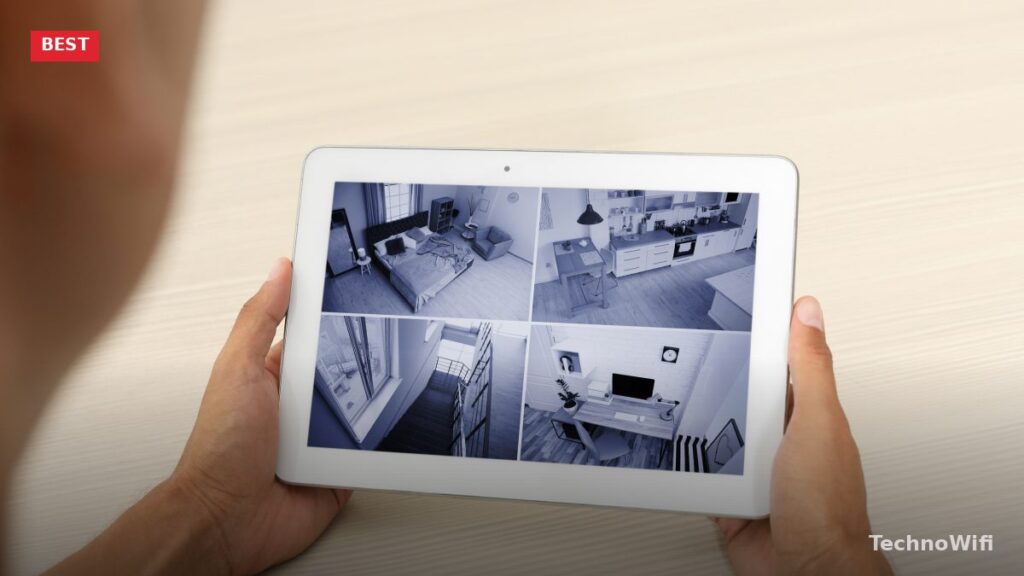
Professional Monitoring vs DIY Self-Monitoring
For a closer look at how the two most popular camera brands compare on video quality, subscriptions, and smart home integration, see our Ring vs Arlo 2026 comparison.
The first decision is whether you want someone watching your alerts 24/7 or whether you’ll handle it yourself. Professional monitoring means a monitoring center contacts you (and emergency services) when an alarm triggers. You pay a monthly fee, typically $10 to $30, but you get peace of mind when you’re asleep, traveling, or simply not checking your phone. DIY self-monitoring sends alerts to your phone and you decide what to do. No monthly fee required, but if you miss an alert, nobody else is watching.
Most systems offer both options. You can start with self-monitoring and add professional monitoring later if you decide you want it. The hardware is the same either way – the difference is the subscription.
Best Smart Home Security Systems Compared
| System | Best For | Monitoring | Contract | Starting Price |
|---|---|---|---|---|
| Ring Alarm Pro | Best overall | $20/month (Ring Protect Pro) | No contract | $250 to $350 (kit) |
| SimpliSafe | Easiest setup | $18 to $28/month | No contract | $200 to $400 (kit) |
| ADT | Best professional | $28 to $60/month | 3-year contract | $0 to $200 (with contract) |
| Abode | Best smart home integration | $0 to $20/month | No contract | $200 to $350 (kit) |
| Wyze Home Monitoring | Best budget | $5/month | No contract | $100 to $150 (kit) |
Best Overall: Ring Alarm Pro
Ring’s ecosystem is the most complete package for a connected home. The Alarm Pro base station doubles as a WiFi 6 router (Eero built in), which means your security system and home network run on the same device. The starter kit includes the base station, a keypad, door/window sensors, a motion detector, and a range extender. Add Ring cameras, video doorbells, smart locks, and flood/freeze sensors to build out from there.
Ring Protect Pro ($20/month) includes 24/7 professional monitoring, cellular backup (keeps monitoring active if your internet goes down), 180 days of cloud video storage for unlimited Ring cameras, and an extended warranty. The no-contract model means you can cancel anytime without penalty. Alexa integration is deep since Amazon owns Ring – arm and disarm with voice commands, get Alexa announcements when sensors trigger, and view camera feeds on Echo Show devices.
The Ring app handles everything: live camera views, sensor status, alarm arming, smart home automations, and alert history. The interface is straightforward enough that every household member can use it. At $250 to $350 for the starter kit plus $20/month, the total cost of ownership is competitive with systems that charge more for less coverage.
Easiest Setup: SimpliSafe
SimpliSafe designed their system for people who want security without complexity. Every component is wireless and pre-configured. Peel the backing off a sensor, stick it to a door or window, and it’s connected. The base station, keypad, and sensors communicate out of the box with no wiring, drilling, or technical setup required. Most people have a full system running in under 30 minutes.
The monitoring plans are straightforward. The Standard plan ($18/month) covers 24/7 professional monitoring with cellular backup. The Interactive plan ($28/month) adds camera recording, app control, smart home integration, and secret alerts. No contract on either plan. The hardware catalog includes indoor and outdoor cameras, video doorbells, smoke detectors, water leak sensors, and a panic button.
SimpliSafe’s smart home integration is more limited than Ring or Abode. It works with Alexa and Google Assistant for basic voice commands (arm/disarm) but doesn’t support complex automations or a wide range of third-party devices. If smart home integration matters, Abode or Ring are better choices. If you just want a security system that works with minimal effort, SimpliSafe delivers.
Best Professional: ADT
ADT has been in the home security business for over 145 years and monitors more homes than any other company. The professional installation means a technician comes to your home, assesses your layout, installs sensors in optimal positions, and configures everything. You don’t touch a screwdriver. The equipment is commercial-grade and the monitoring centers have redundancy built in – if one center goes offline, another takes over automatically.
The tradeoff is cost and commitment. ADT requires a 3-year contract, and monthly monitoring fees range from $28 to $60 depending on the plan. Early termination fees apply if you cancel before the contract ends. Equipment costs are sometimes waived or reduced with a contract, but you’re locked in. The higher-tier plans include video monitoring where ADT operators can view your cameras when an alarm triggers and visually verify the threat before dispatching police, which reduces false alarm dispatches.
ADT makes the most sense for homeowners who want the maximum reliability and are comfortable with the contract commitment. For renters or anyone who might move within three years, the no-contract options from Ring or SimpliSafe are more practical.
Best Smart Home Integration: Abode
Abode stands out for how well it plays with other smart home devices. It supports HomeKit, Alexa, Google Assistant, Z-Wave, and Zigbee natively. This means you can integrate Abode sensors into Apple Home automations, trigger Philips Hue lights when motion is detected, lock August or Yale smart locks when you arm the system, and control everything from whichever voice assistant your household prefers.
The free self-monitoring plan includes basic app alerts and local storage. The Pro plan ($20/month) adds professional monitoring, cellular backup, and timeline history. No contract required. The hardware starter kits run $200 to $350 and include a gateway, key fob, door sensor, and motion sensor. Additional sensors, cameras, and smart home devices expand the system.
Abode is the pick for people who already have a smart home ecosystem (or want to build one) and want their security system integrated into it. The security features themselves are comparable to Ring and SimpliSafe, but the cross-platform compatibility is best in class.
Best Budget: Wyze Home Monitoring
Wyze’s security system offers professional monitoring at $5/month, which is dramatically cheaper than any competitor. The starter kit includes a hub, keypad, motion sensor, and entry sensors for $100 to $150. Wyze cameras (sold separately for $20 to $50 each) are among the cheapest on the market and integrate directly with the monitoring system.
At $5/month, Wyze uses Noonlight for professional monitoring – a third-party service rather than an in-house monitoring center. Response times and service quality are adequate but may not match ADT’s dedicated infrastructure. The hub has a built-in siren and cellular backup. Sensors are reliable and the app works well for basic security management.
The limitations are in build quality and ecosystem depth. Wyze hardware feels budget-priced (because it is), and the sensor range is shorter than premium competitors. Camera quality is good for the price but doesn’t match Ring or Arlo at higher tiers. For a basic security setup that covers doors, windows, and motion detection with professional monitoring, $5/month is hard to argue with.
What Components Do You Need?
A basic system that covers most homes includes a base station/hub, a keypad for arming and disarming, door/window sensors on exterior doors (front, back, garage), a motion detector for the main living area, and a video doorbell for the front door. This setup runs $200 to $400 for equipment across most brands.
From there, add components based on your specific needs. Indoor cameras for monitoring pets or kids while you’re away. Outdoor cameras for the driveway and backyard. Water leak sensors for the basement, laundry room, and under sinks. Smoke and CO detectors that trigger monitoring alerts. Glass break sensors if you have large ground-floor windows. Smart locks that auto-lock when you arm the system.
Do smart security systems work without WiFi?
The system’s alarm and sensors work locally without WiFi – if a door opens while the system is armed, the siren goes off regardless of internet status. What requires WiFi is remote app access, camera streaming, and cloud-based features. Systems with cellular backup (Ring, SimpliSafe, ADT, Wyze) maintain professional monitoring communication even when WiFi is down. The cellular backup connects the base station directly to the monitoring center over a cellular network.
Can renters install smart security systems?
Yes. Wireless systems from Ring, SimpliSafe, Abode, and Wyze use adhesive mounting and don’t require drilling or wiring. When you move, peel off the sensors and take everything with you. Door/window sensors use adhesive strips that remove cleanly from most surfaces. Cameras can mount with adhesive or command strips. Avoid ADT’s professional installation if you rent – it typically involves drilling and permanent mounting.
Are smart security systems hackable?
Like any connected device, smart security systems have theoretical vulnerabilities. In practice, major brands use encrypted communications between sensors and the hub, encrypted cloud connections, and two-factor authentication on accounts. The most common “hack” is someone guessing a weak account password, not a sophisticated technical attack. Use a strong, unique password for your security system account and enable two-factor authentication. The risk of a break-in through your unlocked window is far higher than the risk of someone hacking your security system.
Sources
Ring – Ring Alarm | SimpliSafe – SimpliSafe Home Security | ADT – ADT Home Security