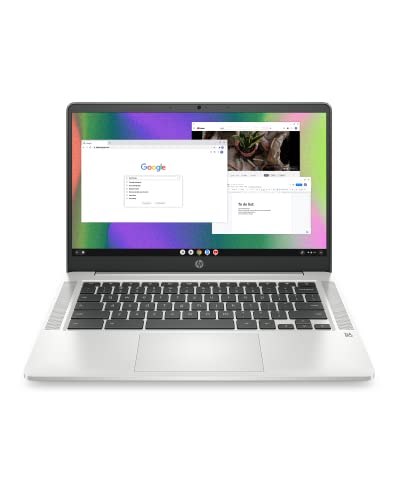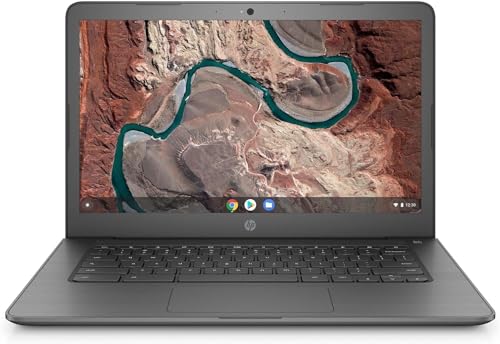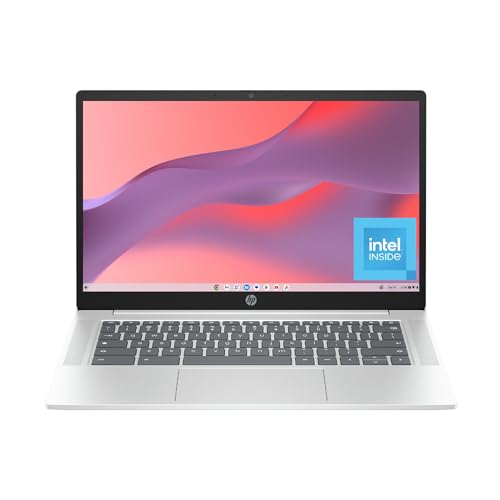
An HP Chromebook that refuses to turn on is usually not dead. In most cases the problem is a drained battery, a bad charger, or a software crash that locked up the system. The fix is almost always something you can do at home in under 10 minutes without any tools.
This guide covers every fix in order, starting with the simplest and moving to the more involved steps. Work through them one at a time. Most people solve the problem before reaching step four.
Why Won’t My HP Chromebook Turn On
Before diving into fixes, it helps to know what typically causes the problem. HP Chromebooks fail to power on for a handful of common reasons, and each one has a different fix.
| Symptom | Likely Cause | Fix |
|---|---|---|
| No lights, no sound, completely dead | Dead battery or faulty charger | Check charger and cable, then charge for 30 minutes |
| Charging light comes on but screen stays black | System crash or frozen firmware | Hard reset (Refresh + Power) |
| Charging light blinks but Chromebook won’t start | Battery stuck in deep discharge | Drain and recharge cycle |
| No response to any button | Embedded controller locked up | EC reset |
| Fan spins or sounds play but screen is black | Display or backlight failure | External monitor test |
| Shows error screen on boot | Corrupted ChromeOS | Recovery mode reinstall |
How to Check the HP Chromebook Charger and Power Cable
The charger is the first thing to check because it is the most common reason an HP Chromebook appears dead. A Chromebook with a completely drained battery and no working charger will show zero signs of life. No lights, no sounds, nothing.
- Plug the charger into the Chromebook and look for a small LED near the charging port. On most HP Chromebook models (HP Chromebook 14, Chromebook x360, Chromebook 11), this light is white or amber when charging. If no light appears at all, the charger or cable may be the problem.
- Try a different wall outlet. Power strips and surge protectors can fail silently. Plug the charger directly into a wall outlet you know works, such as one you just tested with a phone charger or lamp.
- Inspect the USB-C cable for damage. Look for frayed insulation, bent connectors, and kinks along the cable length. USB-C cables take a lot of abuse, especially in backpacks. If the cable is damaged, replacing it often solves the problem immediately.
- Try a different USB-C charger if you have one available. Any USB-C charger rated at 45W or higher should work for most HP Chromebooks. Phone chargers (5W or 10W) will not provide enough power to start the Chromebook, even though they physically fit the port.
- If using a USB-C charger, try plugging into the other USB-C port if your HP Chromebook has two. One port may have accumulated dust or debris that prevents a solid connection.
Leave the Chromebook plugged in for at least 30 minutes before trying to turn it on. A deeply drained battery needs time to accumulate enough charge to boot. Pressing the power button repeatedly on a dead battery does nothing and can actually delay the process.
How to Hard Reset an HP Chromebook
A hard reset forces the Chromebook to restart its hardware even when the screen is black and no buttons seem to respond. This clears temporary hardware states that a normal power button press cannot fix. It does not erase your files or settings.
- Make sure the charger is plugged in.
- Press and hold the Refresh key (the circular arrow key, usually located above the 3 or 4 key on the top row).
- While holding Refresh, press the Power button once.
- Release both keys. The Chromebook should restart within a few seconds.
If your HP Chromebook is a 2-in-1 tablet model without a physical keyboard (like the HP Chromebook x2), press and hold the Volume Up + Power buttons simultaneously for at least 10 seconds, then release. This performs the same hard reset function on tablet-style Chromebooks.
The hard reset works because ChromeOS occasionally freezes in a state where the screen goes completely black but the system is still technically running. Holding Refresh + Power forces the embedded controller to cut power to the CPU and restart everything from scratch.
How to Fix HP Chromebook Battery Not Charging
Sometimes the battery enters a deep discharge state where it has so little charge that the Chromebook’s power management system refuses to boot. The charging light may blink, show amber briefly then turn off, or not appear at all even with a known-good charger. This is different from a dead charger because the battery itself needs to be reset.
Our Acer vs. HP Chromebook walkthrough covers this from a different angle.
- Unplug the charger from the Chromebook.
- Press and hold the Power button for 30 seconds. This drains any residual charge from the system’s capacitors and forces the battery management chip to reset its state.
- Plug the charger back in and wait. Do not press any buttons. Leave the Chromebook completely alone for at least 30 to 45 minutes.
- After waiting, press the Power button normally. The Chromebook should turn on. If the charging LED came on during the wait, that is a good sign the battery is recovering.
HP Chromebooks use lithium-ion batteries that have built-in protection circuits. When the battery voltage drops too low, this circuit disconnects the battery from the system to prevent damage. The drain-and-recharge cycle triggers the protection circuit to reconnect and start accepting charge again.
If the battery still will not charge after this process, the battery itself may have reached the end of its lifespan. Chromebook batteries typically last 3 to 5 years before their capacity degrades significantly. A battery that holds less than 20% of its original capacity may fail to power the system even when plugged in.
How to Do an EC Reset on HP Chromebook
The EC (Embedded Controller) manages low-level hardware functions including power delivery, keyboard input, and charging. When the EC itself locks up, the Chromebook becomes completely unresponsive. No lights, no sounds, no response to the power button or hard reset. An EC reset is the fix for this specific scenario.
- Unplug the charger.
- If your HP Chromebook has a removable back panel and visible battery connector, disconnect the battery cable. Wait 30 seconds, reconnect it, plug in the charger, and press Power.
- If the battery is not removable (most modern HP Chromebooks), press and hold Refresh + Power for 10 full seconds. Release both keys, wait 5 seconds, then press Power by itself.
- For HP Chromebook models with a pinhole reset button on the bottom of the chassis, insert a paperclip into the reset hole and hold it for 10 seconds while the charger is connected. This directly resets the EC chip.
The EC reset is more aggressive than a standard hard reset. It forces the embedded controller to completely reinitialize, which clears any stuck power states, frozen charging circuits, or corrupted hardware flags. Think of it as restarting the part of the Chromebook that decides whether power should flow to the rest of the components.
After an EC reset, the Chromebook may take a few extra seconds to boot because the EC is rebuilding its internal state from scratch. This is normal.
HP Chromebook Screen Is Black but Still Running
If you hear the fan spinning, hear a startup sound, or see the charging LED respond normally but the screen stays completely black, the Chromebook is probably turning on. The screen just is not displaying anything. This points to a display or backlight problem rather than a power problem.
- Press the brightness up key (usually in the top row, looks like a sun icon) several times. The brightness may have been turned all the way down, which makes the screen appear completely off.
- Shine a flashlight at the screen at a slight angle. If you can see a faint image of the ChromeOS login screen or desktop, the backlight has failed but the display panel itself still works. Backlight failure is a hardware issue that requires repair.
- Connect an external monitor or TV using a USB-C to HDMI adapter or cable. If the external display shows the ChromeOS interface, the Chromebook itself is working fine and the problem is isolated to the built-in screen.
- Try a hard reset (Refresh + Power) with the external monitor connected. Sometimes the Chromebook gets stuck sending video to an output that is not connected, and the hard reset forces it to redetect available displays.
On HP Chromebook x360 models that fold into tablet mode, the display may shut off when the hinge sensor thinks the lid is closed. Open and close the lid firmly to reset the sensor. A magnet placed near the hinge area (from a case, sticker, or nearby object) can also trigger the lid sensor and turn the screen off.
How to Use Recovery Mode on HP Chromebook
Recovery mode reinstalls ChromeOS from scratch. Use this when the Chromebook powers on but shows a “ChromeOS is missing or damaged” error, gets stuck on the Chrome logo, or enters a boot loop. Recovery mode erases everything on the Chromebook, so any files not synced to Google Drive will be lost.
You will need a second computer (Windows, Mac, or another Chromebook) and a USB flash drive with at least 8 GB of space.
Looking for more? We have a dedicated guide on mini laptop under 300.
- On the second computer, install the Chromebook Recovery Utility extension from the Chrome Web Store. Open it and follow the prompts to create a recovery drive. Select your HP Chromebook model when asked. The utility downloads the correct ChromeOS image and writes it to the USB drive.
- On the broken HP Chromebook, press and hold Esc + Refresh, then press the Power button. Release Power but keep holding Esc + Refresh until you see the recovery screen. It displays a message about inserting a recovery USB drive.
- Insert the recovery USB drive into the Chromebook. The recovery process starts automatically. Do not unplug the charger or remove the USB drive during recovery. The process takes 5 to 10 minutes.
- When recovery finishes, the Chromebook restarts and presents the initial setup screen as if it were brand new. Sign in with your Google account to restore your settings and apps.
Recovery mode does not fix hardware problems. If the Chromebook still will not turn on after a successful recovery, or if it cannot even reach the recovery screen, the issue is hardware-related.
When Does an HP Chromebook Need Hardware Repair
After working through every software and reset fix above, a Chromebook that still will not turn on likely has a hardware failure. These are the signs that point to a repair rather than a DIY fix.
| Sign | Probable Hardware Failure | Repair Option |
|---|---|---|
| No response to any reset, no charging light ever appears | Motherboard or power circuit failure | HP warranty repair or authorized service center |
| Charging light works but Chromebook never boots past black screen | Failed CPU, RAM, or eMMC storage | Motherboard replacement (usually not cost-effective) |
| Swollen or bulging battery visible through the chassis | Battery cell failure | Stop using immediately. Battery replacement needed. |
| Chromebook turns on only when plugged in, dies instantly when unplugged | Battery end of life | Battery replacement |
| Cracked screen or visible display damage | Physical screen damage | Screen panel replacement |
| Water or liquid spill exposure | Corrosion on internal components | Professional cleaning and board repair |
Check your warranty status before paying for repairs. HP Chromebooks typically come with a one-year limited warranty. School-issued Chromebooks often have extended warranties through the school district. Go to support.hp.com, enter your Chromebook’s serial number, and the site will show your warranty status and options.
For out-of-warranty repairs, compare the repair cost against the price of a new Chromebook. HP Chromebooks in the $200 to $400 range are often cheaper to replace than repair if the motherboard is the failed component. Battery replacements and screen replacements are usually worth doing because those parts are much less expensive than a new machine.
HP Chromebook Won’t Turn On FAQs
How do I know if my HP Chromebook battery is completely dead?
Plug in the charger and watch for the charging LED near the USB-C port. If no light appears after trying multiple chargers and outlets, the battery or charging circuit may have failed. If an amber or white light appears, the battery is accepting charge but may need 30 to 45 minutes before the Chromebook has enough power to boot.
Will a hard reset delete my files on HP Chromebook?
No. A hard reset (Refresh + Power) restarts the hardware without touching your data. Your files, apps, and settings remain intact. Only recovery mode erases the Chromebook and reinstalls ChromeOS from scratch. Even then, anything synced to Google Drive is recoverable after signing back in.
Why does my HP Chromebook turn on then immediately shut off?
This usually means the battery has just enough charge to start the boot process but not enough to sustain it. Plug in the charger and wait 30 to 45 minutes without pressing any buttons. If it still shuts off while plugged in, the charger may not be delivering enough wattage. Use a charger rated at 45W or higher.
Can I replace the battery in an HP Chromebook myself?
On some models, yes. HP Chromebook 14 and Chromebook 11 G-series models use batteries held in with screws and a single ribbon cable. Replacement batteries are available online for $30 to $60. You need a small Phillips screwdriver to open the back panel. For HP Chromebook x360 models, the battery is glued and more difficult to access. Those are better handled by a repair shop.
What does the blinking light on my HP Chromebook charger mean?
A blinking amber light typically means the battery is critically low and accepting a trickle charge. It should switch to solid amber or white once the battery reaches a functional level. If the light blinks continuously for more than an hour without changing, try a different charger. The power adapter itself may be faulty.
How long do HP Chromebook batteries last before they need replacing?
Most HP Chromebook batteries last between 3 and 5 years with normal daily use. After that, capacity drops noticeably. You can check battery health in ChromeOS by opening the Crosh terminal (press Ctrl + Alt + T), typing battery_test 0, and pressing Enter. The output shows current capacity versus design capacity. If current capacity is below 50% of design capacity, a replacement will significantly improve performance.
Sources
HP Support – Chromebook Does Not Start | Google – Fix Chromebook That Won’t Turn On | Google – Recover Your Chromebook | HP Support – HP Chromebook Troubleshooting | Google – Chromebook Hardware Reset