What Is a Full Frame Camera?
A full frame camera has a sensor that measures 36mm x 24mm, matching the size of a single frame on 35mm film. That’s where the name comes from. Every other standard consumer camera sensor is smaller, which means it captures less light and crops the edges of whatever your lens sees.
The sensor is the most important component in any camera. It controls how much light you gather, how much background blur you can create, how clean your photos look in dim conditions, and how much of the scene fits in each shot. Full frame sensors are the largest you’ll find in typical cameras. Medium format sensors are bigger, but they start at $5,000 and go up from there.
If you’re deciding between a full frame camera and a more affordable APS-C or Micro Four Thirds model, the choice goes beyond price. It changes what your lenses do, how your images perform in low light, and how much depth-of-field control you have.
What Does Full Frame Mean in Cameras
“Full frame” is about sensor size, not the camera body or the lens. A full frame sensor is 36mm wide and 24mm tall. This matches the dimensions of a single exposure on 35mm film, which was the standard format for photography from the 1930s through the early 2000s.
When digital cameras first showed up, building a sensor that large cost a fortune. Camera makers started using smaller, cheaper sensors instead. APS-C (roughly 23mm x 15mm) and Micro Four Thirds (17mm x 13mm) became the default in consumer cameras, while full frame stayed in pro-level bodies.
In 2026, full frame cameras are more affordable than ever. You can pick up a new full frame mirrorless body for under $1,000 (Canon EOS R8, Nikon Z5 II). A decade ago, going full frame meant spending $2,500 or more on the body alone. The image quality hasn’t gotten worse. Manufacturing costs simply dropped as the market grew.
Full Frame vs APS-C vs Micro Four Thirds: What’s the Difference
The practical differences between sensor sizes boil down to three things: crop factor, low-light performance, and depth of field control. Each one affects your images in visible ways.
Crop factor is the easiest to understand. Think of it like looking through a window. A full frame sensor sees the entire view through the window. An APS-C sensor sees about 65% of that view, with the edges cut off. Micro Four Thirds sees about 50%. The lens projects the same image circle, but the smaller sensor only captures the middle portion.
This crop factor changes the effective focal length of every lens you mount. A 50mm lens on a full frame camera gives you a classic portrait perspective. That same 50mm lens on APS-C (1.5x crop) behaves like a 75mm lens, tighter and more zoomed in. On Micro Four Thirds (2x crop), it acts like a 100mm. You gain reach but lose wide-angle capability.
Low-light performance improves with larger sensors because each pixel can be physically bigger. Bigger pixels collect more light, which means less electronic noise (grain) in your images. A full frame sensor has roughly 2.5 times the surface area of APS-C. At ISO 6400, a full frame camera typically produces cleaner images than an APS-C camera at ISO 3200.
Depth of field, the amount of background blur behind your subject, is easier to control with full frame. At the same aperture, focal length, and subject distance, a full frame camera produces shallower depth of field than a smaller sensor. This is why full frame portraits have that creamy, blurred background that’s harder to pull off with crop-sensor cameras.
| Feature | Full Frame (36x24mm) | APS-C (23x15mm) | Micro Four Thirds (17x13mm) |
|---|---|---|---|
| Crop factor | 1x (none) | 1.5x (Nikon/Sony) or 1.6x (Canon) | 2x |
| 50mm lens equivalent | 50mm | 75mm (or 80mm Canon) | 100mm |
| Low-light performance | Best, clean images to ISO 12800+ | Good, clean to ISO 6400 | Decent, clean to ISO 3200 |
| Background blur (bokeh) | Most blur at same settings | Moderate blur | Least blur |
| Body size/weight | Larger and heavier | Mid-size | Smallest and lightest |
| Lens cost | Most expensive | Moderate | Most affordable |
| Entry-level body price | $800-1,300 | $500-900 | $400-700 |
Who Should Buy a Full Frame Camera
Full frame makes the biggest difference for photographers who shoot in tough lighting or need maximum depth-of-field control. Wedding photographers, event shooters, and anyone working in dimly lit venues will see the clearest improvement over smaller sensors. Being able to push ISO higher without destroying image quality means you can shoot a reception at ISO 8000 and still get usable images.
Portrait and fashion photographers benefit from the shallower depth of field. Full frame at f/1.8 produces noticeably more background separation than APS-C at f/1.8. You can isolate your subject from a busy background more easily, which is the look most portrait clients expect.
Landscape photographers gain full wide-angle performance from their lenses. A 16mm lens on full frame is genuinely ultra-wide. That same lens on APS-C gives you a 24mm equivalent, still wide but not dramatic. If sweeping vistas and architectural interiors are your thing, full frame captures more of the scene in every shot.
Video shooters benefit from the larger sensor for the same reasons: better low light, shallower depth of field, and a wider field of view. Most cinema cameras use full frame or Super 35mm sensors (close to APS-C size) for exactly these reasons.
When You Don’t Need a Full Frame Camera
Full frame isn’t automatically better for every photographer. If you shoot wildlife, birds, or sports, the crop factor of APS-C actually helps. That 1.5x crop gives your telephoto lenses extra reach for free. A 200mm lens acts like a 300mm on APS-C. Wildlife photographers on a budget often prefer crop sensors for this reason.
If portability is your priority, Micro Four Thirds and APS-C systems are significantly smaller and lighter. A complete Micro Four Thirds kit (body plus three lenses) can weigh less than a single full frame body with one lens. Travel photographers and hikers often choose smaller systems on purpose.
Beginners rarely need full frame. The learning curve for photography, including composition, exposure, lighting, and post-processing, is identical no matter what sensor size you’re using. Starting with a $600 APS-C camera and putting the savings toward good lenses and education will improve your photos more than spending $2,000 on a full frame body.
Social media and web-only photographers won’t notice much difference either. Instagram compresses images to roughly 1080 pixels wide. At that resolution, the quality gap between a modern APS-C sensor and full frame is nearly invisible. The sensor advantage shows up most in large prints, professional delivery, and heavy post-processing where you’re pushing shadows and highlights.
Best Full Frame Cameras in 2026
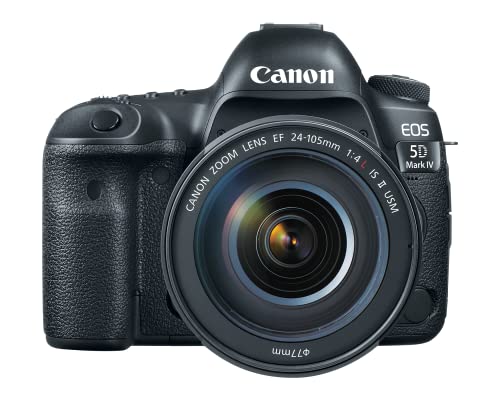
The full frame market has shifted almost entirely to mirrorless. Canon, Nikon, and Sony have all stopped developing new DSLR bodies. If you’re buying new, mirrorless is the only direction worth considering. Used DSLRs (Canon 5D Mark IV, Nikon D850) are still excellent cameras at lower prices, but new lens development focuses on mirrorless mounts.
| Camera | Resolution | Autofocus Points | Video | Best For | Price Range |
|---|---|---|---|---|---|
| Canon EOS R6 III | 24.2 MP | 1,053 areas | 6K 60fps, 4K 120fps | Hybrid photo/video, events | $2,500 |
| Sony A7 IV | 33 MP | 759 points | 4K 60fps | All-around workhorse | $2,000 |
| Nikon Z6 III | 24.5 MP | 299 points | 6K 60fps, 4K 120fps | Sports, action, video | $2,500 |
| Canon EOS R8 | 24.2 MP | 1,053 areas | 4K 60fps | Budget full frame entry | $1,300 |
| Sony A7C II | 33 MP | 759 points | 4K 60fps | Compact full frame, travel | $1,800 |
| Nikon Z5 II | 24.5 MP | 299 points | 4K 60fps | Budget Nikon full frame | $1,200 |
| Sony A7R V | 61 MP | 693 points | 8K 24fps, 4K 60fps | Landscape, studio, high-res | $3,500 |
The Canon EOS R8 and Nikon Z5 II are the most affordable full frame cameras worth buying new. Both deliver great image quality, modern autofocus with eye detection, and solid video performance. You do make trade-offs at this price: plastic bodies, single card slots, and smaller batteries compared to their pricier siblings.
For professionals or serious enthusiasts, the Canon EOS R6 III, Sony A7 IV, and Nikon Z6 III sit in the sweet spot of performance and price. These cameras have faster autofocus tracking, better burst shooting speeds, weather-sealed bodies, and dual card slots. The R6 III and Z6 III added 6K video recording, which gives extra room to crop in post.
Full Frame Camera Lenses: What You Need to Know
The camera body is only half the equation. Full frame lenses are generally larger, heavier, and more expensive than APS-C equivalents because they need to project a bigger image circle to cover the larger sensor.
A basic full frame lens kit for most photographers includes three lenses: a 24-70mm f/2.8 zoom for general shooting, a 70-200mm f/2.8 for portraits and events, and a 50mm f/1.8 prime for low light and creative work. This three-lens setup covers about 90% of what most photographers need. The two zooms will run $2,000 to $2,500 each from Canon, Nikon, or Sony. The 50mm f/1.8 is usually $200 to $300.
Third-party lens makers like Sigma, Tamron, and Viltrox offer full frame lenses at significantly lower prices. A Sigma 24-70mm f/2.8 Art costs roughly half what the Canon or Sony equivalent costs, with comparable optical quality. Tamron’s lightweight zoom lenses (28-75mm f/2.8, 70-180mm f/2.8) are popular for their compact size and lower weight.
One important detail: you can use APS-C lenses on most full frame mirrorless cameras, but the camera will automatically crop to APS-C mode, reducing your resolution. A 45MP full frame camera drops to roughly 18MP in crop mode. It works in a pinch, but you’re not using the full sensor. Going the other direction works perfectly. Full frame lenses on APS-C bodies use the sharpest center portion of the lens.
Full Frame Camera FAQs
Is full frame better than APS-C for beginners?
Not necessarily. Full frame gives you better low-light performance and more background blur, but those advantages don’t matter much while you’re learning the basics like composition and exposure. A modern APS-C camera like the Fujifilm X-T5, Canon EOS R7, or Sony A6700 produces excellent images. Spend the money you save on lenses and practice rather than chasing the biggest sensor you can afford.
Can I use my old DSLR lenses on a full frame mirrorless camera?
Yes, with an adapter. Canon RF cameras use the Canon EF-RF adapter for EF and EF-S lenses. Nikon Z cameras use the FTZ II adapter for F-mount lenses. Sony E-mount cameras use the LA-EA5 for A-mount lenses. Autofocus performance with adapted lenses varies. Native mirrorless lenses almost always focus faster and more accurately than adapted DSLR lenses.
Why are full frame cameras more expensive?
Building a 36x24mm sensor costs more than a smaller one because each silicon wafer yields fewer usable chips. Larger sensors also require larger, more complex lenses. The camera bodies themselves are often built with better materials (magnesium alloy, weather sealing) and faster processors to handle the larger data files. That said, entry-level full frame cameras have dropped below $1,000 used, making the format more accessible than ever.
Does full frame matter for video?
Yes. Full frame sensors capture more light, which means cleaner footage in low-light situations. The shallower depth of field gives video that cinematic look with blurred backgrounds. Most modern full frame cameras shoot 4K at 60fps or higher, and some (Canon R6 III, Nikon Z6 III) record 6K internally. The wider field of view also means you don’t need ultra-wide lenses to capture wide establishing shots.
How long do full frame cameras last?
Modern mirrorless cameras have no mechanical shutter limit on most models since the electronic shutter is unlimited. Bodies typically last 5 to 10 years of heavy professional use. The sensor and processor don’t wear out. Buttons, dials, and card slot contacts eventually show wear, but these are repairable. Image quality from a camera bought today will still be excellent in 2032. Camera technology improves, but older full frame bodies don’t suddenly take worse photos.
What is the difference between full frame and medium format?
Medium format sensors are larger than full frame, typically 44x33mm compared to 36x24mm. They capture even more light and detail, produce shallower depth of field, and generate enormous files (50 to 100+ megapixels). Medium format cameras like the Fujifilm GFX 100S II and Hasselblad X2D cost $4,000 to $6,000 or more for the body alone. They’re built for studio, fashion, and fine-art photography where maximum image quality justifies the size, weight, and cost.