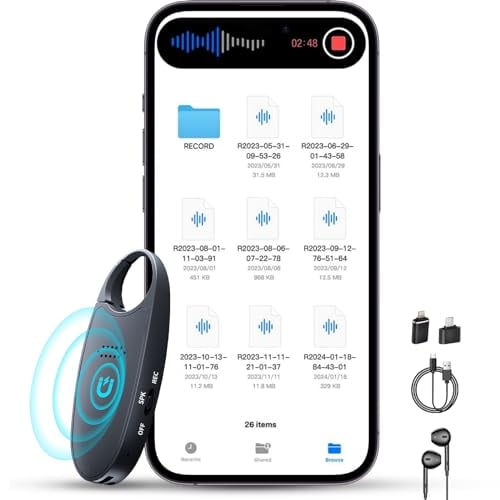
Keychain spy cameras look like regular key fobs or car remotes, but they hide a tiny lens, a microphone, and enough battery for short recording sessions. Most are about the size of your thumb and run anywhere from $15 to $50. You’ll find them all over Amazon, AliExpress, and eBay from dozens of no-name brands.
People pick these up for a few practical reasons. Monitoring a parked car’s interior, recording conversations with a landlord or mechanic, keeping watch over a workspace. These aren’t pro-grade surveillance tools by any stretch. They’re cheap, battery-powered gadgets designed for moments when pulling out your phone would be too obvious or awkward.
The controls are simple once you get the hang of them. One or two buttons handle everything: video, photos, motion detection. The annoying part? Every model works a little differently, and the instruction sheet is almost always a single page of rough translations paired with blurry diagrams. This guide covers the general operation that applies to the majority of keychain spy cameras you can buy right now.
How to Charge a Keychain Spy Camera
Most keychain cameras charge through a micro USB port, though newer models are starting to ship with USB-C. You’ll usually find the port behind a small rubber flap on the side or bottom of the device. Plug in the included cable and connect it to any USB power source. A computer port, a wall adapter, or a power bank all work.
A full charge takes between 1 and 3 hours depending on battery size. There’s a small LED indicator that shows charging status. On most models, the LED stays solid red while charging and goes dark or switches to green when the battery is full. A few models blink during charging instead of holding a steady light.
Stick with a standard 5V/1A USB power source. Don’t use fast chargers or high-wattage adapters built for phones and laptops. The small lithium-polymer batteries inside these cameras aren’t made for rapid charging, and pushing too much power through them can damage the battery or shorten its lifespan.
Battery life is limited. Expect 30 to 90 minutes of continuous video recording on a full charge. Some higher-end models claim up to 2 hours, but real-world performance usually falls below the listed specs. Recording video drains the battery faster than snapping photos, and cold temperatures cut battery life even further.
Always charge the camera completely before using it the first time. Some models won’t power on at all until they’ve finished an initial full charge cycle. If you press the button and nothing happens on a brand-new camera, plug it in for 2 to 3 hours before trying again.
How to Set Up a Keychain Spy Camera for the First Time
Before you turn the camera on, grab a microSD card. Most keychain spy cameras don’t include one in the box. The camera will power on without a card, but it can’t save anything. You need to supply your own.
Most models support microSD cards from 8GB to 32GB. Some accept up to 64GB, but check your model’s specs before buying a larger card. A lot of budget cameras simply won’t recognize anything above 32GB. Get a Class 10 or UHS-I card. Slower cards cause recording errors, dropped frames, and corrupted video files.
- Format the microSD card on a computer before inserting it into the camera. On Windows, open File Explorer, right-click the card, select Format, choose FAT32 as the file system, and click Start. On Mac, open Disk Utility, select the card, click Erase, and choose MS-DOS (FAT) as the format. Some keychain cameras won’t recognize cards formatted with NTFS or exFAT file systems.
- Insert the formatted card into the camera’s microSD slot. The slot is usually near the USB port, behind the same rubber flap or on the opposite side. Push the card in until it clicks. If you feel resistance, flip the card. It only goes in one way.
- To set the date and time stamp on your recordings, connect the camera to a computer via USB. The camera mounts as a removable drive in File Explorer or Finder. Look for a text file on the drive, often called “time.txt” or “TAG.txt” depending on the manufacturer. Open the file in Notepad or TextEdit, change the date and time to the current values using the format shown in the file (usually YYYY-MM-DD HH:MM:SS), save, and safely eject the drive. The camera reads this file on its next boot and sets the internal clock accordingly.
| Specification | Budget models ($15-$25) | Mid-range models ($25-$50) |
|---|---|---|
| Video resolution | 720p (1280×720) | 1080p (1920×1080) |
| Photo resolution | 1-3 megapixels | 5-12 megapixels |
| Battery life | 30-45 minutes | 60-120 minutes |
| Max microSD | 32GB | 64GB |
| Video format | AVI | AVI or MP4 |
| Charging port | Micro USB | Micro USB or USB-C |
| Motion detection | Sometimes | Usually included |
| Audio recording | Yes (built-in mic) | Yes (built-in mic) |
How to Record Video on a Keychain Spy Camera
- Press and hold the power button for 2 to 3 seconds to turn the camera on. On most models, this is the only button, or the larger of two buttons. A small LED will blink briefly or glow solid for a moment to confirm the camera is powered on.
- Once the camera is on, press the function button once (or twice, depending on the model) to start video recording. The LED behavior during recording varies by brand. Some models blink steadily while recording. Others turn the LED off entirely so the camera stays hidden. Do a test recording at home before relying on it in the field.
- Press the button again to stop recording and save the current video file. The LED usually blinks a few times to confirm the file saved successfully. On some models, holding the button for 2 to 3 seconds stops recording and powers off the camera in one step.
Video files are saved as AVI or MP4 files on the microSD card. You’ll find them in a folder called DCIM, VIDEO, or sometimes just a numbered folder at the root level. Most cameras split long recordings into segments, typically 3 to 5 minutes per file, rather than creating one giant file. This actually protects your footage: if the battery dies or the card has an error, you only lose the last segment instead of the entire recording.
Recording resolution depends on your model. Budget cameras typically record at 720p (1280×720), which is watchable but noticeably soft. Mid-range models offer 1080p (1920×1080), which is sharper and more useful if you need to read text or identify faces. Higher resolution means larger files, so your microSD card fills up faster.
For the complete picture, our spy camera for cars guide fills in the gaps.
Many keychain cameras also support loop recording. When the microSD card fills up, the camera automatically overwrites the oldest files to make room for new footage. This way, the camera never stops recording because of a full card. Some models have loop recording turned on by default. Others need you to enable it through a configuration file on the microSD card or by cycling to a specific mode. If you’re using the camera for continuous monitoring, make sure loop recording is active so you don’t miss anything because the storage filled up hours ago.
How to Take Photos with a Keychain Spy Camera
- Photo mode is usually the second mode in the camera’s cycle. From standby (camera powered on but not recording), press the function button to cycle past video mode into photo mode. The LED pattern changes to signal the new mode, often a different color or a different blink pattern than video mode.
- Once in photo mode, press the button to take a photo. Some models give a quick LED flash to confirm the shot was captured. Others show no visible response at all, so you may need to check the microSD card afterward to verify.
Photo resolution on budget keychain cameras ranges from 1 to 5 megapixels. Higher-end models offer up to 12 megapixels, though image quality at that resolution is still well below what a smartphone produces. These cameras have tiny lenses and tiny sensors. They perform best in well-lit environments. Indoor shots under dim lighting will be grainy and dark.
Photos save as JPG files in the DCIM or PHOTO folder on the microSD card. They’re small files, typically 200KB to 1MB each, so storage is rarely a concern in photo mode. A 32GB card can hold tens of thousands of photos.
Some models include a motion detection mode, which is usually the third mode in the cycle. In motion detection, the camera sits idle and only starts recording when it senses movement in front of the lens. This saves battery and storage, making it handy for monitoring a room or a desk over longer periods. The camera captures a short video clip (usually 30 to 60 seconds) each time it detects motion, then returns to standby and waits for the next trigger.
How to Transfer Files from a Keychain Spy Camera to a Computer
There are two ways to get your recordings off the camera and onto a computer. Both work well, so just pick whichever is more convenient for you.
Method 1: USB cable. Connect the camera to your computer using the same USB cable you use for charging. The camera should mount as a removable drive in File Explorer (Windows) or Finder (Mac). Open the drive, find the DCIM, VIDEO, or PHOTO folder, and copy the files over. This method is straightforward but slow on cameras with USB 2.0 ports, and it drains the camera’s battery during the transfer.
Method 2: Card reader. Pop the microSD card out of the camera and insert it into a USB card reader connected to your computer. This is faster than the USB method, doesn’t drain the camera battery, and works even if the camera itself is acting up. A basic USB card reader costs $5 to $10 and is worth having if you regularly use microSD-based devices.
Files are organized into folders on the card. Sort by date modified to find your most recent recordings. Most video players, including VLC, Windows Media Player, and the default Mac player, handle AVI and MP4 files from these cameras without issues. If a file won’t play, the recording was likely corrupted by a power loss or a low-quality microSD card.
After transferring your files, you can delete them from the card to free up space, or format the card entirely for a fresh start. Formatting is better than manually deleting because it resets the file table and lowers the chance of card errors over time.
| Recording quality | File size per minute | Minutes per 8GB card | Minutes per 32GB card |
|---|---|---|---|
| 720p AVI | ~50-80 MB | ~100-160 min | ~400-640 min |
| 720p MP4 | ~30-50 MB | ~160-260 min | ~640-1060 min |
| 1080p AVI | ~100-150 MB | ~53-80 min | ~213-320 min |
| 1080p MP4 | ~60-100 MB | ~80-133 min | ~320-533 min |
What Are the LED Light Patterns on a Keychain Spy Camera
Keychain spy cameras communicate everything through a single LED. There’s no screen, no speaker, no app. That little light is your only feedback, and learning its patterns is the quickest way to stop guessing what mode the camera is in.
The exact patterns vary by manufacturer, but most models follow similar logic. The table below covers the most common LED behaviors you’ll see across different brands.
We break down how to detect spy camera with your phone in a separate post that complements this one.
| LED behavior | What it means |
|---|---|
| Solid red (plugged in) | Battery is charging |
| LED turns off (plugged in) | Battery is fully charged |
| Solid blue or green (2 seconds) | Camera just powered on |
| Steady blinking | Recording video |
| Single quick blink | Photo captured |
| LED off (camera running) | Standby or covert recording mode |
| Rapid blinking | Low battery or storage full |
| Alternating red and blue | Motion detection mode active |
| No response to button press | Dead battery or hardware error |
Some models use a blue LED for power and a red LED for recording, while others flip this around. The only reliable way to learn your specific camera’s patterns is to test each mode at home with the microSD card inserted and check the saved files to confirm.
If you want the camera to be completely invisible during operation, some models let you disable the LED entirely. Connect the camera to a computer, find a file named “setting.txt” or similar on the microSD card, and look for an LED on/off option. Not all models support this, and turning off the LED means you lose all visual feedback about what the camera is doing.
Are Keychain Spy Cameras Legal
The legality of using a keychain spy camera depends on where you are, what you’re recording, and whether the camera captures audio. Laws vary significantly by country, state, and even city. What’s legal in one place can be a criminal offense in another.
In the United States, recording video in public places is generally legal. There’s no expectation of privacy on a sidewalk, in a park, or in a store. But recording video in private spaces where people expect privacy, such as bathrooms, changing rooms, locker rooms, bedrooms, and hotel rooms, is illegal everywhere in the US. No exceptions.
Audio recording adds a separate legal layer that many people overlook. The US has a mix of “one-party consent” and “two-party consent” (also called “all-party consent”) states. In one-party consent states, you can legally record a conversation you’re part of without telling the other person. In two-party consent states, including California, Florida, Illinois, Maryland, Massachusetts, Montana, New Hampshire, Oregon, Pennsylvania, and Washington, all parties must agree to being recorded. Recording audio without the other person’s knowledge in these states is illegal even in public.
Since most keychain spy cameras record audio by default through a built-in microphone, you could violate wiretapping laws simply by forgetting to disable audio recording in a two-party consent state. Some cameras let you turn off the microphone through a configuration file, but many don’t offer this option.
Outside the US, laws vary even more. Many European countries have strict privacy rules under GDPR that limit recording people without consent. Canada generally follows one-party consent for private communications but restricts surveillance of others. Check your local and national laws before using any hidden recording device.
Common legal uses include monitoring your own property (your car, your desk, your front porch), recording interactions where you’re a participant in a one-party consent state, and documenting potential harassment for personal safety. Using a hidden camera to record someone without consent in a private setting is a crime in most places and can lead to both criminal charges and civil lawsuits.
Keychain Spy Camera FAQs
How long can a keychain spy camera record continuously?
Most keychain spy cameras record for 30 to 90 minutes on a full charge. The battery is the limiting factor, not storage. Higher-end models with larger batteries can hit 2 hours, but those are the exception. If you need longer recording times, look for a model with loop recording and plug it into a USB power source while recording. Some cameras can record indefinitely when connected to external power, though this limits your placement options.
What size microSD card should I use in a keychain spy camera?
A 32GB Class 10 microSD card is the safest bet for most models. It gives you enough storage for several hours of 720p video and works with virtually every keychain camera on the market. Some models accept 64GB cards, but many budget cameras cap out at 32GB and simply won’t recognize anything larger. Always format the card as FAT32 before first use.
Can a keychain spy camera record in the dark?
Standard keychain spy cameras can’t capture usable footage in total darkness. They don’t have infrared LEDs or night vision. A few pricier models ($40 and up) include IR LEDs that light the scene invisibly, producing grainy black-and-white footage in low light. For dark environments, you need a model specifically advertised as having night vision or IR recording. Otherwise, the camera needs at least some ambient light to pick up anything recognizable.
How do I know if my keychain spy camera is recording?
Check the LED. Most models blink steadily during video recording, typically a slow, rhythmic blink every 1 to 2 seconds. Some models turn the LED off during recording to stay covert, which makes it harder to tell. If you’re unsure, do a test recording at home: start the camera, wait 30 seconds, stop it, then connect to a computer and check whether a new video file showed up on the microSD card. That tells you exactly what the LED does (or doesn’t do) in recording mode on your specific model.
Why won’t my keychain spy camera turn on?
The most common cause is a dead battery. Charge the camera for at least 2 to 3 hours and try again. If it still won’t power on, check that the USB cable works by testing it with another device. Try a different USB port or power source. If the camera was working before and suddenly stopped, the internal battery may have reached the end of its lifespan. Cheap lithium batteries degrade quickly after a few hundred charge cycles. On a brand-new camera that never worked, you may have a defective unit. Contact the seller for a replacement.
Do keychain spy cameras record audio?
Yes, most keychain spy cameras record audio through a built-in pinhole microphone. Audio quality is functional but not great. You can usually make out voices in the same room, but background noise, muffled speech, and distance reduce clarity quickly. A few models let you disable audio recording through a configuration file on the microSD card, which matters if you live in a two-party consent state where recording someone’s voice without permission is illegal. Check your local laws before recording audio with any hidden device.