Can You Actually Connect Multiple Bluetooth Speakers?
Standard Bluetooth was designed for one-to-one connections – one phone paired to one speaker. Connecting multiple speakers simultaneously requires either a workaround built into your phone, a feature built into the speakers themselves, or a third-party app. The good news is that all three options exist and work reasonably well in 2026. The bad news is that no single universal method works with every phone and every speaker combination.
The best approach depends on what speakers you already own and which phone you use. Samsung phones have a built-in dual audio feature. JBL, Sony, Bose, and Ultimate Ears speakers have brand-specific pairing modes. And apps like AmpMe work across brands but with some limitations.
Method 1: Samsung Dual Audio (Samsung Phones)
Samsung Galaxy phones running One UI have a built-in feature called Dual Audio that sends audio to two Bluetooth devices simultaneously. This works with any two Bluetooth speakers or headphones, regardless of brand.
- Pair both speakers to your Samsung phone through Settings then Connections then Bluetooth.
- Go to Settings then Connections then Bluetooth and tap the three-dot menu in the top-right corner.
- Select “Advanced” or “Dual audio” (location varies by One UI version).
- Toggle “Dual audio” on.
- Play music. Both connected speakers output audio simultaneously.
The audio sync between the two speakers is usually close but not always perfect. You might notice a slight delay between them, especially if the speakers are different brands or models. For background music at a party, the delay is unnoticeable. For watching a movie, even a small delay can be distracting. Samsung’s Dual Audio works with any Bluetooth speakers, which makes it the most flexible option if you own a Galaxy phone.
Method 2: JBL Connect+ and PartyBoost
JBL speakers have two pairing technologies depending on when they were made. Older models (Flip 4, Charge 3, Xtreme 2) use JBL Connect+. Newer models (Flip 5, Flip 6, Charge 5, Xtreme 3, Pulse 5) use PartyBoost. The two systems aren’t compatible with each other, so a Flip 4 can’t pair with a Flip 6.
- Turn on two or more JBL speakers that support the same technology (Connect+ or PartyBoost).
- Pair your phone to one of the speakers via Bluetooth.
- Press the PartyBoost button (or Connect+ button) on each speaker. The button has a symbol that looks like a circle with a “+” sign.
- The speakers link together and play the same audio in sync.
PartyBoost supports up to 100+ speakers in theory, though most real-world setups top out at 3 to 5 before the sync quality degrades. You can also set two PartyBoost speakers to stereo mode, where one plays the left channel and the other plays the right. This creates genuine stereo separation that sounds dramatically better than mono from a single speaker.
Method 3: Ultimate Ears PartyUp
Ultimate Ears (UE) speakers like the Boom 3, Megaboom 3, and Hyperboom support PartyUp through the UE Boom app. The feature connects up to 150 speakers playing the same audio.
Our article on how to connect Bluetooth headphones to Xbox one covers related ground and is worth a look.
- Download the UE Boom app (iOS or Android).
- Pair one UE speaker to your phone via Bluetooth.
- Open the app and tap the PartyUp icon.
- The app scans for nearby UE speakers. Select the ones you want to add.
- All selected speakers play in sync.
PartyUp only works between UE speakers. You can’t mix UE and JBL, for example. Stereo pairing is available between two identical models (two Boom 3s or two Megaboom 3s). The sync quality is solid – UE’s PartyUp is one of the tighter implementations in terms of latency between speakers.
Method 4: Sony Speaker Link
Sony’s portable speakers (SRS-XB series and newer) support Wireless Party Chain or Stereo Pair through the Sony Music Center app. The feature connects up to 100 compatible Sony speakers.
- Download the Sony Music Center app.
- Pair one Sony speaker to your phone via Bluetooth.
- Open the app and navigate to the wireless speaker link option.
- Add other Sony speakers from the app. They need to be powered on and in range.
- Choose Party mode (all speakers play the same audio) or Stereo mode (left/right split between two speakers).
Like JBL, compatibility depends on the generation. Newer SRS-XB models link with each other but may not support linking with older Sony speakers. Check Sony’s compatibility list for your specific models.
Method 5: AmpMe App (Any Brand)
AmpMe is a third-party app that syncs audio playback across multiple phones and Bluetooth speakers, regardless of brand. Each phone connects to its own speaker, and the app synchronizes playback across all phones so all speakers play at the same time.
- Download AmpMe on all participating phones (iOS and Android).
- One person creates a party in the app and selects a music source (Spotify, Apple Music, YouTube, or local files).
- Other people join the party using a code or link.
- Each phone plays through its own connected speaker. The app synchronizes playback.
The advantage is brand independence – any combination of speakers works. The disadvantage is that everyone needs the app, sync can drift slightly over time (requiring a manual resync), and the free version has ads and limited features. The premium subscription removes ads and adds more music source options. AmpMe works best for casual outdoor gatherings where perfect sync isn’t critical.
Method 6: Bluetooth 5.0+ Multipoint (Some Phones)
Some newer Android phones running Android 13 or later support Bluetooth LE Audio with Auracast, which allows broadcasting audio to multiple Bluetooth devices natively at the OS level. This is still emerging technology – not all phones support it yet, and the speakers need to support Auracast as well. Check your phone’s Bluetooth settings for a “Broadcast” or “Auracast” option. If it’s there, your phone can broadcast to any number of compatible receivers.
We put together a full guide on how to connect soundbar to TV that pairs well with this.
iPhones don’t support multi-speaker Bluetooth broadcasting natively as of iOS 18. The AirPlay 2 protocol lets you send audio to multiple HomePods or AirPlay-compatible speakers, but this uses WiFi, not Bluetooth, and requires compatible speakers.
Tips for Better Multi-Speaker Sound
Place speakers at roughly the same distance from your listening area. If one speaker is 5 feet away and the other is 30 feet away, the audio from the closer one arrives noticeably earlier, creating an echo effect. Equal distance minimizes this. For outdoor parties, space speakers around the perimeter of the area rather than clustering them together. This creates more even coverage and reduces dead spots where music is faint.
When pairing two speakers in stereo mode, position them 6 to 10 feet apart for the best stereo separation. Too close and you lose the stereo effect. Too far and the two channels sound disconnected rather than complementary.
Will connecting multiple speakers drain my phone battery faster?
Slightly. Each active Bluetooth connection uses a small amount of additional power, but the difference between one and two connections is minimal – maybe 5 to 10% more drain over several hours. The music playback itself (if streaming) uses more battery than the Bluetooth connections. If battery is a concern, keep your phone plugged in or use a power bank during extended listening sessions.
Can I connect Bluetooth speakers from different brands together?
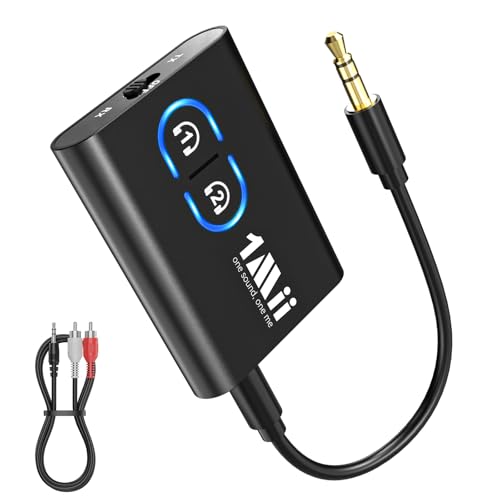
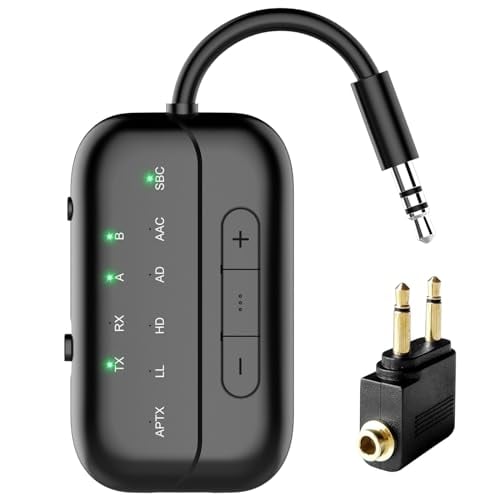
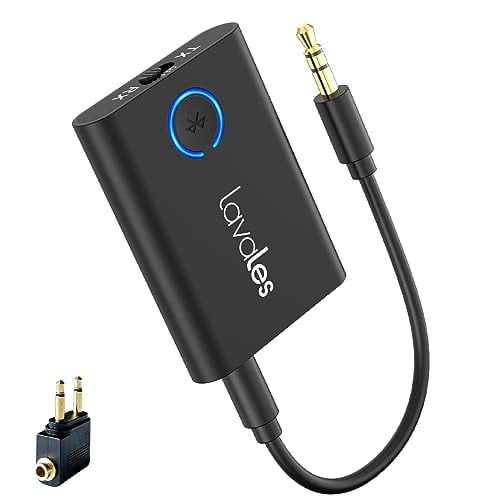
Not through the speakers’ own linking features – JBL PartyBoost only works with JBL, UE PartyUp only with UE, etc. Your options for mixing brands are Samsung Dual Audio (any two speakers with a Galaxy phone), AmpMe (through multiple phones), or a Bluetooth transmitter with dual output (hardware solution). The simplest approach is buying speakers from the same brand if multi-speaker pairing is important to you.
Is there audio delay when using multiple speakers?
Some delay is almost always present, though brand-specific pairing systems (JBL PartyBoost, UE PartyUp) keep it minimal – usually under 20 milliseconds, which is imperceptible. Cross-brand solutions like AmpMe have more variable delay, typically 50 to 200 milliseconds, which can be noticeable if speakers are close together. For background music at gatherings, even moderate delay is rarely a problem because listeners aren’t close enough to both speakers to perceive the difference.
Sources
JBL – PartyBoost | Ultimate Ears – PartyUp | Bluetooth SIG – Auracast