USB Connection Options by Phone Type
Connecting your phone to a TV via USB depends on what your phone supports and what ports your TV has. There are three approaches: USB-C to HDMI (for screen mirroring and video), USB file transfer (for viewing photos and videos stored on your phone), and MHL adapters (for older phones). Each method does something different.
| Method | Phone | What It Does | Cable Needed | Cost |
|---|---|---|---|---|
| USB-C to HDMI | Android (with DP Alt Mode) | Full screen mirroring | USB-C to HDMI adapter | $15 to $30 |
| Lightning to HDMI | iPhone (Lightning models) | Full screen mirroring | Apple Lightning Digital AV Adapter | $49 |
| USB-C to HDMI | iPhone 15/16 and newer | Full screen mirroring | USB-C to HDMI adapter | $15 to $30 |
| USB file transfer | Any Android | Browse photos/videos on TV | USB-A cable | $5 to $10 |
| MHL adapter | Older Android phones | Screen mirroring | MHL to HDMI adapter | $10 to $20 |
Method 1: USB-C to HDMI (Screen Mirroring)
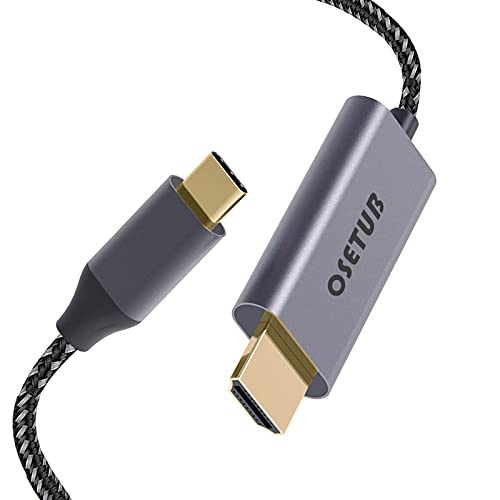
This is the best wired method for getting your phone’s screen on your TV. It mirrors everything – apps, games, streaming, presentations – with zero lag. You need a USB-C to HDMI adapter or cable and a phone that supports DisplayPort Alternate Mode (DP Alt Mode).
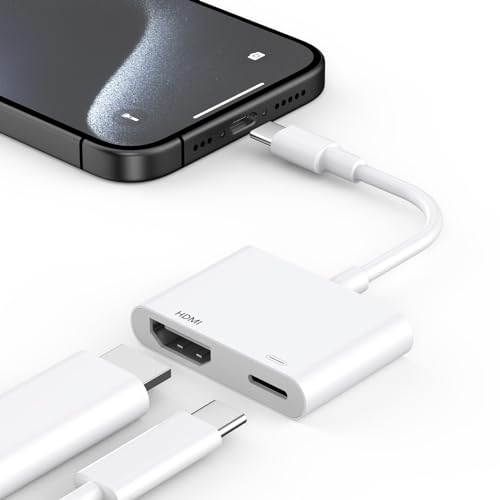
- Buy a USB-C to HDMI adapter. Get one that also has a USB-C charging port so you can charge your phone while it’s connected to the TV.
- Plug the USB-C end into your phone.
- Connect an HDMI cable from the adapter to an available HDMI port on your TV.
- Switch your TV to the correct HDMI input.
- Your phone screen appears on the TV immediately. No app or setup required.
Which phones support this? Samsung Galaxy S8 and newer (via Samsung DeX or screen mirroring), Google Pixel 4a and newer, OnePlus 7 and newer, and most flagship phones from 2020 onward. Budget phones often skip DP Alt Mode to cut costs. Check your phone’s specs for “DisplayPort Alternate Mode” or “video output via USB-C” before buying an adapter.
Samsung phones have a bonus feature called DeX. When you connect a Samsung Galaxy to a TV via USB-C to HDMI, you get a desktop-like interface on the TV while your phone continues to work independently. You can use a Bluetooth keyboard and mouse with the TV display and treat your phone like a mini computer.
Method 2: Lightning to HDMI (Older iPhones)
iPhones with Lightning ports (iPhone 14 and earlier) need Apple’s Lightning Digital AV Adapter. Third-party Lightning to HDMI adapters exist for less money but are often unreliable with iOS updates. The Apple adapter costs $49 but works consistently.
- Plug the Lightning Digital AV Adapter into your iPhone’s Lightning port.
- Connect an HDMI cable from the adapter to your TV.
- Optionally connect a Lightning charging cable to the adapter’s second port to keep your phone charged.
- Switch your TV to the HDMI input.
- Your iPhone screen mirrors to the TV.
iPhone 15 and iPhone 16 models have USB-C ports and work with standard USB-C to HDMI adapters. No Apple-specific adapter needed. A $15 to $20 third-party USB-C to HDMI adapter works perfectly.
For related tips, check out our full guide on how to connect Bluetooth headphones to Xbox one.
Method 3: USB File Transfer (Photos and Videos)
If your TV has a USB port and you just want to view photos or play video files stored on your phone, you can connect with a basic USB cable. This doesn’t mirror your screen – it treats your phone like a USB drive so the TV can browse and play media files directly.
- Connect your phone to the TV’s USB port using a USB cable (USB-C to USB-A, or micro-USB to USB-A for older phones).
- On your Android phone, pull down the notification shade and tap the USB notification. Select “File Transfer” or “MTP” mode.
- On your TV, navigate to the USB or Media Player input. The TV shows folders from your phone.
- Browse to your photos or videos and select them to play.
This method only works with Android phones. iPhones don’t support USB file transfer mode with TVs. The TV’s media player typically supports JPEG photos, MP4 videos, and sometimes AVI or MKV video files. DRM-protected content from streaming apps won’t play this way – only files stored on your phone work.
Not all TVs have media player capability through their USB ports. Some TV USB ports are service-only (for firmware updates) and don’t read media files. Smart TVs from Samsung, LG, Sony, and TCL generally support this feature. Check your TV’s manual if nothing happens when you plug in.
Wireless Alternatives Worth Considering
For most people, wireless screen mirroring is more convenient than cables. If you have a smart TV or a streaming device, these options work without buying adapters.
AirPlay (iPhone to Apple TV, Samsung, LG, Sony, Vizio smart TVs): Swipe open Control Center, tap “Screen Mirroring,” and select your TV. Works over WiFi with no cable needed.
Our article on how to connect soundbar to TV covers related ground and is worth a look.
Chromecast (Android and iPhone): Cast from supported apps (YouTube, Netflix, Spotify) to any TV with a Chromecast dongle or built-in Chromecast. Tap the Cast icon in the app and select your TV.
Miracast (Android to smart TVs): Built into most Android phones and Windows-compatible smart TVs. Go to Settings, then Display, then Cast or Wireless Display. Select your TV from the list.
The advantage of a USB/HDMI wired connection is zero latency and consistent quality. Wireless mirroring can have a half-second delay and occasional quality drops on congested WiFi networks. For presentations and gaming, wired is better. For casual video watching, wireless is more convenient.
Can I charge my phone while it’s connected to the TV?
Yes, if you use an adapter with a pass-through charging port. Apple’s Lightning Digital AV Adapter has a Lightning port for charging while outputting to HDMI. Many USB-C to HDMI adapters include a USB-C charging port. Without pass-through charging, the phone uses battery power for the video output, which drains faster than normal use.
Why is my phone screen not showing on the TV?
Check these common issues: the TV is on the wrong HDMI input, the cable or adapter is faulty (try a different one), your phone doesn’t support video output over USB-C (check specs for DP Alt Mode), or you’re using a charge-only USB cable that doesn’t carry data. Cheap cables sometimes omit the data pins. Try the cable that came with your phone first.
Can I play Netflix from my phone on the TV using USB?
With HDMI mirroring (USB-C to HDMI or Lightning to HDMI), Netflix plays on the TV screen as a mirror of your phone. Some streaming apps block HDMI mirroring for copyright reasons – Netflix allows it on most devices but Disney+ and some others may show a black screen for the video content while audio plays. If an app blocks mirroring, use the app’s built-in Cast feature or install the app directly on your smart TV instead.
Sources
Apple – Lightning Digital AV Adapter | Samsung – Samsung DeX
![[Apple MFi Certified] Lightning to HDMI Adapter for Phone to TV,Compatible with iPhone,iPad, Sync Screen Connector Directly Connect on HDTV/Monitor/Projector NO Need Power Supply (6.6 Feet)(red)](https://www.technowifi.com/wp-content/uploads/2026/08/apple-mfi-certified-lightning-to-hdmi-adapter-for-phone-to-tvcompatible-with-1.jpg)