Picking your first real camera is a big decision. You want something that takes better photos than your phone, teaches you how photography actually works, and does not bankrupt you in the process. The good news? There are more great beginner cameras available in 2026 than ever before, and many of them are available at excellent prices since the industry has largely shifted to newer mirrorless systems.
A quick note on terminology: this list includes both traditional DSLR cameras and mirrorless cameras. The camera industry has moved heavily toward mirrorless in recent years, with Canon, Nikon, and others focusing their new releases on mirrorless mounts. But that does not mean DSLRs are obsolete, far from it. Many DSLR models are still widely available new, and the used market is flooded with excellent deals. For a beginner, both types will serve you incredibly well.
Here are 15 cameras that we recommend for beginners, covering a range of budgets and shooting styles. For each one, I will tell you what makes it a good pick, what its limitations are, and whether you can still find it new or should be shopping used.
| Camera | Effective Pixels | Display Size & Type | Video Recording | Connectivity | ISO Sensitivity Range | Weight |
|---|---|---|---|---|---|---|
| Fujifilm X-T3 Mirrorless Camera | 26.1 mp | 3.0 inch tiltable 3-direction touchscreen LCD | 4K UHD video recording | Bluetooth | ISO range is 100-51200 | 1905 grams |
| Nikon D7500 Camera | 20.9 mp | 3.2 inch tiltable touchscreen | 4K UHD video recording | Wi-Fi and Bluetooth | ISO range is 100-51200 (expandable up to 1640000) | 640 grams |
| Canon EOS 90D Camera | 32.5 mp | 3.2 inch vari-angle touchscreen LCD display | 4K UHD video recording | Wi-Fi and Bluetooth | ISO range is 100-25600 | 1374 grams |
| Fujifilm X-T30 Mirrorless Camera | 26.1 mp | 3.0-inch 2-way tilting touchscreen LCD display | 4K HD video recording | Wi-Fi and Bluetooth | ISO range is 100-51200 | 1587 grams |
| Nikon D5300 Camera | 24.2 mp | 3.2 inch vari-angle touchscreen LCD display | Full HD 1080p video recording | Wi-Fi and Bluetooth | ISO range is 100-12800 | 2390 grams |
| Sony Alpha 6400 Mirrorless Camera (ILCE-6400) | 24.2 mp | 3.0-inch 180-degree tiltable touchscreen LCD display | 4K HD video recording | NFC, Wi-Fi and Bluetooth | ISO range is 100-32000 | 771 grams |
| Canon EOS Rebel T8i Canon EOS 850D | 24.1 mp | 3.0 inch vari-angle touchscreen LCD display | 4K HD video recording | Wi-Fi and Bluetooth | ISO range is 100-25600 | 1315 grams |
| Panasonic LUMIX G7 Mirrorless Camera | 16.0 mp | 3.0 inch vari-angle touchscreen LCD display | 4K HD video recording | Wi-Fi | ISO range is 100-25600 | 408 grams |
| Nikon D5600 Camera | 24.2 mp | 3.2 inch vari-angle touchscreen | Full HD 1080p video recording | Wi-Fi and Bluetooth | ISO range is 100-25600 | 725 grams |
| Canon EOS Rebel SL3 Canon EOS 250D Camera | 24.1 mp | 3.0 inch vari-angle touchscreen LCD display | 4K HD video recording | Wi-Fi and Bluetooth | ISO range is 100-25600 | 984 grams |
| Panasonic LUMIX G85 | 16.0 mp | 3.0 inch vari-angle touchscreen LCD display | 4K HD video recording | Wi-Fi and Bluetooth | ISO range is 100-25600 | 503 grams |
| Nikon D3500 Camera | 24.2 mp | 3.0 inch LCD display | Full HD 1080p video recording | Bluetooth | ISO range is 100-25600 | 365 grams |
| Sony Alpha 6000 Mirrorless Camera (ILCE-6000L) | 24.3 mp | 3.0 inch TFT LCD display | Wi-Fi and NFC | ISO range is 100-25600 (51200 expandable) | 344 grams | |
| Canon EOS Rebel T7 Camera | 24.1 mp | 3.0 inch TFT LCD display | Full HD 1080p video recording | NFC | ISO range is 100-6400 (12800 expandable) | 3361 grams |
| Panasonic Lumix FZ80 Camera | 18.1 mp | 3.0 inch touchscreen LCD display | 4K HD video recording | Wi-Fi | ISO range is 80-3200 (6400 expandable) | 616 grams |
1. Fujifilm X-T3. Best Overall for Enthusiastic Beginners
The Canon EOS Rebel T8i (known as the EOS 850D outside North America) is one of the last Rebel-series DSLRs Canon released, and it packs a lot of refinement into the familiar Rebel body. If you want a Canon DSLR that does a little bit of everything well and does not overwhelm you with complexity, this is a strong pick.
Key specs: 24.1MP APS-C CMOS sensor, DIGIC 8 processor, Dual Pixel CMOS AF (live view), 45-point viewfinder AF, 7 fps burst, 4K video (cropped), fully articulating touchscreen.
The T8i’s standout feature is Canon’s Dual Pixel CMOS AF in live view and video mode. This gives you smooth, accurate autofocus when shooting through the LCD screen or recording video, a significant advantage over older Rebel models that struggled with live view autofocus.
The fully articulating touchscreen flips, rotates, and tilts in every direction, which is great for vlogging, shooting at ground level, or holding the camera above your head in a crowd. Canon’s guided user interface helps beginners understand what each setting does, with on-screen explanations and visual previews.
4K video is available but with a crop, meaning the frame is tighter than what you see in 1080p mode. For most beginners, this is a minor issue, 1080p video is still perfectly good for social media and personal projects, and the 4K option is there when you want maximum detail.
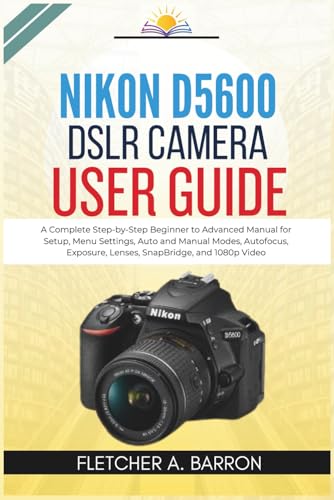
8. Panasonic LUMIX G7. Best Budget Video Camera
The Nikon D3500 was designed from the ground up for people who have never used a camera beyond their smartphone. It is simple, affordable, and produces images that will genuinely surprise you given how little it costs. If you want the easiest on-ramp into photography, the D3500 is hard to argue against.
Key specs: 24.2MP APS-C CMOS sensor, 11-point autofocus, 5 fps burst, 1080p Full HD video, Guide Mode, 1,550-shot battery life, 415 grams body only.
Two things stand out immediately. First, the battery life is extraordinary, 1,550 shots on a single charge crushes most mirrorless cameras, which typically get 300-400 shots. You can shoot all day, all weekend, without worrying about carrying spare batteries. Second, the D3500 is light. At 415 grams body-only, it is comfortable for extended shooting sessions.
Nikon’s Guide Mode walks absolute beginners through every shooting scenario. Want to blur the background? Guide Mode shows you how and adjusts the settings. Want to freeze action? It does the same. It is like having a photography instructor built into the camera.
Our guide on Canon EOS 90D reviews and price goes into more detail if you need it.
The trade-offs are real: no articulating screen (it is fixed), no 4K video, and the 11-point autofocus system is basic. But for learning photography fundamentals and getting excellent still images, the D3500 delivers. The sensor is the same 24.2MP unit found in several higher-end Nikons, so image quality is not a compromise.
The D3500 is discontinued (it was the last of Nikon’s entry-level DSLRs) but abundantly available used, often bundled with one or two kit lenses at very attractive prices.
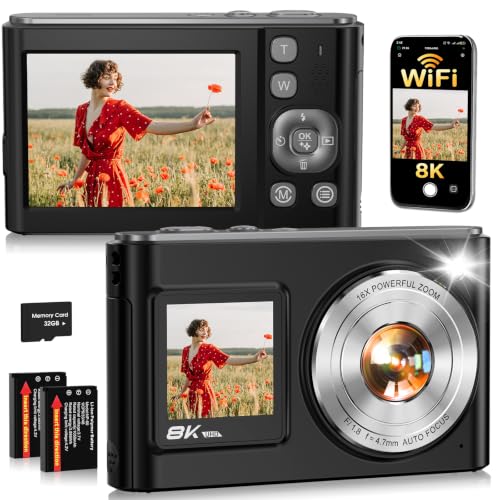
13. Sony Alpha 6000. Mirrorless on a Budget
The Sony Alpha 6000 (a6000) is one of the best-selling mirrorless cameras of all time, and for good reason. When it launched, its 179-point phase-detect autofocus system was class-leading, and even years later, it remains fast and reliable. At current used prices, it is one of the most affordable ways to get into a serious mirrorless camera system.
Key specs: 24.3MP APS-C Exmor CMOS sensor, 179-point phase-detect AF, 11 fps burst shooting, 1080p Full HD video, built-in electronic viewfinder, tilting LCD screen, Wi-Fi and NFC.
The a6000’s autofocus speed and 11 fps burst rate make it surprisingly capable for action and sports photography. It is not uncommon to see wildlife photographers use the a6000 as a lightweight backup body. The 24.3MP sensor produces detailed, vibrant images with good dynamic range.
The Sony E-mount system is one of the largest mirrorless lens ecosystems in the world. Start with the affordable kit zoom, then expand into Sigma’s excellent f/1.4 primes, Tamron’s compact zooms, or Sony’s own lenses. Your investment in E-mount glass carries forward if you eventually upgrade to a newer Sony body.
The main limitations are the lack of 4K video (it maxes out at 1080p), no touchscreen, and the battery life is modest by DSLR standards (about 360 shots per charge). The menu system is the older Sony design, which takes some getting used to. But for still photography on a budget, the a6000 remains a fantastic choice.
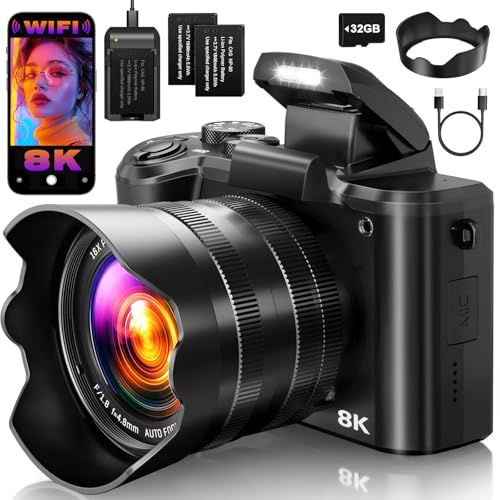
14. Canon EOS Rebel T7 (EOS 2000D). No-Frills Starter Camera
The Canon EOS Rebel T7 (EOS 2000D) is Canon’s most basic DSLR, and that simplicity is actually its selling point. If you want the most affordable new Canon DSLR to learn on without any bells and whistles to distract you, the T7 is it.
Key specs: 24.1MP APS-C CMOS sensor, DIGIC 4+ processor, 9-point autofocus, 3 fps burst, 1080p Full HD video, fixed 3-inch LCD screen, built-in Wi-Fi and NFC.
Let me be upfront: the Rebel T7 is not an exciting camera on paper. The 9-point autofocus system is basic, the 3 fps burst rate is slow, the screen does not tilt or touch, and the DIGIC 4+ processor is several generations behind Canon’s latest. It feels like a camera from a different era because, in many ways, it is.
But here is the thing, it takes great photos. The 24.1MP sensor is perfectly capable, and Canon’s color science produces pleasing, natural-looking images straight out of the camera. For portraits, landscapes, travel photos, and learning the fundamentals of exposure, aperture, and composition, the T7 does everything you need.
We also wrote a hands-on guide on Nikon D5600 that you might find useful.
The real advantage of the Rebel T7 is its price. It is often the cheapest new DSLR you can buy, frequently available in kits with one or two lenses for less than a single mid-range mirrorless body. For someone on a tight budget who wants a genuine DSLR experience with access to Canon’s massive EF lens system, it fills a real need.
Just know that you will likely outgrow the T7’s features before you outgrow its image quality. When you do, everything you learned about Canon’s controls and the lenses you bought will carry forward to a more advanced Canon body.
15. Panasonic LUMIX FZ80. Best Bridge Camera Alternative
The Panasonic LUMIX FZ80 is a bit different from everything else on this list, it is a bridge camera with a fixed 20-1200mm equivalent zoom lens built right in. That means you get an insane zoom range in a single package with no lens swapping required. If you want one camera that does everything from wide-angle landscapes to telephoto wildlife shots, and you do not want to deal with interchangeable lenses, the FZ80 is your camera.
Key specs: 18.1MP 1/2.3-inch MOS sensor, 20-1200mm equivalent f/2.8-5.9 zoom lens, 4K video at 30fps, 4K Photo mode, 10 fps burst shooting, Post Focus function, built-in flash.
A 60x optical zoom is no joke. You can photograph birds, wildlife, and sports from a remarkable distance without needing a heavy telephoto lens. The lens starts at a wide 20mm equivalent for landscapes and group shots, which is wider than most kit lenses. And 4K video is included, which is impressive for a bridge camera.
The trade-off is the sensor. At 1/2.3 inches, it is significantly smaller than the APS-C and Micro Four Thirds sensors in the other cameras on this list. This means image quality suffers in low light, dynamic range is more limited, and background blur (bokeh) is harder to achieve. In good light, the FZ80 produces perfectly acceptable images. In dim conditions, it struggles.
The FZ80 is ideal for daytime outdoor photographers, travelers who want one versatile camera, and anyone who loves wildlife or bird photography but does not want to invest in expensive telephoto lenses. It is not the best choice for indoor shooting, low-light events, or portrait photography where background blur matters.
This camera can still be found new and is very affordable on the used market. It is worth considering as a first camera if you know you want versatility over absolute image quality.
How to Choose Your First Camera
With 15 options on the table, here is a quick framework for narrowing down your choice.
What Will You Mainly Shoot?
Portraits and people: Prioritize good autofocus and access to affordable prime lenses. The Sony a6400, Canon 90D, and Fujifilm X-T3 all excel here.
Video and vlogging: Look for 4K video, a flip screen, and good autofocus in video mode. The Panasonic G7 or G85, Fujifilm X-T3, and Sony a6400 are strong video picks.
Wildlife and sports: You need fast autofocus and a good burst rate. The Nikon D7500, Canon 90D, and Sony a6400 deliver the performance you need.
Travel and everyday: Size and weight matter. The Fujifilm X-T30, Canon SL3, and Sony a6000 are compact and easy to carry.
Learning on a budget: The Nikon D3500, Canon Rebel T7, and Nikon D5300 offer excellent image quality at the lowest prices.
New vs. Used
Buying used is one of the smartest things you can do when shopping for a first camera. Cameras lose value quickly after release, but their image quality does not degrade over time. A well-maintained three-year-old camera takes photos just as well as it did on day one.
Reputable dealers like KEH Camera, MPB, and UsedPhotoPro grade their equipment honestly and offer return policies. eBay is another solid option if you buy from sellers with good feedback. Just inspect photos of the actual item carefully and ask questions about shutter count and any known issues.
Do Not Forget About Lenses
The camera body is important, but lenses have an even bigger impact on your image quality and creative options. Budget for at least one good lens beyond whatever kit lens comes with the body. A fast prime lens, like a 35mm f/1.8 or 50mm f/1.8, will transform your photography with beautiful background blur and excellent low-light performance, usually for under $200.
Whichever camera system you choose, make sure the lens ecosystem has options you can grow into. All five systems represented on this list. Canon EF, Nikon F, Sony E, Fujifilm X, and Micro Four Thirds, have extensive lens lineups with options at every price point.
DSLR vs. Mirrorless in 2026
As I mentioned at the top, the camera industry has largely shifted to mirrorless. Canon, Nikon, and others are no longer developing new DSLR bodies or lenses. But that does not make DSLRs a bad buy, in fact, it makes them a great value buy. Prices on DSLR bodies and lenses have dropped as the market moves to mirrorless, and the cameras themselves have not gotten any worse.
Mirrorless cameras offer advantages in autofocus speed, video features, size, and electronic viewfinders. DSLRs offer advantages in battery life, optical viewfinder experience (some photographers strongly prefer looking through glass rather than at a screen), and currently lower prices for equivalent capability. Either type will teach you photography equally well.