What Are Smart Home Security Products?
Smart home security products are internet-connected devices that help you monitor and protect your home from anywhere. Unlike traditional security hardware that just sounds an alarm, smart security devices send real-time alerts to your phone, record video footage, and let you check on things whether you’re at work or on vacation. Some products work independently, while others connect to a central hub or a full alarm system.
The market has grown enormously over the past few years. You can now build a solid smart home security setup for a few hundred dollars without professional installation. Most devices connect to your Wi-Fi network and pair with a mobile app, so you can set them up in minutes.
Types of Smart Home Security Products
Before picking specific brands or models, it helps to understand the major categories. Each type of device covers a different part of home security, and most households benefit from combining at least two or three types.
Video Doorbells
A video doorbell replaces your existing doorbell with a camera-equipped unit that lets you see, hear, and talk to whoever is at your door. When someone presses the button or triggers the motion sensor, you get a notification on your phone with a live video feed. You can respond through two-way audio even if you’re not home.
Most video doorbells in 2026 offer at least 1080p resolution, though 2K and even 4K models are available. Battery-powered models are easy to install since they don’t require existing doorbell wiring. Wired models never need charging and usually offer better features like continuous recording. Popular brands include Ring, Google Nest, Eufy, and Arlo.
Security Cameras
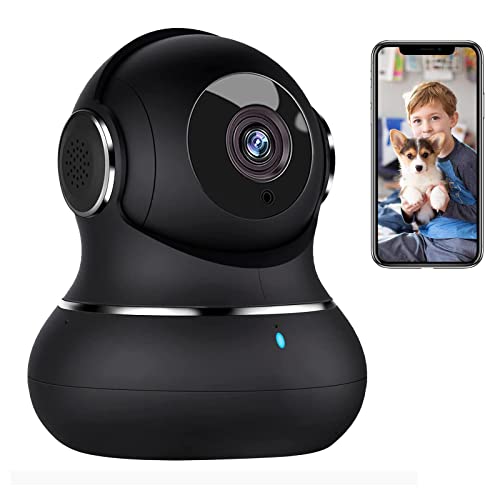
Security cameras come in indoor and outdoor varieties. Indoor cameras are typically smaller and plug into a wall outlet. They’re useful for monitoring living spaces, nurseries, or pet areas. Outdoor cameras need weather resistance and usually offer wider fields of view, brighter night vision, and sometimes built-in spotlights or sirens to deter intruders.
High-resolution cameras with 2K or 4K recording can capture useful details like faces and license plates. Solar-powered models have become popular for locations where running power cables isn’t practical. AI-powered features like person detection, package detection, and pet detection help cut down on false alerts from wind, animals, and passing cars.
Smart Locks
Smart locks let you lock and unlock your doors with a phone app, keypad code, fingerprint, or voice command. Most models fit over your existing deadbolt, so you don’t need to replace your door hardware. They allow you to create temporary codes for guests, receive alerts when someone locks or unlocks the door, and check the lock status from anywhere.
In 2026, many smart locks support the Matter protocol, which means they work with Apple Home, Google Home, and Amazon Alexa without needing a separate hub. Fingerprint readers have also become more common, adding a fast and secure way to unlock your door without pulling out your phone.
Sensors: Motion, Contact, and Glass Break
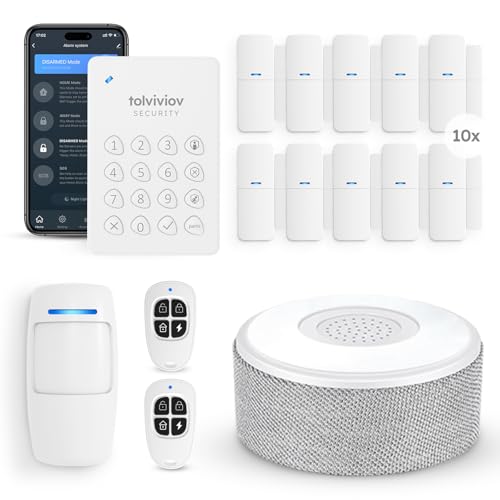
Sensors are the simplest and cheapest smart security devices. Contact sensors attach to doors and windows to alert you when they open. Motion sensors detect movement in a room or hallway. Glass break sensors listen for the specific sound frequency of breaking glass. These are often sold in multi-packs and work best as part of a larger security system.
Most sensors run on small batteries (CR2032 or similar) that last a year or more. They communicate with a hub or base station using low-power protocols like Zigbee, Z-Wave, or the newer Matter/Thread standard.
Complete Alarm Systems
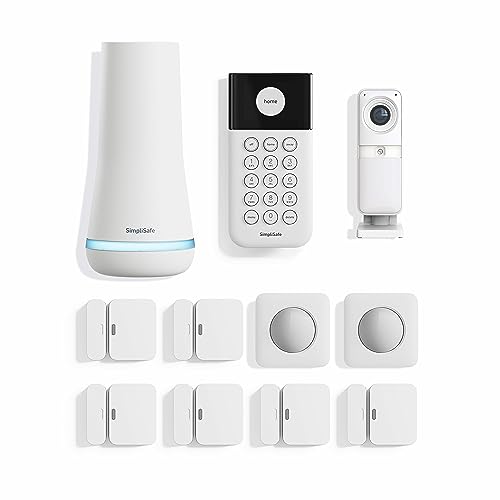
A complete alarm system bundles a base station with a set of sensors, keypads, and sometimes cameras. These systems offer professional monitoring as an optional subscription, where a monitoring center calls emergency services if an alarm goes off and you don’t respond. Self-monitored systems skip the subscription and just send you alerts directly.
DIY alarm systems from brands like Ring Alarm, SimpliSafe, and Abode let you install everything yourself in about 30 minutes. Professional systems from ADT and Vivint include professional installation and typically lock you into a longer contract. The right choice depends on whether you want hands-on control or prefer someone else to manage the setup.
What to Look for When Buying Smart Home Security Products
Connectivity and Protocols
Most smart security devices connect over Wi-Fi, which is convenient since you probably already have a router. Devices that use Zigbee, Z-Wave, or Thread need a hub but tend to be more reliable because they don’t compete with all your other Wi-Fi devices for bandwidth. The Matter standard, which launched in late 2022 and has matured significantly by 2026, aims to make devices from different brands work together without compatibility headaches.
Local Storage vs Cloud Storage
Cameras and doorbells either store footage locally (on a microSD card or a local hub) or upload it to the cloud. Cloud storage usually requires a monthly subscription, typically $3 to $10 per camera per month. Local storage is free after the initial hardware cost, but you lose the footage if the device is stolen or damaged. Some products, like Eufy cameras, offer both options.
Voice Assistant Compatibility
If you already use Amazon Alexa, Apple HomeKit, or Google Home, choose security devices that work with your ecosystem. This lets you arm your system, check camera feeds, and lock doors with voice commands. Matter-compatible devices work across all three platforms, which makes this less of a concern than it used to be.
Installation: DIY vs Professional
Most smart home security products are designed for DIY installation. Video doorbells mount with a few screws. Indoor cameras sit on a shelf or mount to a wall with adhesive. Sensors stick to door frames with double-sided tape. Smart locks typically take 15 to 30 minutes with a screwdriver.
Professional installation makes sense for hardwired camera systems, whole-home setups with 10 or more devices, or if you simply don’t want to deal with it yourself. Companies like ADT and Vivint include installation in their packages, though you’ll pay more overall.
Top Smart Home Security Products for 2026
Best Video Doorbell: Ring Battery Doorbell Pro
Ring continues to dominate the video doorbell market, and the Battery Doorbell Pro hits the sweet spot between features and price. It records in 1536p resolution (Head-to-Toe video), has radar-powered motion detection that tracks movement in 3D, and works on battery or existing doorbell wiring. The Ring app is polished and reliable, and Ring’s Protect subscription ($5/month) gives you video history, person alerts, and package detection.
Best Indoor Camera: Google Nest Cam (Indoor, Wired)
Google’s wired Nest Cam delivers sharp 1080p video, good night vision, and built-in AI that can tell the difference between a person, animal, and vehicle. It plugs into any outlet and sets up through the Google Home app in a few minutes. On-device processing means basic alerts work without a subscription, though Nest Aware ($8/month) adds continuous recording and familiar face detection.
Best Outdoor Camera: Arlo Pro 5S
The Arlo Pro 5S is wireless, weather-resistant, and records in 2K with HDR. The built-in spotlight and siren deter intruders, and the battery lasts 4 to 6 months depending on activity. It connects over dual-band Wi-Fi for reliable streaming, and Arlo’s AI can identify people, vehicles, animals, and packages. Arlo Secure ($8/month) adds video history and priority notifications.
Best Smart Lock: Schlage Encode Plus
The Schlage Encode Plus stands out because it’s one of the few locks that supports Apple Home Key. You can unlock your door by tapping your iPhone or Apple Watch to the lock, just like using a transit pass. It also works with Amazon Alexa and Google Home, connects over Wi-Fi (no hub needed), and has a touchscreen keypad for codes. Build quality is excellent, which you’d expect from Schlage. The lock fits standard deadbolt prep, so installation takes about 20 minutes.
Best Complete System: Ring Alarm Pro
The Ring Alarm Pro combines a security base station with an Eero Wi-Fi 6 router. The starter kit includes contact sensors, a motion detector, and a keypad. Add Ring cameras and doorbells for a full ecosystem controlled from one app. Professional monitoring is $20/month with Ring Protect Pro, which also includes 24/7 internet backup and extended video history for all your Ring cameras. For the price, it’s hard to beat the value.
How to Build a Smart Home Security System from Scratch
If you’re starting from zero, here’s a practical order for adding smart security to your home:
Start with a video doorbell. It covers the most common point of entry and gives you the most daily value. You’ll see deliveries, visitors, and suspicious activity at your front door.
Add a smart lock. Being able to lock and unlock your door remotely, give temporary codes to guests, and check the lock status from bed provides real peace of mind.
Install one or two outdoor cameras. Cover your driveway and backyard. Position them high enough that someone can’t easily knock them off, and angle them to avoid filming your neighbor’s property.
Add sensors if you want full coverage. Contact sensors on ground-floor windows and back doors fill in the gaps that cameras miss. A few motion sensors in hallways catch movement inside the house if someone gets past the perimeter.
Consider a full alarm system last. If you want professional monitoring or a coordinated siren and notification system, a platform like Ring Alarm or SimpliSafe ties everything together. But many people get by just fine with individual devices and phone notifications.
Privacy and Data Considerations
Smart security cameras and doorbells raise legitimate privacy questions. Video footage stored in the cloud is only as safe as the company’s security practices. Here are some things to keep in mind:
Choose products from companies with clear privacy policies and a track record of protecting user data. Enable two-factor authentication on every account connected to your security devices. If cloud storage concerns you, look at brands like Eufy that emphasize local storage. Be aware of local laws about recording audio and video, especially if your cameras capture areas beyond your property line.
Do Smart Home Security Products Work Without Wi-Fi?
Most smart features (remote viewing, alerts, cloud recording) require Wi-Fi. However, many devices still perform basic functions offline. Smart locks still work with keypads and physical keys. Cameras with local storage still record. Alarm systems with cellular backup continue monitoring even if your internet goes down. If internet reliability is a concern, choose products with offline fallback capabilities.
Are Smart Home Security Products Worth the Cost?
For most homeowners, yes. A basic setup with a video doorbell and one outdoor camera costs $200 to $400 plus optional subscriptions. That’s significantly cheaper than a traditional professionally monitored system, which often runs $40 to $60 per month with long contracts. Even without monitoring, just having visible cameras and a video doorbell discourages porch pirates and potential break-ins.
Can Smart Security Devices Be Hacked?
Any internet-connected device has some level of risk. However, major brands invest heavily in encryption and regular security updates. The biggest vulnerability is usually a weak password or reused credentials. Use strong, unique passwords for your security device accounts, enable two-factor authentication, and keep your device firmware up to date. These basic steps prevent the vast majority of attacks.