Canon 1DX Mark III vs Nikon D6: A Pro DSLR Comparison
The Canon 1DX Mark III and the Nikon D6 represent the final generation of professional DSLR flagships from both manufacturers. Canon released the 1DX Mark III in January 2020, and Nikon followed with the D6 in February 2020. Since then, both brands have shifted their focus to mirrorless systems, but these two cameras remain highly capable workhorses that many professionals continue to rely on in 2026.
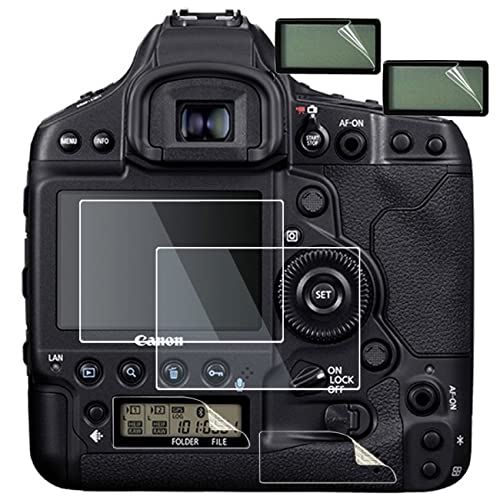
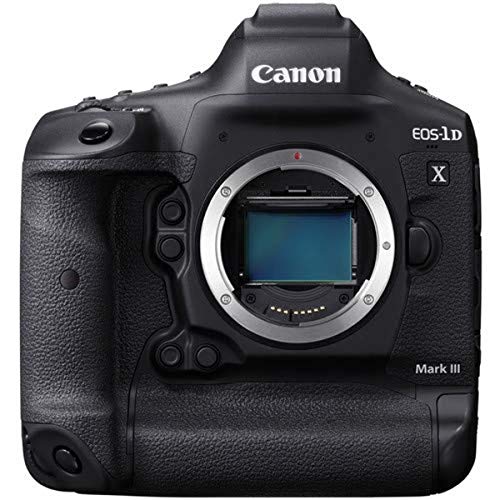
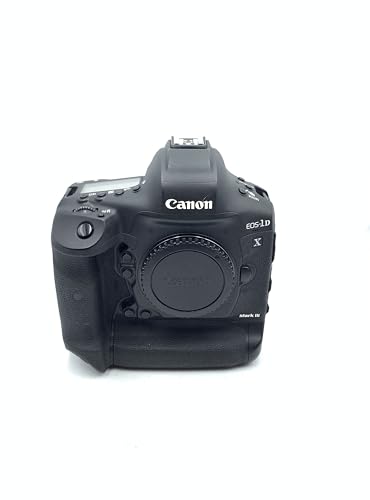
With only a one-month gap between their release dates, the two cameras share a similar level of technology. Both rank among the top professional DSLRs ever made. Out of 36 pro DSLRs evaluated, the D6 earned the number one ranking while the 1DX Mark III came in at number two.
Below, we compare the design, technical specs, sensors, and connectivity options of these two flagship DSLRs to help you decide which one fits your shooting needs.
Canon 1DX Mark III Technical Specifications
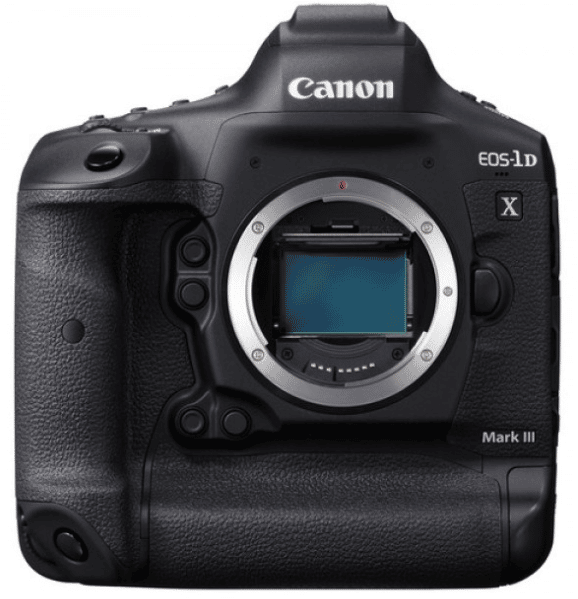
- Autofocus: Pixel grid autofocus with 155 cross-type focus points
- Connectivity: Bluetooth, HDMI mini, Gigabit Ethernet, USB-C, and Wi-Fi
- Continuous shooting speed: 20 fps
- Image sensor: 20 Megapixel full-frame CMOS
- ISO range: 100 to 102,400
- Max Image Size: 5472 x 3648
- Metering Modes: center-weighted, evaluative, partial, and spot
- Video Resolution: 5.5K, 4K (2160p), and Full HD (1080p)
- Viewfinder: Pentaprism
- Storage: 2x CFExpress
- Dimensions: 158.0 x 167.6 x 82.6 mm
- Weight: 2.75 pounds (body only) or 3.17 pounds (body, battery, and storage cards)
Nikon D6 Technical Specifications
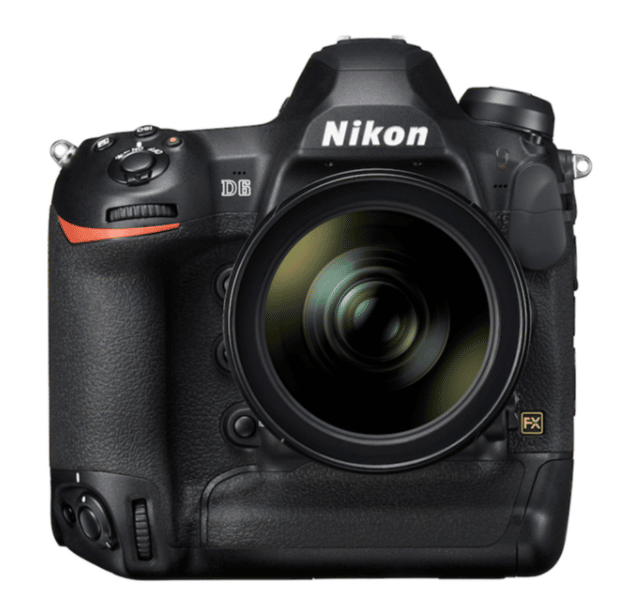
- Autofocus: Phase-detect autofocus with 105 focus points
- Connectivity: Bluetooth, HDMI mini, Gigabit Ethernet, USB-C, and Wi-Fi
- Continuous shooting speed: 14 fps
- Image sensor: 20.8 Megapixel full-frame CMOS
- ISO range: 100 to 102,400
- Max Image Size: 5568 x 3712
- Metering Modes: center-weighted, highlight weighted, matrix, and spot
- Video Resolution: 4K (2160p) and Full HD (1080p)
- Viewfinder: Pentaprism
- Storage: 2x CFExpress
- Dimensions: 160 x 163 x 92 mm
- Weight: 2.8 pounds (body only) or 3.2 pounds (body, battery, and storage cards)
Canon 1DX Mark III vs Nikon D6: Design and Ergonomics
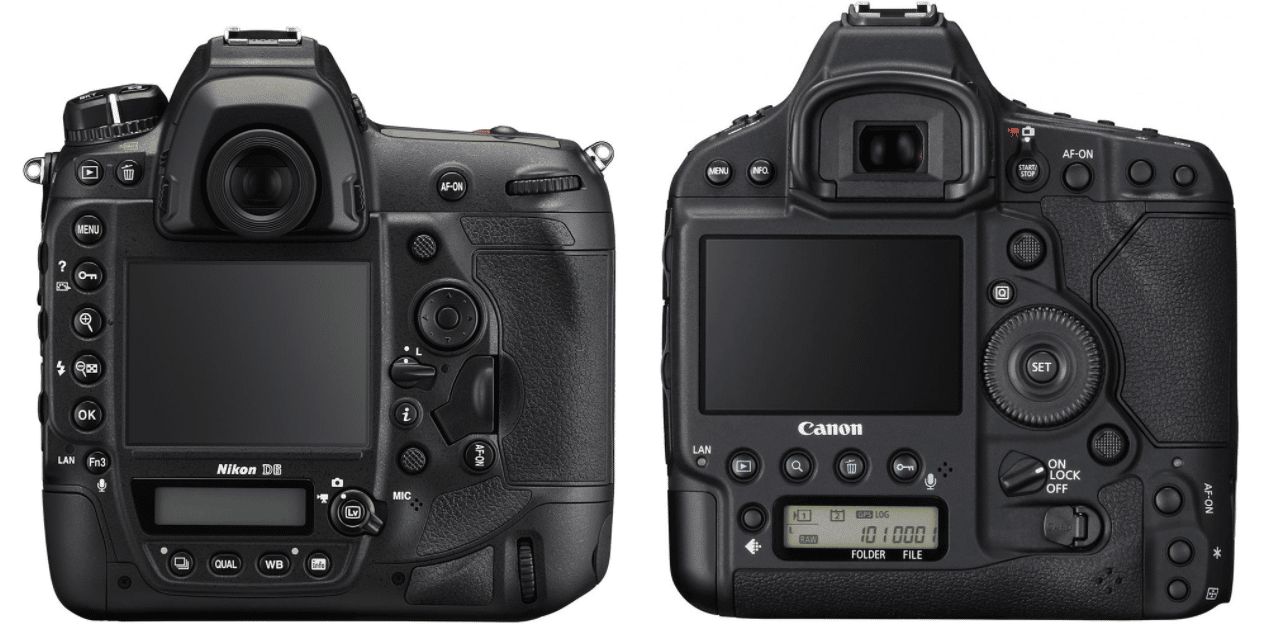
Both cameras are large, built for durability, and designed to feel rock-solid in your hands. They feature curved bodies with deeply recessed rubber grips that stay comfortable during extended shoots, even in cold weather with gloves on.
The shooting experience on both cameras is excellent, but button placement, menu navigation, and the overall feel differ between the two systems. Photographers who have spent years in one ecosystem will need some adjustment time with the other. Personal preference plays a big role here, so we recommend handling both cameras before making a choice.
We also cover DSLR cameras for beginners in a separate article worth checking out.
Canon continues its tradition of using a large rotary dial on the back of the 1DX Mark III. Both cameras feature oversized dials that are easy to operate even while wearing thick gloves, which is a practical detail for sports and wildlife photographers working outdoors.
Canon 1DX Mark III vs Nikon D6: Sensor Comparison
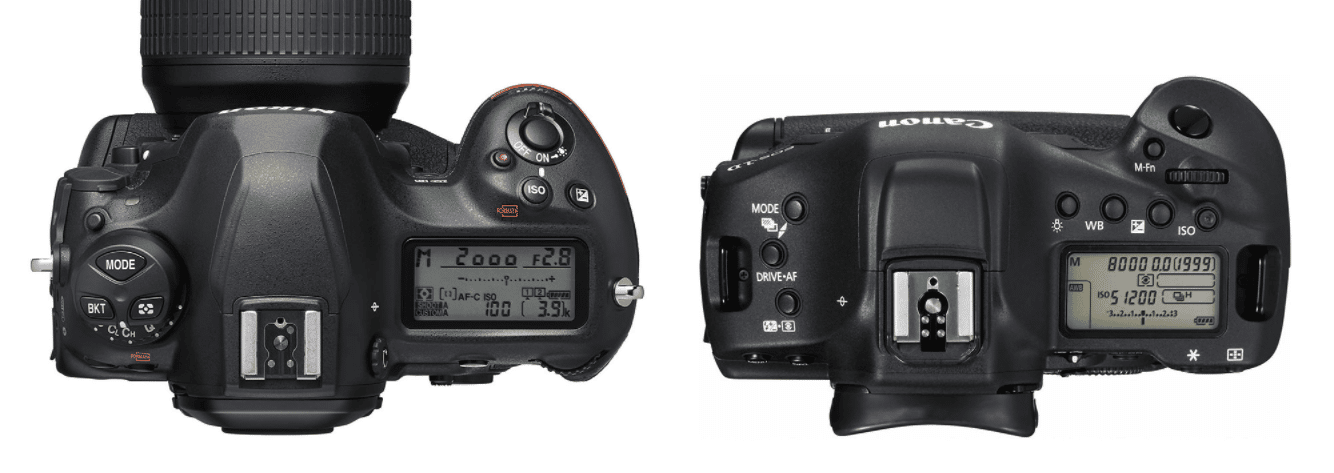
Both the 1DX Mark III and D6 use full-frame CMOS sensors, though they differ slightly in size. The Nikon D6’s sensor area is about 1% smaller than the Canon’s, but both share the same 1.0 format factor and 3:2 native aspect ratio.
In terms of resolution, the D6 has a slight edge at 20.8 megapixels compared to 20 megapixels on the 1DX Mark III. The difference is minimal in practice, but it does give the Nikon a marginally larger maximum image size (5568 x 3712 vs. 5472 x 3648).
Both sensors use CMOS technology, and both perform exceptionally well in low-light conditions thanks to their wide native ISO ranges. For most professional work, the sensor performance between the two is close enough that other factors like autofocus speed and ergonomics will likely matter more to your decision.
Canon 1DX Mark III vs Nikon D6: Connectivity
Both cameras offer identical connectivity options: Bluetooth, HDMI mini, Gigabit Ethernet, USB-C, and Wi-Fi. This means you can transfer images wirelessly, tether to a computer, or send files over a wired network during fast-paced events like sports or press conferences.
If you are still exploring options, our Nikon d5 vs Nikon d6 guide is a solid next read.
Both the 1DX Mark III and the D6 include a PC Sync terminal for triggering professional studio strobes, which is a standard feature for studio photographers working with external lighting setups.
The Canon 1DX Mark III has a built-in GPS sensor for geotagging, which automatically records location coordinates in the EXIF data of each image. This is a useful feature for travel and landscape photographers who want location data embedded in their files.
Both cameras belong to the last generation of pro DSLRs from their respective manufacturers. The Canon 1DX Mark III succeeded the Canon 1DX Mark II, while the Nikon D6 replaced the Nikon D5. As of 2026, both Canon and Nikon have shifted their professional lineups toward mirrorless bodies, but these DSLRs remain fully supported and widely used by working professionals around the world.
Final Thoughts
Looking at the raw specs, the Canon 1DX Mark III has some clear advantages: faster continuous shooting at 20 fps versus 14 fps, 5.5K video capability, and a larger number of cross-type autofocus points (155 vs. 105). The Nikon D6 counters with a slightly higher resolution sensor and its own set of loyal professional users.
Ultimately, the better camera depends on your specific needs and which system you are already invested in. Both are exceptional professional tools, and in 2026 they continue to deliver results that rival much newer mirrorless options. Try both if you can and let your hands and shooting style guide the decision.