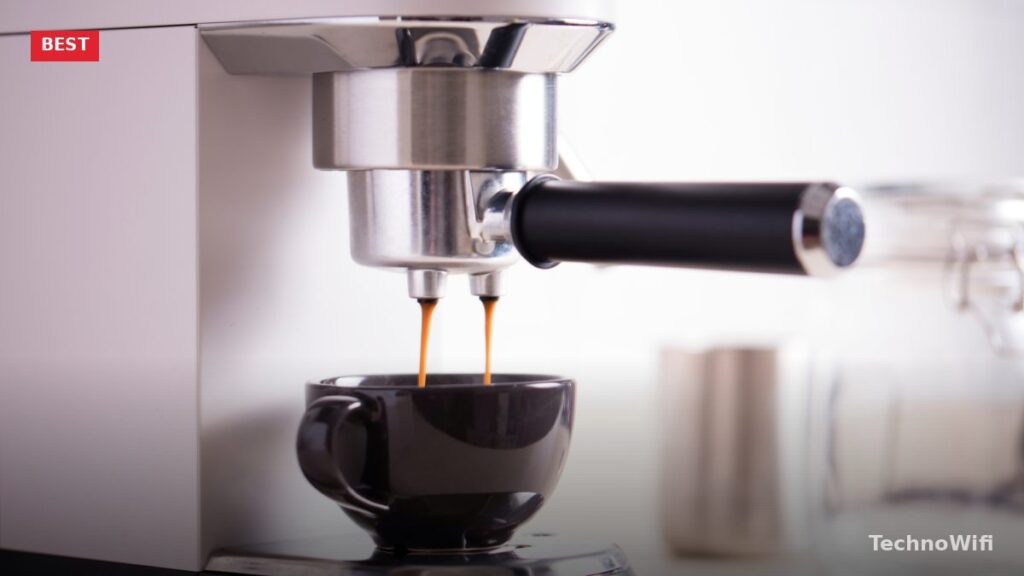
Why Philips Espresso Machines Stand Out
Philips has built a strong reputation for making kitchen appliances that are easy to live with, and their espresso machines are no exception. Every model in the current lineup is either semi-automatic or fully automatic, which means your involvement in the brewing process stays minimal. Load the beans, pick your drink, and the machine handles the rest.
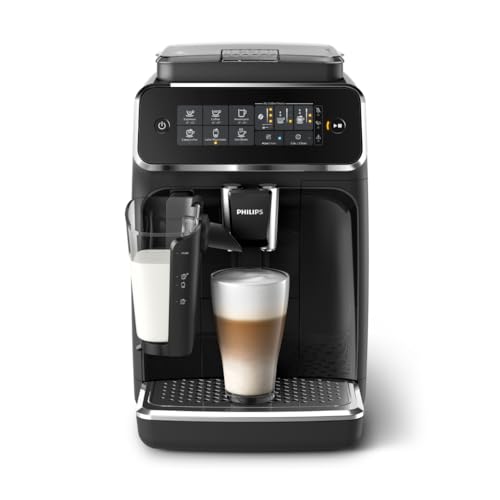
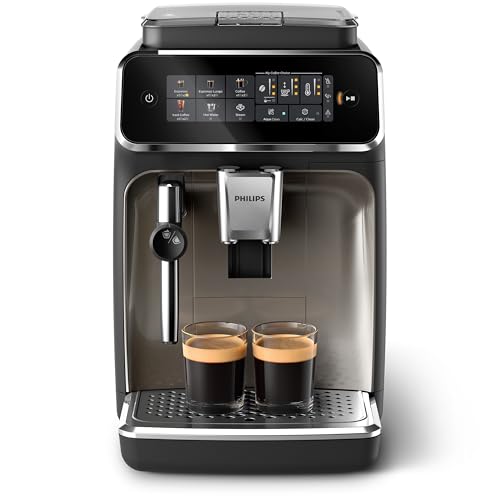
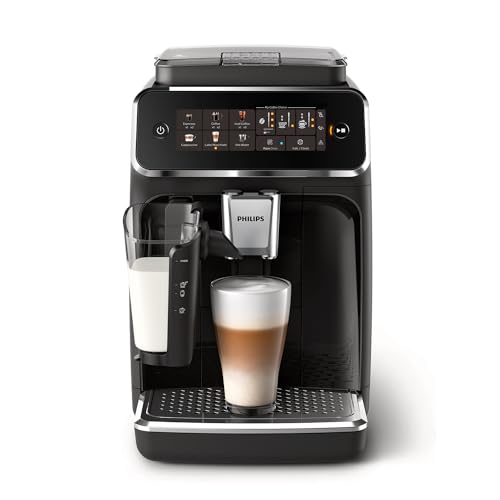
Each Philips espresso machine includes a built-in ceramic grinder with adjustable grind settings. Ceramic burrs last longer than steel ones and generate less heat during grinding, which helps preserve the flavor of your beans. Philips also owns the Saeco brand, so you may see some overlap in design and technology between the two lines.
The 2026 range spans from compact entry-level models that brew two drink types to full-featured machines with touchscreen displays and eight drink options. Sizes vary as well, so even a small kitchen counter can accommodate one. Below, we cover five of the best Philips espresso machines currently available, ranked from entry-level to feature-rich.
5 Best Philips Espresso Machines in 2026
1. Philips 2200 Series EP2230/14
The Philips 2200 Series is the most affordable entry point into the Philips automatic espresso lineup. It is a scaled-down version of the 3200 Series, stripping away some extras to hit a lower price while keeping the core brewing quality intact.
The front panel uses touch buttons for selecting your drink. You get two options directly: regular coffee and espresso. If you want milk-based drinks like lattes or cappuccinos, this model includes a manual steam wand rather than an integrated milk system. That gives you more control over milk texture, but it does require a bit of hands-on work compared to the LatteGo system found on higher-end models.
The 1.8-liter water tank is large enough for multiple drinks before needing a refill, and the compact dimensions (9.75 x 14.75 x 16.75 inches) make it a good fit for smaller kitchens. At 16 pounds, it is also one of the lighter machines in the Philips lineup.
The 2200 is best for people who drink straight espresso or black coffee daily and only occasionally make milk drinks. If lattes and cappuccinos are your go-to orders, you will probably prefer the convenience of the 3200 or 4300 Series.
Key Specifications
- Automation: Semi-Automatic
- Water Tank: 1.8 liters
- Milk System: Manual steam wand
- Drink Options: 2 (espresso, coffee)
- Material: Plastic
- Dimensions: 9.75 x 14.75 x 16.75 inches
- Weight: 16 pounds
2. Philips 3200 Series EP3221/44
The Philips 3200 EP3221 steps things up with a touch display that lets you choose your drink and adjust strength, temperature, and volume. It moves from semi-automatic to fully automatic, so you press one button and walk away while the machine brews.
This model includes a Classic Milk Frother, which is a steam-based system for creating milk foam. It is simpler than the LatteGo system on the EP3241 (covered next), but it still produces smooth, consistent froth for lattes and cappuccinos. The frother has only two parts, making cleanup quick.
The ceramic grinder offers 12 settings, letting you dial in the coarseness to match your preferred bean and drink style. The 1.8-liter tank and compact footprint (9.7 x 14.6 x 17.05 inches) are nearly identical to the 2200 Series, though the 3200 weighs a bit more at 20.35 pounds due to the added milk frothing hardware.
This is a good middle-ground option. You get the convenience of full automation and basic milk frothing without paying for the LatteGo system or the TFT display found on the 4300 Series.
Key Specifications
- Automation: Fully Automatic
- Water Tank: 1.8 liters
- Milk System: Classic Milk Frother
- Drink Options: 4 (espresso, coffee, cappuccino, latte)
- Material: Plastic
- Dimensions: 9.7 x 14.6 x 17.05 inches
- Weight: 20.35 pounds
3. Philips 3200 Series EP3241/54
The EP3241 is the upgraded version of the 3200 Series, and the main difference is the LatteGo milk system. Instead of a traditional steam frother, LatteGo uses a detachable chamber that mixes milk and air at high speed, then dispenses a layer of creamy, splash-free milk foam directly into your cup at the right temperature.
The result is cafe-style drinks with minimal effort. You can make cappuccinos, lattes, mochas, and plain coffee at the touch of a button. The LatteGo chamber has no tubes or hidden parts, so it cleans up in about 15 seconds under running water. That convenience factor is a big deal if you are making milk drinks every morning and do not want to spend time disassembling and scrubbing a frothing attachment.
Dimensions and tank capacity match the EP3221, and the weight is nearly the same at 21.05 pounds. If you drink milk-based coffee every day, the LatteGo upgrade is worth the price jump over the EP3221. If you mostly stick to black coffee, save the money and go with the standard 3200.
Key Specifications
- Automation: Fully Automatic
- Water Tank: 1.8 liters
- Milk System: LatteGo
- Drink Options: 5 (espresso, coffee, cappuccino, latte, mocha)
- Material: Plastic
- Dimensions: 9.7 x 14.6 x 17.05 inches
- Weight: 21.05 pounds
4. Philips 4300 Series EP4321/54
The Philips 4300 EP4321 is the company’s step into premium territory. It features a redesigned interface with an intuitive icon-based display that makes selecting and customizing drinks straightforward, even for first-time users.
This model uses the Classic Milk Frother (similar to the EP3221) and offers up to five different coffee drinks. The ceramic grinder and Aroma Extract brewing system work together to manage the entire bean-to-cup process, adjusting water flow and temperature to pull the best flavor from your beans.
The form factor is slightly more compact than the 3200 Series at 9.6 x 11.42 x 14.6 inches, and it weighs 17.64 pounds. That smaller footprint makes it easier to fit on a crowded countertop. The improved interface is the real selling point here: the display gives you clear visual feedback and makes adjusting strength, volume, and temperature faster than the button-based systems on the lower models.
Key Specifications
- Automation: Fully Automatic
- Water Tank: 1.8 liters
- Milk System: Classic Milk Frother
- Drink Options: 5
- Material: Plastic
- Dimensions: 9.6 x 11.42 x 14.6 inches
- Weight: 17.64 pounds
5. Philips 4300 Series EP4347/94
The EP4347 is the top of the Philips lineup covered here, combining the 4300 Series interface with the LatteGo milk system. The result is a machine that can brew up to eight different coffee drinks at the touch of a button, from straight espresso to creamy lattes and cappuccinos.
The TFT color display with drink icons makes operation straightforward. You tap the drink you want, adjust any settings, and the machine does everything else. The LatteGo system handles milk frothing automatically, mixing milk and air in the detachable chamber and dispensing foam at the correct temperature. Cleanup takes seconds since there are no tubes to flush.
At 9.6 x 11.42 x 14.6 inches and 18.25 pounds, the EP4347 shares the same compact dimensions as the EP4321. The price is higher due to the LatteGo system and expanded drink menu, but for households where multiple people drink different styles of coffee, having eight options available with one-touch brewing is genuinely convenient.
Key Specifications
- Automation: Fully Automatic
- Water Tank: 1.8 liters
- Milk System: LatteGo
- Drink Options: 8
- Material: Plastic
- Dimensions: 9.6 x 11.42 x 14.6 inches
- Weight: 18.25 pounds
How to Choose the Right Philips Espresso Machine
The decision mostly comes down to two questions: how often do you make milk-based drinks, and how much do you value quick cleanup?
If you primarily drink black coffee or espresso, the Philips 2200 EP2230 gives you everything you need at the lowest price. Its manual steam wand works fine for the occasional cappuccino.
If you make lattes or cappuccinos daily, the LatteGo system on the EP3241 or EP4347 saves real time. The tube-free design cleans in seconds, and the automatic frothing is consistent cup after cup.
If you want the best interface and the most drink variety, the EP4347 at the top of the range delivers eight drink options with a color TFT display. It costs more, but for a household with multiple coffee drinkers who all prefer different styles, one machine covers everyone.
Maintenance Tips for Philips Espresso Machines
All Philips espresso machines include automatic rinse and descaling programs. Run the descaling cycle when the machine prompts you, typically every 2 to 3 months depending on water hardness. Empty the drip tray and grounds container regularly to prevent overflow and odor. If your model has a LatteGo system, rinse the chamber after every use to prevent milk residue from building up. The ceramic grinder is low-maintenance, but cleaning it every few months with a grinder brush keeps performance consistent.