A portable router is a small, battery-powered device that takes an existing internet connection – hotel WiFi, an Ethernet cable, or a cellular signal – and rebroadcasts it as your own private WiFi network. Think of it as a personal hotspot you carry in your pocket, except it creates an encrypted network that only your devices can access.
If you travel regularly, work remotely from hotels or coffee shops, or spend time in an RV, a portable router solves problems that your phone’s hotspot feature can’t. It connects more devices, runs for hours on a single charge, and keeps your traffic private on public networks that anyone can snoop on.
How Does a Portable Router Work
A portable router sits between you and whatever internet source is available. It connects to that source on one side – either wirelessly, through an Ethernet port, or via a built-in SIM card – and creates a separate WiFi network on the other side. Your phone, laptop, tablet, and streaming stick all connect to the router instead of directly to the original network.
This matters because of how public WiFi actually works. When you connect to hotel WiFi, your traffic travels over a shared network alongside every other guest. Anyone with basic packet-sniffing software can intercept unencrypted data. A portable router changes this. It connects to the hotel WiFi once, then distributes that connection through its own encrypted network. Your devices never touch the public network directly.
Most portable routers also handle the login page problem. Hotels, airports, and cafes use captive portals – those annoying sign-in pages that pop up before you get internet access. A portable router logs in once through its web interface, and every device connected to it gets instant access without repeating the sign-in process individually.
Types of Portable Routers in 2026
Not every portable router works the same way. Some need an existing WiFi signal or Ethernet connection. Others generate their own internet access through a cellular SIM card. The right type depends on where you plan to use it and what internet sources you’ll have available.
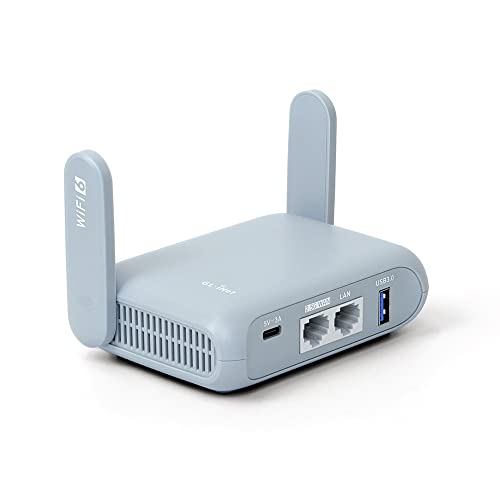
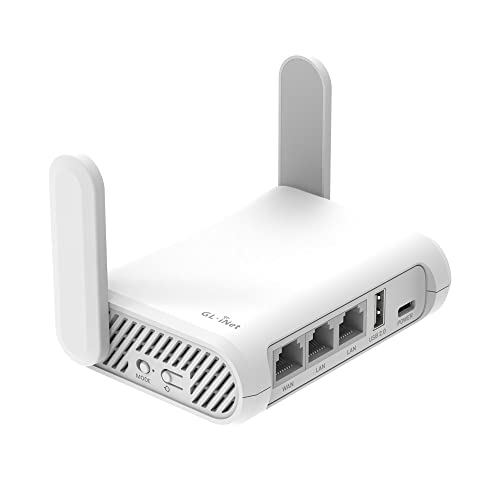
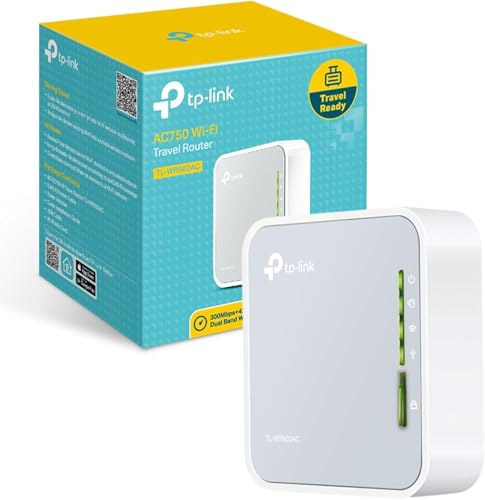
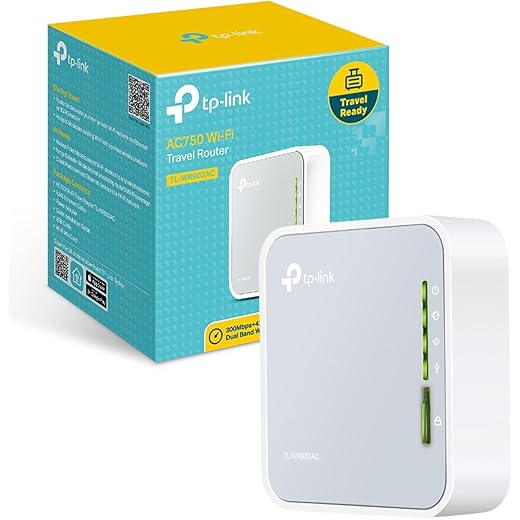
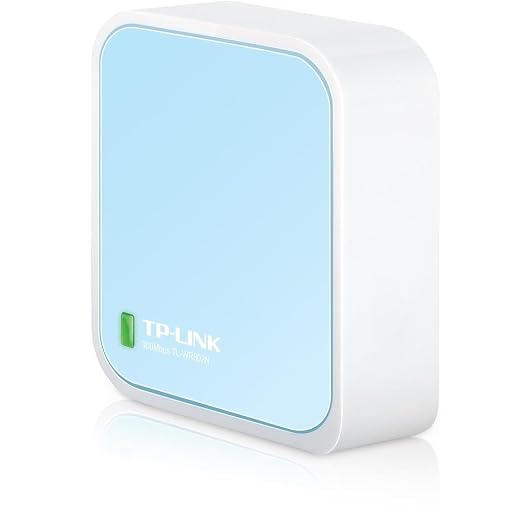
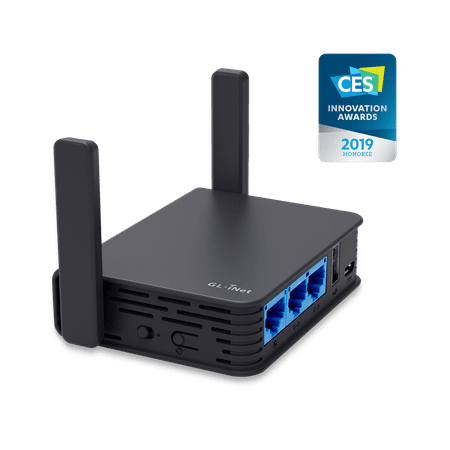
Battery-powered travel routers are the most versatile type. Brands like GL.iNet and TP-Link make pocket-sized routers that weigh under 100 grams. These connect to hotel WiFi, public hotspots, or wired Ethernet and rebroadcast the connection as a private network. Most support VPN passthrough, so you can route all your traffic through a VPN service automatically. The GL.iNet Beryl AX and the TP-Link TL-WR902AC are two of the most popular models.
Mobile hotspot devices use a cellular connection instead of existing WiFi. They have a SIM card slot and connect to 4G LTE or 5G networks just like a phone. Carriers like Verizon, T-Mobile, and AT&T sell dedicated hotspot devices with their own data plans. These work anywhere with cell coverage – no WiFi source needed – but they require a separate data plan and usage is capped or throttled after a certain amount.
USB tethering routers plug into a USB power source and share a connection from a tethered phone or USB cellular modem. They’re the smallest option and work well as a secondary device, but they depend on another device for internet access and usually lack a built-in battery.
| Feature | Travel Router | Mobile Hotspot | Phone Tethering |
|---|---|---|---|
| Internet source | WiFi, Ethernet | Cellular SIM card | Phone’s data plan |
| Separate data plan needed | No | Yes | No (uses phone data) |
| Typical battery life | 4-10 hours | 8-20 hours | Drains phone battery |
| Max connected devices | 10-30 | 10-30 | 5-10 |
| VPN support | Yes (built-in on most) | Rarely | No (requires app on phone) |
| Works without WiFi source | No (unless it has a SIM slot) | Yes | Yes |
| Captive portal handling | Yes | Not needed | Not needed |
| Price range | $30-$120 | $50-$300 + data plan | Free (built into phone) |
| Best for | Hotel WiFi, Ethernet sharing | Rural areas, no WiFi available | Occasional, light use |
When Do You Actually Need a Portable Router
Hotel and airport WiFi. Public hotel networks are open by default. Even hotels that require a room number and password share one network among all guests. A portable router creates an encrypted barrier between your devices and everyone else on that network. It also lets you connect devices that don’t have browsers – streaming sticks, gaming consoles, smart speakers – that can’t handle captive portal login pages.
RV and camping travel. Campgrounds with WiFi usually have weak signals that barely reach your site. A portable router with a better antenna pulls in that weak signal and redistributes it inside your RV. If the campground has no WiFi at all, a mobile hotspot with a cellular SIM gives you independent internet access wherever there’s cell tower coverage.
International travel. Buying a local SIM card in a foreign country is cheaper than paying international roaming fees. Pop the SIM into a portable router with a SIM slot, and all your devices get local data access through one plan. No need to swap SIMs in your phone, deal with eSIM configuration headaches, or pay per-device roaming charges.
Remote work. Working from a cafe or coworking space means trusting their network with your corporate email, VPN credentials, and file transfers. A portable router with built-in VPN encryption adds a security layer that your IT department will appreciate – or may actually require.
What Specs to Look for in a Portable Router
Portable routers range from bare-bones $30 devices to $120+ models packed with features. The specs that matter depend on how you plan to use the device. Here’s what to pay attention to and what you can safely ignore.
| Spec | What It Means | What to Look For |
|---|---|---|
| WiFi standard | Determines max speed and efficiency | WiFi 6 (802.11ax) for best performance; WiFi 5 (802.11ac) is still fine for most travel use |
| Battery capacity | How long it runs unplugged | 3,000-7,000 mAh for 4-10 hours of use; USB-C charging preferred |
| SIM card slot | Cellular data without existing WiFi | Needed only if you want independent cellular access; check LTE band compatibility for your region |
| Max connected devices | How many devices can join at once | 10-15 is enough for most travelers; 20+ if sharing with a family or small team |
| VPN support | Routes all traffic through an encrypted tunnel | OpenVPN or WireGuard built into the router firmware; much better than per-device VPN apps |
| Ethernet port | Wired input for faster, more stable connections | At least one RJ45 port; some hotels offer wired Ethernet in addition to WiFi |
| Frequency bands | 2.4 GHz for range, 5 GHz for speed | Dual-band (2.4 + 5 GHz) minimum; single-band 2.4 GHz routers are too slow for video calls |
| Size and weight | Portability | Under 150 grams and small enough to fit in a jacket pocket |
| Repeater/extender mode | Picks up weak WiFi and rebroadcasts it stronger | Useful in campgrounds and large hotels with weak signals at your room |
One feature worth highlighting is built-in VPN support. Running a VPN directly on the router means every device that connects – phone, laptop, smart TV, tablet – is automatically protected without installing VPN apps on each one. GL.iNet routers are especially popular for this because their firmware has WireGuard and OpenVPN support baked in from the factory.
How to Set Up a Portable Router Step by Step
Setup varies slightly by brand, but the basic process is the same for most travel routers. Here’s the general procedure using a battery-powered travel router connecting to hotel WiFi.
- Charge the portable router fully before your trip. Most charge via USB-C and take 2-3 hours from empty.
- Power on the router by pressing and holding the power button for 3-5 seconds. Wait for the WiFi indicator light to turn solid (usually about 30 seconds).
- Connect your phone or laptop to the router’s default WiFi network. The network name (SSID) and password are printed on the router’s label or included in the quick start guide.
- Open a web browser and go to the router’s admin panel. For GL.iNet routers, the address is 192.168.8.1. For TP-Link, it’s 192.168.0.1 or tplinkwifi.net. Check the label on your specific device.
- Set up an admin password for the router if this is your first time using it.
- Go to the “Internet” or “Repeater” section in the admin panel. The router will scan for nearby WiFi networks.
- Select the hotel WiFi network from the list and enter its password (if required).
- If the hotel uses a captive portal, the router will redirect you to the login page. Sign in with your room credentials. The router handles this login for all connected devices.
- Change the router’s default SSID and password to something you’ll remember. Use WPA2 or WPA3 encryption.
- Connect all your other devices to the router’s network instead of the hotel WiFi directly.
If you’re connecting via Ethernet instead of WiFi, plug the cable into the router’s WAN/LAN port and skip the WiFi scanning steps. The router detects the wired connection automatically and starts broadcasting your private network within seconds.
Why a Portable Router Is Safer Than Public WiFi
Hotel WiFi networks are designed for convenience, not security. Most use shared passwords (or no password at all), which means the encryption protecting your traffic is either weak or nonexistent. Every device on the network can potentially see traffic from every other device.
A portable router fixes this by creating a network-within-a-network. Your devices connect to the router’s private, encrypted WiFi. The router connects to the hotel’s public WiFi as a single client. Other guests see one device on the network – your router – instead of seeing your laptop, phone, and tablet individually.
This architecture provides three specific security benefits. First, your devices are invisible to other users on the public network. Second, traffic between your devices and the router is encrypted with WPA2 or WPA3, even if the hotel WiFi itself has no encryption. Third, if the router supports VPN, all traffic leaving the router is encrypted again before it ever reaches the hotel’s network infrastructure.
For business travelers handling sensitive data – financial reports, client information, login credentials – this level of isolation is not optional. Many corporate security policies now require employees to use either a VPN or a private network when connecting from public locations.
Portable Router Not Working – Common Fixes
Slow speeds through the router. Your portable router can’t make a bad connection faster – it redistributes whatever speed the source network provides. If hotel WiFi gives you 10 Mbps, your router will deliver roughly 8-9 Mbps (some overhead is unavoidable). To check, connect directly to the hotel WiFi without the router and run a speed test. If speeds are similar, the hotel’s internet is the bottleneck, not your router. Switching from 2.4 GHz to 5 GHz on the router’s private network can also reduce overhead.
Can’t connect to the hotel WiFi through the router. Some hotel networks use MAC address filtering or client isolation that blocks routers. Try cloning your laptop’s MAC address in the router’s admin panel (most travel routers have this option under network settings). If the hotel WiFi requires accepting terms on a captive portal, make sure you complete the portal login through the router’s admin interface, not from a connected device.
Battery draining faster than expected. Running on 5 GHz uses more power than 2.4 GHz. If you don’t need the speed, switch the router’s broadcast to 2.4 GHz only. Disconnect devices you’re not actively using. Some routers have a power-saving mode that reduces transmission power – fine for a small hotel room where your devices are close by. Also check that your router’s firmware is up to date, since older firmware versions sometimes have power management bugs.
Devices keep disconnecting. This often happens when the hotel WiFi drops your router’s connection and requires a new captive portal login. Log back into the router’s admin panel and reconnect to the hotel network. Some routers have an auto-reconnect feature that handles this automatically. If disconnections are constant, the hotel network may be overloaded – try connecting during off-peak hours or ask the front desk if a wired Ethernet connection is available in your room.
Portable Router FAQs
Is a portable router the same as a hotspot?
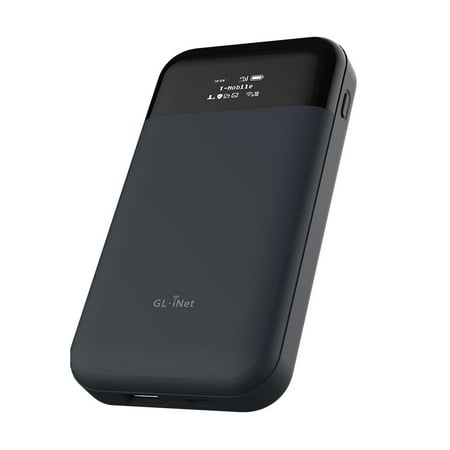
They overlap but are not identical. A mobile hotspot generates internet access using a cellular SIM card – it creates its own connection from cell towers. A portable travel router needs an existing internet source (WiFi or Ethernet) and rebroadcasts it. Some devices combine both – travel routers with SIM card slots that can work as either a hotspot or a WiFi repeater depending on the situation. The GL.iNet Mudi V2 is one example of a hybrid device that supports both modes.
Do I need a SIM card for a portable router?
Only if you want cellular internet access independent of WiFi. If you plan to connect to hotel WiFi, cafe hotspots, or Ethernet cables, a SIM card is unnecessary. You just need a standard travel router. If you need internet in areas with no WiFi – road trips, rural locations, developing countries – then a router with a SIM card slot (or a separate mobile hotspot device) gives you cellular connectivity through a local or international data plan.
Can I use a portable router overseas?
Yes. Battery-powered travel routers that connect to WiFi work anywhere in the world since they use the local WiFi infrastructure. For cellular models with SIM slots, you need to check that the router supports the LTE bands used in your destination country. Buy a local prepaid SIM when you arrive for the cheapest data rates. Alternatively, international eSIM services like Airalo or Holafly sell data plans covering most countries, and some newer portable routers support eSIM directly.
How many devices can connect to a portable router?
Most travel routers support 10 to 30 simultaneous connections. In practice, connecting more than 10-15 devices to a pocket-sized router will slow things down noticeably because the router’s processor is much weaker than a full-size home router. For a solo traveler or couple, this is rarely an issue. For a family of five with multiple phones, tablets, and a streaming stick, keep the total under 10 active devices for the best experience.
Is a portable router worth it or should I just use my phone’s hotspot?
Phone tethering works in a pinch but has three drawbacks a dedicated portable router solves. First, hotspot mode drains your phone battery fast – running it for a few hours can kill a full charge. Second, most phone hotspots support only 5-10 devices with noticeably degraded performance after 3-4. Third, your phone’s hotspot offers zero VPN or network-level security features. A portable router handles all of this better while keeping your phone free for calls and apps.
Sources
Before buying a new router, it helps to know what speeds your ISP actually delivers. Check which providers and plans are available in your area.
GL.iNet Documentation – GL.iNet Router User Guide | TP-Link Support – How to Configure the TL-WR902AC as a Hotspot Router

How we verify what we publishLast checked October 10, 2026Report an error