Wireless power harvesting pulls energy from radio waves, Wi-Fi signals, and other electromagnetic sources floating through the air around you. Instead of plugging a device into a wall outlet or swapping batteries, the device itself captures ambient RF energy and converts it into usable electricity. The amount of power you can harvest this way is small, typically microwatts to low milliwatts, but that is enough to run small electronics like remote controls, Bluetooth sensors, asset tracking tags, and IoT devices indefinitely without a battery change.
The technology has moved well beyond proof-of-concept demos. Samsung’s solar and RF-powered TV remote has shipped across its entire TV lineup since 2022, and by 2026 it stands as the most widely adopted consumer RF harvesting product in the world. Behind Samsung, companies like Wiliot, Atmosic, Powercast, Ossia, and Energous have spent years building the chips, antennas, and protocols that could eventually make batteries optional for entire categories of devices.
How Does Wireless Power Harvesting Work?
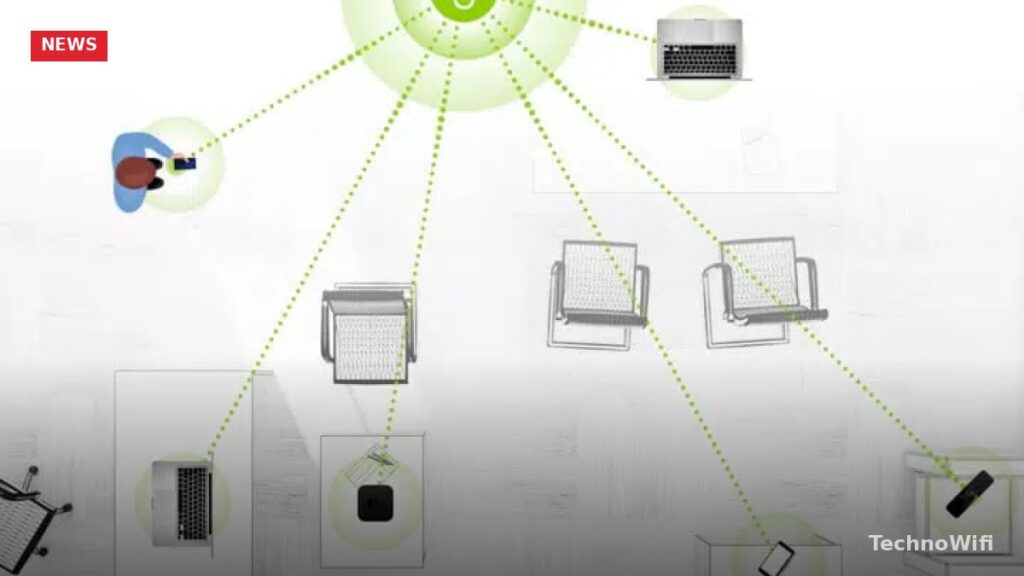
Every Wi-Fi router, cell tower, TV broadcast antenna, and Bluetooth device around you constantly radiates radio frequency (RF) energy. That energy does not disappear after it delivers your video stream or phone call. It keeps traveling outward, getting weaker with distance, until it dissipates. RF energy harvesting captures a fraction of that ambient energy using a rectifying antenna (called a rectenna) and converts it from AC radio waves into DC electricity that can charge a capacitor or power a circuit directly.
Think of it like a tiny solar panel, except instead of collecting light waves from the sun, it collects radio waves from your router. The physics are the same principle Nikola Tesla demonstrated in the 1890s when he wirelessly lit lamps across his lab. The difference is scale. Tesla wanted to power cities. Modern RF harvesting powers a temperature sensor.
How Much Power Can You Harvest?
| Energy Source | Frequency Range | Typical Harvestable Power | Practical Range |
|---|---|---|---|
| Wi-Fi router (2.4 GHz) | 2.4 – 2.5 GHz | 1 – 100 microwatts | Up to 30 feet |
| Wi-Fi router (5 GHz) | 5.1 – 5.8 GHz | 0.5 – 50 microwatts | Up to 15 feet |
| Wi-Fi 6E / Wi-Fi 7 (6 GHz) | 5.925 – 7.125 GHz | 0.5 – 40 microwatts | Up to 12 feet |
| Cell tower (4G/5G sub-6) | 700 MHz – 3.5 GHz | 0.1 – 10 microwatts | Up to several hundred feet |
| Dedicated RF transmitter | 915 MHz (US) / 868 MHz (EU) | Up to 3-4 milliwatts | Up to 80 feet |
| Bluetooth Low Energy | 2.4 GHz | 0.5 – 20 microwatts | Up to 15 feet |
| Digital TV broadcast | 470 – 890 MHz | 0.1 – 5 microwatts | Varies by proximity to tower |
The numbers look small because they are. A single AA battery holds about 9,000 joules of energy. At 10 microwatts of harvested power, you would need roughly 28 years to accumulate that same energy from ambient RF. That is why wireless power harvesting does not replace batteries for power-hungry devices like smartphones or laptops. It targets devices that use so little power that even microwatts are enough: things like temperature sensors that wake up once every 30 seconds, take a reading, transmit it over Bluetooth, and go back to sleep.
What Devices Use Wireless Power Harvesting in 2026?
Samsung SolarCell Remote. Samsung’s SolarCell Remote, included with every Samsung smart TV since 2022, combines a small solar panel with an RF energy harvesting circuit. The remote draws power from indoor lighting and ambient Wi-Fi/RF signals. After four years on the market, Samsung estimates the remote has prevented hundreds of millions of AAA batteries from reaching landfills. The remote has no battery compartment. It simply works, and millions of people use one daily without ever thinking about how it stays charged.
Wiliot IoT Pixels. Wiliot makes postage-stamp-sized Bluetooth tags that have no battery at all. They harvest energy from ambient Bluetooth, Wi-Fi, and cellular signals, then use that power to transmit a Bluetooth Low Energy signal containing sensor data like temperature, humidity, fill level, and tamper detection. Major companies in the pharmaceutical and food industries use them for supply chain tracking, such as monitoring whether a vaccine shipment stayed cold or a pallet of produce reached the correct warehouse. Each tag costs under $0.50 at scale, making them disposable. By 2026, Wiliot has shipped billions of these tags worldwide.
Atmosic Bluetooth Chips. Atmosic Technologies builds Bluetooth system-on-chip (SoC) modules with integrated RF energy harvesting. Their chips power wireless keyboards, mice, remote controls, and beacons. The latest Atmosic modules can operate on harvested RF energy alone or use it to extend a small battery’s lifespan by 5 to 10 times. Several keyboard and peripheral manufacturers now ship products built on Atmosic chips that never need battery replacements.
Powercast Wireless Charging at a Distance. Powercast takes a different approach. Instead of harvesting ambient RF that is already in the environment, they deploy dedicated RF transmitters that beam focused 915 MHz energy to receivers embedded in devices. Their system delivers milliwatts at distances up to 80 feet, enough to charge AA-battery-equivalent devices wirelessly. Powercast systems are deployed in retail stores powering electronic shelf labels, in warehouses powering sensors, and increasingly in smart buildings where running wires to hundreds of sensors is impractical.
Ossia Cota. Ossia’s Cota technology uses focused RF beamforming at 5.8 GHz to deliver power to specific receivers in a room. The system received FCC approval and has moved into commercial deployments in IoT and industrial monitoring applications. Cota can power sensors at room-scale distances of up to about 30 feet without line-of-sight requirements.
Companies Working on Wireless Power Harvesting
| Company | Technology | Power Source | Target Devices | Status (2026) |
|---|---|---|---|---|
| Samsung | SolarCell + RF harvesting | Ambient light + RF | TV remote controls | Shipping since 2022, included with all Samsung smart TVs |
| Wiliot | Battery-free Bluetooth tags | Ambient Bluetooth/Wi-Fi/cellular | Supply chain tracking, smart packaging | Billions of tags shipped, used by major CPG and pharma companies |
| Atmosic | Bluetooth SoC with RF harvesting | Ambient RF | Keyboards, mice, remotes, beacons | Chips shipping to OEMs, consumer products widely available |
| Powercast | Dedicated RF transmitter + receiver | Dedicated 915 MHz transmitter | Electronic shelf labels, sensors, trackers | Commercial deployments in retail, industrial, and smart buildings |
| Ossia (Cota) | Focused RF beamforming | Dedicated 5.8 GHz transmitter | IoT sensors, medical devices, wearables | FCC-approved, commercial deployments in progress |
| Energous (WattUp) | Near-field and mid-field RF | Dedicated transmitter | Hearing aids, wearables, IoT | Shipping in hearing aid and medical device markets |
| e-peas | Energy harvesting PMICs | Multiple (RF, solar, thermal, vibration) | Any low-power IoT sensor | Power management ICs shipping to broad IoT market |
Wireless Power Harvesting vs. Wireless Charging
Wireless power harvesting and wireless charging (like Qi pads for smartphones) are not the same thing. People confuse them because both involve “wireless” and “power,” but the underlying technology and use cases are completely different.
Qi wireless charging uses tightly coupled magnetic induction. You place your phone directly on a charging pad, typically within 4 to 10 millimeters, and the pad transfers 5 to 15 watts of power through magnetic fields. The newer Qi2 standard (which added MagSafe-style magnetic alignment) improves positioning but still requires direct contact. You are replacing a cable with a pad, not eliminating the need for a power source.
RF energy harvesting works at distances measured in feet or meters, not millimeters. It captures ambient or directed radio waves from the air. The power levels are microwatts to milliwatts, not watts. You could never charge a smartphone this way. But you can power a sensor that draws 10 microwatts indefinitely without any battery or charging pad at all.
| Feature | Qi/Qi2 Wireless Charging | RF Energy Harvesting |
|---|---|---|
| Range | 4-10mm (contact) | 1-80+ feet |
| Power delivered | 5-15 watts | 1 microwatt – 4 milliwatts |
| Requires dedicated transmitter | Yes (charging pad) | Sometimes (ambient harvesting needs none) |
| Target devices | Smartphones, earbuds, watches | Sensors, tags, remotes, low-power IoT |
| Can replace device battery entirely | No (still needs internal battery) | Yes, for ultra-low-power devices |
| Standard | Qi / Qi2 (WPC) | No single standard yet |
Applications in Smart Homes and IoT
Wireless power harvesting will not run your smart security camera or your voice assistant speaker anytime soon. A smart security camera draws 2 to 5 watts continuously. A smart speaker draws 2 to 3 watts while idle and 10+ watts while playing audio. Even the most advanced RF harvesting systems top out around 3 to 4 milliwatts at short range. You would need roughly 1,000 times more power than harvesting can deliver to run a camera.
But smart home devices are not all cameras and speakers. Many of the newer ones are low-power sensors: door and window sensors, motion detectors, temperature and humidity sensors, water leak detectors, and air quality monitors. These devices sleep most of the time and only wake up briefly to transmit a reading. A typical Zigbee or Matter door sensor draws under 20 microwatts on average, and that is within reach of ambient RF harvesting.
The realistic path for wireless power harvesting in the smart home is bottom-up. It will not start by powering your doorbell camera. It will start by eliminating the coin cell batteries in your door sensors, the AAA batteries in your TV remote (Samsung already did this), and the watch batteries in your leak detectors. Over the next several years, expect to see more smart home sensors that simply have no battery compartment at all.
In broader IoT applications, the potential is even larger. Wireless power harvesting is already being used in:
- Retail stores with battery-free electronic shelf labels
- Warehouses and logistics with battery-free asset tracking tags
- Agriculture with soil moisture sensors deployed across fields
- Smart buildings with hundreds of environmental sensors per floor
- Healthcare with disposable patient monitoring patches
What Is Holding Wireless Power Harvesting Back?
Physics. RF energy density drops off with the square of the distance. Double the distance from a Wi-Fi router and you get one-quarter the harvestable energy. Walls, furniture, and human bodies absorb RF energy further. In a typical home, the ambient RF energy density is around 0.1 to 1 microwatt per square centimeter, barely enough to power the most efficient circuits.
Efficiency. Current rectennas convert about 20 to 40 percent of received RF energy into usable DC power. The rest is lost as heat. Improving this conversion efficiency is an active area of research. Recent work with metamaterial-based antennas and multi-band harvesters has pushed lab results above 60 percent, but commercial products still lag behind. The gap between lab performance and real-world products is narrowing each year, though.
Regulation. RF transmitters are regulated by the FCC (in the US) and equivalent agencies worldwide. Dedicated power transmitters must stay within power limits to avoid interfering with communications. The FCC has approved specific devices from companies like Ossia and Energous, but the regulatory framework for widespread RF power transmission is still developing. The good news is that regulators have shown willingness to approve these systems on a case-by-case basis.
No universal standard. Unlike Qi for wireless charging, there is no single standard for RF energy harvesting. Each company uses different frequencies, protocols, and hardware. The AirFuel Alliance has been working on an RF wireless power standard, and the IEEE has published guidelines, but broad industry adoption remains a work in progress. Without a standard, device makers cannot guarantee interoperability between different vendors’ transmitters and receivers.
Wireless Power Harvesting FAQs
Is wireless power harvesting safe?
Yes. The RF energy levels involved are far below what your phone, router, or microwave oven already produce. Ambient harvesting captures energy that is already present in the environment. It does not generate any new radiation. Dedicated RF transmitters like Powercast’s operate at power levels well within FCC safety limits (typically under 3 watts EIRP at 915 MHz), which is lower than a typical Wi-Fi router’s output.
Can I build a DIY RF energy harvester?
You can, but the output will be tiny. Hobbyist rectennas using Schottky diodes and printed circuit board antennas tuned to 2.4 GHz can harvest a few microwatts near a Wi-Fi router, enough to barely light an LED. For anything practical, you need purpose-built ICs like those from Atmosic, e-peas, or Powercast that integrate power management circuits optimized for ultra-low input power.
Will wireless power harvesting replace batteries completely?
Not for most devices. Phones, laptops, cameras, speakers, and anything with a screen will continue using batteries for the foreseeable future because the power gap is too large by orders of magnitude. But for the billions of small IoT sensors, trackers, and tags being deployed around the world, wireless power harvesting makes batteries unnecessary. Industry analysts estimate tens of billions of IoT sensors will be deployed by the end of this decade, and most of those cannot rely on batteries that need regular replacement. Harvesting is the realistic answer for powering them.
How far away can wireless power harvesting work?
Ambient harvesting (from existing Wi-Fi, Bluetooth, and cell signals) works effectively within about 15 to 30 feet of the signal source. Dedicated RF transmitters extend the range to 80+ feet for systems like Powercast, and Ossia’s Cota system delivers power at room-scale distances of up to about 30 feet using beamforming to focus energy toward specific receivers. Beyond those distances, the harvestable power drops below what even the most efficient circuits can use.
Does 5G help wireless power harvesting?
Yes, but the impact is still limited. 5G mmWave (millimeter wave) signals carry more energy per unit area than 4G, and their higher frequencies are theoretically easier to harvest efficiently. However, 5G mmWave coverage is still concentrated in dense urban areas and has very short range. Sub-6 GHz 5G, which is more widely deployed, operates at similar power levels to 4G and does not meaningfully change the harvesting equation. Researchers have demonstrated promising 5G mmWave energy harvesting prototypes, and commercial applications are expected within the next few years as mmWave coverage expands.
What role does Wi-Fi 7 play?
Wi-Fi 7 routers transmit across 2.4 GHz, 5 GHz, and 6 GHz bands simultaneously, which increases the total ambient RF energy available for harvesting. Multi-band harvesters that can capture energy from all three bands at once could see meaningful improvements in total harvested power compared to single-band designs. As Wi-Fi 7 adoption grows through 2026 and beyond, the ambient RF environment in homes and offices will become slightly richer for harvesting purposes.