Sony A7III Camera Review
The Sony A7III changed the full-frame mirrorless market when it launched, and its impact is still felt in 2026. For a camera that originally sat at the “entry-level full-frame” price point, the feature set was aggressive: a 24.2-megapixel back-illuminated sensor, 693 phase-detection autofocus points, 10 fps continuous shooting, 5-axis in-body image stabilization, 4K video, and a battery that lasts 710 shots per charge. Several years later, it remains a popular choice for photographers and videographers who want full-frame quality without paying flagship prices.
This review breaks down what the A7III does well, where it falls short, and who should consider buying one in 2026.
Build Quality and Design
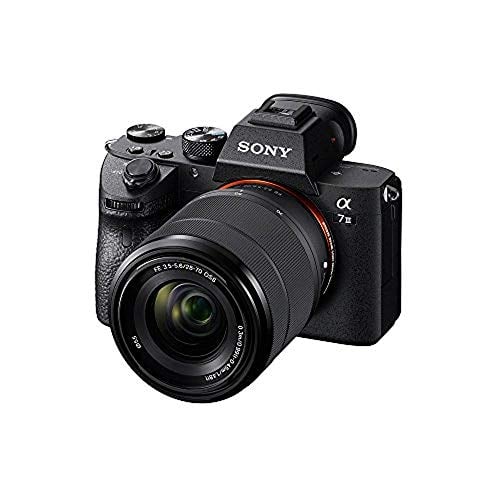
The A7III’s body is built with a magnesium alloy front and top plate, and it’s sealed against dust and moisture (though Sony doesn’t assign an IP rating). The camera feels solid without being heavy. At about 650 grams with the battery, it’s noticeably lighter than comparable DSLRs like the Canon 5D Mark IV or Nikon D750.
The grip is deeper than Sony’s earlier A7-series bodies, which makes a real difference during long shooting sessions. It’s comfortable with larger lenses like the 70-200mm f/2.8, though Sony’s smaller primes balance even better.
Our guide on landscape lens for Sony a7iii goes into more detail if you need it.
The rear joystick is a welcome addition for moving the focus point quickly. The buttons have a positive click, and the overall ergonomics are a big step forward from the A7II.
Image Quality
The 24.2-megapixel back-illuminated (BSI) CMOS sensor is the same type found in Sony’s higher-end A9 sports camera. BSI sensors rearrange the wiring behind each pixel, which lets more light reach the photodiode and improves performance at higher ISO values.
In real-world shooting, the A7III produces images with excellent detail, natural color, and strong dynamic range. At base ISO (100), you can pull 2-3 stops of shadow recovery in post without introducing visible noise. That kind of latitude is a big deal for landscape and event photographers who sometimes need to rescue underexposed areas.
We also wrote a hands-on guide on mirrorless vs DSLR cameras for beginners that you might find useful.
High ISO performance is strong. Images stay clean and detailed up to ISO 6400, and ISO 12800 is usable with mild noise reduction. Even ISO 25600 is workable for web-sized output. The back-illuminated sensor design gives the A7III a noticeable edge over older full-frame sensors in low-light situations.
Autofocus Performance
This is one of the A7III’s strongest selling points. The hybrid AF system combines 693 phase-detection points (covering 93% of the frame) with 425 contrast-detection points. In practice, the camera locks focus almost instantly in good light and stays reliable even in dim conditions.
Eye AF is the headline feature. When enabled, the camera detects and tracks human eyes in real time, even when the subject is moving, turning, or partially obscured. For portrait and event photographers, this changes everything. You can assign Eye AF to a custom button and hold it during shooting. The hit rate for sharp, properly focused portraits jumps dramatically.
Continuous AF tracking at 10 fps keeps up with sports and action subjects. The tracking is predictive, so the camera anticipates where the subject will be when the shutter fires. Combined with the wide AF coverage, you can frame your subject anywhere in the viewfinder without worrying about focus point placement.
Video Capabilities
The A7III records 4K (3840×2160) at 24 and 30 fps using full pixel readout from the full width of the sensor (no crop at 24fps). The camera oversamples from 6K of data, producing 4K footage with excellent detail and minimal moire. Full HD recording goes up to 120 fps for 5x slow motion.
S-Log2 and S-Log3 profiles give videographers flat footage with maximum dynamic range for color grading. HLG (Hybrid Log-Gamma) is available for HDR output. Picture Profiles 1-9 offer ready-to-use color treatments if you don’t plan to grade your footage.
The 5-axis IBIS helps smooth out handheld footage, though it’s not a replacement for a gimbal in walk-and-talk scenarios. The 3.5mm mic input and headphone jack let you use professional audio gear, and HDMI output feeds external recorders for better codecs and longer recording times.
One limitation: the camera has a recording limit of approximately 29 minutes per clip due to EU tax regulations that were in effect at the time of release.
Battery Life
The NP-FZ100 battery is a massive upgrade over the NP-FW50 used in Sony’s older mirrorless cameras. Rated for 710 shots using the viewfinder (or 610 using the LCD), it lasts through a full day of casual shooting. Professional event shooters or heavy video users should still carry a spare, but for most situations, one battery is enough.
The camera charges via USB-C, which means you can top off from a power bank between sessions. AC adapter charging is faster and recommended overnight.
Dual Card Slots
Both card slots accept SD cards (UHS-I and UHS-II in slot 1, UHS-I in slot 2). You can configure them for simultaneous recording (backup), separate recording (RAW on one, JPEG on the other), or overflow. Slot 2 is limited to UHS-I speeds, so put your fastest card in slot 1.
What Could Be Better
No camera is perfect, and the A7III has a few weak spots.
The menu system is Sony’s biggest recurring complaint. Settings are spread across multiple tabs with inconsistent organization. You’ll spend more time than you’d like hunting for options until muscle memory kicks in. Customizing the Fn menu and assigning frequently used functions to custom buttons helps a lot.
The rear LCD is a 3-inch 922K-dot panel that tilts up and down but doesn’t fully articulate. If you shoot a lot of selfies or vlog-style video, the lack of a flip-out screen is limiting.
The electronic viewfinder (EVF) has a resolution of 2.36 million dots, which is adequate but not as sharp as the 3.69M or 5.76M EVFs found on newer cameras. It’s perfectly usable for framing and focusing, but side-by-side with newer bodies, the difference is visible.
The single UHS-I slot (slot 2) can bottleneck write speeds if you’re doing simultaneous recording to both cards during a fast burst sequence.
Who Should Buy the Sony A7III in 2026?
The A7III makes the most sense for photographers who want full-frame quality, strong autofocus, and decent video capabilities without paying $2,500+ for a newer body. It’s a great fit for portrait photographers, event shooters, travel photographers, and content creators who shoot both stills and video.
If you’re upgrading from an APS-C camera (like the Sony A6000 or A6400) and already own E-mount lenses, the A7III is a natural step up. If you’re coming from a DSLR system, the A7III offers a compelling package that’s lighter, more compact, and has a stronger autofocus system than most DSLRs in the same price range.
Photographers who need higher resolution (for large prints or heavy cropping) should look at the A7RIV. Sports shooters who need 20+ fps and blackout-free shooting should consider the A9 series. And if budget is no concern, the A7IV is the direct successor with an improved menu system, a flip-out screen, and a newer sensor.
| Sony A7iii Camera Features | Tech Specs |
|---|---|
| Effective Pixels | Approx. 24.2 megapixels |
| Image Sensor | 35 mm full-frame (35.6×23.8 mm), Exmor R CMOS sensor |
| Image Processor | BIONZ X |
| ISO Range | 50 to 204800 |
| ISO Range (Native) | 100 to 51200 |
| LCD Screen | 7.5 cm (3.0-type) type TFT, 921,600 dots, Tilt-screen that stays behind the camera and only moves up and down. |
| Connectivity | Wi-Fi Compatible, IEEE 802.11b/g/n (2.4 GHz band), View on Smartphone, Remote control via Smartphone, Send to Computer, View on TV, USB (SuperSpeed USB (USB 3.1 Gen 1) compatible) NFC (NFC forum Type 3 Tag compatible), One-touch remote, One-touch sharing Bluetooth Standard Ver. 4.1 [2.4GHz band] HDMI micro connector (Type-D), BRAVIA Sync (Control for HDMI), PhotoTV HD, 4K movie output/4K still image PB |
| Image Size (Max.) | 6000 x 4000 |
| Recording Format | XAVC S, AVCHD format Ver. 2.0 compliant |
| Video | Full HD – 1920 x 1080p video recording |
| Video Compression | XAVC S: MPEG-4 AVC/H.264, AVCHD: MPEG-4 AVC/H.264 |
| Image Stabilization | Image Sensor-Shift mechanism with 5-axis compensation (Compensation depends on lens specifications) |
| Focusing | AF-A (Automatic AF), AF-S (Single-shot AF), AF-C (Continuous AF), DMF (Direct Manual Focus), Manual Focus with AF illuminator |
| Shutter Type | Still images: 1/8000 to 30 sec, Bulb, Movies: 1/8000 to 1/4 (1/3 steps), up to 1/60 in AUTO mode (up to 1/30 in Auto slow shutter mode) Silent Shooting: Yes (ON/OFF) |
| Optics and Focus | Smart zoom (Still images): 35 mm full-frame: M: approx 1.5x, S: approx 2x, APS-C: M: approx 1.3x, S: approx 2x, Digital zoom (Still images): 35 mm full-frame: L: approx 4x, M: approx 6.1x, S: approx 8x, APS-C: L: approx 4x, M: approx 5.2x, S: approx 8x, Digital zoom (Movie): 35 mm full-frame: approx. 4x, APS-C: approx 4x |
| 28-70 mm Zoom Lens | |
| Flash | Flash off, Autoflash, Fill-flash, Slow Sync., Rear Sync., Red-eye reduction (on/off selectable), Wireless4, Hi-speed sync.4 |
| Shooting Modes | Single Shooting, Continuous shooting (Hi+/Hi/Mid/Lo selectable), Self-timer, Self-timer (Cont.), Bracket: Single, Bracket: Cont., White Balance bracket, DRO bracket |
| Memory Card | LOT1: Slot for SD (UHS-I/II compliant) memory card, SLOT2: Multi slot for Memory Stick Duo/SD (UHS-I compliant) memory card |
| Size Dimensions | Approx. 126.9 mm x 95.6 mm x 73.7 mm, Approx. 126.9 mm x 95.6 mm x 62.7 mm (from grip to monitor)/Approx. 5 x 3 7/8 x 3, Approx. 5 x 3 7/8 x 2 1/2 (from grip to monitor) |
| Weight | Approx. 650 g (1 lb 7.0 oz) (With battery and memory card) |
| Battery Life | NP-FZ100, 1 x Rechargeable Battery that gives approx. 240 shots |
The Bottom Line
The Sony A7III earns its reputation as one of the best value full-frame cameras ever made. The autofocus is fast and reliable, the image quality holds up in difficult conditions, the battery life is generous, and the video capabilities cover most professional needs. Its weaknesses (menu system, EVF resolution, slot 2 speed) are real but livable. For photographers who want to invest in the Sony E-mount system without stretching their budget, the A7III remains a smart buy in 2026.