Top Smart Thermostats That Work With Alexa in 2026
A smart thermostat paired with Amazon Alexa gives you hands-free temperature control throughout your home. Instead of walking to the wall or opening an app, you can simply say “Alexa, set the living room to 72 degrees” and get on with your day.
Smart thermostats also help reduce energy waste. Features like scheduling, geofencing, and occupancy sensors keep your HVAC system running only when it needs to, which can lower your monthly utility bills. Below are five of the best smart thermostats for Alexa in 2026, each with its own strengths depending on your budget and needs.
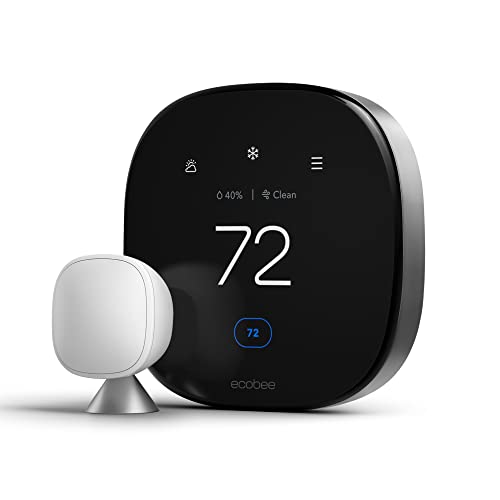
1. Ecobee Smart Thermostat With Voice Control
The Ecobee Smart Thermostat with Voice Control is one of the most feature-packed options you can buy. It has Alexa built right into the device, so you can issue voice commands, play music, hear news briefings, and control other smart devices directly from the thermostat. No separate Echo device is needed in that room.
The full-color touchscreen handles manual adjustments, and the Ecobee app provides remote access from your phone. One of the biggest advantages is the included room sensor. You can place it in a bedroom or office to ensure even temperatures across your home instead of relying on a single reading from the hallway.
Ecobee is compatible with Alexa, Google Assistant, Apple HomeKit, and Samsung SmartThings. The eco+ feature learns your habits and adjusts heating and cooling based on weather, occupancy, and local energy prices.
Pros and Cons
- Built-in Alexa with speaker for voice commands and music playback
- Included room sensor for balanced temperature across rooms
- Works with all major smart home platforms
- Eco+ learns your patterns and optimizes energy use
- Premium price tag
- Geofencing limited to a single phone
2. Google Nest Thermostat
The Nest Thermostat is one of the most visually striking smart thermostats available. Its mirror-finish design and minimalist look make it a conversation piece on any wall. It works with Alexa, Google Assistant, and Samsung SmartThings, giving you voice control through whichever assistant you prefer.
Setting it up is a do-it-yourself job for most people. The Nest app walks you through the wiring process, and the device checks compatibility with your HVAC system before you start. Once installed, the Nest Thermostat builds a basic schedule based on your adjustments during the first few days.
It features around ten different sensors that track temperature, humidity, ambient light, and motion. The motion sensor is particularly useful for Home/Away detection. When no one is home, the thermostat shifts to an energy-saving mode automatically.
Pros and Cons
- Attractive, modern design
- Affordable compared to other smart thermostats
- Works with Alexa, Google Assistant, and SmartThings
- Easy DIY installation with app guidance
- No Apple HomeKit support
- Limited learning capabilities compared to the Nest Learning model
- Does not support external room sensors
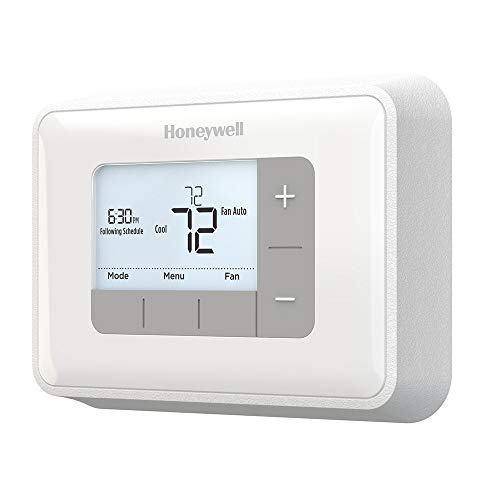
3. Honeywell Home T9 Smart Thermostat With Sensor
Honeywell has been making thermostats for decades, and the T9 brings that experience into the smart home era. Its standout feature is multi-zone temperature management. The included sensor has a range of about 200 feet, so you can place it in a far-off bedroom or basement and still get accurate readings.
The T9 is compatible with Alexa and Google Assistant. Through the Honeywell Home app, you can set schedules, adjust temperatures remotely, and view energy usage data. The thermostat also supports geofencing, switching to an away mode when everyone leaves the house.
For the best experience, you may want to buy additional sensors. The kit ships with just one, and larger homes benefit from having sensors in multiple rooms.
Pros and Cons
- Strong multi-zone temperature management
- Room sensor with 200-foot range
- Trusted Honeywell brand with long reliability history
- Works with Alexa and Google Assistant
- The Honeywell Home app could be more intuitive
- No Apple HomeKit support
- Only one sensor included in the box
4. Nest Learning Thermostat (3rd Generation)
The Nest Learning Thermostat, now in its third generation, takes automation a step further. It observes your temperature adjustments over time and builds a custom schedule without any manual programming. If you tend to lower the heat at 10 PM and raise it at 7 AM, the Nest will pick up on that pattern within a week.
The large, high-resolution display shows the current temperature, target temperature, and weather. It is compatible with Alexa, Google Assistant, and Samsung SmartThings. Energy History reports in the app show exactly how much heating and cooling your home used each day.
Multi-zone support means you can install multiple Nest thermostats in different zones and control them all from one app or through Alexa voice commands.
Pros and Cons
- Learns your schedule and adjusts automatically
- Large, bright display
- Works with Alexa, Google Assistant, and SmartThings
- Energy History reports help track usage over time
- Higher cost than the standard Nest Thermostat
- No Apple HomeKit support
- Does not support external room sensors from Nest
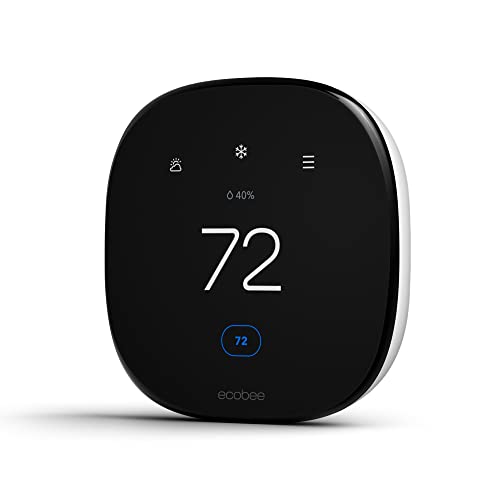
5. Ecobee3 Lite
If you want Ecobee quality at a lower price, the Ecobee3 Lite delivers the essentials without the premium extras. It connects to your home Wi-Fi and works with Alexa, Google Assistant, and Apple HomeKit. The touchscreen is responsive and easy to navigate, and the app gives you full remote control.
The Ecobee3 Lite does not include a room sensor in the box, but you can purchase them separately if you need multi-room temperature balancing later. It also lacks the built-in Alexa speaker found on the higher-end Ecobee model, so you will need a separate Echo device for voice commands.
For apartments or smaller homes where a single thermostat reading is accurate enough, the Ecobee3 Lite is a smart, budget-friendly pick.
Pros and Cons
- Lower price than the full Ecobee Smart Thermostat
- Works with Alexa, Google Assistant, and Apple HomeKit
- Clean interface with responsive touchscreen
- Room sensors available as an add-on
- No room sensor included
- No built-in Alexa speaker
- Lacks geofencing out of the box
How to Pick the Right Alexa Thermostat
Your best choice depends on what matters most to you. If you want the most features in a single device, the Ecobee Smart Thermostat with Voice Control is hard to beat. If style and affordability are your priorities, the Nest Thermostat offers a clean design at a reasonable price. The Honeywell T9 is the pick for larger homes where multi-zone control is a must. The Nest Learning Thermostat suits anyone who wants a thermostat that programs itself. And the Ecobee3 Lite hits the sweet spot between quality and budget.
All five work with Alexa, so no matter which one you choose, adjusting your home’s temperature is as simple as asking.