Choosing the Best Thermostat for Google Home in 2026
Heating and cooling systems account for a large share of household energy costs. Smart thermostats help cut those costs by giving you precise temperature control from your phone, your schedule, or your voice.

If you already use Google Home to manage lights, speakers, and other devices, pairing it with a compatible thermostat is a natural next step. Voice commands through Google Assistant let you adjust the temperature, check settings, and create routines without touching the thermostat itself.
Below are three proven thermostats that work well with Google Home in 2026. Each one has been on the market long enough to build a solid track record, so you can buy with confidence.
1. Emerson Sensi Smart Thermostat
The Emerson Sensi has earned a loyal following for good reason. It connects to Google Home, Amazon Alexa, and Apple HomeKit, making it one of the most flexible options available. Setup is straightforward, and the companion app walks you through wiring and Wi-Fi configuration in minutes.
Sensi supports geofencing, which means it can detect when you leave home and adjust the temperature to save energy. When you return, it brings the house back to your preferred setting automatically. You also get smart alerts for extreme temperature or humidity readings, so you know right away if something is off.
The physical design centers on a monochrome LCD display with dedicated buttons for Fan, Schedule, and Mode along the bottom. Navigation arrows on the right side give you access to Wi-Fi settings, temperature adjustments, and system configuration. An illumination button at the top lights up the screen for easy reading in dim rooms.
Compatibility
Sensi works with most single-stage and two-stage HVAC systems, including gas, oil, and electric furnaces. It also supports heat pumps, central air conditioning, air purifiers, and dehumidifiers. A C-wire is required for installation. Note that it does not support electric baseboard heating.
Pros and Cons
- Works with Google Home, Alexa, and HomeKit
- Geofencing for automatic energy savings
- Smart alerts for humidity and temperature extremes
- Easy setup with guided app instructions
- Requires a C-wire, which not every home has
- Fan indicator icon can be hard to spot on the display
- Outside temperature is not shown on the home screen
- Priced slightly higher than basic smart thermostats
2. Google Nest Learning Thermostat
The Nest Learning Thermostat is Google’s own product, so its integration with Google Home is about as smooth as it gets. It also works with Amazon Alexa, giving you flexibility if you switch voice assistants down the road.
What sets the Nest apart is its learning capability. Over the first week or so, it pays attention to the temperatures you set at different times of day. Then it builds a schedule on its own. The longer you use it, the more accurate it becomes. The “Home/Away Assist” feature uses motion sensors and your phone’s location to determine whether anyone is home, adjusting the temperature accordingly.
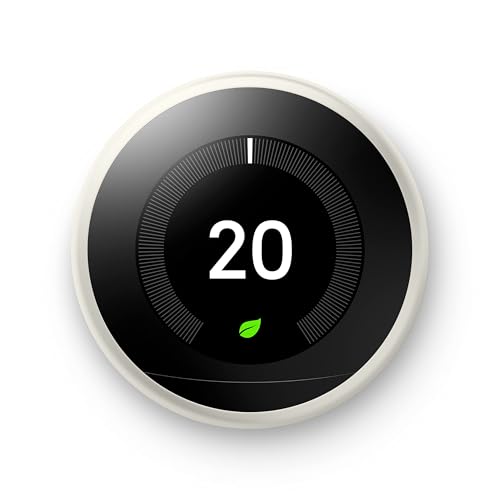
Design-wise, the Nest has a distinctive circular shape with a rotating outer ring for manual adjustments. It comes in several colors, including copper, black, white, and stainless steel, so it blends into most home interiors. The bright display turns on when it detects you walking by and shows the current temperature along with a quick summary of your schedule.
Energy Reporting
The Nest app provides monthly energy reports that break down how much heating and cooling you used. These reports include tips for saving more energy based on your actual usage patterns, which is a nice touch for anyone trying to reduce their utility bills.
Pros and Cons
- Learns your preferences and builds a schedule automatically
- Built by Google, so Google Home integration is excellent
- Attractive design with multiple color options
- Monthly energy reports with savings tips
- Does not support Apple HomeKit
- Motion sensors can occasionally misread room activity
- Higher price point compared to basic models
- No smart radiator valve option
3. Ecobee Smart Thermostat
The Ecobee Smart Thermostat stands out for its included room sensors and built-in voice control. It works with Google Home, Amazon Alexa, Apple HomeKit, and Samsung SmartThings, covering every major platform.
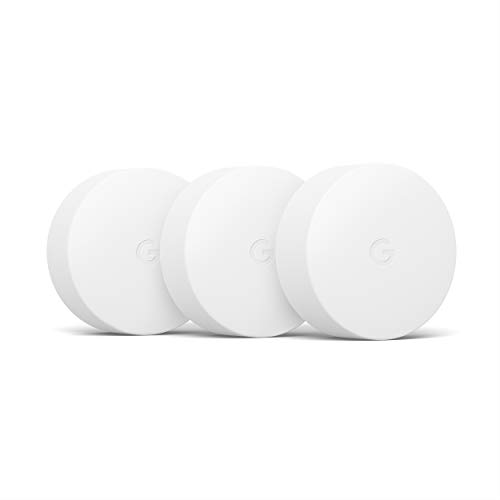
The room sensors are a big deal. Most thermostats measure the temperature only where they are mounted, which often means a hallway or living room. Ecobee’s wireless sensors can be placed in bedrooms, offices, or other rooms, and the thermostat averages their readings to keep the whole house comfortable. This is especially helpful in multi-story homes where temperatures vary between floors.
The eco+ system learns your habits and factors in local weather, electricity rates, and your home’s thermal profile to optimize heating and cooling. The large touchscreen display makes manual adjustments simple, and the smartphone app gives you full control from anywhere.
Voice Control
With Alexa built into the thermostat itself, you can ask questions, play music through the built-in speaker, set timers, and control other smart home devices directly from the thermostat. When paired with Google Home, you can also adjust settings through Google Assistant on any Google speaker or display.
Pros and Cons
- Includes wireless room sensors for balanced whole-home comfort
- Compatible with all major smart home platforms
- Eco+ system optimizes energy use based on multiple data points
- Built-in Alexa with speaker for voice commands and music
- Premium pricing, especially with additional sensors
- Geofencing tracks only one phone at a time
- Installation is more involved if your system lacks a C-wire
Which Google Home Thermostat Is Right for You?
Each of these three thermostats brings something different to the table. The Emerson Sensi is a solid all-rounder with broad HVAC compatibility and a competitive price. The Nest Learning Thermostat is ideal if you want a device that adapts to your habits over time and you are already invested in the Google ecosystem. The Ecobee is the best choice if room-to-room temperature balance matters to you, thanks to its included sensors.
Managing multiple rooms? Check our best multi-zone smart thermostats.
Not sure which smart home platform fits your setup? See our Google Home vs Alexa breakdown for a side-by-side look.
All three have been available for several years now, which means firmware updates have ironed out early bugs, third-party app support is mature, and replacement parts are easy to find. Whichever you choose, pairing it with Google Home will let you adjust your home’s temperature with a simple voice command.