Verizon Fios Business is Verizon’s fiber optic internet service designed for small and medium-sized businesses. It shares the same fiber network as residential Fios but adds business-grade extras like static IP addresses, service level agreements (SLAs), and a dedicated business support line.
Think of it as residential Fios with a business upgrade. Same fast fiber backbone, but with the reliability promises and tools that businesses actually need. If your company depends on internet uptime for processing transactions, running VoIP phones, or connecting remote employees through a VPN, Fios Business is built for that kind of work.
The service covers parts of the northeastern United States, matching the footprint where Verizon installed fiber for its residential Fios network. Plans start around $69/month for 200 Mbps symmetric speeds and go up to near-gigabit service for larger operations.
Here’s a full breakdown of current pricing, speed tiers, availability by state, how Fios Business stacks up against residential Fios, and whether the extra cost makes sense for your type of business.
How Much Does Verizon Fios Business Internet Cost
Verizon has restructured its Fios Business internet plans over the past few years. The current lineup has three main tiers, and every one of them offers symmetric upload and download speeds. That symmetry is a big deal for businesses. Cable internet providers tend to give you fast downloads but really slow uploads.
All Fios Business plans include at least one static IP address, an SLA with uptime guarantees, and access to Verizon’s business support team. Month-to-month billing is available on every tier, though signing a two-year or three-year contract brings the monthly rate down.
| Plan | Download / Upload Speed | Starting Price | Contract | Key Features |
|---|---|---|---|---|
| Fios Business Internet 200 | 200 / 200 Mbps | ~$69/month | Month-to-month or 2-3 year term | 1 static IP, SLA, business support |
| Fios Business Internet 400 | 400 / 400 Mbps | ~$99/month | Month-to-month or 2-3 year term | 1 static IP, SLA, business support |
| Fios Business Internet Gigabit | 940 / 880 Mbps | ~$249/month | Month-to-month or 2-3 year term | Multiple static IPs, SLA, priority support |
Prices listed are approximate standard rates as of 2026. Verizon regularly adjusts promotional offers, and exact pricing depends on your location, contract length, and whether you bundle phone service. Always check the current pricing at your business address on verizon.com/business.
Multi-year contracts usually save $10-$30 per month compared to month-to-month billing. The tradeoff is straightforward: you’re locked in. If your business might relocate or if you’re testing the service for the first time, month-to-month gives you flexibility even though it costs more each month.
One thing that surprises new customers: Fios Business plans cost a lot more than residential Fios at similar speeds. Residential Fios Gigabit runs about $90/month. Business Gigabit starts around $249/month. That price gap pays for the SLA, static IPs, and faster support response times.
What Affects Your Final Monthly Bill
The base price isn’t always what shows up on your bill. Verizon may tack on charges for router rental, extra static IP addresses beyond the included one, and business phone lines if you add voice service. Taxes and regulatory fees also apply on top of listed prices.
If you already own a compatible router, you can dodge the monthly equipment rental charge. Just ask Verizon which router models work on their business fiber network before you buy one.
Installation fees are another line item worth asking about upfront. New Fios Business installs may include a setup charge that covers the technician visit and ONT installation. Some promotions waive this fee, so always ask the sales rep whether installation cost is included or separate before signing.
Bundling Fios Business Internet with Verizon business phone service can sometimes qualify for a discount. That’s worth exploring if your business needs both internet and a landline or VoIP phone system through Verizon.
What Is the Difference Between Verizon Fios and Fios Business
Residential Fios and Fios Business run on the same underlying fiber optic network. The cables in the ground, the technology delivering the signal, and the core infrastructure are identical. What changes is the service layer wrapped around that connection.
Fios Business adds several features that residential accounts don’t get. These features matter when your internet connection is directly tied to revenue. A home user whose Netflix buffers for 30 seconds is annoyed. A retail store whose credit card terminal goes offline for 30 minutes is losing money.
| Feature | Residential Fios | Fios Business |
|---|---|---|
| Static IP address | Not included | At least 1 included |
| Service level agreement (SLA) | No | Yes – uptime guarantees with service credits |
| Support priority | Standard consumer support | Dedicated business support with faster response |
| Data caps | No official cap (but not guaranteed) | No cap – guaranteed in contract |
| Business phone lines | Not available | Can add VoIP or traditional lines |
| Symmetric speeds | Yes | Yes |
| Contract required | No | No (but discounts for multi-year terms) |
Static IP addresses are one of the biggest practical differences. A static IP gives your business a permanent internet address that never changes. You need one if you’re hosting your own email server, setting up a VPN for remote employees, running security cameras with remote access, or pointing a domain name to a server at your location.
Residential Fios assigns dynamic IP addresses that can change from time to time. That’s fine for home use. For a business running a VPN or hosting services, a changing IP address breaks the connection every time it rotates.
The SLA is Verizon putting its money where its mouth is. If the service goes down past a specified window, Verizon issues service credits. Residential accounts don’t get that guarantee. Your home internet drops and Verizon fixes it on their schedule. Business accounts come with contractual commitments around response times and resolution.
Business support means shorter hold times and technicians who understand commercial networking setups. If you’ve ever called consumer tech support and spent 20 minutes explaining that, no, you don’t need to restart your router, the dedicated business line tends to skip that script a lot faster.
If you work from home and just need fast internet for video calls and email, residential Fios is the better choice and it costs less. If you run a business that depends on uptime, processes card transactions, hosts servers, or needs guaranteed support response times, Fios Business is worth paying more for.
There’s one more difference that matters for growing businesses. Fios Business accounts can add business phone lines through Verizon, combining internet and voice on a single bill with a single provider. Residential accounts can’t get business-grade phone service. If your company uses or plans to use VoIP, having both services on one account simplifies billing and makes troubleshooting easier when something goes wrong.
Where Is Verizon Fios Business Available
Fios availability is limited to the northeastern United States. Specifically, the regions where Verizon invested in laying fiber optic cable. This isn’t a nationwide service. If your business is in Texas, California, the Midwest, or the South, Fios won’t be an option.
Verizon Fios Business is available in parts of these states and territories: New York, New Jersey, Pennsylvania, Maryland, Virginia, Washington D.C., Delaware, Rhode Island, Massachusetts, and Connecticut. That’s ten coverage areas, and “parts” is doing a lot of heavy lifting in that sentence.
Even within those states, coverage isn’t wall-to-wall. Fios is concentrated in metro and suburban areas. A business in downtown Philadelphia or Manhattan will likely have access. A business in rural upstate New York or western Pennsylvania probably won’t. Verizon stopped expanding its fiber footprint years ago, so the coverage map hasn’t changed much.
Major metro areas with strong Fios Business coverage include New York City, northern New Jersey, the Philadelphia suburbs, Baltimore, the Washington D.C. corridor, and parts of Boston. Coverage tends to follow the I-95 corridor and surrounding suburbs. Smaller cities and towns in those states may or may not have fiber depending on when Verizon built out their neighborhood.
The most reliable way to check availability is to enter your business address on verizon.com/business. The online tool will tell you exactly which plans and speeds are available at your location. Two businesses on the same street can sometimes have different availability depending on when the fiber was laid and which side of the street it reaches.
If Fios isn’t available at your address, Verizon does offer alternatives. DSL and fixed wireless internet are available in some areas where fiber hasn’t been installed. Both are significantly slower than Fios. DSL typically maxes out around 15 Mbps, and fixed wireless speeds vary a lot based on signal quality and distance from the tower.
For businesses outside the Fios footprint, competitors like Spectrum Business, Comcast Business, or AT&T Business Internet may have cable or fiber service in your area. These providers have different coverage maps and pricing, so it’s worth checking a few options if Verizon fiber isn’t available.
If you’re signing a commercial lease in the Fios footprint, check internet availability at the address before you commit. Not every building in a covered city has fiber run to it. Asking the landlord or property manager whether previous tenants had Fios installed can save you from unpleasant surprises after move-in day.
How Fast Is Verizon Fios Business Internet
Fiber optic internet gives you symmetric speeds, meaning your upload speed matches your download speed. This is the single biggest technical advantage fiber has over cable internet. Cable providers like Spectrum or Comcast typically offer fast downloads but much slower uploads, sometimes as low as 10-35 Mbps upload on plans advertising 200-400 Mbps download.
Why does upload speed matter for a business? More than most people think. Every video conference depends on your upload speed just as much as your download speed. When your employee’s face freezes on a Zoom call, the issue is almost always insufficient upload bandwidth, not download.
Picture a two-lane highway where both lanes are equally wide. That’s fiber. Cable internet is like having a four-lane highway going one direction but just a bike path going back. For a business that sends as much data as it receives, that bike path becomes a bottleneck fast.
Here’s what symmetric speeds mean in day-to-day use. Uploading large design files, engineering drawings, or video content to cloud storage happens at the same speed as downloading them. Backing up business data to an offsite server doesn’t take all night. VPN connections for remote employees work well in both directions because VPN traffic flows both ways by nature.
Latency on Fios is consistently lower than cable or DSL connections. Latency measures the delay between sending a request and getting a response. For businesses using VoIP phone systems, real-time collaboration tools, or cloud-based point-of-sale systems, lower latency means snappier performance and fewer dropped calls or frozen screens.
The Gigabit plan at 940/880 Mbps can handle dozens of simultaneous users without noticeable slowdown. A typical office worker doing email, web browsing, and occasional video calls uses roughly 5-10 Mbps. So the Gigabit plan can comfortably support 50 or more employees doing standard office work at the same time.
Even the 200/200 Mbps entry-level plan is fast enough for many small businesses. A five-person office running cloud-based accounting software, email, and the occasional video call won’t come close to maxing out a 200 Mbps connection. The higher tiers make sense when you have more employees, heavier workloads like video production, or you’re hosting on-premise services that outside clients connect to.
Reliability plays a role too. Fiber optic cables aren’t affected by electromagnetic interference the way copper-based DSL and cable lines are. They’re also less vulnerable to weather-related outages. For a business that needs consistent performance day after day, fiber provides a more stable connection than the alternatives.
One practical tip: run a speed test at your business during peak hours after installation. Fios typically delivers speeds very close to advertised numbers, but confirming this gives you a baseline. If speeds ever drop noticeably later on, you’ll have documentation to reference when contacting support.
Fiber also scales well. If your business grows and you need to jump from 200 Mbps to 400 Mbps or Gigabit, the change is usually a software-side adjustment on Verizon’s end. No new cables need to be run to your building. The physical fiber line already supports faster speeds; Verizon just provisions the higher tier on your account.
Is Verizon Fios Business Worth It for Small Businesses
The honest answer depends on what your business actually does and how many people share the connection. Fios Business isn’t automatically the right pick for every small business. In some cases, residential Fios handles the job for less money.
For a solo freelancer or a two-person home office that just needs fast internet for email, browsing, and video calls, residential Fios is usually fine. You save $20-$160 per month depending on the speed tier, and you still get the same fiber performance. The lack of an SLA and static IP won’t matter if your business can handle an occasional outage without losing revenue.
The math changes once any of these situations apply. You run a point-of-sale system that processes credit card transactions. You rely on VoIP phones as your primary phone system. You have 10 or more employees sharing one connection. You run cloud-based software as your primary business platform. You need remote employees to VPN into your office network.
When your internet connection is directly tied to revenue, when downtime means you literally can’t ring up customers, take orders, or communicate with clients, the SLA alone justifies the extra cost. An SLA means Verizon is contractually obligated to maintain uptime. If they fail, you get service credits. That accountability doesn’t exist on a residential account.
Static IPs unlock capabilities that residential accounts simply can’t match. You can set up a site-to-site VPN between office locations. You can configure remote access to security cameras, NAS drives, or internal applications. You can host a mail server or run services that require a fixed internet address. None of that works reliably with the dynamic IP you’d get on a residential plan.
The business support line is another factor that’s hard to put a dollar value on until you need it. When your internet goes down at 2 PM on a Tuesday and you’ve got a retail store full of customers who can’t check out, getting through to a support agent in five minutes instead of waiting 45 minutes in a consumer queue is worth real money.
| Business Type | Recommended Plan | Why |
|---|---|---|
| Solo freelancer or home office (1-3 people) | Residential Fios (300 or 500 Mbps) | Cheaper, no need for SLA or static IP |
| Small office (5-10 employees) | Fios Business 200 or 400 Mbps | SLA for uptime, static IP for VPN access |
| Retail store or restaurant | Fios Business 200 Mbps | SLA protects point-of-sale, static IP for security cameras |
| Office with 10-25 employees | Fios Business 400 Mbps or Gigabit | Bandwidth for heavy cloud use and VoIP |
| Office with 25+ employees or data-heavy operations | Fios Business Gigabit | Handles large file transfers, video, and many simultaneous users |
The 200/200 Mbps plan at around $69/month is a solid starting point for most small businesses. It gets you the SLA, a static IP, and enough bandwidth for a small team. You can always upgrade later if your needs grow. Starting with the Gigabit plan when you only have five employees means spending money you don’t need to spend.
One more thing to think about: installation. Fios Business installation typically requires a technician visit to run fiber to your location and set up the optical network terminal (ONT). If your building already has Fios infrastructure from a previous tenant, the install is usually quick. If the building has never had fiber, the process takes longer and may require coordination with your building management or landlord.
Also consider redundancy. Some businesses pair Fios Business with a secondary connection, like a cellular failover or a basic cable line, so they have a backup if fiber goes down. For businesses where even an hour of downtime costs thousands of dollars, the cost of a backup connection is cheap insurance. Verizon can help set up failover configurations during installation.
Before signing up, call Verizon Business sales and ask about current promotions. Pricing changes throughout the year, and business accounts sometimes have negotiable rates, especially for multi-year commitments or multi-location deals. The listed prices are starting points, not always the final number you’ll pay.
For businesses with multiple locations in the Fios service area, Verizon offers multi-site business accounts. Managing all your locations under one account simplifies billing and gives you a single point of contact for support across every office. Ask the sales team about volume discounts if you’re connecting two or more sites.
Frequently Asked Questions
Is Verizon Fios Business fiber optic?
Yes. Verizon Fios Business runs entirely on fiber optic infrastructure. The fiber cable connects directly to your business location through an optical network terminal (ONT) installed on-site. This is the same fiber network used by residential Fios. The “Fios” name itself stands for Fiber Optic Service, so any plan under the Fios brand uses fiber, not cable or DSL.
What is a static IP and why do businesses need one?
A static IP address is a permanent internet address assigned to your business connection that never changes. Most home internet plans use dynamic IPs that rotate periodically. Businesses need static IPs to run VPNs so remote employees can connect securely, host servers or websites at their location, set up remote access to security cameras and other networked equipment, and configure firewalls and security rules tied to a fixed address. Without a static IP, any service linked to your IP breaks every time the address changes.
Can I get Verizon Fios Business at my home office?
Yes, you can order Fios Business for a home address as long as Fios is available in your area. You don’t need a commercial property to qualify. Some home-based business owners choose Fios Business specifically for the static IP and SLA, even though their location is a residence. Keep in mind that you’ll pay more than the residential Fios rate at the same speeds. If you don’t need the business-specific features, residential Fios at your home address costs less.
Does Verizon Fios Business have data caps?
No. Verizon Fios Business plans don’t have data caps. This is guaranteed in the terms of your business service agreement. You can use as much data as you need each month without throttling or overage charges. Residential Fios also has no official cap in practice, but the no-cap policy isn’t contractually guaranteed the way it is on business accounts. For businesses that move large amounts of data through cloud backups, video uploads, and large file sharing, the guaranteed absence of data caps is reassuring.
What is the difference between Fios Business and Fios residential pricing?
Fios Business plans cost more than residential plans at comparable speed tiers. For example, residential Fios Gigabit runs about $90/month while Fios Business Gigabit starts around $249/month. The price difference covers business-grade features: a service level agreement with uptime guarantees and service credits if Verizon falls short, at least one static IP address, priority access to dedicated business support, and contractually guaranteed no data caps. If you don’t need these features, residential Fios delivers the same raw speed for less money.
Does Verizon Fios Business include a router?
You can also look up every internet provider available at your zip code with our free tool.
Comparing mobile plans? See our Xfinity Mobile vs Verizon comparison.
For a deeper look at how Verizon stacks up, see our Verizon vs AT&T breakdown.
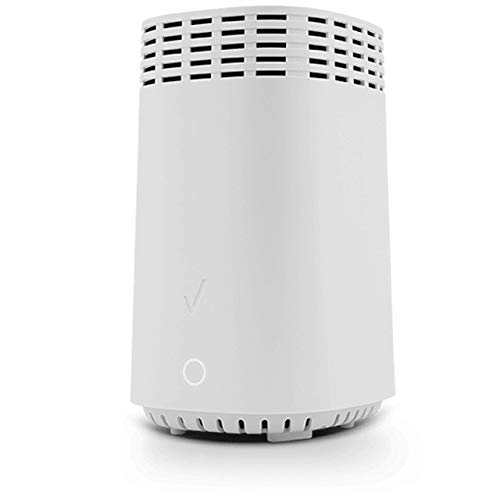
Verizon offers a business-grade router as part of its Fios Business plans, but it typically comes as a monthly rental rather than a freebie. The exact equipment and rental fee depend on your plan tier and current promotions. You can use your own compatible router instead of renting from Verizon. Contact Verizon Business support to confirm which models are approved for their network. Some plans or promotional bundles may include the router at no extra monthly charge, so ask about this when placing your order.