Resetting a Fios router can mean two very different things. A restart (or power cycle) simply turns the router off and back on again. All your settings stay right where they are. Wi-Fi name, password, parental controls, port forwarding rules, everything. The router just clears its temporary memory and boots up fresh.
A factory reset is a completely different process. It wipes the router clean and returns every setting to its original default. Your Wi-Fi network name goes back to whatever’s printed on the label. Your password changes back to the default. Every custom setting you’ve ever configured gets erased.
Most of the time, a simple restart fixes whatever’s going wrong. Slow speeds, random disconnections, a device that won’t connect. Save the factory reset for situations where nothing else works or you’re getting rid of the router entirely.
For Netgear, see our Netgear router reset guide.
This guide covers both processes for every current Fios router model, along with what you need to do after a factory reset to get things running again.
Which Fios Router Do I Have?
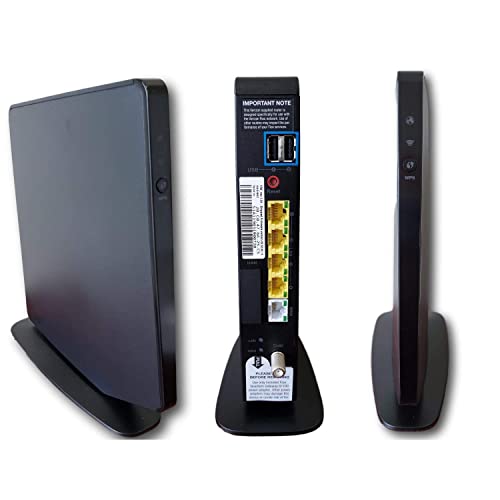
Verizon has released several router models over the years, and the reset steps differ slightly between them. You can find the model number on a label on the bottom or back of the router. If that label isn’t easy to reach, you can usually figure out the model just by looking at it.
| Model | Appearance | Wi-Fi Standard | Ports | Released |
|---|---|---|---|---|
| CR1000A (Fios Gateway) | White, rounded rectangle | Wi-Fi 6E | 1x 10G WAN, 4x 1G LAN, 1x USB-C | 2023 |
| G3100 (Fios Gateway) | White, cylindrical tower | Wi-Fi 6 | 1x WAN, 4x 1G LAN, 1x USB 3.0 | 2020 |
| G1100 (Quantum Gateway) | Black, flat rectangular | Wi-Fi 5 (802.11ac) | 1x WAN (coax + ethernet), 4x 1G LAN, 2x USB | 2016 |
| Actiontec MI424WR | Black, flat | Wi-Fi 4 (802.11n) | Coax WAN, 4x LAN | Legacy |
The CR1000A is Verizon’s latest model, bundled with 2 Gig plans and offered as an upgrade on other tiers. The G3100 is still very common and ships with most current subscriptions. The G1100 is the older black model that plenty of longtime Fios subscribers still have. The Actiontec MI424WR has mostly been retired at this point, but a small number are still active.
If you’re not sure which one you have, flip the router over. The label lists the model number, default Wi-Fi network name, default password, and admin login credentials. You’ll want that label handy if you end up doing a factory reset.
How to Restart a Fios Router
A restart should always be your first move when internet problems show up. It clears out cached data, refreshes the connection to Verizon’s network, and forces every connected device to reconnect. This takes care of most common complaints: slow speeds, spotty connections, stubborn devices, and general sluggishness.
- Unplug the power cord from the back of the router. Pull it from the router end rather than the wall outlet. It’s easier to see and reach. Some Fios setups use power adapters tucked behind furniture, so the router end is more accessible.
- Wait a full 30 seconds. This isn’t just a random number. The capacitors inside the router hold a small charge after you unplug it. Giving them 30 seconds to drain makes sure the router’s memory actually clears. Plug it back in too quickly and the router might not fully reset its internal state.
- Plug the power cord back in. The router will go through its boot sequence, which takes about two to three minutes. On the CR1000A and G3100, a solid white LED means it’s fully booted and online. On the G1100, look for a solid green light. Don’t try connecting any devices until the light stops blinking and stays steady.
A restart does NOT change your Wi-Fi name, password, or any other settings. Everything stays exactly the way you left it. The only difference is that cached data gets cleared, temporary errors get flushed, and the router re-establishes its connection to Verizon.
If restarting the router doesn’t fix the issue, try restarting the ONT (Optical Network Terminal) too. The ONT is the box mounted on your wall, usually in the basement, garage, or outside where the fiber optic line enters your home. Unplug the ONT’s power cord, wait 30 seconds, plug it back in, and let it boot completely before restarting the router. Always restart the ONT first and the router second. The router needs a working ONT connection during its startup process.
How to Restart Fios Router from the My Fios App
If you’re not anywhere near the router, you can restart it remotely through the My Fios app. Maybe you’re upstairs, at the office, or someone at home just told you the internet went down.
Open the My Fios app on your iPhone or Android phone. Tap the Internet section. Scroll down to find “Restart Router” and tap it, then confirm. The restart takes the same two to three minutes as pulling the plug manually. Same effect, too. The router reboots, clears its memory, and reconnects. All your settings stay intact.
This topic ties into our router for Verizon Fios guide, which covers the next steps.
You can also do this from the My Verizon website at verizon.com. Log in, go to the internet section, and find the restart option there. Handy if you don’t have the app installed or prefer working from a computer.
One thing to keep in mind: a remote restart only reboots the router itself, not the ONT. If the problem is on the ONT side (say, a solid yellow light on the router indicating no internet from the fiber line), someone at home will need to physically power-cycle the ONT.
How to Factory Reset Fios Router
A factory reset is the nuclear option. It wipes every custom setting and puts the router back exactly the way it was out of the box. Before you go down this road, know what you’re giving up.
| What a factory reset erases | What a factory reset keeps |
|---|---|
| Custom Wi-Fi network name (SSID) | Router firmware version |
| Custom Wi-Fi password | Hardware MAC address |
| Admin login credentials you changed | Connection to Verizon’s network (re-established on boot) |
| Parental controls | Default Wi-Fi name and password (on the label) |
| Port forwarding rules | Default admin credentials (on the label) |
| DHCP reservations (static IPs) | Physical connection to the ONT |
| Guest network settings | |
| DNS settings | |
| Firewall customizations |
- Find the reset button on the back of the router. It’s a tiny pinhole, not a regular button. You’ll need a paperclip, SIM card ejector tool, or the tip of a pen to press it.
- With the router still powered on, push the paperclip into the reset pinhole and hold it firmly for a full 15 seconds. Don’t let go early. Releasing too soon might just trigger a normal restart instead of a full factory reset.
- After 15 seconds, release the button. The router will reboot on its own. This takes three to five minutes since it’s restoring all default configurations. Once it finishes booting, you’ll need to reconnect using the default Wi-Fi credentials printed on the router’s label.
How to Factory Reset Each Fios Router Model
The basic process is the same across all models: press and hold the reset pinhole for 15 seconds. But the button location and indicator lights vary.
CR1000A (2023 Fios Gateway). The reset pinhole is on the back panel. Press and hold for 15 seconds with a paperclip. After releasing, the front LED will cycle through colors as the router restores defaults and reboots. When the LED settles on a solid white, the router is good to go. Connect using the default Wi-Fi name and password from the bottom label.
G3100 (2020 Fios Gateway). The reset pinhole is on the bottom of the cylindrical unit. You might need to tilt the router to get to it. Press and hold for 15 seconds. The white LED on front will blink during the reboot and turn solid white once everything is ready. Default credentials are on the label under the router.
G1100 (Quantum Gateway). The reset button sits on the back panel, recessed in a pinhole. Press and hold for 15 seconds. The G1100 uses green LEDs rather than white. A solid green light means the router has booted and connected. Default credentials are on the label on the back.
For every model, the default Wi-Fi name looks something like “FIOS-XXXXX” and the default password is a random character string. Both are printed on the physical label. You can’t change them until you log into the admin panel after reconnecting.
What to Do After Factory Resetting a Fios Router
After the router finishes rebooting from a factory reset, you’re basically starting from zero. Every device in your home got kicked off the network because the Wi-Fi name and password reverted to the defaults. Here’s how to set everything up again.
- Connect one device to the router using the default Wi-Fi name and password from the router’s label. A laptop works best here because you’ll need to open the admin panel in a browser, and that’s easier on a full-size screen.
- Open a web browser and go to 192.168.1.1 or type myfiosgateway.com in the address bar. Either one brings up the admin panel. Log in with the default admin credentials, also printed on the label. The username is usually “admin” and the password is the serial number or a code on the sticker.
- Change your Wi-Fi network name and password first. Pick something you’ll remember and set a strong password. Don’t use personal info like your name or address in the network name. Once you save these changes, your current device will disconnect. Reconnect using the new credentials you just set.
- Reconfigure any custom settings you had before. That means parental controls, port forwarding rules for gaming or servers, DHCP reservations for devices that need fixed IP addresses, and guest network settings if you used one. If you can’t remember your old settings, just set things up fresh.
- Reconnect all your devices to the new network. Phones, tablets, laptops, smart TVs, smart home devices, security cameras, all of them. Smart home gadgets like thermostats, smart plugs, and cameras often require you to open each device’s app and update the Wi-Fi settings one at a time. This is the most tedious part of a factory reset.
- If you use the My Fios app, open it and confirm it shows your new network settings. The app should pick up the changes automatically, but you may need to re-pair it with the router.
Fios Router Lights and What They Mean
The LED on the front of your Fios router tells you what’s happening at any given moment. This is particularly useful during and after a reset because it shows you whether the router has finished booting and whether it’s actually connected to the internet.
The CR1000A and G3100 share the same LED color scheme. The G1100 has a different set of indicators since it’s an older model with a separate LED system.
Our guide on Verizon Fios availability goes into more detail if you need it.
| LED Color/State (CR1000A and G3100) | What It Means |
|---|---|
| Solid white | Normal operation, router is on and connected to the internet |
| Blinking white | Router is starting up, wait for it to finish |
| Solid blue | WPS pairing mode is active |
| Blinking blue | WPS pairing is in progress |
| Solid yellow | No internet connection, the router is on but can’t reach Verizon’s network |
| Blinking yellow | Firmware update in progress, do not unplug the router |
| Solid red | Hardware failure or overheating, contact Verizon |
| No light | No power, check the power cord and outlet |
On the G1100, normal operation shows as a solid green light instead of white. The G1100 also has individual LED indicators for each function (power, internet, Wi-Fi, ethernet) instead of one unified LED. If the internet LED on the G1100 is off or red, the router has no internet connection.
If you see a solid yellow light after a restart, the problem is probably with the ONT or Verizon’s network rather than the router. Try restarting the ONT. If the yellow light sticks around after restarting both the ONT and the router, call Verizon. It’s likely an issue on their end.
A blinking yellow light means firmware is being installed. Do NOT unplug the router during a firmware update. Cutting power mid-update can brick the router entirely. Let it finish. Updates usually take five to ten minutes.
When to Reset vs When to Call Verizon
Not every problem is fixable by resetting. Some issues need Verizon’s help because they involve equipment or infrastructure you can’t access or repair yourself.
Problems a restart usually fixes: slow internet speeds, intermittent connection drops, one device refusing to connect while others work fine, general sluggishness, buffering during streaming, and high ping times while gaming. These are almost always caused by temporary software glitches or memory buildup, and a restart clears them right up.
Problems a factory reset fixes: forgetting your admin password and getting locked out of the settings panel, the router acting up after a settings change (and you’re not sure which setting caused it), or preparing the router for return or sale. A factory reset is also worth trying if the router has persistent problems that survive a restart.
Problems that require calling Verizon (1-800-837-4966): a solid yellow light that won’t go away after restarting both the router and ONT (usually means an ONT issue or an area outage), a solid red light (hardware failure), no internet after restarting everything, and speeds that are consistently far below what your plan includes. If you’re paying for Gigabit and getting 50 Mbps, something is wrong beyond what resetting can fix.
Before you call, run a speed test at speedtest.net while connected via ethernet cable (not Wi-Fi). This gives Verizon’s support team a baseline and rules out Wi-Fi interference as the culprit.
Frequently Asked Questions
Will resetting my Fios router change my Wi-Fi password?
That depends on which type of reset you’re doing. A restart (unplugging and plugging back in) leaves your Wi-Fi password, network name, and all settings untouched. A factory reset changes everything. Your Wi-Fi name and password revert to the defaults on the router’s label, and you’ll need to reconnect every device with those default credentials. Then you can log into the admin panel and set a new custom name and password.
How often should I restart my Fios router?
There’s no strict rule, but once a month is a good habit. It clears out accumulated memory usage and temporary errors that pile up over time. Some people restart weekly, which is fine but usually not necessary unless you’re having frequent problems. If everything’s working smoothly, there’s really no reason to restart just for the sake of it.
Will resetting my Fios router affect my TV service?
If you have Fios TV through a set-top box connected via coaxial cable, resetting the router won’t touch your TV service. The TV signal runs over a separate coaxial connection. But if you watch Fios TV through the app on a streaming device or smart TV, that depends on your internet connection. Your TV app will go offline during the two to three minutes the router is rebooting, then reconnect automatically once the router comes back up.
Can I reset my Fios router remotely?
You can restart it remotely using the My Fios app (iOS or Android) or by logging into your Verizon account at verizon.com. A remote restart does the same thing as unplugging and plugging back in. You can’t do a factory reset remotely, though. That requires physical access to the pinhole button on the router. This is actually a good security measure, since a factory reset wipes all your custom settings.
Why does my Fios router keep needing to be restarted?
If you’re restarting more than once a week, something deeper is going on. Common causes: an aging router running low on memory (the G1100 is about ten years old now and can struggle with modern device loads), overheating from poor ventilation (don’t keep the router in a closed cabinet or stack things on top of it), too many devices overwhelming the router’s processor, or a firmware bug. Try moving the router somewhere with better airflow. If that doesn’t help, call Verizon. You might qualify for a free router upgrade, especially if you’re still on a G1100.
Does resetting the Fios router reset the ONT?
Getting the most out of your WiFi also depends on your internet plan. Check which providers and speeds are available at your address.
Spectrum user? Check our Spectrum router reset guide.
If a restart does not fix the issue, our how to restart your WiFi router guide covers more troubleshooting steps.
No. The router and ONT are completely separate pieces of equipment. Resetting or factory resetting the router does nothing to the ONT. If you need to restart the ONT, you have to physically unplug its power cord, wait 30 seconds, and plug it back in. The ONT doesn’t have a customer-accessible factory reset button. If the ONT needs reconfiguration or replacement, Verizon handles that remotely or sends a technician.