What You Need
| Item | Included? | Notes |
|---|---|---|
| Nintendo Switch console | Yes | Must be the standard or OLED model (Switch Lite doesn’t support TV output) |
| Nintendo Switch Dock | Yes | Connects to TV via HDMI and charges the Switch |
| HDMI cable | Yes | Standard HDMI cable included in the box |
| AC adapter (power cable) | Yes | Must be the official Nintendo AC adapter or a compatible USB-C PD charger |
| TV with HDMI port | No | Any TV or monitor with HDMI input |
Connect the Switch Dock to Your TV
- Open the back panel of the Nintendo Switch Dock. It lifts up to reveal the cable ports.
- Plug the AC adapter (power cable) into the top port labeled “AC ADAPTER.”
- Plug the other end of the AC adapter into a wall outlet.
- Connect the HDMI cable to the bottom port on the dock labeled “HDMI OUT.”
- Plug the other end of the HDMI cable into an HDMI port on your TV.
- Close the back panel of the dock.
The order matters. Connect the power and HDMI cables to the dock before placing the Switch in it. Placing the Switch in an unpowered dock doesn’t output to the TV.
Place the Switch in the Dock
- Remove the Joy-Con controllers from the Switch (slide them up while pressing the release button on the back) or leave them attached – either works.
- Align the USB-C connector on the bottom of the Switch with the connector inside the dock.
- Slide the Switch straight down into the dock. Don’t force it at an angle.
- The Switch screen turns off after a few seconds.
- Switch your TV to the correct HDMI input (HDMI 1, HDMI 2, etc.).
- The Switch’s display appears on your TV.
The green LED on the dock lights up when the Switch is properly seated and outputting to the TV. If the LED doesn’t turn on, the Switch isn’t making a good connection with the USB-C connector. Remove it and try again, making sure it slides straight down.
Adjust TV Output Settings
The Switch automatically detects your TV’s resolution, but you can adjust settings manually.
- From the Switch home screen (on the TV), go to System Settings.
- Select “TV Output.”
- Adjust these settings as needed:
TV Resolution: Automatic (recommended), 480p, 720p, or 1080p. The standard Switch outputs at 1080p maximum. The Switch OLED also maxes at 1080p. Neither supports 4K.
RGB Range: Set to “Automatic” unless your TV has specific requirements. “Full Range” is for PC monitors, “Limited Range” is for most TVs. Wrong settings cause colors to look washed out or overly dark.
Screen Size: Adjust the display boundaries if the game image is cut off at the edges. This fixes overscan issues on older TVs.
Match TV Power State: Enable this so the Switch turns on your TV when you dock it and turns the TV off when you undock. This uses HDMI-CEC and works with most modern TVs.
We break down how to connect Bluetooth headphones to Xbox one in a separate post that complements this one.
Connect Joy-Con Controllers for TV Play
When the Switch is docked, you can use the Joy-Cons wirelessly. They connect to the Switch automatically if they were previously paired.
Use Joy-Cons in the grip: Slide the left and right Joy-Cons into the Joy-Con Grip (the controller-shaped accessory included in the box) for a traditional gamepad experience. The grip doesn’t charge the Joy-Cons – it’s just a holder.
Use Joy-Cons individually: Turn each Joy-Con sideways for two-player games. Attach the wrist straps (included) to add a bit of size and prevent dropping. Press the SL and SR buttons on the sides for horizontal play.
Use a Pro Controller: The Nintendo Switch Pro Controller ($70) is the most comfortable option for extended TV play. It connects wirelessly and has a traditional layout with a proper D-pad. Connect it by going to Controllers, then “Change Grip/Order” from the home screen.
Switch Lite Doesn’t Support TV Output
The Nintendo Switch Lite is a handheld-only console. It has no video output capability and no dock connector. Placing it in a Switch dock does nothing. There is no adapter, cable, or workaround that enables TV output on the Switch Lite. If you want to play on a TV, you need the standard Nintendo Switch or the Switch OLED model.
Play on TV Without the Official Dock
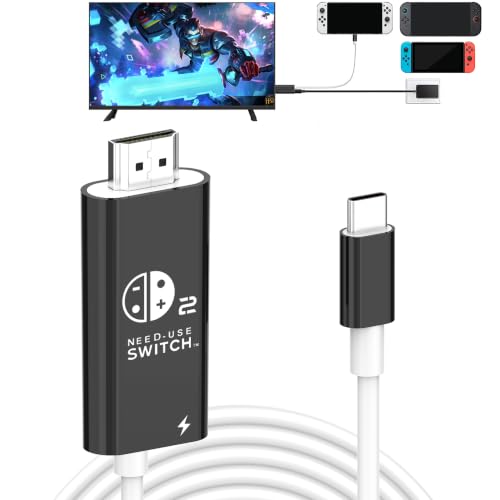
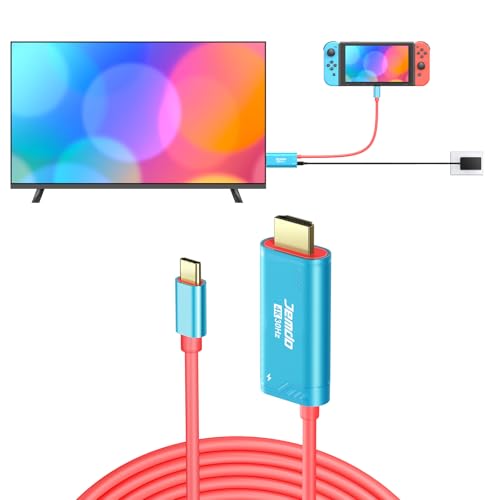
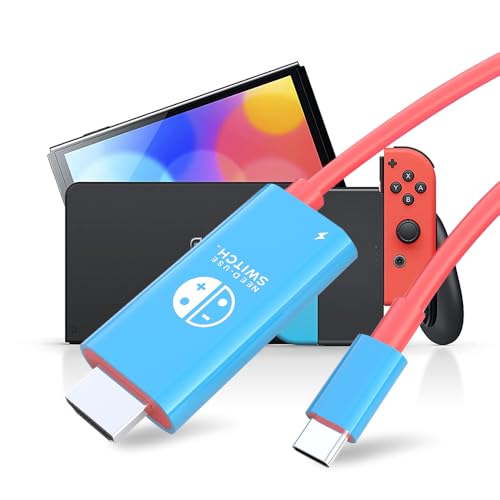
Third-party docks and USB-C to HDMI adapters can connect the Switch to a TV without the official dock. Products from brands like Genki, Skull & Co, and HORI offer portable dock alternatives that are smaller than the official dock.
Requirements for third-party docks: they must support USB-C Power Delivery (at least 39W) and HDMI output simultaneously. Simple USB-C to HDMI adapters that don’t provide power won’t work – the Switch requires power through USB-C to enable video output.
For a different take, see our guide on how to connect soundbar to TV.
Use third-party docks at your own risk. Nintendo has historically released firmware updates that bricked some third-party docks. Stick with well-reviewed products from established brands and check compatibility with the latest Switch firmware before buying.
Troubleshooting No Signal
TV shows “No Signal.” Make sure you’re on the correct HDMI input. Unplug all cables from the dock, wait 30 seconds, then reconnect in this order: power first, HDMI second, then place the Switch in the dock. Try a different HDMI port on the TV. Try a different HDMI cable.
Dock LED doesn’t light up. The AC adapter may not be connected properly. Make sure you’re using the official Nintendo AC adapter (or a USB-C PD adapter that delivers at least 39W). Third-party chargers that don’t meet the power requirement won’t activate the dock’s video output.
Image flickers or cuts out. Try a different HDMI cable. Cheap or damaged cables cause intermittent signal drops. Make sure the Switch is firmly seated in the dock – a loose connection causes flickering. Check that your TV’s firmware is up to date, as some TVs have HDMI compatibility issues fixed by updates.
Audio but no picture (or picture but no audio). Go to System Settings, then TV Output, and set the resolution to a specific value instead of Automatic. Try 1080p first, then 720p. For audio issues, check if your TV’s audio output is set to the correct source (TV speakers vs external).
Can I charge the Switch while playing on TV?
Yes. The dock charges the Switch while it outputs to the TV. The AC adapter powers both the dock’s HDMI output and the Switch’s battery. Leave the Switch docked and it stays fully charged.
Does the Switch support 4K on TV?
No. Both the standard Switch and the Switch OLED output at a maximum resolution of 1080p when docked. There is no 4K support. Games run at either 1080p or 720p when docked, depending on the game.
Can I use a wireless headset while docked?
Yes. The Switch supports Bluetooth audio (added in system update 13.0.0). Go to System Settings, then Bluetooth Audio, and pair your headphones. You can also plug a USB wireless headset adapter into the dock’s USB port for lower latency, which is better for fast-paced games.
Sources
Nintendo – Switch Setup | Nintendo – TV Output Troubleshooting