Pair AirPods to Windows 10
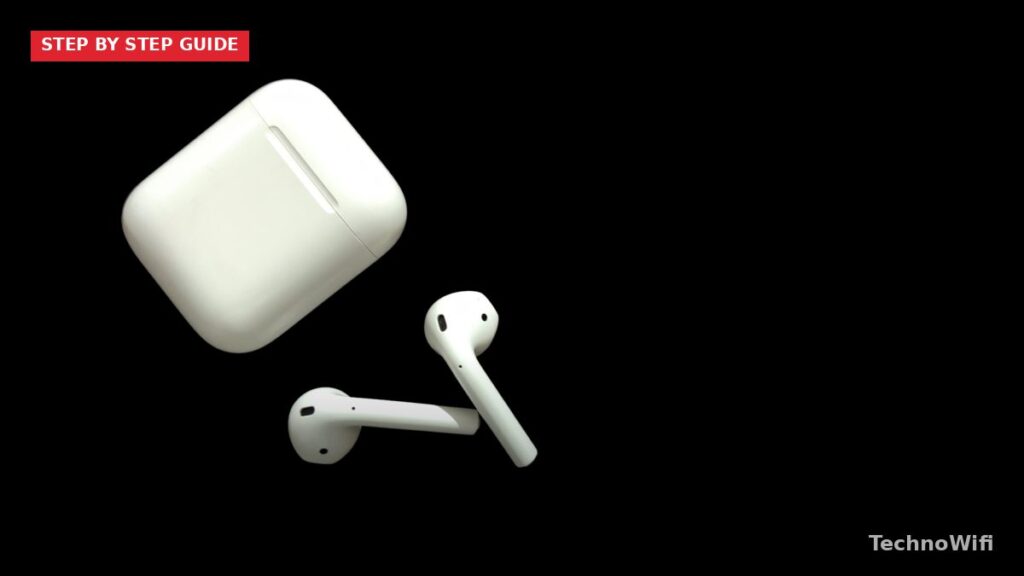
- Put your AirPods in the charging case and open the lid. Keep the AirPods inside the case.
- Press and hold the setup button on the back of the case until the status light flashes white. This puts the AirPods in pairing mode.
- On your PC, go to Settings, then Devices, then “Bluetooth & other devices.”
- Make sure Bluetooth is turned on.
- Click “Add Bluetooth or other device,” then “Bluetooth.”
- Select your AirPods from the list. They appear as “AirPods,” “AirPods Pro,” or your custom name.
- Click “Done.” Your AirPods are now connected.
The setup button is a small circular button on the back of the charging case, between the hinge and the Lightning (or USB-C) port. On AirPods Max, press and hold the noise control button on the right ear cup until the status light flashes white.
Reconnect AirPods After First Pairing
After the initial pairing, your AirPods are saved as a known Bluetooth device. To reconnect:
- Open the AirPods case (or take them out and put them in your ears).
- Go to Settings, then Devices, then “Bluetooth & other devices.”
- Find your AirPods in the list and click “Connect.”
Windows 10 doesn’t auto-connect AirPods the way an iPhone does. You need to manually reconnect each time. If your AirPods auto-connect to your iPhone or iPad instead of the PC, disconnect them from the Apple device first or turn off Bluetooth on the Apple device.
Faster Connection Method
Skip the Settings app by using the taskbar shortcut:
- Click the Action Center icon (speech bubble) in the bottom-right corner of the taskbar, or press Windows + A.
- Right-click the Bluetooth tile and select “Go to Settings.”
- Click your AirPods to connect.
You can also click the Bluetooth icon in the system tray (bottom-right, near the clock), select “Show Bluetooth Devices,” and connect from there.
Set AirPods as Default Audio Device
After connecting, Windows should route audio to your AirPods automatically. If audio still plays through your speakers:
- Right-click the speaker icon in the taskbar.
- Click “Open Sound settings.”
- Under “Output,” select your AirPods from the dropdown menu.
Windows shows two entries for AirPods: “Headphones (AirPods Stereo)” for music and “Headset (AirPods Hands-Free)” for calls. Use “Stereo” for the best audio quality. The “Hands-Free” profile enables the microphone but sounds noticeably worse.
For more on this, take a look at our how to check CPU temp guide.
Use AirPods Microphone in Calls
To use AirPods for video calls or voice chat:
- Right-click the speaker icon and select “Open Sound settings.”
- Under “Input,” select “Headset (AirPods Hands-Free AG Audio).”
- In your video call app (Zoom, Teams, Google Meet), go to audio settings and select the AirPods as both speaker and microphone.
When Windows switches to the Hands-Free profile for calls, audio quality drops because Bluetooth can’t handle high-quality stereo audio and microphone input at the same time. This is a Bluetooth limitation, not an AirPods issue – all Bluetooth headphones behave the same way on Windows.
What Works and What Doesn’t on Windows
| Feature | Works on Windows? |
|---|---|
| Music playback | Yes |
| Call audio and microphone | Yes (lower quality via Hands-Free profile) |
| Play/pause with stem tap | Yes |
| Active Noise Cancellation (AirPods Pro) | Yes (stays on whatever mode was last set) |
| Transparency mode toggle | No – use the force sensor on the stem to switch |
| Automatic ear detection | No – audio doesn’t pause when you remove an AirPod |
| Spatial Audio | No |
| Battery level indicator | Limited – shows in Bluetooth settings but may not update |
| Automatic switching between devices | No – must manually connect/disconnect |
| “Find My” AirPods | No – only works through Apple devices |
Check AirPods Battery on Windows
Windows 10 shows a rough battery percentage for connected Bluetooth devices. Go to Settings, then Devices, then “Bluetooth & other devices.” Your AirPods listing may show a battery percentage. This reading isn’t always reliable or up to date.
For accurate battery info, briefly connect the AirPods to an iPhone or open the case near an iPhone. Third-party apps like MagicPods (available on the Microsoft Store) add battery indicators and some extra AirPods features to Windows, though they’re paid apps.
Troubleshooting
AirPods not showing in Bluetooth list. Make sure the case status light is flashing white (pairing mode). If it’s not flashing, press and hold the setup button again for 15 seconds. Move the AirPods closer to the PC. Make sure no other device is connected to the AirPods – disconnect from your phone first. Turn Bluetooth off and on in Windows settings.
Connected but no audio. Right-click the speaker icon and check that AirPods are selected as the output device. If they show as “Hands-Free” only, remove the AirPods from Bluetooth settings, reset them (hold the setup button for 15 seconds until the light flashes amber then white), and re-pair.
On a similar note, our how to connect Beats to laptop article has more practical tips.
Audio cutting in and out. Move closer to the PC. Close the Bluetooth settings page (having it open can sometimes interfere with the connection). Update your Bluetooth driver: open Device Manager, expand “Bluetooth,” right-click your adapter, and select “Update driver.” If your PC uses a USB Bluetooth adapter, try a different USB port – USB 3.0 ports can cause interference.
Only one AirPod producing sound. Put both AirPods in the case, close the lid for 10 seconds, then open and reconnect. Check the audio balance: go to Settings, then System, then Sound, then “Device properties” under Output, and make sure the Left/Right balance slider is centered.
AirPods keep connecting to iPhone instead. On your iPhone, go to Settings, then Bluetooth, tap the “i” next to your AirPods, and select “Disconnect.” Or turn off Bluetooth on the iPhone temporarily while using AirPods with the PC.
Are AirPods worth using with Windows?
For casual music listening and basic calls, they work fine. You lose the Apple-specific features like seamless switching, automatic ear detection, and Siri, but the core audio functionality is solid. If you already own AirPods and want headphones for your PC, there’s no need to buy a separate pair. If you’re buying new headphones specifically for a Windows PC, options like Sony WH-1000XM5 or Bose QC headphones give you better Windows integration and the same or better audio quality.
Do AirPods Pro noise cancellation controls work on Windows?
ANC itself stays active on whatever mode you last set. To switch between ANC, Transparency, and Off, squeeze and hold the force sensor on the AirPods Pro stem. You can’t control the ANC mode from Windows settings – there’s no software toggle for it on non-Apple devices.
Can I use AirPods with Windows 11 too?
Yes, the process is nearly identical. Windows 11 actually handles Bluetooth audio devices a bit better than Windows 10, with improved reconnection reliability and better codec support. The steps are: Settings, then “Bluetooth & devices,” then “Add device,” then “Bluetooth.”
Sources
Apple – Use AirPods with Non-Apple Devices | Microsoft – Pair Bluetooth Device