If you’re setting up a wired security camera system, the cables and connectors you choose matter just as much as the cameras themselves. A flimsy cable can introduce video interference, drop signal over long runs, or simply fall apart after a few months outdoors. And if you pick the wrong connector type, you won’t get a picture at all.
I’ve tested and compared several BNC video power cables to help you find the right ones for your setup. Whether you’re running cameras around a small home or wiring up a larger property, these are the options worth considering in 2026.
Top Security Camera Wire Connectors Compared
Here’s a quick overview of the four cables I recommend, followed by detailed breakdowns of each one.
- 2-Pack BNC Video Power Cable. Best budget option for short runs
- Tainston 4-Pack 400ft Cable. Best for large properties and commercial installs
- Postta BNC Video Power Cable. Best all-around quality and durability
- HISVISION 4-Pack 100ft Cable. Best value multi-pack for standard home setups
2-Pack BNC Video Power Cable
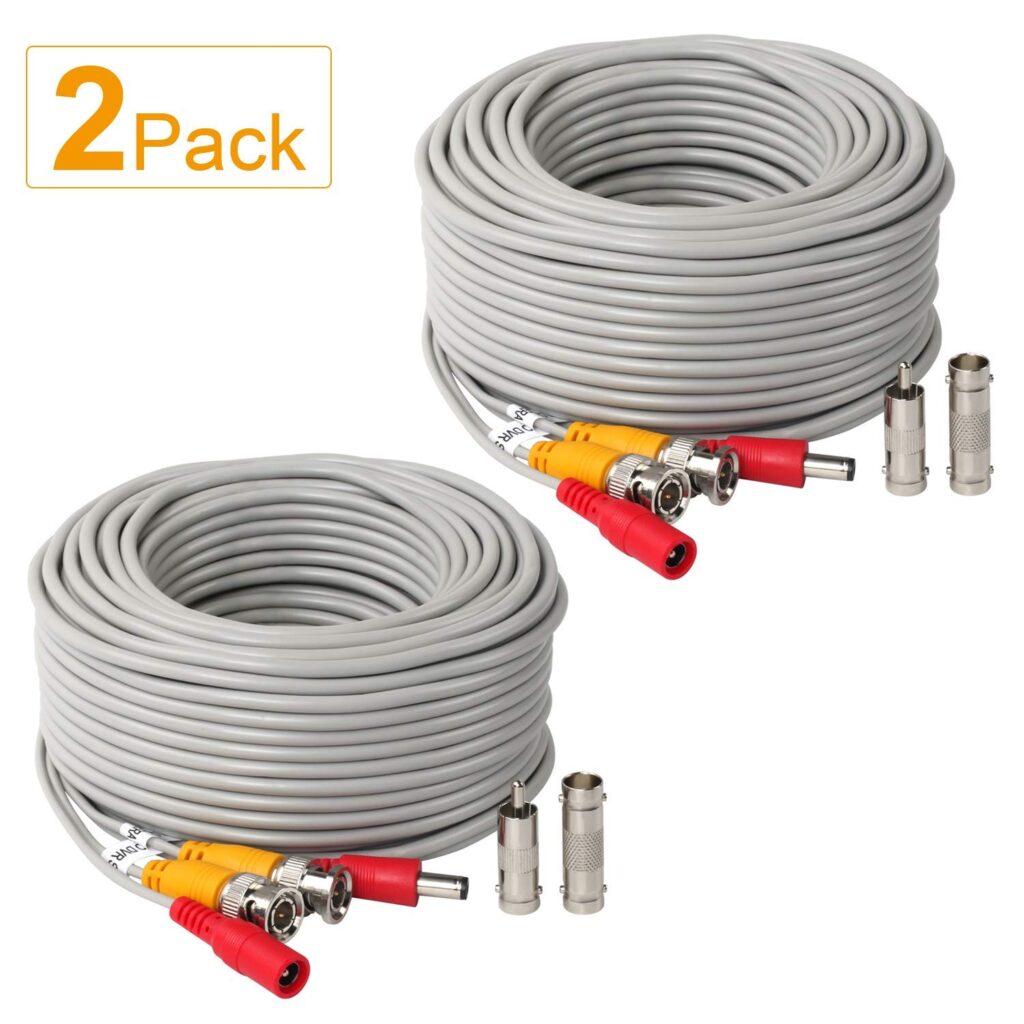
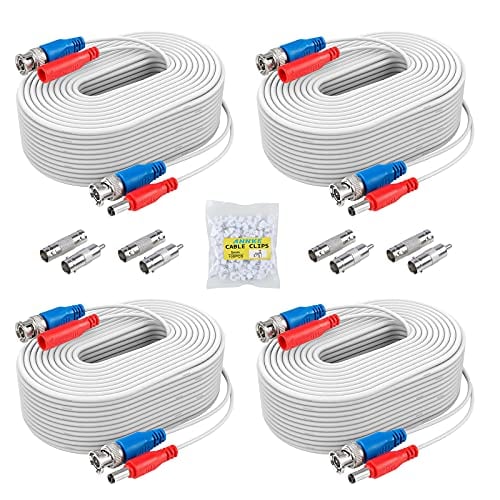
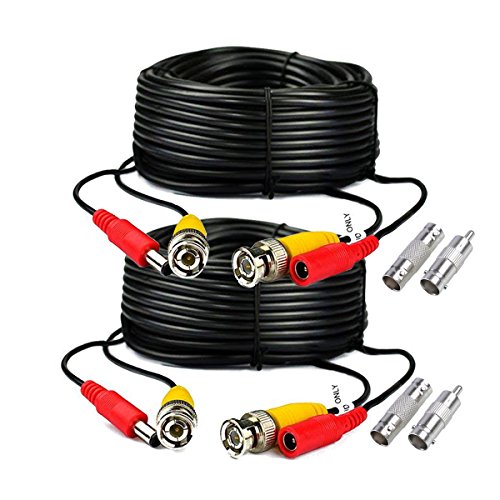
This 2-pack is a straightforward, no-nonsense option if you only need a couple of cables. Each cable carries both video and power through a single run, so you don’t have to deal with separate wiring for each. The BNC connectors come pre-attached, which saves you from crimping or soldering anything yourself.
Build quality is decent for the price. The connectors fit snugly into most DVR and camera ports, and the cable itself is flexible enough to route through walls and along baseboards without too much fuss. For indoor installations or short outdoor runs under a covered area, these work perfectly fine.
Where they fall short is on very long runs or fully exposed outdoor use. The shielding isn’t as heavy-duty as some of the pricier options on this list, so if you’re running cable across a large yard or through areas with a lot of electrical interference, you might notice some signal degradation.
Pros and Cons
- Pro: Affordable entry point for basic setups
- Pro: Pre-attached BNC connectors, no tools needed
- Pro: Combined video and power in one cable
- Con: Lighter shielding than premium options
- Con: Only two cables per pack
Tainston 4-Pack 400ft BNC Cable
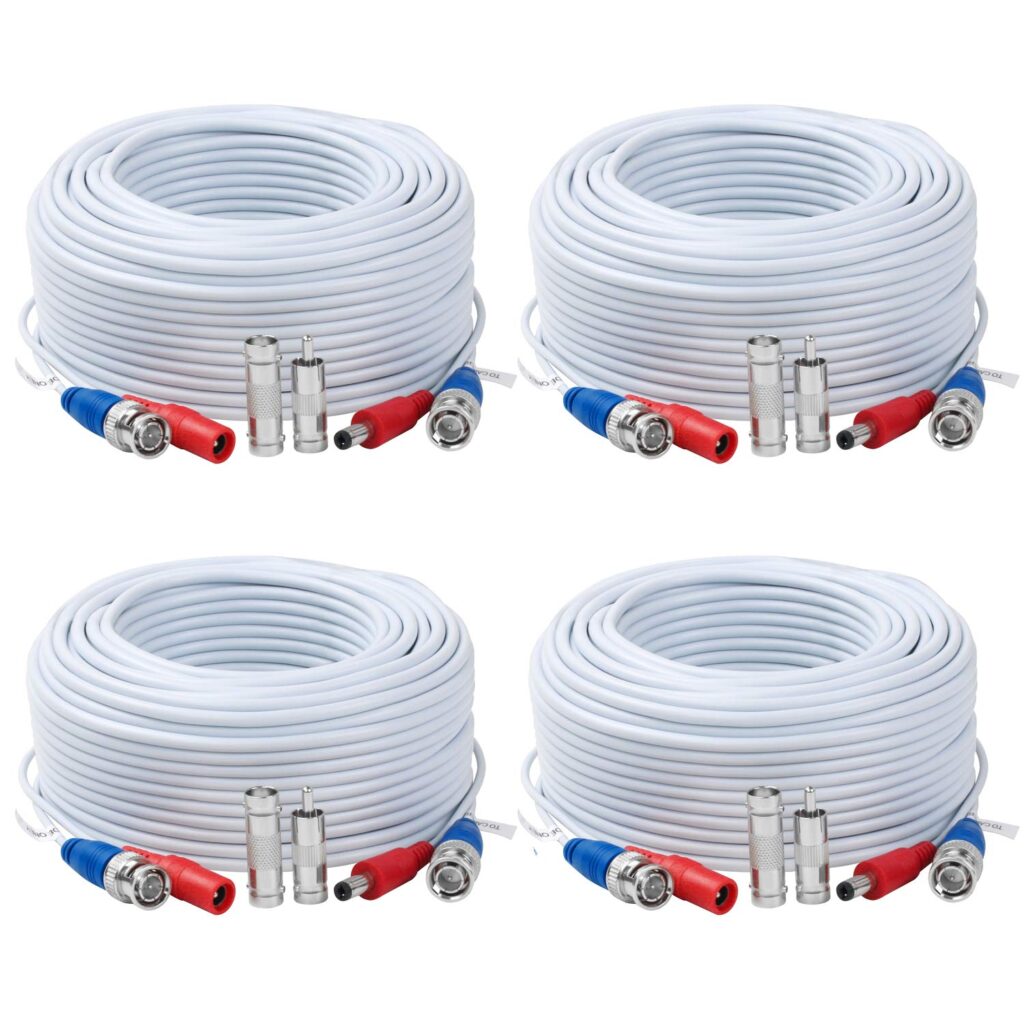
If you need to cover serious distance, the Tainston 4-pack with 400-foot cables is the way to go. This kind of length is ideal for commercial properties, large homes, or situations where your DVR sits far from where your cameras are mounted. Four cables at 400 feet each gives you 1,600 feet of total reach, enough to wire up most properties without splicing.
The cable quality is solid. Each run uses a proper coaxial core for the video signal with decent shielding against electromagnetic interference. I’ve seen these used in installs alongside fluorescent lighting and HVAC systems without noticeable video noise, which tells you the shielding does its job.
The main thing to keep in mind with 400-foot runs is signal loss. Even with good cable, BNC video signals degrade over distance. For runs over 300 feet, you might want to consider adding a video balun or signal amplifier to keep the picture crisp. That said, for most DVR-based analog and HD-over-coax systems, these cables perform reliably at their full length.
Pros and Cons
- Pro: 400-foot length handles even large commercial installs
- Pro: Four cables included, good value per foot
- Pro: Solid shielding against interference
- Con: Very long runs may need a signal booster
- Con: Bulkier to route through tight spaces
Postta BNC Video Power Cable
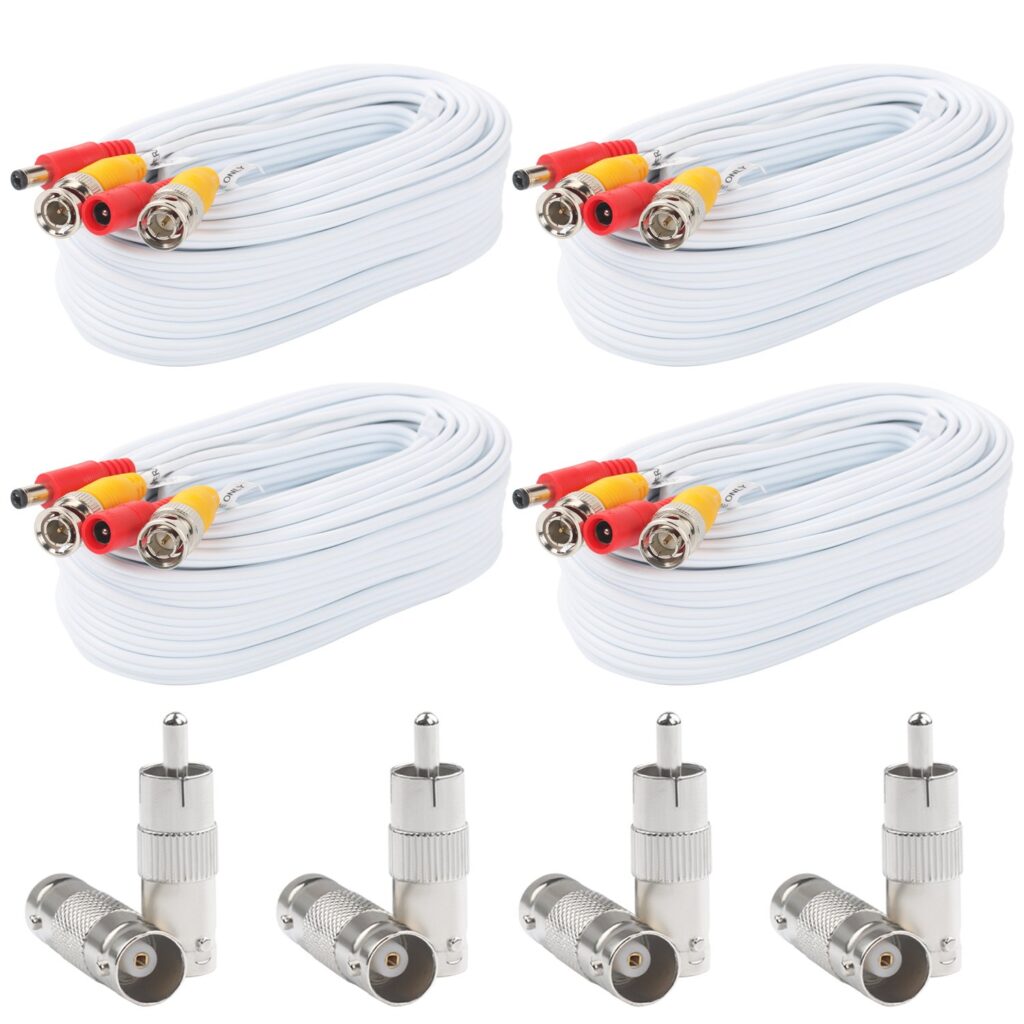
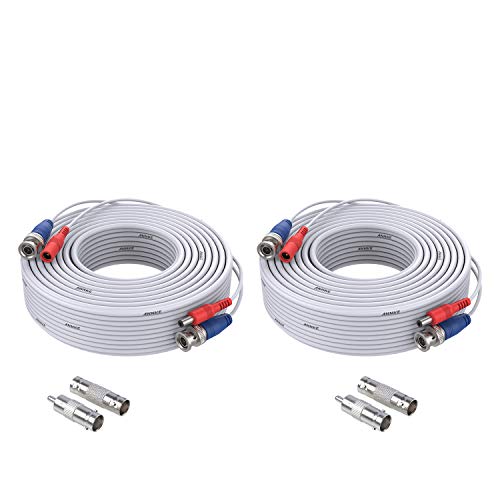
The Postta BNC cable is my top pick for overall quality and reliability. The build feels noticeably sturdier than budget alternatives, thicker outer jacket, tighter shielding, and connectors that click into place with a satisfying firmness. These are the kind of cables you install once and forget about.
What really sets the Postta apart is its weather resistance. The outer jacket holds up well in heat, cold, and moisture, making it a genuine option for outdoor runs where cables are exposed to the elements. I wouldn’t submerge it in standing water, but rain, snow, and UV exposure haven’t been issues in setups I’ve seen running these cables for years.
The video quality over these cables is clean and consistent. They work well with both traditional analog CCTV cameras and newer HD-over-coax formats like HD-TVI, HD-CVI, and AHD. If you’re upgrading an older wired system to higher-resolution cameras, these cables can handle the increased bandwidth without problems.
Pros and Cons
- Pro: Excellent build quality and durability
- Pro: Weather-resistant for outdoor use
- Pro: Compatible with HD-over-coax formats
- Pro: Clean, interference-free video signal
- Con: Higher price per cable than budget options
HISVISION 4-Pack 100ft BNC Cable
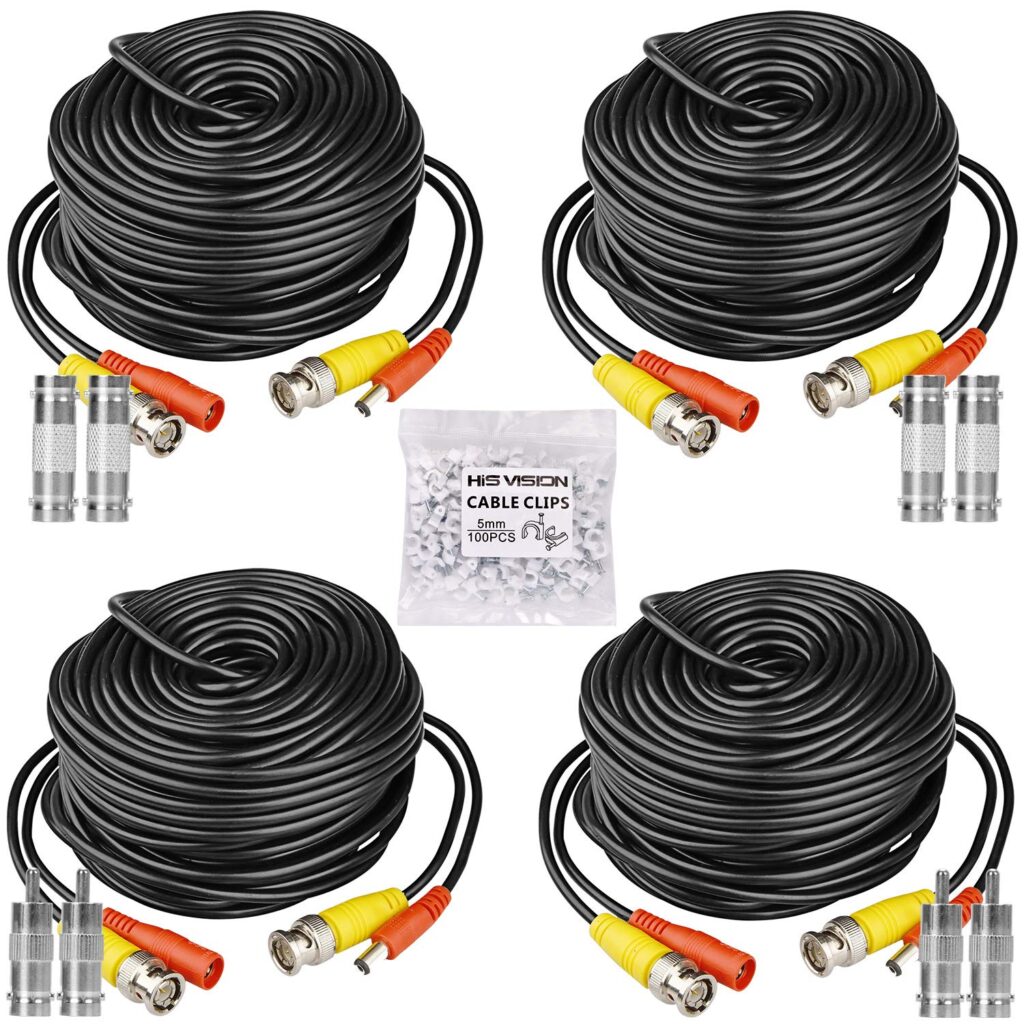
The HISVISION 4-pack hits the sweet spot for typical home security installations. You get four 100-foot cables, which is enough to wire up a standard 4-camera DVR system with cable to spare. At 100 feet each, signal loss isn’t a concern, so you’ll get clean video without needing any boosters or baluns.
These cables come with all the connectors you need pre-attached. BNC on both ends for video, and DC barrel connectors for power. The pack also includes BNC-to-RCA adapters, which is a nice touch if you need to connect to equipment that uses RCA inputs instead of BNC.
Build quality is middle-of-the-road. The cables are flexible and easy to work with, the connectors hold firm, and the shielding is adequate for residential use. They’re not as rugged as the Postta cables for harsh outdoor environments, but for most home setups where cables run through attics, along walls, or through conduit, they’ll serve you well for years.
Pros and Cons
- Pro: Four cables, perfect for a 4-camera system
- Pro: 100ft is ideal for most homes
- Pro: Includes BNC-to-RCA adapters
- Pro: Pre-attached connectors on both ends
- Con: Not the most durable for exposed outdoor runs
Security Camera Cable Buyer’s Guide
Picking the right cable isn’t complicated, but there are a few things worth understanding before you order. Here’s what actually matters.
BNC vs. RCA Connectors
BNC (Bayonet Neill-Concelman) connectors are the standard for security cameras. They lock into place with a twist, which means they won’t accidentally pull loose the way push-in RCA connectors can. If your DVR and cameras have BNC ports, and most wired security equipment does, stick with BNC cables.
RCA connectors are the red, white, and yellow plugs you probably remember from older TVs and game consoles. Some budget security cameras still use them, but they’re less secure and more prone to signal issues. If you do need RCA, look for cables that include BNC-to-RCA adapters so you have flexibility.
Choosing the Right Cable Length
Measure your actual cable runs before ordering, and then add 20% for routing around obstacles, corners, and through walls. Here are general guidelines:
- 25–50 feet: Single-room indoor cameras, cameras near the DVR
- 100 feet: Most residential installations, front door, backyard, garage
- 150–200 feet: Larger homes, cameras at the property perimeter
- 300–400+ feet: Commercial properties, large estates, warehouse setups
Don’t coil up excess cable and stuff it behind a wall. While a few extra feet won’t cause problems, 50+ feet of coiled cable can create interference. It’s better to buy the right length or trim excess cleanly.
Indoor vs. Outdoor Rated Cables
If any part of your cable run is exposed to weather, use outdoor-rated cables. Indoor cables have thinner jackets that break down in UV light and crack in freezing temperatures. Outdoor-rated cables use UV-resistant, weatherproof jacketing that stands up to rain, sun, and temperature swings.
Even if you plan to run cables through conduit outdoors, outdoor-rated cable is worth the small price premium. Conduit can trap moisture, and cheaper indoor cable may degrade over time in that environment.
Video Quality and Cable Type
For traditional analog CCTV (up to 960H resolution), basic RG59 coaxial cable is fine. If you’re running HD-over-coax cameras (720p, 1080p, or higher), look for cables specifically rated for HD-TVI, HD-CVI, or AHD signals. These use better shielding and conductor quality to handle the higher bandwidth without signal degradation.
If you’re considering an IP camera system instead of analog, you’ll need Ethernet cable (Cat5e or Cat6), not BNC cables. That’s a completely different setup, check out our guide to wireless CCTV cameras if you want to go that route.
Power over the Same Cable
All four cables reviewed here carry both video and power in a single run, which simplifies installation significantly. You connect the power end to a 12V DC power supply or power distribution box near your DVR, and the cable delivers power directly to each camera. No need to run separate electrical wiring or install outlets near each camera location.
Just make sure your power supply can handle the total current draw of all connected cameras. A typical security camera draws 0.5–2 amps at 12V, so a 4-camera system usually needs a power supply rated for at least 5 amps.
Which Cable Should You Buy?
For most home security setups with 4 cameras, the HISVISION 4-Pack 100ft cables offer the best balance of price, quantity, and quality. If you need longer runs or more rugged outdoor performance, step up to the Postta BNC cables. And for very large properties or commercial installations, the Tainston 400ft cables give you the reach you need without splicing.
Whatever you choose, buy from a reputable brand with decent reviews. Cheap no-name cables are tempting, but a $5 cable that introduces video noise or fails after six months isn’t really saving you anything. For more camera recommendations, check out our guides to the best outdoor home security cameras and best wireless CCTV cameras.