
Why Use a Parental Control App?
Kids get smartphones and tablets earlier than ever, and the internet doesn’t come with guardrails built in. A parental control app lets you set screen time limits, block inappropriate websites and apps, track your child’s location, and monitor what they’re doing online – all from your own phone. The goal isn’t to spy on your kid. It’s to create boundaries that match their age and maturity while giving them room to explore safely.
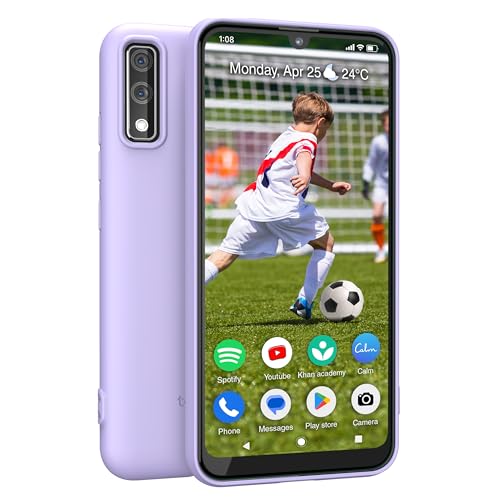
Both Apple and Google offer free built-in parental controls (Screen Time and Family Link), and they’re decent starting points. Third-party apps go further with features like social media monitoring, real-time alerts, geofencing, and cross-platform management. Whether you need a third-party app depends on how much control and visibility you want.
Best Parental Control Apps Compared
| App | Best For | Platforms | Price |
|---|---|---|---|
| Qustodio | Best overall | iOS, Android, Windows, Mac, Kindle | $55 to $100/year |
| Bark | Best for monitoring | iOS, Android, Amazon | $49 to $99/year |
| Google Family Link | Best free (Android) | Android, Chromebook | Free |
| Apple Screen Time | Best free (iPhone) | iOS, iPadOS, Mac | Free |
| Net Nanny | Best web filtering | iOS, Android, Windows, Mac | $40 to $90/year |
Best Overall: Qustodio
Qustodio covers every platform a family might use – iPhones, Android phones, Windows PCs, Macs, and even Kindle tablets. The dashboard gives you a single view of all your children’s devices, which is useful when one kid has an iPad and another has an Android phone. Screen time limits work per device or across all devices combined, so a child can’t hit their iPad limit and switch to the family laptop.

Web filtering is AI-powered and catches inappropriate content beyond simple blocklists. The app categorizes sites in real time, which means it blocks newly created sites that a static blocklist would miss. You get detailed reports showing which sites your child visits, which apps they use most, and how much time they spend on each. Location tracking shows your child’s current location and movement history.
Call and text monitoring works on Android but is limited on iOS due to Apple’s restrictions (no third-party app can read iMessages). At $55 to $100/year depending on the plan, it’s not cheap, but the cross-platform coverage and depth of features justify the price for families with multiple devices.
Best for Monitoring: Bark
Bark takes a different approach than most parental control apps. Instead of logging every website visit and text message for you to review, it uses AI to scan content for concerning patterns – cyberbullying, depression, suicidal ideation, sexual content, drug references, and violence. When Bark detects something worrying, it sends you an alert with context. You don’t see every message your child sends, only the ones the system flags as potentially harmful.
This approach works well for older kids and teens who would resent having every text message read by their parents. The monitoring covers texts, emails, YouTube, and 30+ social media platforms including Instagram, Snapchat, TikTok, and Discord. Bark also offers basic screen time management and web filtering, though these features aren’t as granular as Qustodio’s.
The two plans are Bark Jr ($49/year, web filtering and screen time only) and Bark Premium ($99/year, adds content monitoring and alerts). The premium plan’s monitoring capability is the reason to choose Bark over alternatives – no other app matches its AI content analysis across that many platforms.
Best Free Option for Android: Google Family Link
Family Link is Google’s built-in parental control system for Android and Chromebook devices. It’s completely free, requires no additional app installation beyond the Family Link parent app on your phone, and covers the basics well: screen time limits, app approval before download, content filters in Google Play and Chrome, and real-time location tracking.
You can set daily screen time limits and a bedtime schedule that locks the device. App permissions require your approval – when your child tries to download an app from Google Play, you get a notification and can approve or deny it from your phone. Google SafeSearch stays locked on, and you can block specific websites in Chrome.
The limitations are platform-specific. Family Link only manages Android devices and Chromebooks. If your child uses an iPhone, iPad, or Windows PC, you’ll need a different solution for those. The monitoring is basic compared to paid apps – you see app usage time and location but can’t monitor messages, social media, or web browsing history in detail.
Best Free Option for iPhone: Apple Screen Time
Screen Time is Apple’s built-in parental control, available on iPhone, iPad, and Mac. Set it up through Settings then Screen Time then Family. You can manage your child’s device remotely from your own iPhone through Family Sharing.
The features include daily screen time limits, app category restrictions (block Social Networking but allow Education), a downtime schedule that limits the device to approved apps only, content filters for explicit music and movies, and communication limits that control who your child can call, text, and FaceTime. The purchase approval feature requires your permission before any App Store downloads or in-app purchases.
Screen Time works seamlessly within the Apple ecosystem but doesn’t extend to Android or Windows. The content filtering is decent but not as granular as third-party options. There’s no social media monitoring, no location history, and no AI-based content alerts. For iPhone families who want basic screen time management without paying for an app, it covers the essentials.
Best Web Filtering: Net Nanny
Net Nanny has been in the content filtering business longer than most competitors, and its web filter remains one of the most accurate available. It analyzes page content in real time rather than relying solely on a blocklist database, which means it catches inappropriate content on sites that haven’t been categorized yet. The false positive rate is low – it rarely blocks sites that should be allowed.
Beyond filtering, Net Nanny offers screen time management, app blocking, and profanity masking (replaces swear words with #@% on web pages rather than blocking the entire page). The dashboard shows search history, blocked attempts, and time spent on different content categories. Plans start at $40/year for a single device and scale to $90/year for 20 devices.
Net Nanny doesn’t offer social media monitoring or the AI content analysis that Bark provides. If your primary concern is keeping inappropriate web content away from younger children, Net Nanny’s filter is the sharpest available. For monitoring teens’ social media and messaging, Bark is the better choice.
What Age Should You Start Using Parental Controls?
As soon as your child has unsupervised access to a connected device. For most families, that’s around ages 5 to 7 when kids start using tablets for games and educational apps. At this age, the focus should be on content filtering and screen time limits rather than monitoring – young kids aren’t on social media and don’t need surveillance.
As kids get older (10 to 13), the needs shift toward web filtering for broader internet access, app approval to prevent installation of age-inappropriate apps, and possibly location tracking for safety. Teens (13+) benefit more from monitoring-style tools like Bark that flag concerning content without reading every message. The level of control should decrease as kids demonstrate responsibility, with the goal of building trust and digital literacy rather than permanent restriction.
Can kids bypass parental control apps?
Older kids and teens can sometimes find workarounds – using a friend’s device, creating alternate accounts, using VPNs, or finding unfiltered browsers. No parental control app is 100% bypass-proof. The most effective approach combines technology with ongoing conversations about online safety. If your child is actively trying to bypass controls, that’s a conversation about trust and boundaries, not a technical problem to solve with a stricter app.
Do parental control apps slow down devices?
Modern parental control apps have minimal impact on device performance. You might notice slightly slower page loading if the app uses real-time content filtering (it’s analyzing each page before displaying it), but the delay is usually under a second. Battery drain is the more common concern – apps that track location continuously use more battery. Most apps let you adjust location tracking frequency to balance accuracy with battery life.
Are parental control apps legal?
Yes, for minor children. Parents have the legal right to monitor and manage their children’s device usage. Using these apps on another adult’s device without consent is illegal in most jurisdictions. Once your child turns 18, monitoring their device without their knowledge crosses from parenting into surveillance. Many families transition from monitoring to an honor system as kids enter their late teens.
Sources
Google – Google Family Link | Apple – Use Screen Time | Bark – Bark Parental Controls