Quick Fixes That Take Under 5 Minutes
Restart your router and modem. Unplug both devices, wait 30 seconds, plug the modem in first, wait for it to fully boot (about 2 minutes), then plug in the router. This clears the memory cache, resets the connection to your ISP, and often fixes slowdowns caused by days or weeks of continuous operation. Make this your first step before trying anything else.
Move closer to your router. WiFi signal degrades with distance and obstacles. Every wall between you and the router cuts signal strength significantly. Concrete walls and floors are the worst offenders. Moving to the same room as the router is the fastest way to test whether distance is your problem.
Switch from 2.4 GHz to 5 GHz. If your router broadcasts two network names (like “HomeWiFi” and “HomeWiFi_5G”), connect to the 5 GHz network. It’s faster and less congested, though it has shorter range. Use 5 GHz when you’re close to the router and 2.4 GHz when you’re far away or on a different floor.
Test Your Actual Internet Speed
Before troubleshooting, know what you’re working with. Run a speed test to see your actual download and upload speeds.
- Go to speedtest.net or fast.com on your browser.
- Click “Go” or “Start Test.”
- Note your download speed, upload speed, and ping (latency).
Compare results to what you’re paying for. If your plan promises 200 Mbps and you’re getting 180 Mbps, your connection is fine – the problem is likely the specific website or service you’re using. If you’re getting 30 Mbps on a 200 Mbps plan, something is wrong on your end or your ISP’s end.
Run the test on a device connected via Ethernet cable directly to the router. This gives you the true internet speed without WiFi interference. If the wired speed matches your plan but WiFi is slow, the problem is your WiFi setup, not your internet service.
Optimize Your Router Placement
Router placement is the single biggest factor in WiFi performance. Most people put the router wherever their internet cable enters the house, which is rarely the optimal location.
Best location: Central and elevated. Place the router in the middle of your home, on a shelf or mounted high on a wall. WiFi signals radiate outward and slightly downward from the router, so a central, elevated position provides the most even coverage.
Avoid these spots: Inside closets or cabinets (blocks signal), on the floor (signal radiates outward, not upward), behind the TV (the TV’s metal chassis blocks signal), near microwaves (they emit interference on the 2.4 GHz band), and in corners of the house (wastes half the signal on the neighbors).
Antenna position: If your router has external antennas, point some vertically and others horizontally. Vertical antennas broadcast horizontally (good for the same floor), and horizontal antennas broadcast vertically (good for reaching other floors).
Reduce Network Congestion
Too many devices sharing the same connection causes slowdowns. A typical household now has 15 to 25 connected devices – phones, laptops, tablets, smart TVs, game consoles, smart speakers, security cameras, and smart home devices. Each one consumes bandwidth.
Disconnect unused devices. Smart home devices, security cameras, and background app syncing consume bandwidth even when you’re not actively using them. Disconnect or pause devices you don’t need right now.
Check for bandwidth hogs. Log into your router’s admin panel (usually 192.168.1.1 or 192.168.0.1 in a browser) and look for a connected devices or bandwidth monitor section. Identify which devices are using the most data. A single 4K stream uses about 25 Mbps, and cloud backups or large downloads can saturate your connection.
Schedule large downloads. Game updates, OS updates, and cloud backups can be scheduled for late-night hours when nobody is actively using the internet. Most devices have scheduling options in their update settings.
Update Your Router Firmware
Router manufacturers release firmware updates that fix bugs, improve performance, and patch security vulnerabilities. Many routers don’t update automatically.
- Log into your router’s admin panel (check the label on the router for the address, usually 192.168.1.1).
- Look for a “Firmware Update,” “Software Update,” or “System Update” section.
- Click “Check for Updates” and install any available updates.
- The router restarts after updating. Internet is briefly unavailable during the restart.
If your router is more than 5 years old, firmware updates may have stopped. Older routers also use slower WiFi standards (WiFi 4 or WiFi 5) and weaker processors that struggle with many simultaneous connections. Upgrading to a WiFi 6 or WiFi 6E router can dramatically improve speed and reliability.
Use Ethernet for Critical Devices
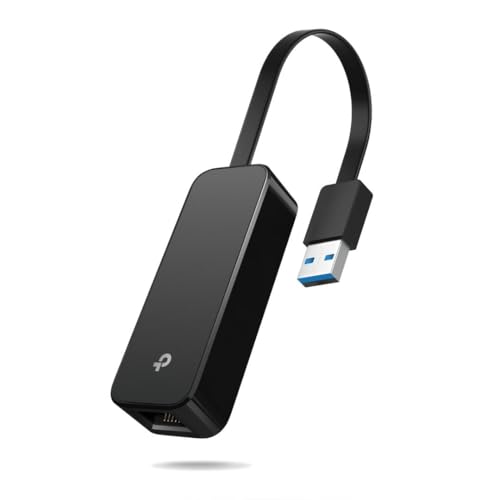
Nothing beats a wired connection for speed and reliability. Ethernet eliminates WiFi interference, provides consistent latency, and delivers the full speed your internet plan offers. Connect these devices with Ethernet whenever possible: desktop computers, gaming consoles, smart TVs, and streaming devices.
If running Ethernet cables isn’t practical, powerline adapters are an alternative. They send internet signals through your home’s electrical wiring. Plug one adapter near the router (connected via Ethernet) and another in any room (also with Ethernet to your device). Speeds aren’t as fast as direct Ethernet but are usually better than weak WiFi.
Upgrade to a Mesh WiFi System
If your home is larger than about 1,500 square feet, a single router often can’t cover every room with strong signal. A mesh WiFi system uses multiple access points placed throughout your home to create seamless coverage. Each node communicates with the others, and your devices automatically connect to whichever node has the strongest signal.
Popular mesh systems include Google Nest WiFi Pro, Eero Pro, TP-Link Deco, and Netgear Orbi. A two-pack covers most homes up to 3,000 square feet, and three-packs handle larger spaces. Mesh systems typically cost $200 to $400 for a multi-unit pack.
Change Your WiFi Channel
In apartments and dense neighborhoods, dozens of WiFi networks compete on the same channels. This interference slows everyone down.
- Download a WiFi analyzer app (WiFi Analyzer on Android, or NetSpot on Mac/Windows).
- The app shows which channels are most congested.
- Log into your router’s admin panel and go to WiFi settings.
- Change the 2.4 GHz channel to 1, 6, or 11 (these are the only non-overlapping channels). Pick the one with the least congestion.
- For 5 GHz, most routers auto-select the best channel. If yours doesn’t, try channels in the DFS range (52 to 144) which are typically less crowded.
Contact Your ISP
If none of the above fixes improve your speed, the problem may be on your ISP’s side. Call and ask them to run a line test, which checks the signal quality from their end to your modem. Common ISP-side issues include degraded wiring, overloaded local infrastructure, and provisioning errors where your modem isn’t configured for the speed tier you’re paying for.
Ask about upgrading your plan if your current speed doesn’t meet your needs. As a rough guide: 25 Mbps handles one person streaming and browsing, 100 Mbps works for a small household, 200 to 300 Mbps covers a family of four with heavy streaming, and 500+ Mbps is for large households or homes with many simultaneous 4K streams and gamers.
Why is my internet fast on speed tests but slow in practice?
Speed tests measure raw throughput between your device and a nearby server. Real-world performance depends on the specific servers you’re connecting to. Netflix, YouTube, and gaming servers can be congested at peak hours regardless of your local speed. DNS resolution speed, router processing power, and the number of simultaneous connections also affect real-world performance.
Does a VPN slow down my internet?
Yes. A VPN encrypts all your traffic and routes it through an extra server, which adds latency (usually 5 to 30ms) and reduces throughput (typically 10 to 30 percent slower). The closer the VPN server is to your physical location, the less impact it has. If you’re using a VPN and experiencing slowness, try connecting to a VPN server in your country or region.
Should I replace my ISP-provided router?
Often, yes. ISP-provided routers are typically budget models with limited range, fewer features, and less processing power than retail routers. Buying your own modem and router also eliminates the monthly rental fee (usually $10 to $15/month) that most ISPs charge for their equipment. A good WiFi 6 router costs $80 to $150 and pays for itself within a year through saved rental fees.
Sources
If you are looking for faster speeds, it might be time to compare providers. Check which ISPs and plans are available at your zip code.
FCC – Broadband Speed Guide | Google – WiFi Troubleshooting