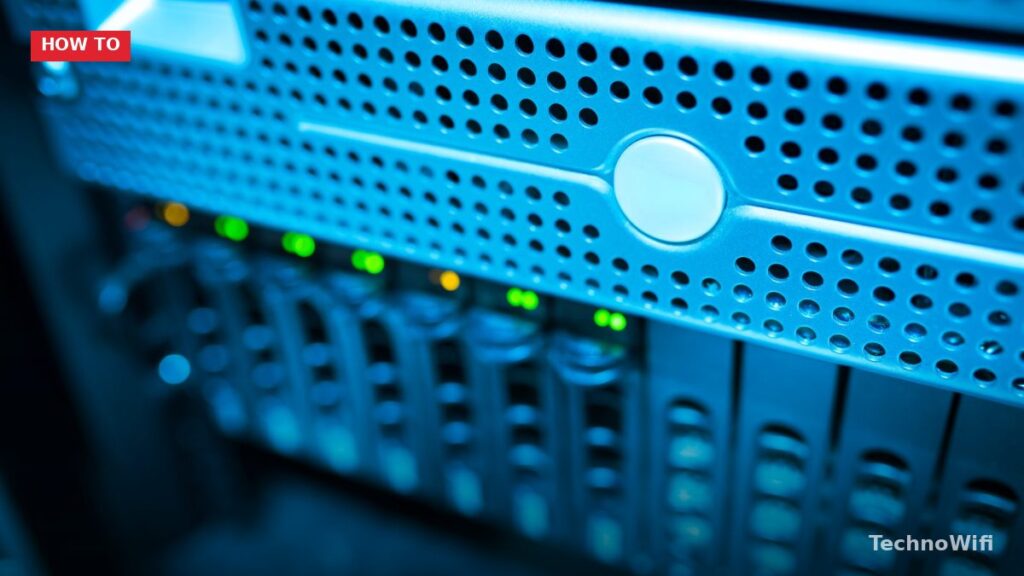
A WiFi router is the device that connects every phone, laptop, smart TV, and tablet in your home to the internet. It takes the single internet connection coming from your modem and shares it wirelessly with all your devices at the same time. Without a router, only one device could go online at a time, and it would need a physical cable to do it.
But a router does more than just share a connection. It assigns each device its own address, directs data to the right place, keeps unauthorized users out, and manages dozens of simultaneous connections without mixing up who asked for what. Here is how every part of that process works in 2026.
What Does a WiFi Router Actually Do
A router routes data. That’s where the name comes from. When you load a webpage on your phone, the request leaves your phone as a small chunk of data called a packet. The packet travels wirelessly to your router. Your router reads the destination address on the packet and forwards it through your modem to your internet service provider (ISP), which sends it to the web server hosting that page.
The web server responds with packets containing the page content. Those packets travel back through your ISP to your modem, then to your router. Your router reads which device requested that data and delivers the packets to your phone specifically, not to your laptop or your smart TV. It does this for every device on your network simultaneously, routing thousands of packets per second to the correct destinations.
Think of your router as a mail sorter in a busy post office. Every letter that arrives has an address on it. The sorter reads the address and puts the letter in the correct mailbox. Your router does the same thing with data packets, except it handles millions of letters per day at the speed of light.
What Is the Difference Between a Modem and a Router
A modem and a router do two completely different jobs, and most home networks need both.
The modem connects your home to your ISP. It translates the signal coming over your cable line, phone line, or fiber optic cable into a standard Ethernet signal that your home network equipment can understand. A modem gives you one internet connection for one device.
The router takes that single connection from the modem and shares it with multiple devices, both wired and wireless. It creates your local network, assigns IP addresses, and manages traffic between all your devices and the internet.
Many ISPs now provide a combo unit called a gateway that puts both the modem and router into one box. This simplifies setup but limits your upgrade options. If you want better WiFi performance, buying your own separate router and connecting it to the modem (or putting the gateway in bridge mode) gives you more control.
| Feature | Modem | Router | Gateway (Combo) |
|---|---|---|---|
| Connects to ISP | Yes | No | Yes |
| Creates WiFi network | No | Yes | Yes |
| Supports multiple devices | No (1 device) | Yes | Yes |
| Assigns IP addresses | No | Yes | Yes |
| Has firewall | No | Yes | Yes |
| Upgradeable independently | Yes | Yes | No (replace entire unit) |
How Do WiFi Signals Travel Between Your Router and Devices
WiFi uses radio waves to transmit data through the air. Your router has antennas (internal or external) that broadcast radio signals in all directions. When your phone or laptop has WiFi turned on, its built-in antenna picks up those radio waves and converts them back into data.
The communication goes both ways. Your device also sends radio waves back to the router when you upload a photo, send an email, or make a video call. This two-way radio conversation happens on specific frequency bands, following rules set by the WiFi standard your router supports.
Radio waves travel at the speed of light but lose strength as they move through space. Every time the signal passes through a wall, floor, or piece of furniture, it loses more energy. Dense materials like concrete and metal block signals much more than drywall or wood. This is why your WiFi speed drops the farther you get from the router, and why certain rooms in your house might have weak or no signal at all.
What Are the 2.4 GHz, 5 GHz, and 6 GHz WiFi Bands
WiFi routers broadcast on specific radio frequency bands. In 2026, most routers use two or three of these bands: 2.4 GHz, 5 GHz, and 6 GHz. Each band has different strengths.
2.4 GHz has the longest range and passes through walls the best. It only has 3 non-overlapping channels, which means it gets crowded in apartments and dense neighborhoods. Maximum speeds are lower than the other bands. Bluetooth devices, microwaves, and baby monitors also use 2.4 GHz, adding interference. This band works best for smart home devices that need range over speed.
5 GHz is faster than 2.4 GHz and offers 25 non-overlapping channels, so congestion is rarely a problem. The trade-off is shorter range and more signal loss through walls. Most streaming, gaming, and video calling should happen on 5 GHz when you’re within a few rooms of your router.
6 GHz is the newest band, available on WiFi 6E and WiFi 7 routers. It provides the fastest speeds and has the most available channels (59 non-overlapping channels). Almost no other devices compete for this airspace yet, so interference is practically zero. The drawback is the shortest range of all three bands and the most signal loss through solid obstacles. It works best in the same room or with a clear line of sight to the router.
| Band | Max Speed (WiFi 7) | Range | Wall Penetration | Congestion Risk | Non-Overlapping Channels |
|---|---|---|---|---|---|
| 2.4 GHz | ~1.1 Gbps | Longest (150+ ft) | Best | High | 3 |
| 5 GHz | ~6.9 Gbps | Medium (80-100 ft) | Moderate | Low | 25 |
| 6 GHz | ~23 Gbps | Shortest (50-70 ft) | Weakest | Very low | 59 |
Modern routers labeled as “tri-band” operate on all three bands simultaneously. They automatically steer each device to the best band based on its capabilities and distance from the router.
What WiFi Standards Are Available in 2026
WiFi standards define how fast a router can transmit data, how many devices it can handle, and which frequency bands it can use. Each new generation adds speed and efficiency. Here are the standards you’ll find in routers sold in 2026.
WiFi 6 (802.11ax) launched in 2020 and is now the baseline standard. It introduced OFDMA (Orthogonal Frequency Division Multiple Access), which lets the router communicate with multiple devices in a single transmission instead of one at a time. WiFi 6 also added BSS Coloring to reduce interference from nearby networks and Target Wake Time to save battery life on connected devices. It operates on 2.4 GHz and 5 GHz.
WiFi 6E is WiFi 6 with one major addition: access to the 6 GHz band. Same speeds and technology as WiFi 6, but with a massive chunk of new, uncrowded spectrum. This matters most in apartments and offices where the 2.4 GHz and 5 GHz bands are packed with competing networks.
WiFi 7 (802.11be) is the newest standard available in 2026. It supports 320 MHz-wide channels (double the widest WiFi 6 channels), Multi-Link Operation (MLO) that lets a device send data across two bands simultaneously, and 4K-QAM modulation for higher data density. The theoretical maximum speed is 46 Gbps, though real-world speeds are a fraction of that. WiFi 7 delivers the biggest improvements for high-bandwidth tasks like 4K/8K streaming, VR gaming, and large file transfers.
| Standard | Year Launched | Max Theoretical Speed | Bands Supported | Key Feature |
|---|---|---|---|---|
| WiFi 6 (802.11ax) | 2020 | 9.6 Gbps | 2.4 GHz, 5 GHz | OFDMA for multi-device efficiency |
| WiFi 6E | 2021 | 9.6 Gbps | 2.4 GHz, 5 GHz, 6 GHz | 6 GHz band access |
| WiFi 7 (802.11be) | 2024 | 46 Gbps | 2.4 GHz, 5 GHz, 6 GHz | MLO and 320 MHz channels |
How Does a Router Assign IP Addresses With DHCP
Every device on your network needs a unique identifier so the router knows where to send data. That identifier is an IP address – a string of numbers like 192.168.1.15. Your router assigns these addresses automatically using a protocol called DHCP (Dynamic Host Configuration Protocol).
Here is how the DHCP process works when a device connects to your network.
- Your device connects to the WiFi network and broadcasts a message saying “I need an IP address.”
- Your router’s DHCP server receives the request and checks its pool of available addresses (typically 192.168.1.2 through 192.168.1.254).
- The router offers an available address to your device along with other network information like the subnet mask, default gateway (the router’s own address), and DNS server addresses.
- Your device accepts the offer and starts using the assigned IP address.
- The router records the assignment and sets a lease time (usually 24 hours). When the lease expires, the device can renew it or receive a new address.
Your router also has its own IP address assigned by your ISP. This public IP address is what the rest of the internet sees. All your devices share this single public address when communicating with the outside world. The router uses a process called NAT (Network Address Translation) to keep track of which internal device made each external request, so the return traffic goes to the right place.
How Does WiFi Security Work With WPA3
When data travels wirelessly between your device and your router, anyone within range could theoretically intercept it. WiFi security protocols encrypt that data so only your device and your router can read it. In 2026, the current standard is WPA3 (Wi-Fi Protected Access 3).
WPA3 replaced WPA2 as the default security protocol on all new routers. It brought several improvements. SAE (Simultaneous Authentication of Equals) replaced the older PSK handshake, making it much harder for attackers to crack your password by capturing and replaying the connection process. Even if someone records your WiFi traffic, they can’t decrypt it later by guessing your password offline.
Individual data encryption means that each device’s connection to the router is encrypted with its own unique key. On WPA2, if someone knew your WiFi password and captured traffic from the network, they could potentially decrypt other devices’ data. WPA3 prevents this. Even on a shared network, your traffic stays private from other users.
Protected Management Frames (PMF) prevent deauthentication attacks, where an attacker forces your device to disconnect from the network in hopes of capturing the reconnection handshake. WPA3 makes these management frames tamper-proof.
For the best security in 2026, set your router to WPA3-Personal if all your devices support it. If you have older devices that only support WPA2, use WPA2/WPA3 transitional mode, which lets both types connect. Avoid using WPA2-only or older protocols like WEP, which can be cracked in minutes.
What Is the Difference Between Mesh WiFi and a Single Router
A single router broadcasts WiFi from one location. Signal strength decreases as you move farther away, and thick walls or multiple floors create dead zones. This setup works fine for small apartments and open-plan homes under about 1,500 square feet.
A mesh WiFi system uses two or more units (called nodes) placed throughout your home. All the nodes share the same network name and password. Your devices automatically switch to the nearest node as you move around, without dropping the connection. One node connects to your modem as the primary router. The other nodes communicate with each other wirelessly over a dedicated backhaul channel.
The result is even WiFi coverage across your entire home, including upstairs bedrooms, basements, and garages that a single router can’t reach. Mesh systems handle the handoff between nodes seamlessly, so a video call won’t drop when you walk from the kitchen to the backyard.
| Feature | Single Router | Mesh WiFi System |
|---|---|---|
| Coverage area | 800-2,000 sq ft | 2,500-6,000+ sq ft |
| Dead zones | Common in larger homes | Eliminated with proper node placement |
| Network names | One per band | One unified name |
| Seamless roaming | No | Yes |
| Cost | $50-$300 | $200-$700 |
| Setup difficulty | Moderate | Easy (app-guided) |
| Best for | Small to mid homes | Large or multi-story homes |
Mesh systems do cost more than a single router. If your home is under 1,500 square feet with an open layout, a good standalone router will likely cover everything without the extra expense.
What Affects WiFi Speed and Range
Several factors determine how fast and how far your WiFi signal reaches. Some you can control, and others are built into your environment.
Distance from the router is the most basic factor. Radio waves lose strength as they travel. The farther your device is from the router, the weaker the signal, and the slower the connection. Every router has a maximum range that depends on its transmit power, antenna design, and the frequency band being used.
Physical obstacles between your device and the router absorb or reflect the signal. Drywall causes minor signal loss. Concrete walls cause major loss. Metal objects (refrigerators, filing cabinets, ductwork) block signals almost completely. Floors and ceilings add loss too, especially if they contain concrete or metal.
Interference from other devices degrades WiFi performance. Microwaves, Bluetooth devices, baby monitors, and neighboring WiFi networks all compete for the same radio frequencies, especially on the crowded 2.4 GHz band. Switching to 5 GHz or 6 GHz avoids most of this interference.
Number of connected devices matters because your router shares its total bandwidth among all active connections. A router rated at 1,000 Mbps doesn’t give each of 20 devices 1,000 Mbps. It splits the available bandwidth. Older routers with WiFi 5 or earlier struggle with more than 15-20 active devices. WiFi 6 and WiFi 7 routers handle large device counts much better thanks to OFDMA and MU-MIMO technology.
Your internet plan speed sets the ceiling. A WiFi 7 router won’t make your internet faster than what your ISP delivers. If you’re paying for 100 Mbps, that’s the maximum you’ll see on a speed test regardless of your router’s capabilities. The router’s job is to deliver that full speed wirelessly without bottlenecking it.
Router age and hardware play a role too. Older routers with slower processors, less RAM, and outdated WiFi standards can’t keep up with modern demands. If your router is more than 4-5 years old and you’ve added more devices or upgraded your internet plan since buying it, the router itself may be the bottleneck.
WiFi Router FAQs
Do I need both a modem and a router?
If your ISP provides internet over cable, DSL, or fiber, you need a modem to convert the signal and a router to share it with your devices. Many ISPs rent a combo unit (gateway) that includes both. If you have a standalone modem, you need a separate router. Some fiber connections deliver Ethernet directly into your home, in which case you only need a router.
How often should I replace my WiFi router?
Every 4-5 years is a reasonable replacement cycle for most homes. WiFi standards improve significantly in that timeframe, and older routers lack security updates and the processing power needed for growing device counts. If your router doesn’t support at least WiFi 6 in 2026, upgrading will likely improve your speed and coverage noticeably.
Does a more expensive router give me faster internet?
A better router delivers your existing internet speed more efficiently and consistently, but it cannot exceed your plan speed. If you pay for 300 Mbps from your ISP, the fastest you’ll get on any router is 300 Mbps. What a better router does is maintain that speed at greater distances, handle more devices without slowing down, and reduce buffering caused by congestion.
What is the best WiFi band to connect to?
Use 5 GHz or 6 GHz for any device that’s within a couple rooms of your router. These bands offer faster speeds with less interference. Save 2.4 GHz for devices that are far from the router or only need basic connectivity, like smart plugs, sensors, and doorbells. Most modern routers handle band steering automatically, placing each device on the best band without you choosing manually.
Can my neighbors see what I do on my WiFi?
Not if your network uses WPA3 or WPA2 encryption and a strong password. The encryption scrambles all data traveling between your devices and your router. Your neighbors can see that a WiFi network exists, but they cannot read the traffic on it unless they know the password. Always use a unique, strong password and avoid outdated security protocols like WEP.
Why is my WiFi slow even though I have a fast internet plan?
The most common causes are distance from the router, walls blocking the signal, too many devices sharing the connection, or being connected to the congested 2.4 GHz band. Run a speed test on a device plugged into the router with an Ethernet cable. If wired speed is fast but wireless is slow, the problem is between your router and your device, not your internet plan.
Sources
Getting the most out of your WiFi also depends on your internet plan. Check which providers and speeds are available at your address.
Wi-Fi Alliance – Wi-Fi 6 | Wi-Fi Alliance – Wi-Fi 7 | Wi-Fi Alliance – WPA3 Security | IEEE – 802.11be Standard | FCC – 6 GHz Band for Wi-Fi
How we verify what we publishLast checked October 10, 2026Report an error