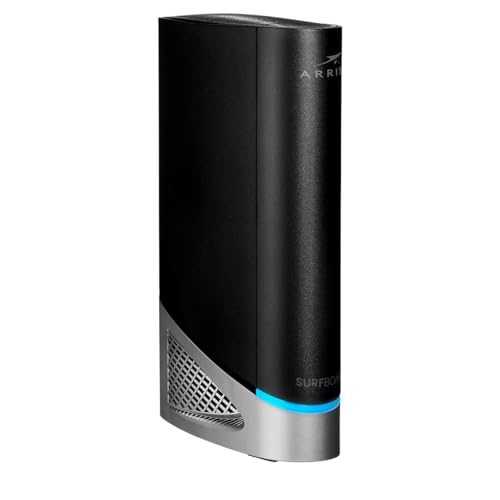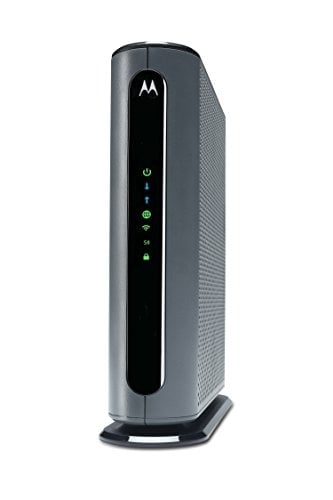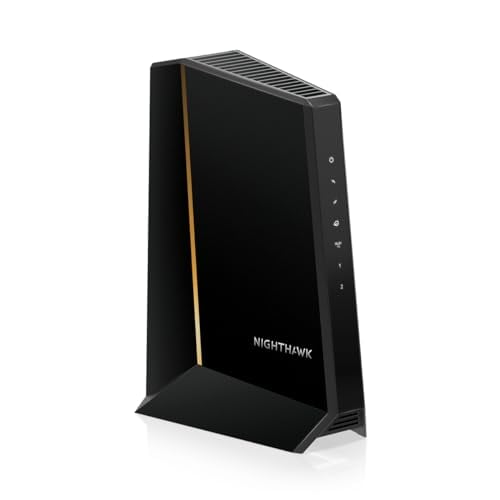
A modem router combo can work as a WiFi extender, but not in the way most people expect. You can’t plug it in across the house and have it magically repeat your wireless signal. The modem half becomes useless the moment you disconnect it from the coaxial or DSL line. What you’re left with is a router that can function as a wireless access point if you configure it correctly.
That access point setup gives you a full-strength WiFi signal in another part of your home, powered by an Ethernet cable running from your primary router. It’s not the same as a plug-and-play WiFi extender, but it can actually perform better than one because the backhaul connection is wired instead of wireless. The trade-off is more setup work and running a cable between the two devices.
What Is the Difference Between a Modem Router and a WiFi Extender
A modem translates the signal from your ISP into data your home network can use. Cable modems connect through coaxial cable and use the DOCSIS standard. DSL modems use phone lines. Fiber connections use an ONT (Optical Network Terminal) instead of a traditional modem. The modem is the gateway between your ISP’s network and your home.
A router takes the internet connection from the modem and shares it across multiple devices. It assigns IP addresses through DHCP, manages traffic between devices, and broadcasts a WiFi signal. The router handles everything inside your home network.
A modem router combo (also called a gateway) puts both functions into one box. Your ISP’s signal comes in through one end, and WiFi comes out the other. ISPs like Xfinity, Spectrum, and AT&T rent these combo units to customers because it’s simpler to support one device instead of two.
A WiFi extender is a completely different device. It connects to your router’s WiFi signal wirelessly and rebroadcasts it to cover areas your router can’t reach on its own. An extender doesn’t create its own internet connection. It relays the existing one.
| Device | Primary Function | Creates Internet Connection | Broadcasts WiFi | Works Standalone |
|---|---|---|---|---|
| Modem | Connects to ISP | Yes | No | Needs a router for WiFi |
| Router | Shares connection to devices | No | Yes | Needs a modem for internet |
| Modem Router Combo | Both modem and router | Yes | Yes | Yes |
| WiFi Extender | Rebroadcasts WiFi signal | No | Yes (repeated signal) | Needs an existing router |
| Access Point | Adds WiFi via wired connection | No | Yes (full-strength) | Needs a router and Ethernet |
Can You Repurpose an Old Modem Router as a WiFi Access Point
Yes, and this is the most practical way to reuse a modem router combo for extending your WiFi. When you set the device to work as an access point, you’re using only its router and WiFi broadcasting hardware. The modem side sits idle because it’s not connected to a cable or phone line.
Here’s what happens. You run an Ethernet cable from your primary router to one of the LAN ports on the old modem router. You disable the DHCP server on the old device so it stops trying to assign IP addresses (your primary router handles that). You give it the same WiFi network name and password as your main network but set it to a different channel. The result is a second WiFi broadcasting point in your home with a full-speed wired backhaul.
This setup actually outperforms most wireless WiFi extenders. A typical wireless extender loses 30 to 50% of bandwidth because it receives and retransmits on the same radio. Your repurposed modem router connected by Ethernet has no such limitation. Every bit of speed your primary router delivers over the cable reaches the access point at full capacity.
How to Enable Bridge Mode on a Modem Router Combo
Bridge mode disables the routing functions (NAT, DHCP, firewall) on your modem router combo and turns it into a simple modem that passes the internet connection to another router. This is different from access point mode, but people often confuse the two.
Use bridge mode when you want to connect a better standalone router to your ISP’s modem router combo and don’t want double NAT issues. Use access point mode when you want the old device to broadcast WiFi in a different part of your house.
- Connect a computer to the modem router combo using an Ethernet cable. Open a web browser and type the device’s IP address into the address bar. Common addresses are 192.168.0.1, 192.168.1.1, or 10.0.0.1. The correct address is printed on the bottom label of the device.
- Log in with the admin credentials. If you’ve never changed them, the default username and password are printed on the device label. Common defaults are admin/admin or admin/password.
- Navigate to the gateway settings or advanced settings section. The exact menu path depends on the manufacturer. On Arris/Surfboard gateways, look under Basic > Setup. On Netgear combos, check Advanced > Advanced Setup. On Xfinity gateways, go to Gateway > At a Glance.
- Find the bridge mode or modem mode option and enable it. The device will warn you that WiFi and routing features will be disabled.
- Save the settings and let the device restart. This takes one to three minutes. After the restart, the modem router combo only functions as a modem. Connect your standalone router to its Ethernet port to get internet access.
Not every modem router combo supports bridge mode. Some ISP-rented gateways from Xfinity and AT&T have bridge mode locked or hidden behind a call to customer support. Check your specific model’s documentation before assuming the option exists.
How to Disable DHCP and Set Up a Modem Router as an Access Point
This is the method to use when you want the old modem router to broadcast WiFi in another room. The key steps are disabling the DHCP server, assigning a static IP, connecting via Ethernet, and matching your WiFi settings.
- Connect a computer to the old modem router combo with an Ethernet cable. Don’t connect it to your primary router yet.
- Open a browser and access the admin panel at the device’s default IP address (usually 192.168.0.1 or 192.168.1.1).
- Go to the LAN or Network settings and disable the DHCP server. This prevents the old device from handing out IP addresses, which would conflict with your primary router’s DHCP server.
- Change the old modem router’s IP address to something within your primary router’s subnet but outside its DHCP range. For example, if your primary router uses 192.168.1.1 and assigns DHCP addresses from 192.168.1.2 to 192.168.1.200, set the old device to 192.168.1.250. This gives it a static address that won’t clash with anything else on the network.
- Go to the wireless settings. Set the WiFi network name (SSID) and password to match your primary router exactly. This lets your devices switch between the two access points without needing to reconnect manually.
- Set the WiFi channel to something different from your primary router. If your main router uses channel 6 on the 2.4 GHz band, set the old device to channel 1 or 11. For the 5 GHz band, pick a non-overlapping channel at least 40 MHz away from what your primary router uses. Same-channel operation causes interference when the two devices can hear each other.
- Save all settings and restart the old modem router.
- Run an Ethernet cable from one of the LAN ports on your primary router to one of the LAN ports on the old modem router. Do not use the WAN or Internet port on the old device. Using the WAN port activates routing functions you just disabled.
- Test the setup by connecting a phone or laptop to the WiFi near the old modem router. Run a speed test to confirm the connection is working and delivering good speeds.
If the old device supports an “access point mode” or “AP mode” setting in its firmware, use that instead. AP mode handles steps 3 through 6 automatically. Check the admin panel under wireless settings or operating mode for this option. Many newer modem router combos from Netgear, TP-Link, and Asus include a dedicated AP mode toggle.
What Are the Limitations of Using a Modem Router as an Extender
The biggest limitation is the Ethernet cable. Unlike a wireless extender that you plug into any outlet, an access point setup requires running a cable from your primary router to the old modem router’s location. In a single-story home with accessible attic space or a basement, this is straightforward. In a multi-story house with finished walls, it can mean drilling holes or running cable along baseboards.
Older modem routers also have outdated WiFi hardware. A combo unit from 2018 likely supports WiFi 5 (802.11ac) at best, and some older models are stuck on WiFi 4 (802.11n). Connecting a WiFi 4 access point to a WiFi 6 network creates a bottleneck. Devices connected to the old access point get WiFi 4 speeds even though the rest of your network runs at WiFi 6.
| Limitation | Impact | Workaround |
|---|---|---|
| Requires Ethernet cable | Physical cable run between router and access point | Use powerline adapters or MoCA adapters as alternatives |
| Outdated WiFi standard | Slower speeds than modern access points | Only use if the old device supports WiFi 5 or newer |
| No seamless roaming | Devices may not switch between access points smoothly | Set same SSID and password, use different channels |
| Higher power consumption | Modem router combos draw 15 to 30 watts vs 5 to 10 for an extender | Acceptable for most people, but adds to electricity cost |
| Bulky form factor | Combo units are large compared to wall-plug extenders | Place on a shelf or behind furniture |
| No centralized management | Must configure each device separately | Use router apps if available on both devices |
Seamless roaming is another gap. Mesh systems and some modern extenders use 802.11k/v/r standards to hand off devices between access points without dropping the connection. A repurposed modem router doesn’t support these standards. Your phone might cling to a weak signal from one access point instead of switching to the stronger one nearby. Setting both devices to the same SSID helps, but it doesn’t guarantee smooth handoffs.
When Should You Buy a Dedicated WiFi Extender Instead
If you don’t have Ethernet wiring between rooms and don’t want to run a cable, a wireless WiFi extender is the simpler solution. Modern dual-band and tri-band extenders plug into a wall outlet and set up in 10 minutes through a phone app. They cost $30 to $80 for a solid dual-band model and $80 to $150 for a tri-band unit.
A dedicated extender also makes sense when your old modem router is too outdated. If the combo unit only supports WiFi 4 (802.11n), the access point it creates will be slower than a $40 WiFi 6 extender. You’d be spending time configuring an inferior access point when a modern extender delivers better performance for less effort.
Mesh WiFi systems are worth considering for larger homes. A two-pack or three-pack mesh system ($150 to $400) covers the entire house with seamless roaming, dedicated backhaul, and centralized management through one app. If you have three or more dead zones, a mesh system is a better investment than either a repurposed modem router or a standalone extender.
| Scenario | Best Option | Why |
|---|---|---|
| Have Ethernet between rooms, old WiFi 5+ combo available | Repurpose as access point | Free solution with wired backhaul for full speeds |
| No Ethernet, one dead zone | Dual-band WiFi extender ($30 to $80) | Wireless setup, no cables, covers single dead spot |
| Old combo unit is WiFi 4 or older | Buy a modern extender | New hardware outperforms outdated access point |
| Multiple dead zones throughout the house | Mesh WiFi system ($150 to $400) | Seamless coverage, automatic handoffs, centralized control |
| Need coverage in detached building | Outdoor access point or point-to-point bridge | Standard extenders and repurposed routers lack range |
Can a Modem Router Combo Work as a Wireless Repeater Without Ethernet
In almost all cases, no. Standard modem router combos do not have a wireless repeater mode. They are designed to create a network, not extend one. A few third-party firmware options like DD-WRT and OpenWrt can add repeater functionality to certain router chipsets, but this requires technical knowledge and only works on supported hardware.
Flashing third-party firmware voids any warranty and carries a risk of bricking the device. It also doesn’t work on most ISP-provided gateways because they use locked bootloaders. If you want wireless extending without running Ethernet, buying a purpose-built WiFi extender for $30 to $50 is faster, easier, and more reliable than trying to hack repeater mode onto an old modem router.
Modem Router as WiFi Extender FAQs
Does bridge mode turn a modem router into a WiFi extender?
No. Bridge mode disables the routing and WiFi features of a modem router combo, leaving only the modem function active. It’s the opposite of what you want for extending WiFi. To use the device as a WiFi access point, keep WiFi enabled, disable DHCP, and connect it to your primary router with an Ethernet cable.
Can I use a modem router as an access point without an Ethernet cable?
Standard modem router combos don’t support wireless access point mode. They need a wired connection to the primary router. If running Ethernet isn’t practical, use powerline adapters to send the network signal through your electrical wiring instead. Plug one powerline adapter near the primary router and the other near the old modem router, then connect each to its respective device with short Ethernet cables.
Will using an old modem router as an access point slow down my network?
It depends on the old device’s WiFi standard. A WiFi 5 (802.11ac) modem router used as an access point handles most household tasks without issues. Devices connected to it will reach WiFi 5 speeds, which still support 4K streaming, video calls, and web browsing without problems. A WiFi 4 (802.11n) device will be noticeably slower and may bottleneck modern devices.
Do I need to disconnect the coaxial or DSL cable from the old modem router?
Yes. When using the device as an access point in a different location, there’s no reason to keep the ISP line connected. The modem portion is inactive in this setup. Only the Ethernet connection to your primary router matters.
Can I use two modem routers as access points in different rooms?
Yes. Connect each one to your primary router with Ethernet cables, disable DHCP on both, give each a unique static IP address, and set each to a different WiFi channel. Use the same SSID and password on all devices so your phone and laptop switch between them as you move through the house.
What if my old modem router doesn’t have an access point mode setting?
You can still set it up manually by disabling the DHCP server and connecting it through a LAN port instead of the WAN port. The result is the same as access point mode. The manual process takes a few extra minutes but works on virtually every modem router combo regardless of whether the firmware includes a dedicated AP mode toggle.
Sources:
Wi-Fi Alliance – WiFi Standards and Generations Overview. wi-fi.org
Netgear – How to Set Up Your Router as an Access Point. netgear.com
TP-Link – Access Point Mode Setup Guide. tp-link.com
Arris – SURFboard Gateway Bridge Mode Instructions. surfboard.com
If your WiFi feels slow even after optimizing, the bottleneck might be your internet plan. See what providers and speed tiers are available in your area.
IEEE 802.11 Working Group – Wireless LAN Standards Overview. ieee802.org