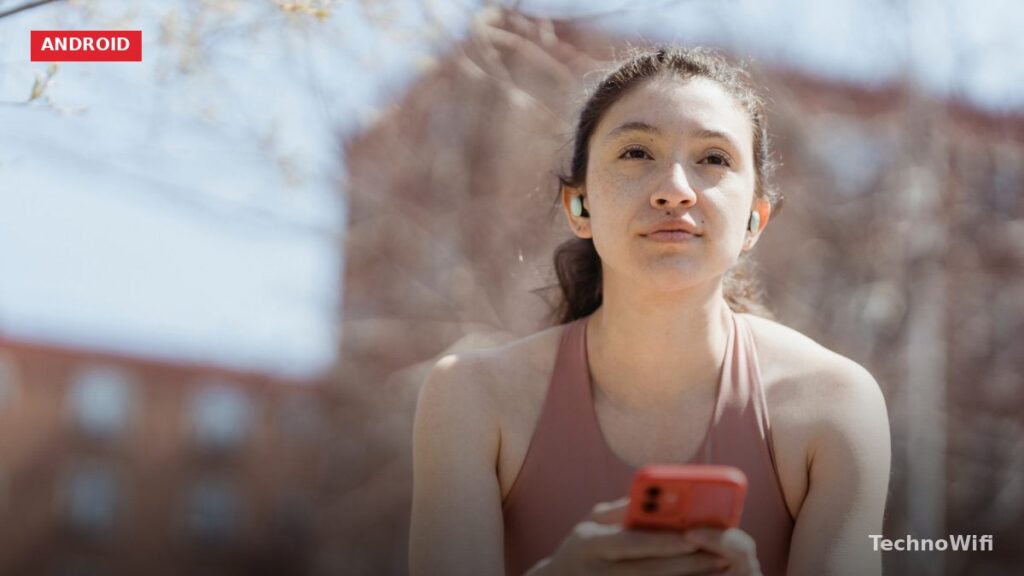
Yes, AirPods work with Android phones. They connect over standard Bluetooth just like any other wireless earbuds. You get music playback, phone calls, and on Pro models, active noise cancellation. But you lose a long list of Apple-specific features that make AirPods feel special on an iPhone.
This is the trade-off Android users deal with in 2026. The audio quality is identical on both platforms because AirPods use the same AAC Bluetooth codec regardless of the connected device. What changes is everything around the audio – the setup experience, the controls, the integration with your phone’s operating system.
How to Connect AirPods to an Android Phone
Pairing AirPods with an Android phone is straightforward, but it works differently than pairing with an iPhone. There is no automatic popup or one-tap setup. You go through the same Bluetooth pairing process you would use with any third-party earbuds.
- Open the lid of your AirPods charging case with the AirPods inside. Do not take them out yet.
- Press and hold the small button on the back of the case until the status light flashes white. This puts the AirPods into pairing mode.
- On your Android phone, go to Settings and tap Connected devices or Bluetooth (the exact wording depends on your phone manufacturer).
- Tap “Pair new device” and wait for your AirPods to appear in the list of available devices.
- Tap the AirPods name to connect. You should hear the pairing chime in both earbuds.
Once paired, your AirPods will reconnect to your Android phone automatically whenever you open the case and put them in your ears. This automatic reconnection works reliably, though it takes a few seconds longer than it does on an iPhone.
If your AirPods were previously paired to an Apple device, you may need to reset them first. Hold the button on the back of the case for about 15 seconds until the light flashes amber, then white. After that, follow the pairing steps above.
What Features Do AirPods Keep on Android
The core audio experience stays intact. AirPods deliver the same sound quality on Android as they do on an iPhone because the Bluetooth audio codec (AAC) and the hardware drivers inside the earbuds don’t change based on the connected device.
Phone calls work normally too. The built-in microphones pick up your voice, and the person on the other end won’t know you’re using AirPods with an Android phone instead of an iPhone. Video calls through apps like Google Meet or Zoom also work without any issues.
On AirPods Pro (both first and second generation) and AirPods Pro 3, active noise cancellation and transparency mode are fully functional on Android. These features are processed by the H2 chip inside the earbuds themselves, so they don’t depend on the connected device.
AirPods Max also retain their noise cancellation and transparency mode on Android. The digital crown still adjusts volume, and pressing it controls playback. Battery life is unaffected – you get the same listening hours regardless of platform.
What Features Do AirPods Lose on Android
This is where things get frustrating. A significant number of AirPods features require Apple software to function, and none of that software exists on Android. Here is what you give up.
Automatic ear detection customization is gone. On an iPhone, you can configure what happens when you remove one AirPod – pause audio, do nothing, or play through the remaining earbud. On Android, the default ear detection still pauses audio when you remove both AirPods, but you cannot customize the behavior.
Seamless device switching does not work. On Apple devices, AirPods automatically switch between your iPhone, iPad, and Mac based on which one is playing audio. On Android, your AirPods stay connected to one device until you manually disconnect and pair with another.
Siri is completely unavailable. The press-and-hold or “Hey Siri” gesture does nothing useful on Android. You can still trigger Google Assistant using the standard long-press gesture on some AirPods models, but the experience is inconsistent.
Spatial Audio with head tracking requires Apple’s software stack. Even on AirPods Pro 3 and AirPods Max, which have the hardware for spatial audio, this feature will not activate when connected to an Android phone.
The battery widget that shows individual charge levels for each earbud and the case is an iOS and macOS feature. Android does not display this information natively, though third-party apps can fill this gap (more on that below).
Personalized Spatial Audio, which uses the front camera to scan your ear shape and optimize the sound profile, only works on iPhone. The same goes for Conversation Awareness on AirPods Pro 3, which lowers audio volume when you start speaking.
Find My integration is unavailable. You cannot locate lost AirPods through Find My on Android. However, if your AirPods support the Find My network, other Apple device users can still help locate them.
AirPods Features on iPhone vs Android Comparison
| Feature | iPhone | Android |
|---|---|---|
| Audio playback (music, podcasts, video) | Yes | Yes |
| Phone and video calls | Yes | Yes |
| Active Noise Cancellation (Pro/Max) | Yes | Yes |
| Transparency Mode (Pro/Max) | Yes | Yes |
| AAC Bluetooth codec | Yes | Yes |
| One-tap pairing setup | Yes | No |
| Automatic device switching | Yes | No |
| Siri voice assistant | Yes | No |
| Spatial Audio with head tracking | Yes | No |
| Personalized Spatial Audio | Yes | No |
| Conversation Awareness (Pro 3) | Yes | No |
| Ear detection customization | Yes | No |
| Battery level display (native) | Yes | No (third-party apps available) |
| Find My tracking | Yes | No |
| Firmware updates | Automatic | Requires temporary iPhone connection |
| Customize tap/press controls | Yes | No (third-party apps partially) |
Do AirPods Pro Work Better Than Regular AirPods on Android
In terms of the Android experience specifically, AirPods Pro have a slight advantage. The noise cancellation and transparency mode features are hardware-driven, so they work fully on Android without any extra setup. Regular AirPods don’t have these features on any platform, so there’s nothing additional to lose.
AirPods Pro 3, released with the H3 chip, brought improvements like better noise cancellation and Adaptive Audio. The noise cancellation improvements carry over to Android. Adaptive Audio, which blends transparency mode and noise cancellation based on your surroundings, also functions on Android since it runs on the earbuds’ chip.
AirPods Max work well on Android too. The over-ear design, noise cancellation, and the digital crown for volume control all function as expected. The main losses are the same – no spatial audio, no automatic switching, no Siri.
Third-Party Apps That Restore AirPods Features on Android
Several Android apps have been built specifically to fill the gaps that Apple leaves open. None of them replicate the full iPhone experience, but they bring back some genuinely useful features.
AndroPods is one of the most popular options on the Google Play Store. It adds a battery level popup that shows charge percentages for the left earbud, right earbud, and case individually. It also provides ear detection notifications and a persistent status bar indicator.
AirBattery offers similar battery monitoring functionality. It displays a popup when you open the AirPods case near your phone, mimicking the iOS experience. The app also supports battery level widgets for your home screen.
CAPod is an open-source alternative that shows battery levels and connection status. Because it is open-source, some users prefer it for privacy reasons – the code is publicly auditable, and the app does not include ads or trackers.
None of these apps can restore spatial audio, Siri, automatic device switching, or firmware updates. Those features are locked into Apple’s ecosystem at a level that third-party developers cannot access. For firmware updates, you still need to temporarily connect your AirPods to an iPhone or iPad.
Should You Buy AirPods If You Use Android
If you already own AirPods and recently switched from iPhone to Android, there is no reason to throw them out. They still work as solid Bluetooth earbuds with good sound quality and reliable connectivity. You just lose the ecosystem perks.
If you are shopping for new earbuds and you use an Android phone, the picture changes. Several alternatives offer deeper Android integration at the same or lower price points. Samsung Galaxy Buds pair instantly with Samsung phones and offer seamless switching across Samsung devices. Google Pixel Buds Pro integrate tightly with Pixel phones and support spatial audio on Android natively.
Sony’s WF-1000XM5 earbuds are widely considered the best noise-cancelling earbuds regardless of platform, with a full-featured companion app on both Android and iOS. All of these options give you the complete feature set on Android, while AirPods give you a partial one.
That said, if you also use a Mac or iPad, AirPods become more practical. The automatic switching between Apple devices is a genuine convenience, and having AirPods that also work “well enough” on your Android phone might be the right compromise for a mixed-ecosystem setup.
How to Check AirPods Battery on Android
Android does not show AirPods battery levels natively in most cases. Some Android phones (particularly Samsung Galaxy devices running One UI) display basic Bluetooth device battery percentages in the Bluetooth settings menu, but the reading is often unreliable and does not show individual earbud levels.
For accurate battery monitoring, install one of the third-party apps mentioned earlier. Here is how to check using AndroPods as an example.
- Download and install AndroPods from the Google Play Store.
- Open the app and grant the required Bluetooth permissions.
- Make sure your AirPods are connected to your phone.
- Open the AirPods case near your phone. A popup should appear showing battery percentages for the left earbud, right earbud, and the case.
The battery information updates in real-time while the AirPods are connected. Most of these apps also offer a home screen widget so you can check battery levels at a glance without opening the app.
Frequently Asked Questions
Do AirPods sound worse on Android than on iPhone?
No. AirPods use the AAC Bluetooth codec on both platforms, and the sound quality is the same. The drivers, chipset, and acoustic design inside the earbuds produce identical audio regardless of whether an iPhone or an Android phone is sending the signal.
Can I use “Hey Siri” with AirPods on Android?
No. Siri only works when AirPods are connected to an Apple device. On Android, you can set up Google Assistant to respond to a long press on the AirPods stem, but this requires a third-party app and the experience is not as smooth as Siri on iPhone.
Will AirPods firmware update when connected to Android?
No. AirPods firmware updates are pushed through Apple’s servers and require a connection to an iPhone, iPad, or Mac. If you only use Android, you will need to borrow an Apple device periodically to keep your AirPods firmware current.
Do AirPods Pro noise cancellation controls work on Android?
Yes. You can switch between noise cancellation, transparency mode, and off by pressing and holding the force sensor on the AirPods Pro stem. This hardware control works identically on Android and iPhone.
Can I customize AirPods tap gestures on Android?
Not through Apple’s settings, which are only accessible on iOS. However, some third-party apps like AndroPods offer limited gesture customization. The default press controls (play/pause, skip track, noise cancellation toggle) work without any customization.
Is there latency when using AirPods with Android?
AirPods may have slightly higher audio latency on Android compared to iPhone. Apple optimizes the Bluetooth connection between AirPods and its own devices. For music and video calls, the difference is barely noticeable. For gaming, the extra milliseconds of delay can be perceptible, and Android-native earbuds with aptX or LC3 codec support may perform better.
Sources
Apple – Use AirPods with a non-Apple device | Apple – AirPods Pro and AirPods Max noise cancellation | Bluetooth SIG – Bluetooth Core Specification