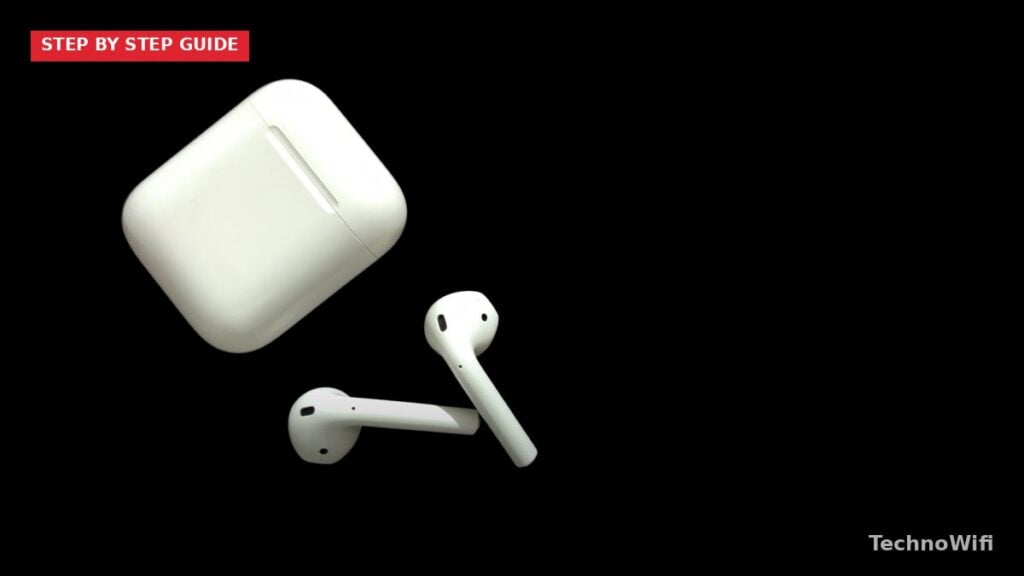
Automatic Pairing (Same Apple ID)
If your AirPods are already set up with an iPhone or iPad that uses the same Apple ID as your MacBook, the AirPods are already paired with your Mac. Apple syncs Bluetooth pairings across devices through iCloud. No manual setup needed.
- Open the AirPods case (or put them in your ears).
- Click the Sound icon in your Mac’s menu bar (or the Bluetooth icon).
- Your AirPods appear in the output device list. Click them to connect.
If you don’t see the Sound icon in the menu bar, go to System Settings, then Control Center, then Sound, and set it to “Always Show in Menu Bar.”
This automatic pairing works because Apple syncs the Bluetooth pairing key through iCloud Keychain. As long as both devices are signed into the same Apple ID and iCloud Keychain is enabled, the AirPods appear as an available audio device on every Apple device you own.
Manual Pairing (Different Apple ID or New)
If your AirPods haven’t been set up with an Apple device that shares your MacBook’s Apple ID, you need to pair them manually through Bluetooth.
Pair AirPods and AirPods Pro
- Put both AirPods in the charging case and open the lid.
- Press and hold the setup button on the back of the case until the status light flashes white. This puts the AirPods into Bluetooth pairing mode.
- On your MacBook, go to System Settings (or System Preferences on older macOS), then Bluetooth.
- Your AirPods appear in the list of nearby devices. Click “Connect.”
- The AirPods pair with your MacBook.
The setup button is a small round button on the back of the charging case, near the bottom. On AirPods Pro with a USB-C case, the button is on the front near the status light on some models. Press and hold until you see the white flashing light – if it flashes amber, the AirPods are resetting instead (which also works for pairing, just takes longer).
Pair AirPods Max
- Press and hold the noise control button on the right ear cup until the status light flashes white.
- On your MacBook, go to System Settings, then Bluetooth.
- Select AirPods Max from the device list and click “Connect.”
How to Switch AirPods Between Devices
AirPods paired through the same Apple ID can switch between your iPhone, iPad, Mac, and Apple Watch without re-pairing. There are two ways to switch.
Manual switch: Click the Sound icon in the Mac menu bar and select your AirPods. On iPhone, open Control Center, long-press the audio widget, and tap the AirPlay icon to select AirPods. The AirPods disconnect from the current device and connect to the one you selected.
Our article on 4K monitors for Mac Mini covers related ground and is worth a look.
Automatic switching: AirPods (2nd gen and later) and AirPods Pro automatically switch to whichever Apple device you’re actively using. Start playing a video on your Mac and the AirPods move to the Mac. Take a call on your iPhone and they switch to the phone. This works seamlessly most of the time, though it occasionally switches at unwanted moments (like when a notification sound plays on your phone while you’re watching a movie on your Mac).
To disable automatic switching for your Mac, go to System Settings, then Bluetooth, click the info icon (i) next to your AirPods, and change “Connect to This Mac” from “Automatically” to “When Last Connected to This Mac.”
Adjust AirPods Settings on Mac
With AirPods connected, go to System Settings, then Bluetooth, and click the info icon next to your AirPods name. Here you can customize:
Double-tap or press-and-hold actions (Siri, play/pause, next track, noise control). Set different actions for the left and right AirPod.
Noise control modes (AirPods Pro and AirPods Max): switch between Active Noise Cancellation, Transparency, and Off. You can also switch modes by pressing the force sensor on AirPods Pro stems or the noise control button on AirPods Max.
Ear detection: When enabled, audio pauses when you remove an AirPod and resumes when you put it back. Disable this if the feature triggers incorrectly (common with certain ear shapes or when wearing hats).
Spatial Audio: Creates a surround-sound effect for supported content (Apple Music, Apple TV+, and some other apps). Enable or disable it here, or toggle it from the Sound menu bar icon while AirPods are connected.
We put together a full guide on docking stations for MacBook Pro that pairs well with this.
Troubleshooting AirPods on MacBook
AirPods don’t appear in Bluetooth settings. Make sure the AirPods are in pairing mode (white flashing light on the case). Check that Bluetooth is enabled on your Mac (System Settings, then Bluetooth). If AirPods are connected to another device, they won’t appear as available – disconnect them from the other device first or put them in pairing mode.
AirPods connected but no audio. Click the Sound icon in the menu bar and make sure AirPods are selected as the output device. Check the volume level. If audio still doesn’t play, disconnect the AirPods in Bluetooth settings and reconnect. Sometimes the connection establishes but the audio routing doesn’t switch automatically.
Audio quality is poor on calls. When AirPods are used for both microphone input and audio output (during calls), Bluetooth switches to the HFP profile which reduces audio quality. This is a Bluetooth limitation, not an AirPods issue. The audio sounds noticeably worse during calls than during music playback. Using the MacBook’s built-in microphone instead of the AirPods microphone keeps audio output at full quality.
AirPods keep disconnecting. Check the AirPods battery level (click the Bluetooth icon in the menu bar to see battery percentage). Low battery causes dropouts. If battery is fine, reset the AirPods: put them in the case, open the lid, hold the setup button for 15 seconds until the light flashes amber then white. Re-pair after the reset.
Do AirPods work with non-Apple laptops?
Yes. AirPods connect to any Bluetooth device – Windows laptops, Chromebooks, Android phones. Put them in pairing mode (hold the case button until white flashing), then pair through the device’s Bluetooth settings. You lose Apple-specific features like automatic switching, Siri, ear detection, and spatial audio, but the core audio and microphone functions work.
Can I use one AirPod at a time with my MacBook?
Yes. Take one AirPod out of the case and leave the other inside. The single AirPod connects and plays mono audio. This is useful for calls where you want to hear your surroundings with one ear. Both AirPods function independently – you can alternate between left and right to extend battery life on long listening sessions.
Why is there a delay between video and AirPods audio?
Bluetooth audio has inherent latency (about 100 to 200 milliseconds). Apple minimizes this on Apple devices through proprietary codecs, but some delay can still be noticeable during video playback. If lip-sync issues bother you, use Safari for video streaming – Apple optimizes Safari’s audio sync for AirPods. Third-party browsers and apps may have slightly more delay.
Sources
Apple – Connect AirPods to Mac | Apple – Reset AirPods