Canon and Sony own the mirrorless camera market in 2026. Both brands build excellent bodies at every price point, from entry-level kits under $500 to professional flagships above $3,000. Picking between them isn’t about one brand being clearly better anymore. The gap has narrowed a lot over the past three years.
The real question is which system fits your shooting needs, budget, and long-term plans. Each brand holds genuine advantages in certain areas, and those differences matter depending on what you photograph. A landscape shooter faces different trade-offs than a wedding photographer or a wildlife specialist.
This canon vs sony camera comparison breaks down every category that actually affects your buying decision: image quality, video capability, autofocus performance, lens selection, and value for beginners. Every spec and claim reflects the current 2026 lineup, including the Canon EOS R6 Mark III and Sony A7 V.
Is Canon or Sony better for photography?
Neither brand holds a decisive edge for still photography in 2026. Both Canon and Sony make full-frame mirrorless cameras with outstanding image quality, fast autofocus, and high burst rates. The differences come down to specific strengths that favor one system over the other depending on your priorities.
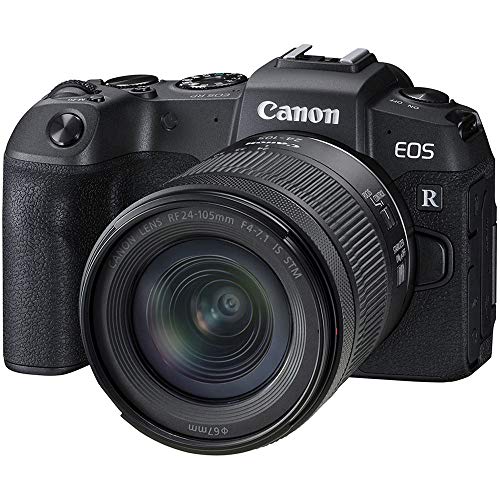
Canon’s strongest mid-range option is the EOS R6 Mark III. It shoots at 40 frames per second with the electronic shutter and holds roughly 110 RAW files in the buffer before slowing down. That burst rate and buffer depth make it exceptional for sports, wildlife, and any fast-action scenario. Canon’s color science also continues to earn praise from portrait and wedding photographers who want accurate skin tones straight out of camera.
Sony’s answer is the A7 V. It reaches 30 frames per second, which is still fast but ten frames behind the R6 III. Where Sony pulls ahead is dynamic range. The A7 V delivers over 16 stops of dynamic range at base ISO, roughly one full stop more than the R6 III. That extra stop means more recoverable detail in shadows and highlights, which matters for landscape photographers and anyone who pushes exposure in post-processing.
High-resolution picks
For high-resolution work, Sony holds the lead with the A7R V at 61 megapixels. Canon’s closest competitor is the EOS R5 Mark II at 45 megapixels with a stacked sensor design that adds 30fps burst shooting. The R5 II targets photographers who need both resolution and speed, while the A7R V prioritizes maximum detail for studio, landscape, and architectural work.
Both systems deliver professional-grade results. Your choice should depend on whether you prioritize burst speed and color rendition (Canon) or dynamic range and resolution ceiling (Sony). Neither answer is wrong. The best camera is the one that matches how you actually shoot.
Canon vs Sony specs comparison
The most direct comparison in 2026 pits the Canon EOS R6 Mark III against the Sony A7 V. These two cameras sit in the same price bracket and target the same audience: enthusiast and professional photographers who want a capable all-around body. Here’s how their key specifications line up.
| Feature | Canon EOS R6 Mark III | Sony A7 V |
|---|---|---|
| Sensor | 24.2 MP Full-Frame CMOS | 33.2 MP Full-Frame Exmor R |
| Max Burst (Electronic) | 40 fps | 30 fps |
| RAW Buffer Depth | ~110 frames | ~80 frames |
| Dynamic Range (Base ISO) | ~15 stops | ~16+ stops |
| Native ISO Range | 100-102,400 | 100-51,200 |
| In-Body Stabilization | Up to 8 stops | Up to 7 stops |
| Viewfinder | 3.69M-dot EVF | 9.44M-dot EVF |
| Max Video Resolution | 6K 60p | 4K 120p |
| Weight (Body Only) | ~670g | ~723g |
| Approximate Price (Body) | $2,500 | $2,800 |
Canon wins on burst rate, buffer depth, and stabilization. Sony takes the lead in dynamic range, resolution, and viewfinder quality. The A7 V packs a noticeably higher-resolution EVF at 9.44 million dots, which makes manual focusing and composition review sharper and more comfortable during extended shoots.
On the other hand, Canon’s wider native ISO range gives it more headroom in extreme low-light situations. For event and wedding photographers working in dim venues, that extended ISO ceiling can be the difference between a usable shot and a missed moment.
Numbers alone don’t capture how a camera feels during a full day of shooting. Ergonomics, menu systems, and button layouts differ a lot between the two brands. Renting or borrowing both cameras before buying is the best way to judge which handling style suits you.
How do Canon and Sony compare for video?
Sony built its reputation as the video-first mirrorless brand, and that advantage held for years. Canon has aggressively closed the gap since the original EOS R5 launch. In 2026, the two systems stand much closer than they did even two years ago.
The Canon EOS R5 Mark II records internal 8K RAW video and supports ProRes 422 HQ output. For filmmakers who need the highest resolution footage available from a mirrorless body, this camera delivers at a professional level. The R6 Mark III records 6K at 60 frames per second, producing oversampled 4K footage with exceptional detail when downscaled for delivery.
Sony’s video strengths
Sony’s A7 V shoots 4K at up to 120 frames per second with full pixel readout. That frame rate gives filmmakers excellent slow-motion capability without any sensor cropping. The Sony FX3 and FX6 also remain popular among professional video creators who want dedicated cinema bodies within the E-mount ecosystem. Having those cinema-grade options alongside photo-oriented bodies is a genuine advantage of choosing Sony.
Heat management has historically been a differentiator. Canon bodies struggled with recording limits due to thermal throttling in earlier generations. The R5 Mark II addresses this with an active cooling fan accessory, and the R6 Mark III runs significantly cooler overall. Sony cameras have generally handled extended recording sessions with fewer thermal issues, though heavy 4K 120p usage will warm up any body over time.
Both brands support Log profiles for maximum dynamic range in post-production. Canon uses C-Log 3, while Sony offers S-Log 3. Professional colorists work with both profiles routinely, and neither system creates a workflow disadvantage. For hybrid shooters who split time between stills and video, either system performs well. Pure video creators still lean toward Sony for the broader cinema camera ecosystem and third-party lens options, while Canon’s recent improvements make it a strong contender.
Which has better autofocus, Canon or Sony?
Autofocus performance is one of the closest races in the canon vs sony camera comparison. Both brands use AI-powered subject recognition systems that detect and track people, animals, birds, vehicles, and aircraft. The practical gap between them is smaller than marketing materials suggest.
Canon’s Dual Pixel CMOS AF II system covers 100% of the sensor area and uses deep learning algorithms to predict subject movement. The EOS R6 Mark III tracks eyes, heads, and bodies with remarkable consistency, even when a subject turns away from the camera or drops behind an obstruction. Canon also introduced Eye Control AF in the R5 Mark II, which lets photographers select focus points by looking at them through the viewfinder. That adds a new dimension to rapid subject switching.
How Sony’s AI autofocus compares
Sony’s AI autofocus system in the A7 V uses a dedicated processing unit to recognize and track subjects independently from the main image processor. It excels at tracking subjects through cluttered scenes and maintains lock when other objects pass between the camera and the subject. Sony also recognizes a wider variety of subject types out of the box, including insects and trains, which Canon’s system doesn’t yet support natively.
In controlled testing, both systems achieve hit rates above 95% for fast-moving subjects in good light. The differences show up in edge cases. Canon tends to perform slightly better with erratic movement patterns, such as a bird suddenly changing direction mid-flight. Sony maintains an edge in very low light autofocus acquisition, locking onto subjects faster when ambient light drops below levels that challenge other systems.
For most photographers, either system delivers reliable autofocus that would have seemed impossible five years ago. Bird and wildlife photographers have vocal preferences for both brands. Canon’s R7 and R5 Mark II earn consistent praise alongside Sony’s A9 III and A1. The decision between them shouldn’t rest on autofocus alone unless you shoot a very specific niche where one system’s edge case performance matters.
Are Canon or Sony lenses better value?
Lens selection and pricing is where the two systems differ most, and this factor often matters more than the camera body itself. Bodies get replaced every few years. Lenses stay in your kit for a decade or longer, making them the foundation of your investment in either system.
Canon’s RF mount remains relatively restrictive. Canon hasn’t licensed the RF mount protocol to third-party manufacturers as broadly as Sony opened its E-mount. Sigma and Tamron now produce autofocus RF lenses, but the selection is still smaller than what they offer for Sony E-mount. Native Canon RF glass is optically excellent, though. The RF 70-200mm f/2.8L, RF 24-70mm f/2.8L, and RF 15-35mm f/2.8L all rank among the best zoom lenses produced by any manufacturer.
The third-party advantage
Sony’s E-mount is open to everyone. Sigma, Tamron, Samyang, Viltrox, and other manufacturers produce a massive catalog of E-mount lenses. Those third-party options often cost 40% to 60% less than their Sony-branded equivalents while delivering comparable optical performance. For example, a Tamron 28-75mm f/2.8 G2 for E-mount costs roughly $880, while Sony’s FE 24-70mm f/2.8 GM II runs about $2,200. Most photographers can’t visually distinguish the output from these two lenses at normal viewing sizes.
This third-party advantage adds up when you build a full lens kit. A three-lens zoom set covering wide, standard, and telephoto focal lengths from Tamron or Sigma for Sony E-mount costs around $2,400 to $3,000 total. An equivalent Canon RF L-series set runs $6,000 to $7,000. The Canon glass delivers marginally better optical performance at the extremes, but the price gap is big and hard to justify for most shooters.
Canon’s RF lens lineup continues to grow, and third-party RF options are expanding with each quarter. By late 2026, Sigma and Tamron will likely offer more RF lenses than they do today. For now, though, Sony’s ecosystem provides significantly more choices at lower price points. If total system cost factors heavily into your decision, Sony currently holds a clear advantage.
Canon vs Sony for beginners
Entry-level options from both brands give new photographers a solid starting point without overwhelming complexity. The cameras at this tier prioritize ease of use, affordability, and lightweight design over advanced features.
Canon’s entry pick is the EOS R100. It uses an APS-C sensor, weighs just 356 grams, and costs around $480 with a kit lens. The R100 strips away advanced features to keep the interface simple. There’s no touchscreen, no articulating screen, and limited video specs. What remains is a straightforward camera that teaches photographic fundamentals well.
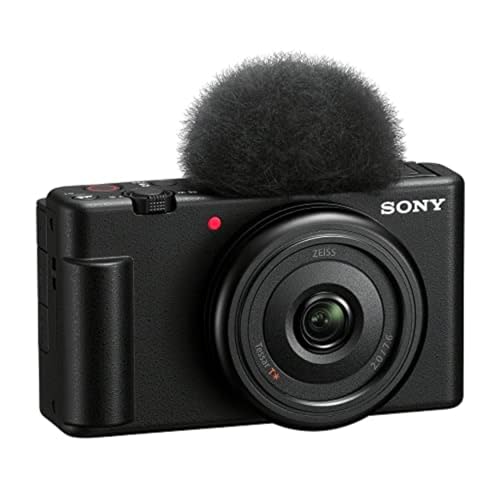
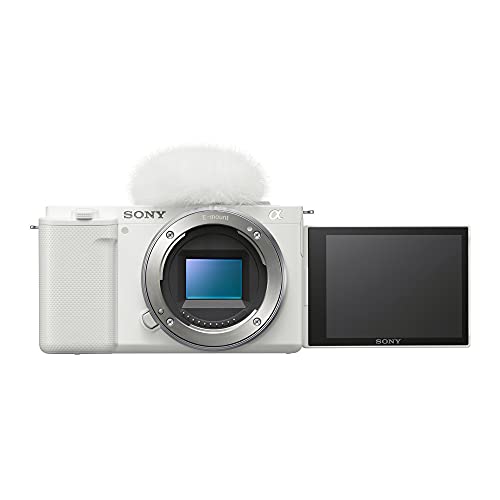
Sony offers the ZV-E10 II as its budget-friendly mirrorless option. Priced around $900 with a kit lens, it targets creators who shoot both photos and video. The ZV-E10 II includes a fully articulating screen, built-in directional microphone, and cinematic vlog settings that the Canon R100 lacks entirely. Its APS-C sensor also delivers better image quality than the R100 in low light.
Choosing your first camera system
For beginners focused primarily on photography, the Canon R100 costs less and keeps things simple. Beginners who want a camera that handles video equally well should consider the ZV-E10 II despite the higher price tag. Canon’s EOS R50 sits between these two options at roughly $680 with a kit lens and provides a more feature-rich experience than the R100 while staying under $700.
The beginner-level decision also affects your long-term investment. Both Canon RF-mount and Sony E-mount APS-C cameras accept full-frame lenses from their respective systems. Starting with either brand locks you into that lens ecosystem unless you sell everything and switch later. On the other hand, this compatibility means a beginner lens purchased today still works on a professional body purchased years from now. Choose based on which ecosystem offers the lenses and bodies you might want as your skills develop.
| Feature | Canon EOS R100 | Sony ZV-E10 II | Canon EOS R50 |
|---|---|---|---|
| Sensor | 24.1 MP APS-C | 26 MP APS-C | 24.2 MP APS-C |
| Video | 4K 24p (cropped) | 4K 60p | 4K 30p |
| Articulating Screen | No | Yes | Yes |
| Built-in Mic | Mono | Directional 3-capsule | Stereo |
| Weight | 356g | 377g | 375g |
| Price (with Kit Lens) | ~$480 | ~$900 | ~$680 |
Frequently Asked Questions
Is Canon better than Sony in 2026?
Neither brand is objectively better across all categories. Canon leads in burst speed with the R6 Mark III at 40fps and often wins on color science for portraits. Sony leads in dynamic range, resolution options, and third-party lens availability. Your specific shooting needs determine which system suits you better. Both produce professional-grade images that are virtually indistinguishable when printed or displayed online.
Should I switch from Canon to Sony or Sony to Canon?
Switching camera systems means selling all your existing lenses and buying new ones. That cost is substantial, often amounting to thousands of dollars. Unless your current system has a specific limitation that actively prevents you from getting the shots you need, staying with your existing brand and upgrading within it is almost always the better financial decision. Both systems are capable enough that switching brands rarely produces a dramatic improvement in your actual images.
Which is better for portraits, Canon or Sony?
Canon cameras have traditionally been preferred by portrait photographers due to warmer, more flattering skin tone rendering straight from camera. The EOS R6 Mark III and R5 Mark II both excel at portrait autofocus with reliable eye detection. Sony’s A7 V produces excellent portraits as well, though many Sony shooters apply color corrections in post-processing to match Canon’s natural skin tone output. Either system delivers professional portrait results with the right lens and lighting.
Is Canon or Sony cheaper overall?
Camera bodies from both brands are priced competitively at every tier. The significant cost difference appears in lenses. Sony’s open E-mount means third-party manufacturers like Sigma and Tamron offer a wider range of affordable options. A complete Sony lens kit often costs 40% to 60% less than an equivalent Canon RF lens kit when comparing similar focal lengths and apertures. Over several years, this savings can amount to thousands of dollars.
Can I use Canon lenses on a Sony camera?
Adapters exist that let you mount Canon EF (DSLR) lenses on Sony E-mount bodies. The Sigma MC-11 and various Metabones adapters are popular choices for this. Autofocus performance through adapters varies by lens and is typically slower and less reliable than native glass. Canon RF lenses can’t currently be adapted to Sony bodies. For the best experience, use lenses designed natively for your camera’s mount system.
Which brand is better for wildlife photography?
Both brands produce excellent wildlife cameras. Canon’s EOS R7 (APS-C, 32.5MP, 30fps) and EOS R5 Mark II (full-frame, 45MP, 30fps) are popular among bird and wildlife photographers. Sony’s A9 III offers a global shutter that eliminates rolling shutter distortion entirely, and the A1 delivers 50MP at 30fps. Canon has a stronger native super-telephoto selection with lenses like the RF 200-800mm f/6.3-9. Sony users benefit from affordable Sigma and Tamron telephoto alternatives at lower price points.
Sources:
Canon USA – EOS R6 Mark III Specifications. usa.canon.com
Canon USA – EOS R5 Mark II Specifications. usa.canon.com
Sony – Alpha 7 V Specifications. sony.com
Sony – Alpha 7R V Specifications. sony.com
Sony – ZV-E10 II Specifications. sony.com
DPReview – Canon EOS R6 Mark III Review. dpreview.com
Considering a Canon mirrorless body? Our Canon mirrorless camera roundup compares every current model.
DPReview – Sony A7 V Review. dpreview.com