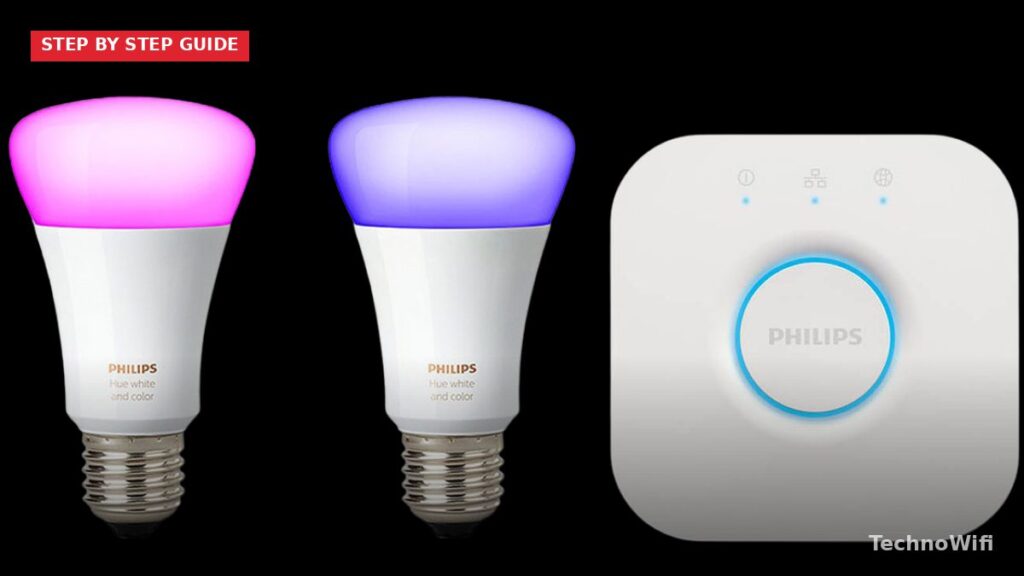
Setting Up Philips Hue Without the Bridge
Philips has one of the most adaptable and wide-ranging lineups of smart lights available: the Philips Hue collection. Normally, the way to use Philips Hue smart lights is by plugging the Hue Bridge into your router.
But what if you do not want to use the Hue Bridge? The good news is that you have options. Thanks to the ZigBee standard built into Hue bulbs, you are not required to have the Hue Bridge to power and control them.
Some of the newer Philips Hue bulbs also support Bluetooth, which gives you another way to control them directly from your phone. Keep in mind that the Hue Bridge is still the best overall option for managing Hue bulbs because it was specifically designed for that purpose, and it supports features like routines and away-from-home control. However, if you do not have the Bridge and still want to get your Philips Hue bulbs up and running, here is how to do it.
Steps to Set Up Philips Hue Bulbs Without the Hue Bridge:
- Connect your Hue bulbs to the desired locations. Just screw the bulbs into sockets like you would with any other light bulb.
- Next, download the Philips Hue Bluetooth App on your smartphone. The app is available on the App Store for iPhone users and on Google Play for Android users.
- Launch the Philips Hue Bluetooth App to begin.
- On the home screen, tap “Yes” if asked whether your lights are Bluetooth-ready. If you tap “No,” the app will prompt you to set up a Hue Bridge instead.
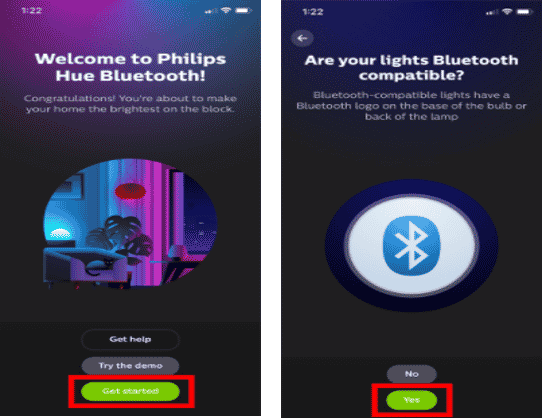
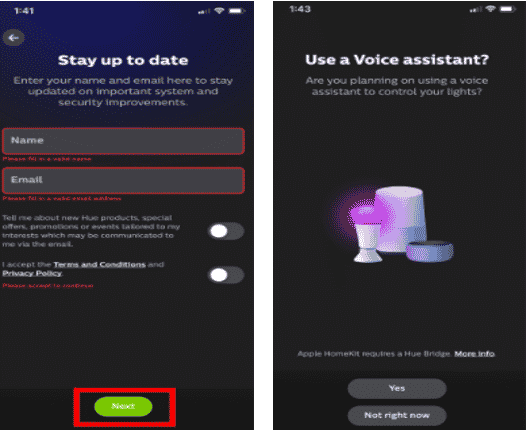
- Next, create a Philips account. You will need your name and email address. You will also need to accept the Terms and Conditions at the bottom of the screen.
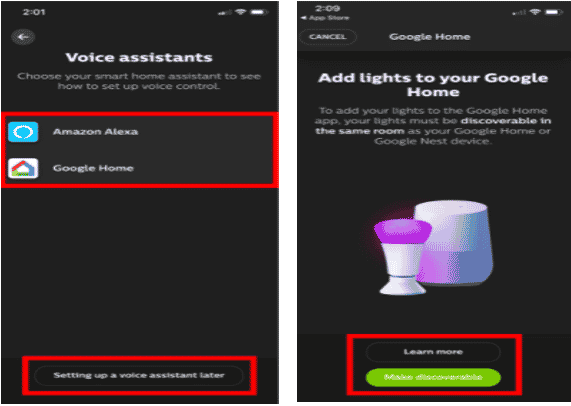
- Then choose whether you would like to use a voice assistant. Tap “Yes” if you have Alexa or Google Assistant. Otherwise, tap “Not Right Now.”
On a similar note, our how to setup Google Home mini article has more practical tips.
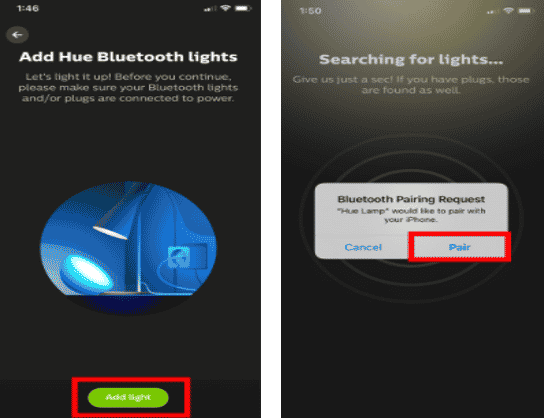
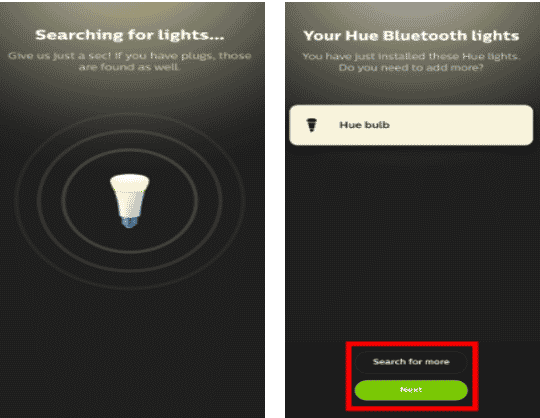
- Next, turn on your lights and tap “Add Light.” The app will automatically start scanning for nearby Philips Hue bulbs.
- Then tap “Pair.” A pop-up prompt will appear on your screen asking you to give the app access to your smartphone’s Bluetooth settings.
- Tap “Next” or “Search for More.” If the app finds one of your bulbs, you can tap “Next.” If you are setting up more than one bulb, tap “Search for More.” You can verify which bulb is linked to the app by tapping the bulb image, and the physical light will turn off to confirm the connection.
- Next, choose the voice assistants you would like to use. Your two options are Alexa and Google Assistant. If you do not have a voice assistant or want to set one up later, tap “Setting up a voice assistant later.”
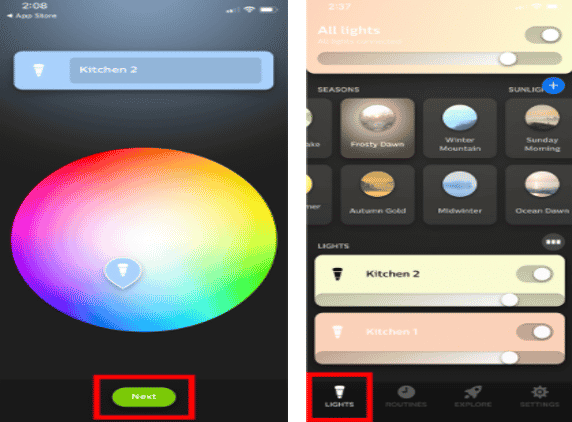
- Then you will need to assign names to your Hue bulbs. Tap the text box at the top of the screen to replace the default names. If you are using a voice assistant, pick a name the speaker can easily recognize, such as “Bulb 1” or “Bedroom Light.”
- Finally, tap “Next” to complete the setup process. You can now control your Hue bulbs using the Philips Hue Bluetooth App. Change the color of the bulbs or dim them by tapping the lights tab in the lower-left corner of the screen.
- You can also rename all of your bulbs later by tapping the settings button in the lower-right corner of the screen. Then tap “Lights” and select the bulb whose name you want to change. Tap the default name to type in a new one.
We walk through smart bulbs step by step in a separate post.
How Do You Use the Hue Dimmer Switch?
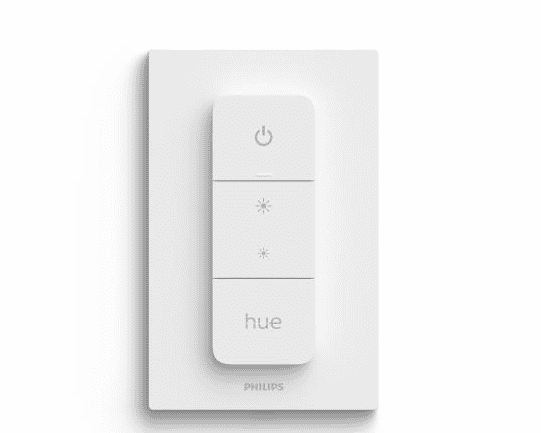
You can also buy a Dimmer Switch to control your Hue bulbs without the Hue Bridge. Here is how to set it up:
- Unbox all your bulbs along with the Dimmer Switch. Once unboxed, the bulbs and the switch connect to each other automatically.
- Next, screw the bulbs into empty sockets and turn them on.
- Insert the provided battery into the Dimmer Switch.
- Now that the Dimmer Switch is powered, you can use it to control your Hue bulbs right away. You can turn the lights on and off or adjust the brightness. Keep in mind, though, that the Hue Dimmer Switch does not let you change the color of your bulbs.
Troubleshooting Philips Hue Setup Problems
If you are having trouble connecting to your Philips Hue bulbs, there are a few things to double-check. Make sure you have the latest version of the Philips Hue app installed. Confirm that Bluetooth is turned on and working properly on your smartphone. Also, make sure you are standing no more than 3 feet from your Philips Hue bulbs during the pairing process.
If the bulbs still will not connect, try power-cycling them (turn the light switch off for 10 seconds and back on). You can also try uninstalling and reinstalling the Hue app, or resetting the bulbs by toggling the light switch on and off five times in a row.

Final Thoughts
As you can see, you do not need a Hue Bridge to control your Hue bulbs. You have a couple of solid options, from using Bluetooth-ready Hue bulbs with the app to picking up a Hue Dimmer Switch. It all comes down to what works best for your setup, but either way, you save money by skipping the Bridge.
That said, if you find yourself adding more and more Hue bulbs over time, the Bridge does open up extra features like scheduling, geofencing, and controlling your lights when you are away from home. For a small starter setup, though, Bluetooth or the Dimmer Switch will get the job done nicely.