The Sensi smart thermostat by Emerson is one of the easiest smart thermostats to install yourself. Most homeowners can get it done in under 30 minutes with nothing more than a screwdriver and their phone. The key is labeling your existing wires correctly, mounting the new base plate, and walking through the Sensi app setup.
This guide covers both the Sensi Touch and Sensi Lite models. The wiring process is nearly identical for both, though the Touch has a color touchscreen while the Lite uses a simpler button-driven interface. Either way, you don’t need to hire an HVAC technician unless your system has unusual wiring.
What HVAC Systems Work with Sensi Thermostats
Before buying a Sensi thermostat, confirm that your heating and cooling system is compatible. Sensi thermostats work with most 24-volt residential HVAC systems, which covers the majority of homes in the U.S. and Canada.
Compatible systems include conventional forced-air furnaces (gas, oil, or electric), central air conditioning, heat pumps (with or without auxiliary/emergency heat), multi-stage heating and cooling systems (up to 2 stages of heat and 2 stages of cool), and hot water or steam boiler systems with a single-stage setup.
Sensi does not work with high-voltage systems like 110V or 220V electric baseboard heaters, millivolt systems (some older gas fireplaces and wall heaters), or proprietary mini-split systems from brands like Mitsubishi or Daikin without an adapter.
Emerson provides a free compatibility checker at sensi.emerson.com. It asks a few questions about your current wiring and tells you whether your system will work. Run it before you start.
Sensi Touch vs Sensi Lite Which Model Should You Install
| Feature | Sensi Touch (1F95U-42WF) | Sensi Lite (1F86U-42WF) |
|---|---|---|
| Display | Full-color touchscreen | Basic LCD with buttons |
| Wi-Fi | Yes (2.4 GHz) | Yes (2.4 GHz) |
| C-wire required | No (works without one on most systems) | No (works without one on most systems) |
| Smart home support | Alexa, Google Home, Apple HomeKit | Alexa, Google Home, Apple HomeKit |
| Humidity display | Yes | No |
| Geofencing | Yes (via app) | Yes (via app) |
| Flexible scheduling | 7-day programming | 7-day programming |
| Typical price (2026) | $130 – $170 | $70 – $100 |
Both models install the same way and use the same wiring terminals. The Sensi Touch is worth the extra cost if you want to adjust settings on the wall without pulling out your phone. The Sensi Lite is a solid budget pick if you plan to control everything through the app anyway.
What Tools Do You Need to Install a Sensi Thermostat
You probably already have everything you need. Gather these before you start so you don’t have to stop mid-install.
- Phillips-head screwdriver – for removing the old thermostat and mounting the new base plate.
- Flathead screwdriver or small pick – helpful for releasing wires from push-in terminals on the old thermostat.
- Pencil – for marking screw holes on the wall.
- Drill with a small bit (optional) – only needed if you’re mounting into drywall without existing anchors. The Sensi box includes wall anchors.
- Painter’s tape and a pen – for labeling wires before you disconnect them from the old thermostat.
- Smartphone – the Sensi app (iOS or Android) walks you through setup and connects the thermostat to your Wi-Fi.
- Level (optional) – to make sure the base plate sits straight. The Sensi app also has a built-in level tool.
How to Label and Remove Your Old Thermostat
This is the most important part of the whole install. Labeling your wires correctly prevents headaches later. If a wire ends up in the wrong terminal, your system won’t heat, won’t cool, or won’t turn on at all.
- Turn off your HVAC system at the circuit breaker. Flip the breaker that controls your furnace or air handler. This protects the low-voltage transformer and prevents blowing a fuse on your furnace control board if wires accidentally touch.
- Remove the faceplate of your old thermostat. Most thermostats pull straight off or unclip from a base plate. You’ll see several colored wires connected to screw or push-in terminals labeled with letters.
- Take a photo of the wiring. Use your phone to snap a clear picture showing which colored wire connects to which terminal letter. This is your safety net.
- Label each wire. Using painter’s tape, wrap a small flag around each wire and write the terminal letter it was connected to (not the wire color – the terminal letter). Write R on the wire from the R terminal, W on the wire from W, and so on.
- Disconnect the wires. Loosen each terminal screw or press the release tab and gently pull each wire free. Let the wires hang without touching each other.
- Remove the old base plate from the wall. Unscrew the mounting screws. Be careful not to let the wires fall back into the wall. If the hole is large, loosely wrap tape around the wire bundle to keep it from sliding through.
Sensi Thermostat Wire Color and Terminal Guide
Thermostat wire colors aren’t fully standardized, which is why labeling by terminal letter matters more than wire color. That said, most installers follow common conventions. Here’s a reference table for the typical setup.
| Terminal | Common wire color | Function |
|---|---|---|
| R (or Rh) | Red | 24V power from transformer (heating) |
| Rc | Red (second red, if present) | 24V power for cooling (separate transformer) |
| W or W1 | White | Heating – calls the furnace or heat source |
| W2 | Brown (varies) | Second-stage heat (multi-stage systems) |
| Y or Y1 | Yellow | Cooling – calls the air conditioner or heat pump compressor |
| Y2 | Light blue (varies) | Second-stage cooling |
| G | Green | Fan – controls the indoor blower |
| C | Blue (most common) | Common wire – provides continuous 24V power to thermostat |
| O/B | Orange or dark blue | Heat pump reversing valve (switches between heat and cool mode) |
| E | Varies | Emergency heat (heat pump systems) |
If your old thermostat has a jumper wire between Rh and Rc, you have a single-transformer system and only need to connect the R terminal on the Sensi. Remove the jumper and connect the red wire to R. If you have two separate red wires (one for Rh, one for Rc), connect each to its matching terminal on the Sensi.
How to Wire and Mount the Sensi Thermostat Step by Step
With your old thermostat removed and your wires labeled, you’re ready to mount the Sensi and connect everything.
You might also want to read our kasa smart plug setup guide for the full picture.
- Thread the wires through the Sensi base plate. Hold the base plate against the wall where the old one was mounted. Pull all the labeled wires through the center opening.
- Level and mark the screw holes. Use a pencil to mark where the mounting screws will go. The included trim plate covers old screw holes and paint marks, so don’t worry about the old holes.
- Secure the base plate to the wall. Use the included screws and wall anchors. If you’re screwing into a stud, skip the anchors and drive the screws directly in. Make sure the plate sits flush and level.
- Connect each wire to its matching terminal. Look at the labels you wrote on the painter’s tape. Insert the wire labeled R into the R terminal on the Sensi, W into W, Y into Y, G into G, C into C, and so on. Push each wire in firmly until you feel it click into the connector. Give a gentle tug to confirm it’s secure.
- Double-check every connection. Compare against the photo you took earlier. A single misplaced wire can prevent the system from working or cause the fan to run constantly.
- Snap the thermostat onto the base plate. Align the unit with the base plate and press it firmly until it clicks into place.
- Turn the circuit breaker back on. Go back to your electrical panel and flip the HVAC breaker on.
The thermostat should power up within a few seconds. If the screen stays blank, check that your wires are seated fully in the terminals and confirm the breaker is on.
What to Do If You Don’t Have a C Wire
One of the biggest selling points of Sensi thermostats is that many installations work fine without a C wire. The Sensi Touch and Sensi Lite can both run without one in certain configurations, pulling small amounts of power through the R wire circuit. This works for most conventional heating and cooling systems.
However, if your system is a heat pump or you experience issues like short cycling, Wi-Fi dropping, or the screen flickering, you may need to add a C wire. Here are your options.
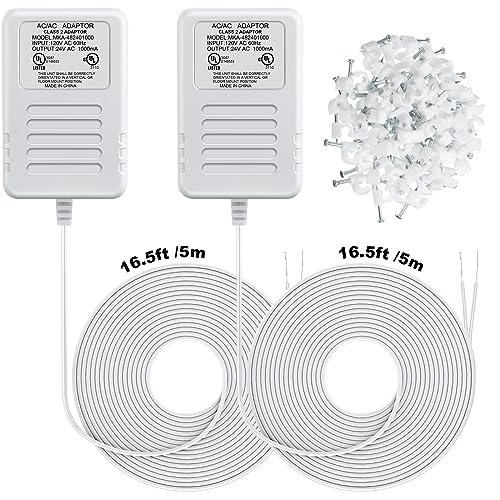
Option 1: Use an existing unused wire. Some thermostat cables have 5 or more wires, but only 4 are connected. If there’s a spare wire in the cable bundle that isn’t hooked up to anything at the thermostat or the furnace, you can repurpose it as a C wire. Connect one end to the C terminal on the Sensi and the other end to the C terminal on your furnace control board.
Option 2: Install an add-a-wire kit. Products like the Venstar ACC0410 Add-A-Wire accessory let you get a C wire connection through existing 4-wire cable without running new wire. The kit installs at the furnace end and converts the existing wiring to include a C connection.
Option 3: Run a new thermostat cable. If the other options aren’t possible, an electrician can run new 5-conductor (18/5) thermostat wire from the furnace to the thermostat location. This typically costs $100-$200 depending on the distance and wall accessibility.
How to Set Up the Sensi App and Connect to WiFi
Once the thermostat is mounted and powered on, the Sensi app handles the rest of the setup. You’ll need a 2.4 GHz Wi-Fi network – Sensi thermostats do not connect to 5 GHz bands.
- Download the Sensi app from the Apple App Store or Google Play Store. Create a free account if you don’t already have one.
- Tap the “+” icon in the app to add a new thermostat. Select your model (Sensi Touch or Sensi Lite).
- Follow the app’s wiring confirmation. The app will ask you to select which wires are connected. This helps it configure the thermostat for your specific HVAC system type – conventional, heat pump, or other.
- Connect the thermostat to Wi-Fi. The app will prompt you to connect your phone to the thermostat’s temporary Wi-Fi network (it broadcasts its own network during setup). Once connected, you’ll select your home Wi-Fi network and enter the password.
- Name and configure your thermostat. Give it a name (like “Living Room” or “Upstairs”), set your preferred temperature scale (Fahrenheit or Celsius), and configure your heating and cooling preferences.
- Set up a schedule or enable geofencing. The app lets you create a 7-day schedule with different temperatures for wake, leave, return, and sleep periods. You can also enable geofencing so the thermostat adjusts automatically when you leave or arrive home.
If the thermostat fails to connect to your Wi-Fi, make sure you’re using a 2.4 GHz network. Many modern routers broadcast both 2.4 GHz and 5 GHz under the same name. You may need to separate them temporarily in your router settings, or check if your router has a combined network that auto-steers devices.
Common Sensi Thermostat Installation Problems and Fixes
Most Sensi installs go smoothly, but a few issues come up regularly. Here’s how to handle them.
Thermostat won’t power on. Check that the circuit breaker is on. Inspect the R wire connection on the Sensi and make sure the wire is pushed in fully. At the furnace end, confirm the wire is securely attached to the R terminal on the control board. Also check the furnace’s 3-amp fuse on the control board – if it blew during installation (from wires briefly touching), replace it with an identical fuse from a hardware store.
Heat or AC won’t turn on. This almost always means a wire is in the wrong terminal. Pull the thermostat off the base plate and compare your connections to the photo you took of the old thermostat. If the wire labeled Y is in the W terminal, for example, the system will try to heat when it should cool. Correct any misplaced wires and test again.
Interested in this area? We go deeper in our merkury smart plug setup guide.
Fan runs constantly. Check the G wire connection. If G and another wire are swapped, the fan may run nonstop. Also check the fan setting in the Sensi app – make sure it’s set to “Auto” rather than “On.” The “On” setting keeps the fan running regardless of heating or cooling calls.
Wi-Fi won’t connect. The Sensi requires a 2.4 GHz Wi-Fi network. If your router uses a combined 2.4/5 GHz SSID, try temporarily disabling the 5 GHz band or creating a separate 2.4 GHz network name. Also confirm the thermostat is within range of your router. Thick walls, metal ductwork, and long distances can weaken the signal.
Short cycling (system turns on and off rapidly). This can happen when the thermostat doesn’t have enough power. If you don’t have a C wire connected, try adding one using one of the methods described above. Short cycling can also indicate an HVAC system problem unrelated to the thermostat, like an oversized AC unit or a dirty air filter restricting airflow.
How to Connect Sensi Thermostat to Alexa Google Home or HomeKit
After the Sensi app setup is complete and the thermostat is online, you can connect it to your preferred smart home platform.
Amazon Alexa: Open the Alexa app, go to Skills & Games, and search for “Sensi.” Enable the skill and sign in with your Sensi account. Alexa will discover your thermostat automatically. You can then say things like “Alexa, set the thermostat to 72” or “Alexa, what’s the temperature inside.”
Google Home: Open the Google Home app, tap the “+” icon, select “Set up device,” then “Works with Google.” Search for Sensi and link your account. The thermostat will appear in your Google Home and respond to Google Assistant voice commands.
Apple HomeKit: During the initial Sensi app setup, you’ll be prompted to scan the HomeKit code included on the thermostat or its packaging. Once added, the Sensi appears in the Apple Home app and responds to Siri commands. You can also include it in HomeKit automations and scenes.
Sensi Thermostat Installation FAQs
Can I install a Sensi thermostat with only 2 wires?
It depends on your system. Two-wire setups are common with simple heating-only systems (like older furnaces or boilers) where you have just an R wire and a W wire. The Sensi Lite and Sensi Touch can work with 2-wire heating-only configurations. You won’t have cooling control or fan control because there are no Y or G wires, but heating will function normally. The Sensi app will configure itself for a heat-only setup during installation.
Do I need to turn off the breaker before installing?
Yes. Always turn off the HVAC breaker before disconnecting or connecting thermostat wires. While thermostat wiring runs on 24 volts (not dangerous to touch), shorting the wires while the system is powered can blow the small fuse on your furnace’s control board. That’s an easy fix, but it’s better to avoid it entirely by cutting the power first.
Will a Sensi thermostat work with a heat pump?
Yes. Both the Sensi Touch and Sensi Lite support heat pump systems, including those with auxiliary or emergency heat strips. You’ll connect the O/B wire to the O/B terminal for the reversing valve, and the Sensi app will ask whether your system uses an O wire (energized in cooling, which is most common) or a B wire (energized in heating). Make sure to select the correct option during app setup or your heat pump will run in the wrong mode.
Why does my Sensi thermostat keep losing Wi-Fi?
Frequent Wi-Fi disconnections usually point to one of three things. The thermostat may be too far from the router – adding a Wi-Fi extender near the thermostat can help. Your router may be set to a channel with heavy interference from neighbors, and switching to a less congested channel in your router settings can improve stability. Or the thermostat may lack a C wire and is intermittently losing power, which drops the Wi-Fi radio. Adding a C wire connection typically resolves power-related disconnection issues.
Can I use the Sensi thermostat without the app after installation?
Yes. The Sensi Touch has a full touchscreen that lets you adjust temperature, change modes, set schedules, and view humidity right on the unit. The Sensi Lite has physical buttons for temperature adjustment and mode selection. You need the app for initial setup and Wi-Fi connection, but after that, both models work as standalone thermostats if you prefer not to use the app for daily control.
Is the Sensi thermostat compatible with multi-zone systems?
Yes, but each zone needs its own thermostat. Multi-zone HVAC systems use separate thermostats to control dampers or individual air handlers for different areas of the house. You can install a Sensi thermostat on each zone and manage all of them from a single Sensi app account. Each thermostat operates independently with its own schedule and settings.
Sources
Emerson Sensi – Sensi Thermostat Installation Support | Emerson Sensi – Sensi Compatibility Checker | U.S. Department of Energy – Thermostats