Siri is Apple’s voice assistant built into every HomePod, HomePod mini, iPhone, iPad, Apple Watch, and Mac. When paired with the Apple Home app and HomeKit-compatible devices, Siri becomes a full smart home controller. You speak a command, and Siri turns off the lights, locks the front door, adjusts the thermostat, or pulls up a camera feed. No phone unlocking required. No app tapping. Just your voice.
In 2026, Siri handles smart home tasks through a combination of on-device processing and Apple Intelligence. Apple has expanded what Siri can do with contextual awareness, meaning Siri now understands follow-up commands and multi-step requests better than previous versions. If you say “turn off the bedroom lights and set the thermostat to 68,” Siri processes both actions in a single pass.
This guide covers how Siri works as a home assistant, which devices it controls, how to set it up, and where it falls short compared to Alexa and Google Assistant.
How Does Siri Work on HomePod and HomePod Mini
The HomePod and HomePod mini are the primary hardware for using Siri as a home assistant. Both speakers are always listening for the wake phrase “Hey Siri” or just “Siri” (added in 2024). When they hear it, the device processes your command and sends instructions to your smart home devices through the Apple Home app.
The full-size HomePod (2nd generation) costs $299 and delivers room-filling sound alongside Siri voice control. The HomePod mini costs $99 and provides the same Siri smart home features in a smaller, more affordable package. Both work as HomeKit home hubs, Thread border routers, and Matter controllers.
As a home hub, the HomePod stays connected to your network at all times. It runs automations locally, handles remote access when you are away from home, and relays commands from your iPhone to your smart devices. Without a home hub, HomeKit only works when your phone is on the same Wi-Fi network as your accessories.
| Feature | HomePod (2nd Gen) | HomePod Mini |
|---|---|---|
| Price | $299 | $99 |
| Siri voice control | Yes | Yes |
| HomeKit home hub | Yes | Yes |
| Thread border router | Yes | Yes |
| Matter support | Yes | Yes |
| Temperature and humidity sensor | Yes | No |
| Sound quality | High-fidelity, spatial audio | Good for its size |
| Intercom | Yes | Yes |
You can place a HomePod mini in every room for whole-home voice coverage. Each one responds independently to Siri commands and controls the devices assigned to its room. If you say “turn off the lights” to the kitchen HomePod mini, Siri turns off the kitchen lights specifically, not every light in the house.
What Is the Apple Home App and How Does Siri Use It
The Apple Home app is the control center for every smart device in your house. It runs on iPhone, iPad, Mac, and Apple Watch. Every accessory you add to the Home app becomes available to Siri for voice control. The app organizes devices by room, lets you build scenes, and handles automations.
When you give Siri a smart home command, the assistant looks at the devices registered in your Home app. Siri matches your spoken words to device names, room names, and scene names you have created. That is why naming devices clearly matters. Calling a light “Living Room Lamp” instead of “Light 1” helps Siri understand exactly which device you mean.
The Home app also shows the current status of every accessory at a glance. You can see which lights are on, whether the front door is locked, what the thermostat is set to, and live camera feeds. Siri can relay this information by voice too. Ask “Is the front door locked?” and Siri checks the Home app and responds.
What Devices Are Compatible With Siri and HomeKit
Siri controls any device that carries the “Works with Apple HomeKit” label or the Matter logo. The HomeKit ecosystem has grown significantly since Apple began supporting the Matter standard. In 2026, thousands of accessories from hundreds of manufacturers work with Siri through the Home app.
Here are the main device categories Siri can control.
| Device Category | What Siri Can Do | Popular Brands |
|---|---|---|
| Smart lights | Turn on/off, dim, change color, set brightness percentage | Philips Hue, Nanoleaf, LIFX, Eve |
| Smart locks | Lock, unlock, check status | Yale, Level, August, Schlage |
| Thermostats | Set temperature, switch modes, check current reading | Ecobee, Honeywell Home |
| Security cameras | Show live feed on Apple TV, check recent activity | Logitech Circle View, Eve Cam, Eufy |
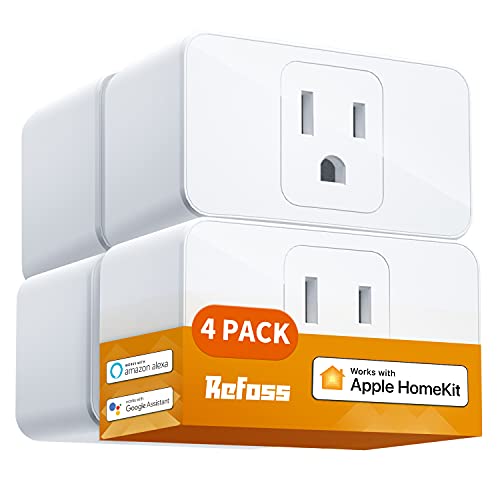
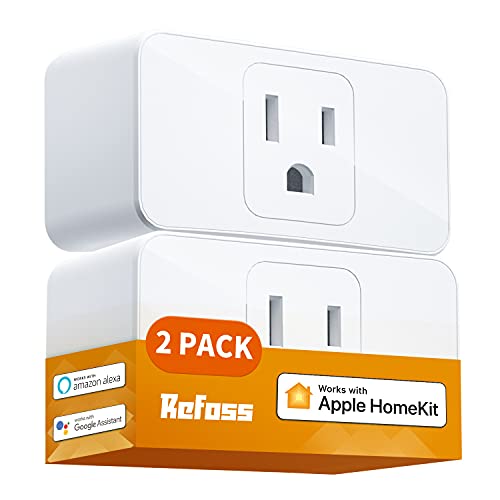
| Smart plugs | Turn on/off, schedule | Eve Energy, Wemo, Meross |
| Garage door openers | Open, close, check status | Chamberlain myQ, Meross |
| Window blinds and shades | Open, close, set position percentage | Lutron, Hunter Douglas, IKEA |
| Sensors | Report temperature, humidity, motion, door/window open status | Eve, Aqara, Onvis |
| Sprinkler controllers | Start, stop, check zone status | Rachio, Eve Aqua |
Matter devices deserve special attention. Any accessory with the Matter logo works with Siri through the Home app, even if the manufacturer never specifically built HomeKit support. This has opened the door for many brands that previously only supported Alexa or Google Home.
What Voice Commands Does Siri Support for Smart Home Control
Siri responds to natural language commands for smart home control. You do not need to memorize exact phrases. Speak naturally, and Siri figures out what you mean. That said, certain command patterns work consistently across all device types.
For lights, you can say things like “Turn on the living room lights,” “Dim the bedroom lights to 30 percent,” “Set the kitchen lights to warm white,” or “Turn off all the lights.” Siri recognizes room names, device names, and zones you have created in the Home app.
For locks, try “Lock the front door,” “Unlock the back door,” or “Is the garage door locked?” Siri confirms lock actions verbally so you know the command went through. For security reasons, unlocking a door through Siri on a HomePod requires you to have personal requests enabled and your voice recognized.
For thermostats, say “Set the thermostat to 72 degrees,” “Turn up the heat,” “What is the temperature inside?” or “Set the AC to 68.” Siri adjusts the thermostat and confirms the new setting.
For cameras, ask “Show me the front door camera” while near an Apple TV. The live feed appears on your television screen. You can also ask “Show me the backyard camera on my iPhone” to pull up the feed directly.
For scenes, say “Good morning” or “Good night” to trigger scenes you have created with those names. Any scene name works as a Siri command. Name a scene “Movie time” and saying those words activates it.
How to Set Up Scenes With Siri
Scenes group multiple device actions into a single command. Instead of telling Siri to turn off five different lights, lower the blinds, and lock the door separately, you create a scene called “Good Night” that does all of it at once.
- Open the Apple Home app on your iPhone or iPad.
- Tap the plus (+) button in the top-right corner and select “Add Scene.”
- Choose a suggested scene name (Good Morning, Good Night, I’m Leaving, I’m Home) or tap “Custom” to create your own.
- Give the scene a name that is easy to speak. This name becomes your Siri command.
- Add the accessories you want the scene to control. For each device, set the target state: on or off, brightness level, color, temperature setting, lock position.
- Tap “Done” to save the scene.
Once saved, say “Hey Siri, Good Night” and every device in the scene moves to its assigned state. You can also tap the scene tile in the Home app or trigger it through an automation.
Practical scene ideas include a “Leaving Home” scene that turns off all lights, locks all doors, and sets the thermostat to eco mode. A “Cooking” scene might turn on the kitchen lights to full brightness and start playing a cooking playlist on the kitchen HomePod. Build scenes around your daily routines, and Siri becomes much more useful.
How to Create Automations That Work With Siri
Automations run actions without any voice command at all. They trigger based on time, location, sensor input, or device state changes. Your HomePod or Apple TV handles everything locally once you set them up.
- Open the Home app and go to the Automations tab.
- Tap the plus (+) icon to create a new automation.
- Choose a trigger type: time of day, when someone arrives or leaves, when a sensor detects something, or when an accessory changes state.
- Set any conditions. For example, a time-based trigger can be limited to specific days of the week or only run when nobody is home.
- Choose which devices to control and what they should do when the automation fires.
- Tap “Done” to save.
A common automation is “When the last person leaves home, turn off all lights and lock the front door.” The Home app uses the GPS location of every household member’s iPhone to detect arrivals and departures. Another useful example is “When the front door sensor detects an opening after sunset, turn on the hallway light for 5 minutes.”
Siri can tell you about your automations if you ask. Say “What automations are set up?” and Siri reads back your active automations. You cannot create automations through voice alone, though. The Home app is required for building and editing them.
How Does Siri Compare to Alexa and Google Assistant for Smart Home
All three voice assistants control smart home devices, but they differ in device compatibility, features, and how deeply they integrate with their ecosystems. Here is a side-by-side comparison for 2026.
| Feature | Siri (Apple) | Alexa (Amazon) | Google Assistant |
|---|---|---|---|
| Compatible device count | Large (HomeKit + Matter) | Largest (native + Matter) | Large (native + Matter) |
| Speaker hardware | HomePod, HomePod mini | Echo, Echo Dot, Echo Show, Echo Pop | Nest speakers, Nest Hub, Nest Hub Max |
| Display-based speaker | No (uses Apple TV for visual) | Yes (Echo Show) | Yes (Nest Hub, Nest Hub Max) |
| Matter support | Yes | Yes | Yes |
| Voice match (multi-user) | Yes (personal requests) | Yes (voice profiles) | Yes (voice match) |
| Routines/scenes | Scenes and automations | Routines | Routines |
| Privacy approach | On-device processing, no always-on recording | Cloud-processed, optional recording review | Cloud-processed, optional recording review |
| Third-party skills/actions | Limited (no equivalent to Alexa Skills) | Extensive (over 100,000 skills) | Moderate (Google Home actions) |
| Intercom feature | Yes (HomePod to HomePod, iPhone, AirPods) | Yes (Echo to Echo, Alexa app) | Yes (Nest to Nest, Google Home app) |
Alexa has the widest device compatibility and the most third-party integrations. Amazon has been in the smart home space longer, and its open approach means nearly every smart home brand supports Alexa natively. Google Assistant sits in the middle, with strong compatibility and excellent integration with Google services like Calendar, Maps, and Gmail.
Where Does Siri Have an Advantage Over Alexa and Google Assistant
Siri’s strongest advantage is privacy. Apple processes Siri requests on-device whenever possible, and smart home commands routed through HomeKit stay within your local network. Apple does not store recordings of your Siri interactions for review by human employees. Both Amazon and Google have faced scrutiny for their audio data handling practices in the past.
The Apple ecosystem integration is another advantage. If you already own an iPhone, iPad, Apple Watch, Mac, and Apple TV, Siri ties everything together without extra setup. You can control your home from any Apple device. The Apple Watch lets you whisper a command from bed without waking anyone. AirPods let you trigger Siri hands-free while doing chores.
HomeKit Secure Video is a feature that no competitor matches. Security cameras in HomeKit process footage locally on your HomePod or Apple TV before encrypting it and uploading to iCloud. Apple cannot see the recordings. This level of camera privacy does not exist on Alexa or Google platforms, where video processing happens in the cloud.
What Are the Limitations of Siri as a Home Assistant
Siri has real weaknesses that you should understand before building your smart home around it.
The biggest limitation is device variety. While Matter has expanded compatibility, many popular smart home brands still do not offer full HomeKit support. Ring doorbells and cameras, for example, work with Alexa but not HomeKit. Nest thermostats and cameras work with Google Assistant but not HomeKit. If you have existing devices from these brands, Siri cannot control them.
Siri also lacks a display-based smart speaker. Both Alexa (Echo Show) and Google Assistant (Nest Hub) offer speakers with screens that show camera feeds, recipes, calendars, and weather at a glance. Apple has no equivalent. You need an Apple TV connected to a television to see camera feeds through Siri.
Third-party voice skills are another gap. Alexa has over 100,000 skills that let you order food, play trivia games, check bank balances, and interact with countless services by voice. Siri has no equivalent skill marketplace. Its voice capabilities are limited to what Apple has built in and what app developers choose to support through SiriKit.
Does Siri Support Complex Routines and Non-Apple Users
Complex multi-step routines are harder with Siri. Alexa routines can include wait timers, conditional logic, and sequences of actions spread across time. Siri scenes trigger everything simultaneously, and automations in the Home app offer fewer conditional options. For advanced smart home users who want granular control, Siri can feel limited.
Finally, Siri requires Apple hardware throughout. Every household member who wants to control the smart home needs an iPhone or iPad. Android users in the household cannot use the Home app or Siri. With Matter devices, they can use the Google Home app on Android as a workaround, but the experience is not unified.
How to Set Up Siri as Your Home Assistant
Getting started with Siri for smart home control takes about 15 to 20 minutes. Here is the process from scratch.
- Make sure your iPhone or iPad is running the latest version of iOS. Siri’s smart home features require iOS 16.1 or later for Matter support. Update through Settings, then General, then Software Update.
- Set up a home hub. Plug in a HomePod or HomePod mini and follow the on-screen setup on your iPhone. The device automatically becomes your home hub once it is added to the Home app. An Apple TV 4K also works as a home hub.
- Open the Home app on your iPhone. If this is your first time, the app creates a default home for you. Name it and continue.
- Add your first smart home device. Tap the plus (+) button, then tap “Add Accessory.” Scan the HomeKit or Matter setup code on the device or its packaging. Assign the device to a room.
- Test a Siri command. Say “Hey Siri, turn on the [device name].” If Siri responds and the device reacts, the setup is complete.
- Add more devices, create rooms and zones, build scenes, and set up automations as your collection grows.
Place your HomePod mini in a central location where you spend most of your time. The kitchen or living room works well. If you want whole-home voice coverage, add a HomePod mini to each main room. Every HomePod on your network shares the same Home app configuration automatically.
What Are Common Questions About Siri as a Home Assistant
Does Siri work as a home assistant without a HomePod?
Yes, but with limits. You can use Siri on your iPhone, iPad, or Apple Watch to control HomeKit devices when you are on the same Wi-Fi network. However, without a HomePod or Apple TV acting as a home hub, you lose remote access, automations, and always-listening voice control. A HomePod mini at $99 is the most affordable way to get the full experience.
Can Siri control Ring doorbells and cameras?
No. Ring products are owned by Amazon and do not support HomeKit or Matter as of 2026. Ring devices only work natively with Alexa. If you want doorbell camera integration with Siri, look at alternatives from Logitech, Aqara, or Eve that support HomeKit.
Does Siri work with Google Nest thermostats?
No. Google Nest thermostats do not support HomeKit. The Nest Learning Thermostat (4th gen) supports Matter, which theoretically allows cross-platform use, but full Siri integration through the Home app depends on the specific Matter device categories the thermostat supports. Ecobee remains the most reliable thermostat choice for HomeKit users.
How many devices can Siri control at once?
Apple does not publish a hard limit on the number of HomeKit accessories. Users routinely run 100 to 200 devices without issues. The practical limit depends on your Wi-Fi network capacity and your home hub’s processing power. Thread devices reduce the load on Wi-Fi because they communicate over their own mesh network.
Is Siri always listening on HomePod?
The HomePod listens locally for the wake phrase “Hey Siri” or “Siri.” It does not send audio to Apple servers until it hears the wake phrase. Apple processes Siri requests with a random identifier rather than your Apple ID, and the company states that recordings are not stored. You can also turn off “Listen for Siri” entirely in the Home app settings for any HomePod.
Can Siri control smart home devices when the internet is down?
Partially. HomeKit devices connected over your local Wi-Fi still respond to commands from the Home app and Siri on a HomePod, as long as everything is on the same network. Automations stored on the home hub continue running locally. What you lose is remote access from outside your home and any cloud-dependent features. Thread devices are especially resilient during outages because they communicate locally through their mesh network.
Sources
Apple – Apple Home App | Apple – HomePod Mini | Apple – HomeKit Accessories | Apple – Siri | Connectivity Standards Alliance – Matter Standard