When you purchase through links on our site, we may earn an affiliate commission. Here’s how it works.
Canon EOS 1D Mark III Review
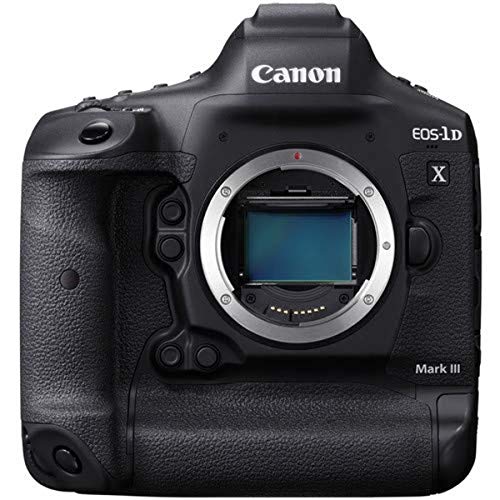
Canon’s EOS 1D Mark III is a fast, tough, professional-grade DSLR that sits at the top of Canon’s lineup.
At first glance, it looks a lot like its predecessors in the EOS 1D series, which goes back over 20 years. But look closer and you’ll find that the Mark III is a major step forward in almost every way.

Canon EOS 1D Mark III Review
The double-grip body might look bulky, but it works surprisingly well as a high-end mirrorless camera when you switch to Live View mode.
The Mark III produces sharp 8-bit+ JPEG images and uses machine learning for AF subject recognition. It’s also capable of shooting impressive video, including Internal Raw footage.
Specifications of Canon EOS 1D Mark III
Here’s a closer look at what the Mark III brings to the table:
Sensor – 20.1 MP full-frame CMOS sensor
Viewfinder – Pentaprism, 20mm eyepoint, 0.76x magnification, 100% coverage
AF Points – Optical 191 points (155 cross-type) phase-detection with AF-dedicated sensor
Image Processor – Digic X
Image size (max) – 5472 x 3648
Metering Modes – Partial, Spot, Evaluative, Center Spot, AF Point-linked Spot, center-weighted average, multi-spot
Video – 4K RAW, 4K UHD, 4K DCI, 4K DCI Cropped at 23.98, 24, 25, 29.97, 50, 59.94 fps / 1080p at (23.98, 24, 25, 29.97, 50, 59.94, 120 fps
LCD – 3.2 inches fixed touchscreen with 2.1 million dots
Memory Card – 2x CFexpress 1.0 Type B
Burst (max) – Optical viewfinder 16 fps mechanical shutter / Live View 20 fps mechanical or electronic shutter
Connectivity – Wi-Fi (2.4 GHz), USB-C (USB 3.1 Gen 2), Bluetooth, HDMI mini, headphone jack, external microphone, N3 remote release terminal, gigabit Ethernet (10BASE-T, 100BASE-TX, 1000BASE-T), Flash PC
Dimensions – 158 cm x 167.6 cm x 82.6 cm
Weight – 1,250 grams (body only)
As you can see, the spec sheet is loaded. This is one of the most feature-packed DSLRs in its class.
Features of Canon EOS 1D Mark III
Now let’s dig into how the camera actually performs in practice.
Key Features of Canon EOS 1D Mark III
The Mark III is built around a traditional optical viewfinder, even though it’s packed with modern tech.
Why keep the optical viewfinder? Because it enables shooting at 16 fps with a mechanical shutter, using a 400,000-pixel metering sensor paired with a dedicated Digic 8 processor.
That feeds into the 191-point Auto Focus system (155 of those are cross-type), making face detection and AF tracking possible even through the optical viewfinder.
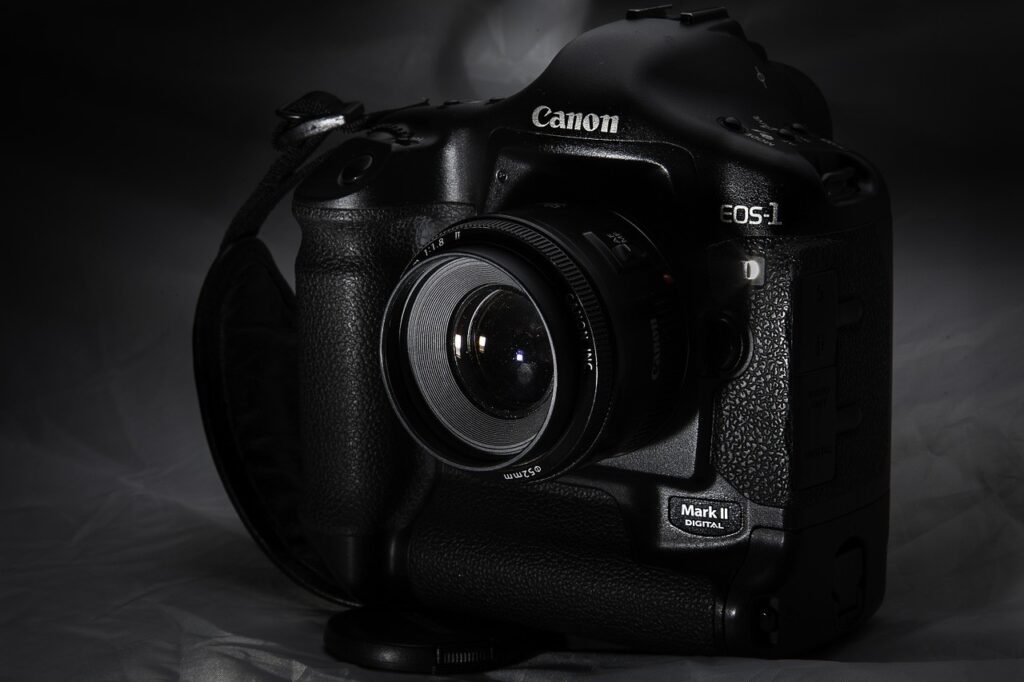
Key features of Canon EOS 1D Mark III
Switch to Live View and the Mark III can hit 20 fps with a mechanical or electronic shutter, using the full 20.1 million pixels of its CMOS sensor.
Combine that with the Digic X processor and 3,869 Dual Pixel CMOS AF points, and you get full eye-detection Auto Focus similar to what you’d find on the Canon EOS R.
You might notice the 20.1 MP sensor is lower than the Sony A9 II (24.2 MP), and it’s even slightly below the predecessor EOS 1D Mark II (20.2 MP). Canon says that 20.1 MP is the sweet spot for this sensor, delivering sharper and higher-resolution images than what a 24.2 MP sensor produces at this level.
For video, the Mark III shoots internal 12-bit 4K RAW at 5472 x 2886 at up to 30 fps (using a 1,800 Mbps bitrate). On top of that, you get various 4K crop options and 1080p video at up to 120 fps with AF/E and tracking.
It can record MP4 and RAW video at the same time and store them on separate CFexpress cards.
Control Quality of Canon EOS 1D Mark III
The Mark III includes a Smart Controller that works alongside (or even replaces) the traditional joystick. It lets you move AF points around the frame much faster than the old joystick method.
How Does the Canon EOS 1D Mark III Handle?
The body layout is nearly identical to the Mark I and Mark II. Canon did this on purpose so that photographers who’ve been using the 1D series since the 1980s can pick up the Mark III and feel right at home.
The Smart Controller is a real standout. Compared to a conventional joystick, it allows faster and more precise AF point movement across the entire frame. Canon says this technology will become standard across their DSLR lineup.
Despite the familiar layout, the redesigned magnesium alloy chassis makes the Mark III both more durable and lighter than its predecessors.
How Does the Canon EOS 1D Mark III Perform?
Some people question the 20.1MP sensor when competitors offer more, but the image quality speaks for itself. The pictures from the Mark III are clearly sharp and detailed. While a 24MP sensor might edge it out on paper, the Mark III holds its own against other cameras in the same sensor range.
Video performance is equally strong. The camera captures crisp, cinematic 4K footage in full-frame cropping, and the built-in electronic stabilizer keeps everything smooth.
Final Verdict
The Canon EOS 1D Mark III is a lightweight, powerful DSLR. Its 20.1MP sensor produces stunning images and cinematic video.
The familiar body design means anyone who’s used a Canon 1D series camera before can pick this up and start shooting immediately. The advanced AutoFocus system delivers professional-quality results.
We’d recommend the Canon EOS 1D Mark III for professional photographers who need a reliable secondary body and for serious hobbyists looking to level up their photography game.
See Also