When you purchase through links on our site, we may earn an affiliate commission. Here’s how it works.
What is a Monocular Telescope and What is it Used For?
Monocular telescopes have become hugely popular in the optics world, and it’s easy to see why.
They’re smaller than binoculars, easy to carry, and surprisingly powerful for their size. If you spend any time outdoors, a monocular telescope is one of those tools you’ll be glad you packed.
Not sure what a monocular telescope actually is? You’re in the right place.
In this article, we’ll cover what a monocular telescope is, how it works, how it compares to traditional telescopes and binoculars, and which brands are worth looking at in 2026.
How Does a Monocular Telescope Work?
A monocular telescope is basically a modified refracting telescope designed to magnify distant objects.
It uses a system of lenses and prisms to work as a compact, lightweight viewing tool. Think of it as half a pair of binoculars.
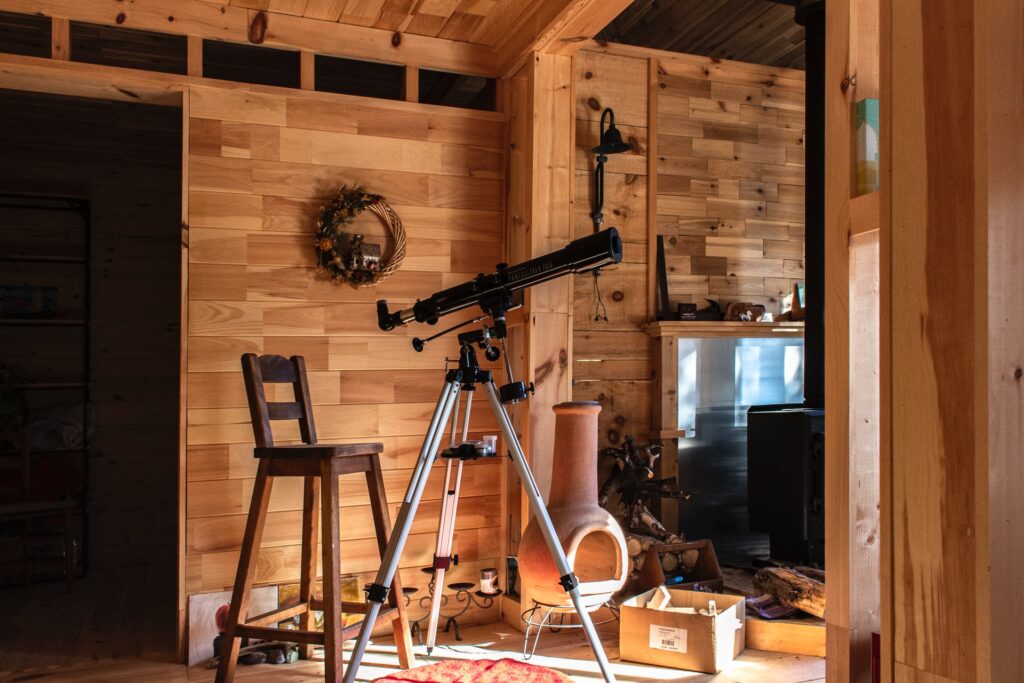
What is Monocular Telescope – How does a Monocular Telescope work
Compared to binoculars, a monocular weighs less than half as much and takes up way less space.
Looking for more? We have a dedicated guide on Canon fisheye lens.
The optics are similar to what you’d get with binoculars, but monoculars are easier to carry and cost significantly less. Since a monocular only needs half the optics of a binocular, the price drops accordingly.
One trade-off: binoculars produce 3D images by adding depth perception, while monoculars can only produce 2D images.
What is the Difference Between a Telescope and a Monocular Telescope?
A lot of people mix up traditional telescopes and monocular telescopes, so let’s clear that up.
Both are good for viewing distant objects, but they work differently in practice.
Monocular telescopes are essentially small refractor telescopes. Light enters through the front (the aperture), passes through lenses and prisms, and comes out magnified at the eyepiece.
But monoculars also share some traits with binoculars. They have a single eyepiece like a telescope, but you hold them up to your eye like you would with binoculars, rather than mounting them on a tripod.
They’re also noticeably smaller than even the smallest telescope and don’t need any extra accessories. Just point and look.
Are Monocular Telescopes Better Than Telescopes or Binoculars?
That really depends on what you need.
We also cover Canon wedding lens in a separate article worth checking out.
Monoculars are smaller and more compact, which makes them easier to carry than either telescopes or binoculars. Some monoculars are so small they fit in your palm. That portability makes them ideal for hunting and hiking trips.
If traveling light is your priority, a monocular is hard to beat. And the price? Monoculars are significantly cheaper than telescopes and binoculars.

Are Monocular Telescopes better than Telescopes or Binoculars?
Basic monoculars have a simple dual-lens magnification system, but higher-end models add prisms between the lenses. This keeps the design compact while still offering impressive magnification.
Most monocular telescopes offer between 4x and 10x zoom. You can find ones with higher magnification, but that usually comes with trade-offs: a narrower field of vision, dimmer images (because less light enters the aperture), and the need for a tripod to keep things steady.
If you want serious zoom power, you’re probably better off with a full telescope. The practical maximum magnification for a handheld monocular is about 8x.
Are There Different Types of Monocular Telescopes?
Yes, and there’s more variety than most people expect. Here are some of the most popular types:
- Compass monocular telescope
- Infrared monocular telescope
- Range finder monocular telescope
- Galilean-type Zoom monocular telescope
- Night vision monocular telescope
- Thermal imaging monocular telescope
What are the Different Uses of a Monocular Telescope?
Monoculars show up in a surprising number of settings. One of the most notable uses is helping visually impaired people see objects beyond their normal field of vision. For example, they’re commonly used to read text on classroom chalkboards or projection screens.
Beyond that, monoculars are popular in the military, marine navigation, nature observation, and hunting.
More recently, compact monoculars have become a go-to tool for getting a close-up view of exhibits in museums and art galleries.
Which is the Best Monocular Telescope Brand?
Here are the top monocular telescope brands worth considering in 2026:
- Gosky
- Hawke
- Celestron
- Bushnell
- Opticron
- Leica
- Zeiss
Before You Buy
Before picking a monocular telescope, figure out exactly what you’ll be using it for. That way, you can zero in on the right specs (magnification, zoom, lens size, and so on) and find the best monocular for your needs.