When you purchase through links on our site, we may earn an affiliate commission. Here’s how it works.
Flashcards are educational and instructional tools containing alphabetical, numeric, and visual elements. Flashcards can be used to fulfill different purposes. You can easily use them for your study, visual learning, and memorizing. You can even play some games using your flashcards.
What is a Flashcard: Definition and Meaning?
A flashcard is a small card that contains written or visual information to help you learn, memorize, and remember. Students from different fields use flashcards to make learning easier and more enjoyable. Teachers can also use flashcards to test their students’ knowledge.
Flashcards can also contain questions and answers to help you quickly learn and process the information. You can put questions on one side of the card and answers on the other and see if you can recall the answers. These flashcards can also be used to track the improvements in your performance.
Best Websites to Make Flashcards Online
- Cram.com
- Brainscape
- Flashcard Machine
- FlashDecks
- Flashcard.online
- StudyBlue
- GoConqr
- ProProfs.com
How to Take Notes for Your Flashcards?
If you want to make your flashcards, you must take notes and organize them. Here are a few tips to make your work easier.
- Pen and paper are always better than taking notes on your laptop or computer
- Keep it as simple as possible
- Try to be selective
- Try to make it personal
- Make things organized
10 Different Types of Flashcards
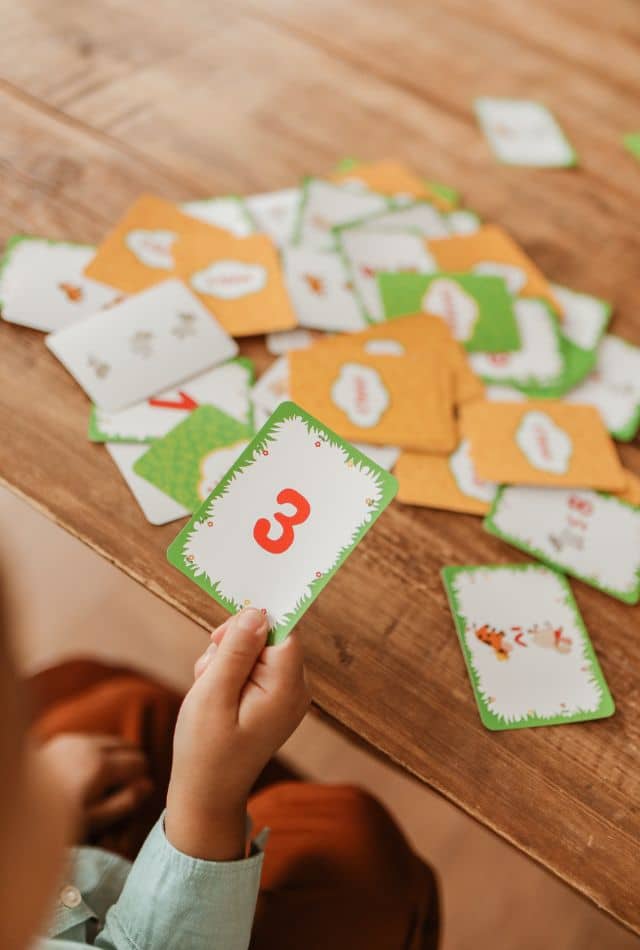
What Is a Flashcard – 10 Different Types of Flashcards
There are ten different flashcards that you can make.
1. Alphabet Flashcard
An alphabet flashcard contains different alphabets. You can make flashcards with varying sample words for each letter. These cards are mainly used to teach children in preschool and kindergarten. They offer children repetitive information, which helps them memorize and remember easily.
2. Vocabulary Flashcard
Vocabulary flashcards can help your children learn quickly and develop their vocabulary skills. They can also help your kids learn and improve their language. The vocabulary cards contain important grammar information, different words, vocabulary lessons, etc.
3. Number Flashcards
Number flashcard is one of the most common flashcards of all time. They can help your kids to learn and identify numbers from a young age. Number flashcards generally have different numerical symbols or numbers to help your kids learn and remember the numbers.
4. Body Parts Flashcard
Identifying different body parts can be complex and confusing for young children. Body parts flashcards can make their job easier. They can identify and learn more about their body parts with these flashcards by following repetitive earning and recall methods.
5. Preschool Flashcard
Preschool flashcards can contain alphabets, numbers, words, colors, and many more. They are used in preschools to make the education process fun.
6. Family Flashcards
Knowing and remembering the family members can be tricky and confusing for kids, especially in large families. Family flashcards can come to their rescue in certain situations. These flashcards generally contain pictures of every family member and their names on the back. With these, you can help your child identify and recall them later. You can also track their performance with the help of these family flashcards.
7. Toddler Flashcard
Toddlers are often inquisitive about almost everything. They develop their ability to feel, taste, think, and observe at this age. Toddler flashcards can help them to develop their ability to think, observe, and listen.
8. Letter Flashcard
Letter flashcards can help you learn more about letters and improve your writing ability. These are moderately similar to alphabet flashcards. The only difference is these are more comprehensive than alphabet flashcards. Letter flashcards are generally used in middle school and at the starting phase of your child’s education.
9. Math Flashcards
Math flashcards can help you learn more about numbers, different formulas, equations, and any other mathematical elements. You can use them to solve your math problems. From teachers to students, anyone can use these flashcards to learn math and develop their skills.
10. Transportation Flashcard
The availability of different modes of transport can sometimes play tricks on your mind. It is common to need clarification. Transportation flashcards can help you in these situations. From children to adults, these flashcards can help everyone, irrespective of age. The only thing that matters is your eagerness to learn.
Things to Remember While Designing a Flashcard
- first, you must choose a size for your flashcard
- Try to determine the purpose of your flashcard
- Select your preferred flashcard template
- Select the type of content you want to use
- Gather as much information as you can for your flashcard
- Gather appropriate pictures, symbols, and any other visual elements as per your requirement
- Once you have gathered all the information, you can design your flashcard
Where Can You Use Your Flashcards?
Anyone eager to learn new things or make their learning process more fun and easy can use flashcards. Flashcards help you learn quickly and memorize information.
Education
Flashcards are used in several educational institutes and schools to make learning fun and interesting. It can help the students to learn quickly and memorize things. You can also track their knowledge by using flashcards.
Self-Testing
You can make flashcards with questions on one side and answers on the other. It can be used as a self-testing tool. You can track your performance and the ability to recall things using these flashcards.
Visual Learning
Flashcards can promote visual learning. It can improve your ability to recall because you have seen the visual representation of the learned information on your flashcard multiple times.
Recall
Flashcards can improve the memorization and recall process. They help you understand things more clearly and remember them efficiently.
Conclusion
Different types of flashcards can serve different purposes. You can use them to track your performance, and various educational institutes can use them to teach their students and improve their memorizing ability. Flashcards can make your learning process more fun and engaging by reducing monotony.
See Also