Best Antivirus for Windows 10: Free and Paid Options Reviewed
Even as Windows 11 continues to gain market share, Windows 10 remains installed on hundreds of millions of PCs worldwide, and it still needs proper security. Finding the best antivirus for Windows 10 in 2026 means balancing protection quality, system performance, and cost, especially since Microsoft’s mainstream support for Windows 10 has wound down.


![Norton 360 Deluxe 2024, Antivirus software for 3 Devices with Auto Renewal - Includes VPN, PC Cloud Backup & Dark Web Monitoring [Download]](https://www.technowifi.com/wp-content/uploads/2026/08/norton-360-deluxe-2024-antivirus-software-for-3-devices-with-auto-renewal.jpg)
We’ve tested six antivirus solutions that work well on Windows 10, from the built-in Windows Security to popular free third-party options. Here’s how each one performs in real-world use.
Windows Security (Windows Defender): The Built-In Option
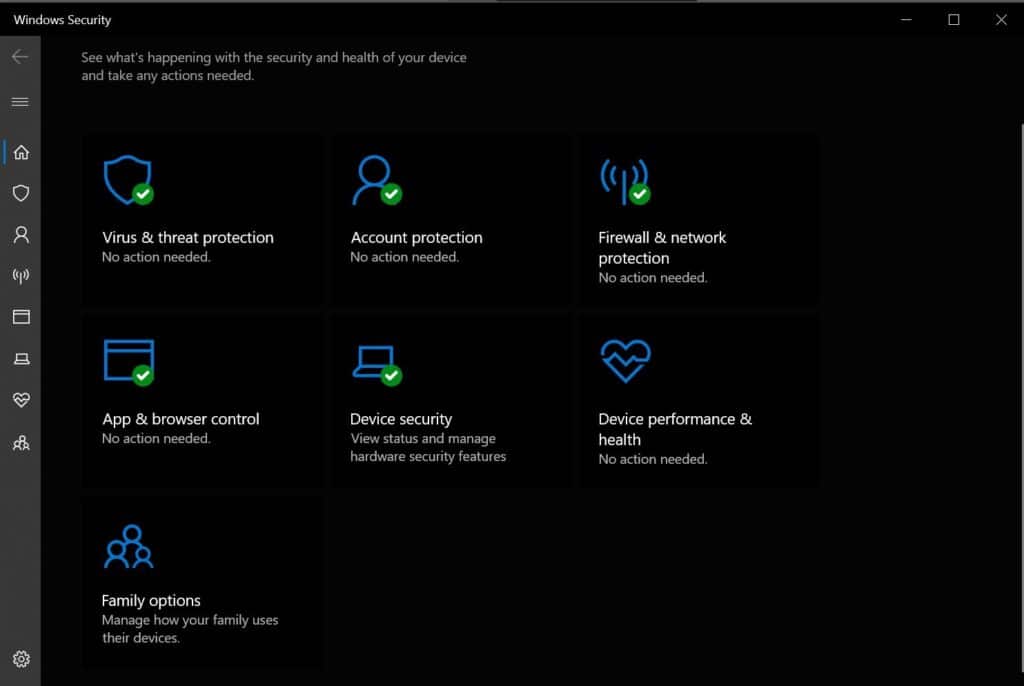
Windows Security comes pre-installed on every Windows 10 PC, making it the most accessible antivirus option available. Over the past few years, Microsoft has dramatically improved Defender’s detection capabilities. In independent lab tests from AV-TEST and AV-Comparatives, it now regularly scores near the top alongside premium paid solutions.
Key Strengths
Zero cost. Deep integration with Windows 10, no compatibility issues or conflicts. Real-time protection against malware, spyware, and ransomware through Controlled Folder Access. Firewall and network protection. Automatic updates through Windows Update. No ads, no upselling, no nagging pop-ups.
Limitations
While Defender’s malware detection is now competitive, it lacks features that dedicated security suites include. There’s no VPN, no password manager, no dark web monitoring, and no webcam protection. The web protection is limited to Microsoft Edge, if you use Chrome or Firefox, you’ll miss that layer unless you install the browser extension manually. For users who want just the basics done well, Defender is a strong starting point.
Avast Free Antivirus: Feature-Rich and Free
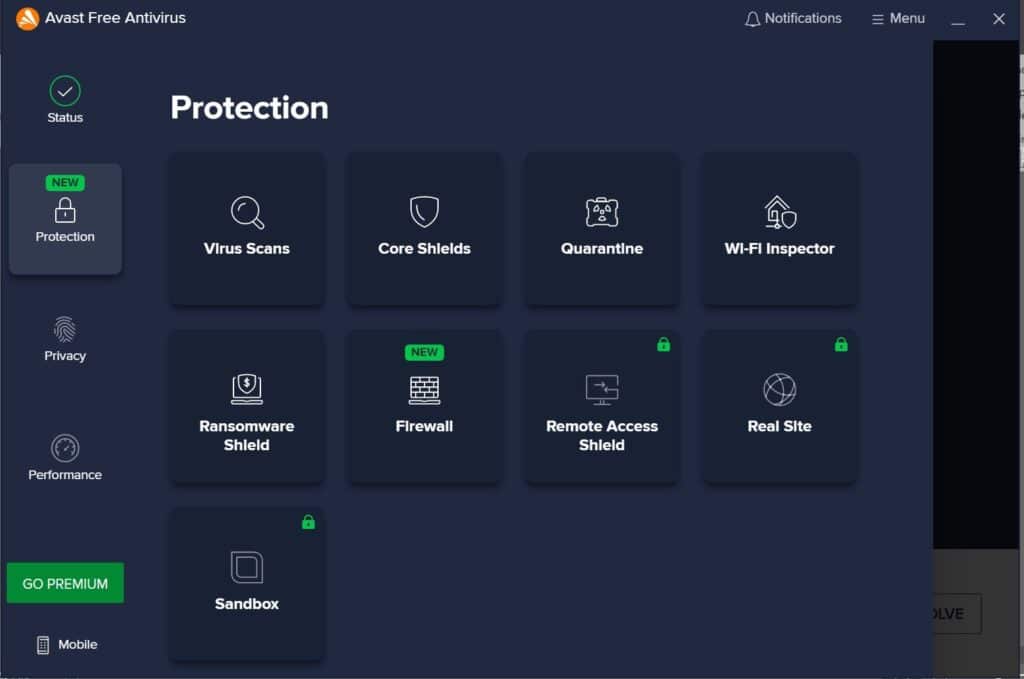
Avast Free Antivirus has long been one of the most popular free security solutions, and its 2026 version continues to offer a surprisingly thorough feature set for a no-cost product. It provides real-time malware protection, a web shield that blocks malicious websites, an email scanner, and a Wi-Fi network inspector that checks for vulnerabilities in your home network.
Key Strengths
Avast’s behavioral detection engine (called CyberCapture) is particularly good at identifying new, unknown threats by sending suspicious files to Avast’s cloud for analysis. The Smart Scan feature checks for outdated software, weak passwords, and network vulnerabilities in a single sweep. It’s more proactive than Windows Defender alone.
For the complete picture, our antivirus list for Mac guide fills in the gaps.
Limitations
The free version includes ads promoting Avast’s paid products, which some users find annoying. The installation process tries to bundle additional Avast products, watch for opt-out checkboxes during setup. System impact is moderate; older Windows 10 machines with limited RAM may notice some slowdown during full scans. Avast also collected and sold user browsing data through a subsidiary (Jumpshot) in the past, raising privacy concerns, the company has since shut down that program.
Kaspersky Free Antivirus: Excellent Detection at No Cost
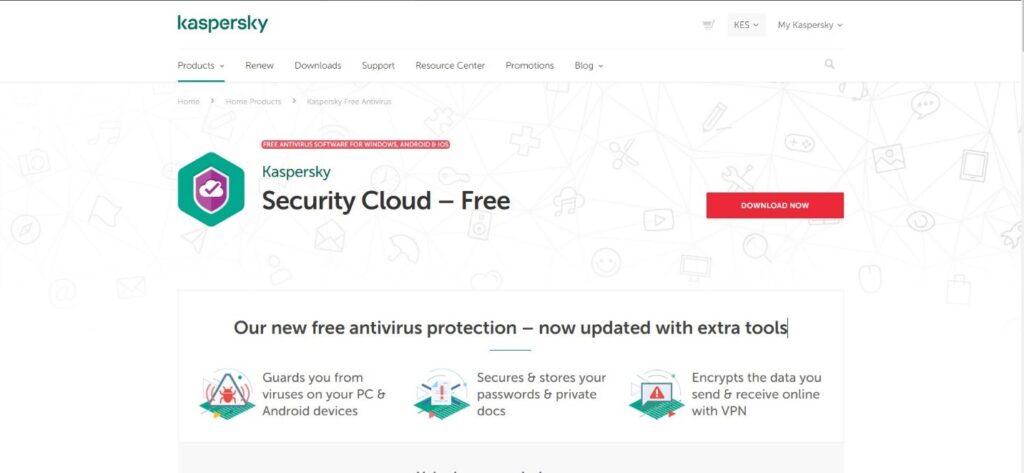
Kaspersky’s free tier offers some of the best malware detection you can get without paying. The company’s heuristic analysis engine excels at identifying new threats through behavioral patterns, and its signature database is one of the most thorough in the industry.
Key Strengths
Near-perfect detection rates. Kaspersky consistently achieves 99.9%+ in independent testing. The interface is clean and user-friendly. Web protection works across all major browsers, not just Edge. File scanning is thorough yet reasonably fast, and real-time protection catches threats without significant system slowdown.
Limitations
The free version strips out many advanced features: no firewall, no ransomware protection, no Safe Money browser, and no parental controls. VPN is limited to 200MB per day. Kaspersky has also faced scrutiny due to its Russian origins, with some government agencies restricting its use on official systems. For personal use, independent audits have consistently validated the software’s integrity, but it’s worth being aware of the debate.
AVG AntiVirus Free: Solid and Straightforward
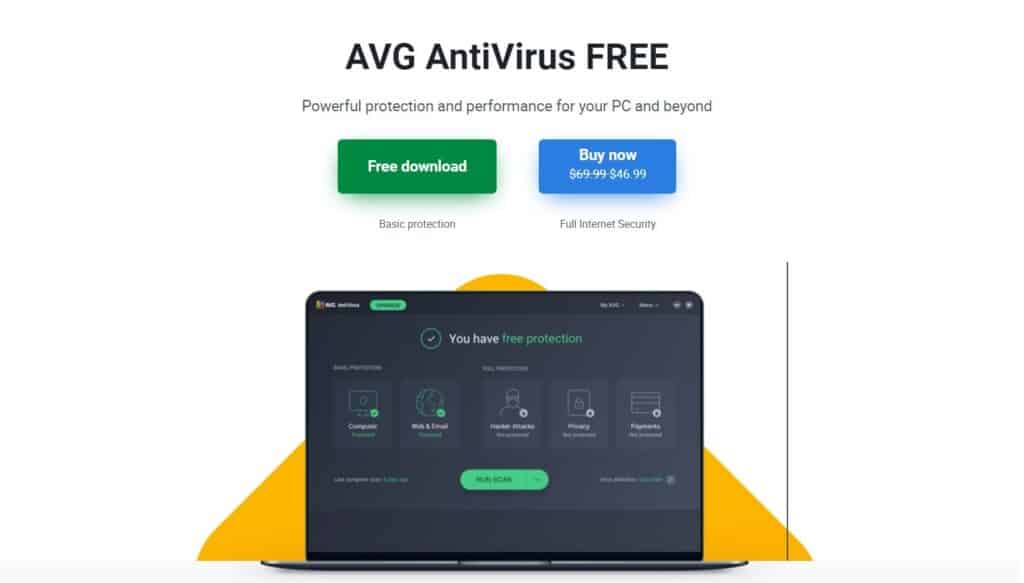
AVG and Avast are owned by the same parent company (Gen Digital), and they share the same underlying detection engine. So why consider AVG separately? The interface. AVG’s design is cleaner and more streamlined, with fewer promotional pop-ups and a more straightforward user experience.
Key Strengths
Real-time protection that matches Avast’s detection rates (since it’s the same engine). A clean, modern interface that doesn’t overwhelm novice users. Web and email protection included in the free version. Deep Scan option for thorough system-wide checks. Performance impact is comparable to Avast, moderate but manageable.
Limitations
Like Avast, AVG displays ads for its paid products. Feature-wise, the free version lacks firewall protection, ransomware-specific defenses, and webcam security. Since it shares Avast’s engine, the same privacy concerns that affected Avast apply here. For users who want Avast’s protection quality with a less cluttered interface, AVG is worth trying.
We break down free antivirus for Mac in a separate post that complements this one.
Panda Free Antivirus: Cloud-Based and Lightweight
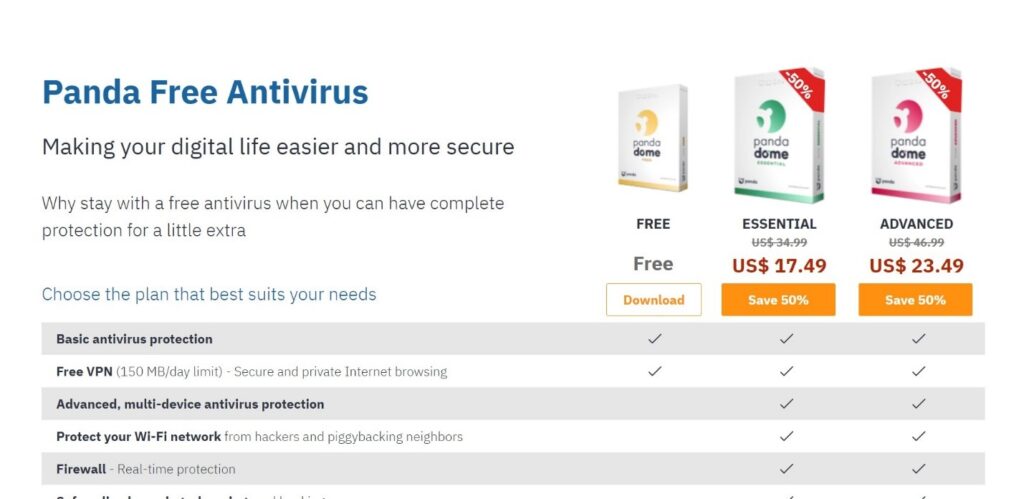
Panda takes a cloud-first approach to antivirus protection, performing most of its analysis on remote servers rather than on your local machine. This makes it one of the lightest best antivirus for Windows 10 options in terms of system resource usage, a significant advantage for older PCs or machines with limited hardware.
Key Strengths
Minimal system impact. Panda barely affects boot times, application launches, or file operations. The cloud-based scanning means you always have up-to-date threat definitions without waiting for large local database downloads. The free version includes a basic VPN (limited to 150MB/day) and a USB vaccination feature that protects against autorun-based malware from flash drives.
Limitations
Cloud-dependent scanning requires an internet connection for full protection, offline detection is limited. Detection rates, while good, don’t quite match Kaspersky or Bitdefender in independent tests. The interface has an unconventional design that some users find confusing. Customer support for free users is essentially limited to community forums.
Avira Free Security: Well-Rounded Free Suite
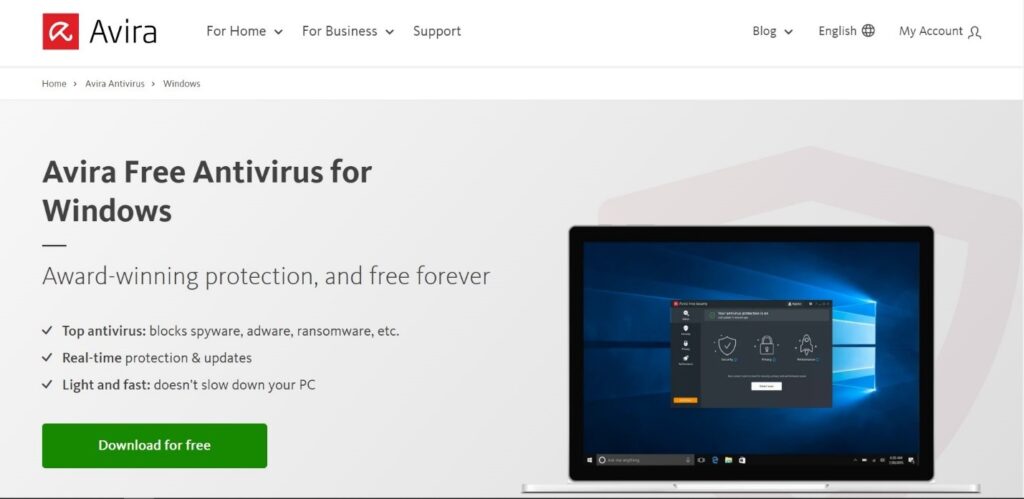
Avira Free Security bundles more extras into its free tier than most competitors. Along with real-time malware protection, you get a limited VPN (500MB/month), a password manager, a software updater that patches vulnerable applications, and browser safety extensions.
Key Strengths
Strong detection rates backed by Avira’s proven engine. The software updater is genuinely useful, outdated software is one of the most common attack vectors, and Avira proactively identifies programs that need patches. The Phantom VPN, while limited in data, provides basic protection for occasional public Wi-Fi use. Browser extensions work across Chrome, Firefox, and Edge.
Limitations
Avira’s free version is heavy on upselling. Pop-ups promoting Avira Prime appear regularly and can be frustrating. The full system scan is slower than competing products, a deep scan on a typical laptop can take over an hour. The VPN’s 500MB monthly limit is too low for regular use. Despite these drawbacks, the overall protection quality and extra tools make Avira a worthwhile option for Windows 10 users who want more than basic coverage.
Which One Should You Choose?
For most Windows 10 users, the answer depends on what you need beyond basic protection. If you’re happy with essential malware defense and don’t want extra software, Windows Defender is a perfectly capable choice in 2026. If you want better web protection and behavioral analysis without paying, Kaspersky Free offers the best detection rates.
Avast and AVG provide the most features in their free tiers, with AVG being the cleaner experience. Panda is ideal for older, slower machines where system resources are precious. Avira offers the most well-rounded free package with its bundled VPN and software updater.
Whichever best antivirus for Windows 10 solution you choose, keep it updated and running. A security tool only works if it’s active when threats arrive.