What Comes in the Box With a Netgear Router?
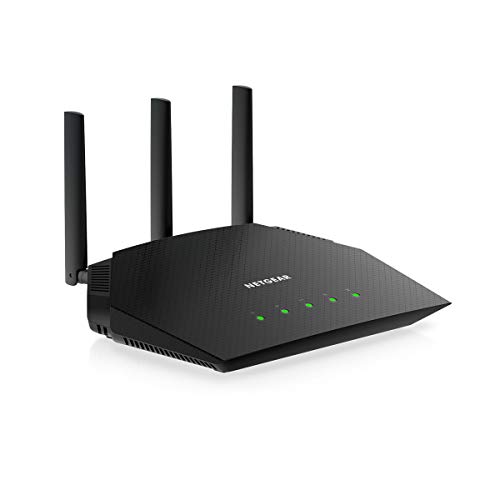
Before plugging anything in, lay out every item from the box and make sure nothing is missing. A missing cable or adapter will stall your setup before it starts. Most Netgear routers ship with the same core accessories regardless of the model.
| Item | Purpose |
|---|---|
| Netgear router | Main wireless networking device |
| Power adapter | Supplies electricity to the router |
| Ethernet cable (yellow) | Connects the router to your modem |
| Quick start guide | Basic setup diagram and default credentials |
| Antennas (some models) | External antennas that screw into the back panel |
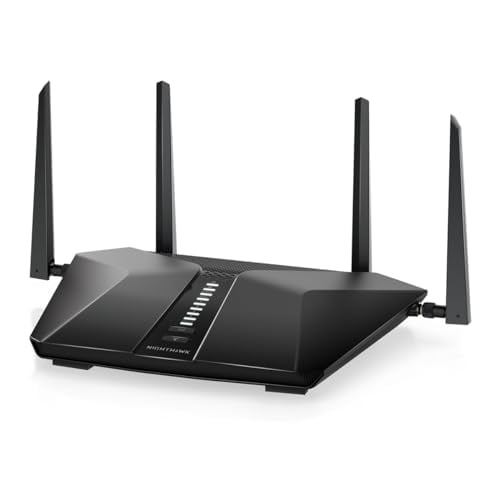
If your model includes detachable antennas, screw them into the threaded connectors on the back of the router before starting. Position them upright for the best signal spread. Nighthawk Pro Gaming and certain WiFi 7 models have internal antennas, so you will not find any in those boxes.
Keep the quick start guide nearby. It has the default WiFi network name (SSID) and password printed on a sticker, along with the router’s serial number and MAC address. You will need these during the first few minutes of setup.
How to Connect a Netgear Router to Your Modem
Start by powering off your modem. Unplug it from the wall outlet and wait 30 seconds. This clears the modem’s connection table and prepares it to recognize your new router.
- Take the yellow Ethernet cable from the box and plug one end into the WAN port (sometimes labeled “Internet”) on the back of your Netgear router.
- Plug the other end of that cable into the Ethernet port on your modem.
- Plug the power adapter into the Netgear router and connect it to a wall outlet.
- Plug your modem back in and wait about 2 minutes for it to fully boot up and establish a connection with your ISP.
- Turn on the Netgear router using the power button on the back panel. Wait until the power LED turns solid white or green.
The WAN port is usually a different color from the four LAN ports next to it. On most Nighthawk models, it is yellow. Plugging the modem cable into a LAN port instead of the WAN port is one of the most common setup mistakes, and it will prevent internet access entirely.
How to Set Up Netgear Router With the Nighthawk App
The Nighthawk app is the fastest way to set up a Netgear WiFi router in 2026. It walks through every step on your phone screen and handles firmware updates automatically. The app is free on both iOS and Android.
- Download the Nighthawk app from the App Store or Google Play Store.
- Open the app and create a Netgear account or sign in if you already have one.
- Tap “Set Up a New Router” and follow the on-screen prompts. The app asks you to confirm that your router is powered on and connected to your modem.
- Connect your phone to the default WiFi network printed on the quick start guide or the sticker on the bottom of the router. The network name usually starts with “NETGEAR” followed by random characters.
- Return to the Nighthawk app. It detects your router automatically and starts the configuration wizard.
- The app checks your internet connection and may prompt you to enter ISP login credentials if your provider requires PPPoE authentication. Most cable and fiber connections skip this step.
- Create a new WiFi network name (SSID) and password when prompted. Choose something you will remember but that others cannot guess easily.
- Set an admin password for the router’s settings panel. This is different from your WiFi password and protects access to the router’s configuration page.
- The app checks for firmware updates and installs them if available. Let this process finish without closing the app or disconnecting from WiFi.
After the setup wizard finishes, your router restarts with the new network name. Reconnect your phone to the new WiFi network using the password you just created. The Nighthawk app confirms when everything is working.
How to Set Up Netgear Router Using routerlogin.net
If you prefer a browser-based setup or your router does not support the Nighthawk app, you can configure everything through the Netgear admin panel. This method works from any computer, tablet, or phone with a web browser.
- Connect your computer to the router using an Ethernet cable plugged into one of the LAN ports. You can also connect over WiFi using the default credentials on the router’s sticker.
- Open a web browser and type routerlogin.net in the address bar. Press Enter. If that does not work, try typing 192.168.1.1 or 192.168.0.1 instead.
- A login prompt appears. The default username is admin and the default password is password (all lowercase). Enter these credentials and click Log In.
- The Setup Wizard launches automatically on first login. Follow the prompts to detect your internet connection type and configure basic settings.
- Choose a new WiFi network name and password. The wizard lets you set these for both the 2.4 GHz and 5 GHz bands separately or use a single name for both (Smart Connect).
- Change the default admin password to something secure. Never leave the admin password as “password” since anyone on your network could access your router settings.
The browser interface gives you access to every setting on the router, including advanced options that the Nighthawk app does not expose. Power users who want full control over their network will find this method more flexible.
How to Choose a Good WiFi Network Name and Password
Your WiFi network name broadcasts to every device within range. Pick a name that is easy for your household to identify but does not reveal personal information. Avoid using your last name, address, or apartment number. Something simple like “HomeNetwork” or a creative phrase works well.
For the password, aim for at least 12 characters mixing uppercase letters, lowercase letters, numbers, and symbols. Avoid common words, birthdays, or repeated patterns. A passphrase like “BlueTiger$Runs42Fast” is both strong and memorable.
| Password Practice | Example | Strength |
|---|---|---|
| Too short | wifi1234 | Weak |
| Dictionary word | sunshine | Weak |
| Personal info | Smith2026 | Weak |
| Mixed passphrase | BlueTiger$Runs42Fast | Strong |
| Random with symbols | k9#Lm!vQ2x&Rp | Strong |
Netgear routers with Smart Connect use one network name for both the 2.4 GHz and 5 GHz bands. The router automatically steers devices to the best band based on signal strength and congestion. If you disable Smart Connect, you will see two separate networks and can connect devices to whichever band you prefer.
How to Update Netgear Router Firmware
Firmware updates patch security holes, fix bugs, and sometimes add new features. Running outdated firmware leaves your network exposed to known vulnerabilities. Check for updates right after the initial setup and periodically after that.
- Log into the admin panel at routerlogin.net with your admin credentials.
- Go to Advanced and then Administration.
- Click Firmware Update (or Router Update on some models).
- Click Check to see if a newer firmware version is available.
- If an update appears, click Yes to download and install it. The router reboots automatically after the update finishes.
Do not turn off the router or close the browser tab during a firmware update. Interrupting the process can corrupt the firmware and brick the device. The update usually takes 3 to 5 minutes. You can also enable auto-update in the same menu so the router installs new firmware on its own during off-peak hours.
How to Set Up a Guest Network on a Netgear Router
A guest network gives visitors internet access without exposing your main network, shared files, or connected smart home devices. Guests connect to a separate WiFi name with its own password and remain isolated from your primary network traffic.
- Log into routerlogin.net.
- Navigate to Guest Network in the left-hand menu (under Basic or Wireless settings depending on your model).
- Check the box next to Enable Guest Network. You can enable it on the 2.4 GHz band, the 5 GHz band, or both.
- Enter a guest network name. Something like “HomeGuest” or “Visitors” makes it obvious.
- Set the security option to WPA2-PSK or WPA3 and create a guest password.
- Keep the “Allow guests to see each other and access my local network” box unchecked for security.
- Click Apply to save.
Some Netgear models let you limit guest network bandwidth so visitors cannot consume all your internet speed. Look for a bandwidth control or QoS option in the guest network settings. You can also set a time limit that automatically disables the guest network after a set number of hours.
How to Set Up Parental Controls on Netgear Router
Netgear routers include built-in parental controls through a feature called Netgear Armor (powered by Bitdefender) or the older Circle with Disney integration, depending on your model. These tools let you filter content, set screen time limits, and monitor browsing activity per device.
- Open the Nighthawk app and tap the Security or Armor tab.
- Follow the prompts to activate Netgear Armor. A free trial period is included with most new routers.
- Tap Profiles and create a profile for each family member.
- Assign specific devices to each profile by selecting them from the connected device list.
- Set content filters by category (adult content, gambling, social media, gaming, and others).
- Define time limits for internet access. You can set daily usage caps or schedule internet-free periods like bedtime.
If you prefer not to use Netgear Armor, you can block specific websites through the router’s admin panel. Go to Advanced, then Security, then Block Sites. Enter the URLs you want to block and choose whether the block applies always or on a schedule.
Keyword blocking is also available. Adding a keyword blocks every website containing that term in its URL. This is a blunt tool, so use it carefully to avoid accidentally blocking legitimate sites.
How to Enable WPA3 on a Netgear WiFi Router
WPA3 is the latest WiFi security protocol. It provides stronger encryption than WPA2 and protects against brute-force password attacks using a technology called SAE (Simultaneous Authentication of Equals). Most Netgear routers sold in 2024 and later support WPA3.
- Log into routerlogin.net.
- Go to Wireless settings (under Basic or Advanced depending on your firmware version).
- Find the Security Options section.
- Select WPA3-Personal if you want the highest security and all your devices support WPA3. Select WPA2/WPA3 Mixed Mode if some older devices in your home only support WPA2.
- Click Apply. The router restarts the wireless radios, which temporarily disconnects all WiFi devices.
| Security Protocol | Encryption | Recommended |
|---|---|---|
| WEP | Weak, crackable in seconds | No |
| WPA | Better, but outdated | No |
| WPA2-Personal | AES, solid protection | Acceptable |
| WPA3-Personal | SAE + AES, strongest | Yes |
| WPA2/WPA3 Mixed | Both protocols accepted | Yes (for mixed device homes) |
After switching to WPA3, reconnect every wireless device using your existing WiFi password. Some devices may require you to “forget” the old network first and re-enter the password. Older devices that do not support WPA3 will fail to connect if you chose WPA3-only mode, so mixed mode is the safer choice for most households in 2026.
How to Set Up Port Forwarding on a Netgear Router
Port forwarding directs incoming internet traffic on specific ports to a device on your local network. Gamers use it to reduce lag and improve NAT type. Home server users rely on it to make services accessible from outside the network. Security camera systems sometimes require it for remote viewing.
- Log into routerlogin.net.
- Go to Advanced, then Advanced Setup, then Port Forwarding / Port Triggering.
- Select Port Forwarding and click Add Custom Service.
- Enter a name for the rule (like “Minecraft Server” or “Security Camera”).
- Set the protocol to TCP, UDP, or Both depending on what the application requires.
- Enter the external and internal port numbers. For most applications, these are the same number.
- Enter the internal IP address of the device you want to forward traffic to. You can find this in the router’s Attached Devices list.
- Click Apply to save the rule.
For port forwarding to work reliably, assign a static IP address to the target device. Otherwise, the device’s IP may change after a reboot, and the forwarding rule will point to the wrong address. You can reserve an IP in the router’s LAN Setup section under Address Reservation.
Open only the ports you actually need. Every open port is a potential entry point for unauthorized access. Close port forwarding rules when you no longer use them.
Why Can’t I Access the Netgear Router Setup Page?
Not being able to reach routerlogin.net or 192.168.1.1 is one of the most common problems during setup. Several things can block access to the admin panel.
| Problem | Fix |
|---|---|
| Wrong browser address | Type routerlogin.net or 192.168.1.1 directly in the address bar, not in a search engine |
| Not connected to the router | Make sure your device is connected to the router’s WiFi or plugged in with an Ethernet cable |
| Browser cache issue | Clear your browser cache or try a different browser (Chrome, Firefox, Edge) |
| IP address conflict | Another device on the network may share the router’s IP. Try connecting with only one device |
| VPN running | Disable any active VPN before accessing the admin panel |
| Wrong default gateway | Open Command Prompt and type “ipconfig” to find your actual gateway address |
If none of these steps work, try a wired connection. Plug an Ethernet cable directly from your computer to one of the LAN ports on the router and navigate to the admin page. Wired connections bypass WiFi-related issues and provide the most reliable access to the setup panel.
Why Is There No Internet After Setting Up the Netgear Router?
Seeing a solid WiFi connection but no internet access after setup usually points to a modem or ISP configuration issue rather than a router problem. Work through these steps to narrow down the cause.
- Restart your modem by unplugging it for 30 seconds and plugging it back in. Wait 2 minutes for it to fully reconnect to your ISP.
- Check the internet LED on your Netgear router. A solid amber light means the router sees the modem but cannot reach the internet. A solid white or green light means the internet connection is working on the router’s end.
- Verify that the Ethernet cable is plugged into the WAN port on the router, not a LAN port.
- Log into routerlogin.net and check the Internet Setup page. Make sure the connection type matches your ISP. Most home connections use DHCP (automatic). DSL connections may require PPPoE with a username and password from your provider.
- Clone your old router’s MAC address if your ISP locks connections to a specific MAC. Find this option under Advanced then Internet Setup in the admin panel.
- Call your ISP if nothing else works. Some providers need to register the new router’s MAC address on their end before it can access the internet.
If you replaced an old router with the new Netgear, the modem may still be bound to the old device. Power cycling the modem forces it to release the old MAC address and accept the new one. In stubborn cases, resetting the modem to factory defaults resolves the binding issue.
Frequently Asked Questions
What is the default login for a Netgear router?
The default username is admin and the default password is password (all lowercase). You should change this password during initial setup to prevent unauthorized access to your router’s settings.
Can I use a Netgear router without a modem?
Only if your internet service comes through a fiber ONT (optical network terminal) that has a built-in Ethernet port. In that case, you plug the Ethernet cable from the ONT directly into the router’s WAN port. Standard cable internet still requires a separate modem.
How do I reset a Netgear router to factory settings?
Locate the small reset button on the back of the router. Press and hold it with a paperclip for about 10 seconds until the power LED blinks amber. The router restores all settings to factory defaults, including the default WiFi name and password from the sticker. You will need to set up the router again from scratch.
Does the Nighthawk app work with all Netgear routers?
The Nighthawk app works with most Netgear Nighthawk and newer dual-band/tri-band routers released after 2018. Some older budget models use the Netgear Genie app instead, which Netgear has since discontinued. Check the Nighthawk app’s supported device list in the app store to confirm compatibility with your specific model.
Should I use Smart Connect or separate WiFi bands?
Smart Connect is convenient for most households because it handles band steering automatically. Your router moves devices between 2.4 GHz and 5 GHz based on real-time conditions. Separate bands give you manual control, which is useful if you want to dedicate the 5 GHz band to streaming devices while keeping smart home gadgets on 2.4 GHz.
How often should I update my Netgear router firmware?
Check for firmware updates at least once a month, or enable automatic updates in the admin panel. Netgear releases firmware patches regularly to address security vulnerabilities and improve performance. Skipping updates for extended periods leaves your network exposed to threats that have already been publicly documented.
Sources
Getting the most out of your WiFi also depends on your internet plan. Check which providers and speeds are available at your address.
Netgear – Nighthawk App | Netgear – How to Update Firmware | Netgear – Guest Network Setup | Wi-Fi Alliance – WPA3 Security | Netgear – Port Forwarding Setup