Setting up a Netgear WiFi extender takes about 10 minutes. There are three ways to do it: through the Nighthawk app on your phone, through a web browser at mywifiext.net, or with the WPS button if your router supports it.
Before you start, plug the extender into a wall outlet in the same room as your router. You’ll move it to its permanent spot after setup is complete — doing the initial configuration close to the router avoids connection issues during the process.
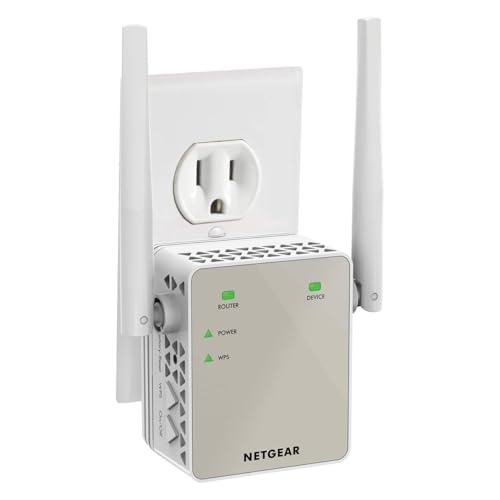
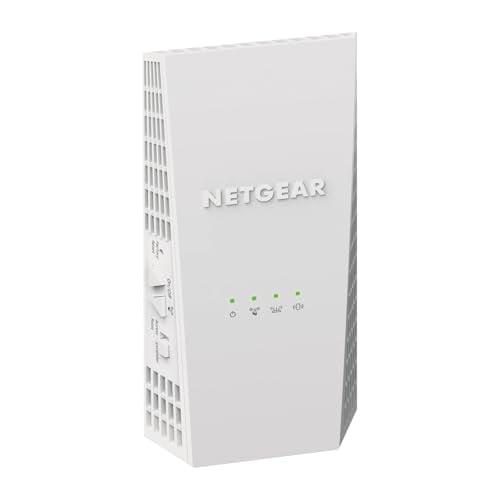
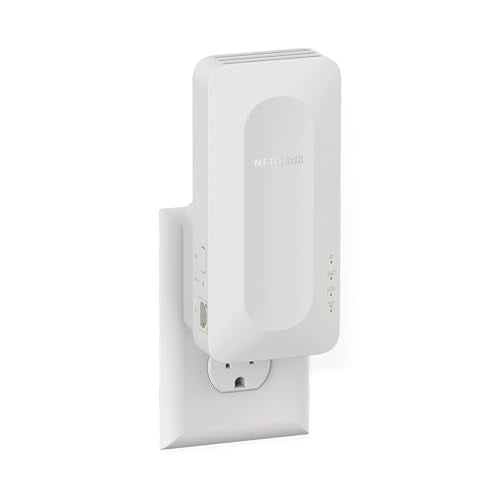
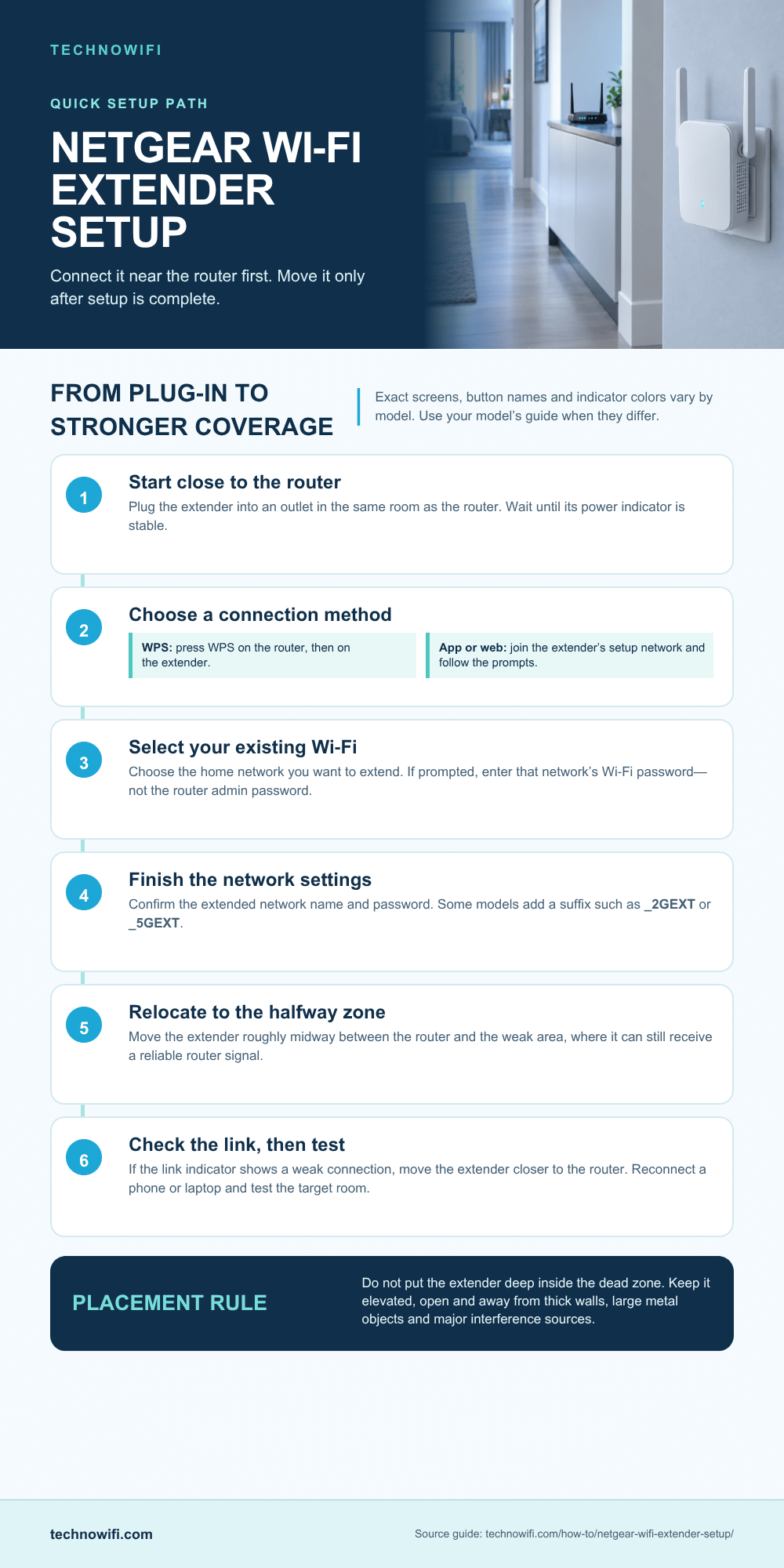
Method 1: Setup with the Nighthawk App
This is the easiest method and the one Netgear recommends for most of their recent extenders.
- Download the Netgear Nighthawk app from the Google Play Store or Apple App Store
- Plug in your extender and wait for the power LED to turn solid green or amber (about 2 minutes)
- Open the app and tap Set Up a New Device
- Select your extender model from the list, if you’re not sure which model you have, check the label on the bottom of the extender
- The app will ask you to connect your phone to the extender’s default WiFi network, usually named NETGEAR_EXT. It may be open (no password) or use “password” as the default
- Follow the on-screen steps, the app will scan for your home WiFi network, ask you to select it, and enter your WiFi password
- Choose a name (SSID) and password for the extended network. By default, Netgear appends _2GEXT and _5GEXT to your existing network name for the 2.4 GHz and 5 GHz bands. You can change these to match your main network name if you want seamless roaming
- Wait for the settings to apply and tap Finish
The app will confirm when setup is complete. At that point, unplug the extender and move it to the location where you need better coverage.
Method 2: Setup via mywifiext.net (Web Browser)
If you’d rather not use the app, you can set up the extender through any web browser on a laptop, phone, or tablet.
- Plug in the extender in the same room as your router
- Wait for the power LED to turn solid green or amber
- Connect your device to the extender’s WiFi network, look for NETGEAR_EXT in your WiFi list
- Open a web browser and go to mywifiext.net. If that doesn’t load, try typing 192.168.1.250 directly in the address bar
- The New Extender Setup page should appear. Click New Extender Setup
- Create a Netgear account (or log in if you already have one)
- The extender will scan for nearby network, select your home WiFi and enter the password
- Set the SSID and password for your extended networks
- Click Continue, let the settings apply, and click Finish
Tip: If mywifiext.net won’t load, make sure you’re actually connected to the extender’s network and not your main router. Also try a different browser or clear your browser cache.
Method 3: WPS Setup (One-Button)
WPS (WiFi Protected Setup) is the fastest method, no app or browser needed. It only works if your router has a WPS button, which most do.
- Plug in the extender in the same room as your router
- Wait for the power LED to turn solid
- Press the WPS button on the extender, it’s usually on the side or top of the device
- Within 2 minutes, press the WPS button on your router
- Wait for the extender’s WPS LED to turn solid green, which means it’s connected to your router’s 2.4 GHz network
- If your router has a 5 GHz band, repeat the WPS process to connect the extender to that band as well
- Once connected, the extender will use your router’s existing network name and password with _EXT appended
That’s it. Move the extender to where you need it.
Where to Place the Extender
Placement makes or breaks how well an extender works. The golden rule: put it roughly halfway between your router and the area with poor signal.
The extender needs to receive a strong signal from your router to rebroadcast it effectively. If you put it too far from the router, it’s just amplifying a weak signal, which doesn’t help much. Too close to the router, and it’s covering ground that already had good WiFi.
Most Netgear extenders have a signal strength LED or indicator on the front panel. After setup, plug the extender into different outlets and check the LED:
- Green — good location, strong connection to router
- Amber/orange — acceptable, but you could do better
- Red — too far from the router, move it closer
Avoid placing the extender behind large metal objects, inside closets, near microwaves or cordless phones, or in rooms separated from the router by multiple thick walls. Line of sight matters, even through walls.
Troubleshooting Common Setup Problems
mywifiext.net won’t load
This is the most common issue. First, confirm you’re connected to the extender’s network (NETGEAR_EXT), not your main WiFi. Try entering 192.168.1.250 instead of mywifiext.net. If that doesn’t work, clear your browser cache or try a different browser. As a last resort, use the Nighthawk app instead.
Extender doesn’t detect your WiFi network
If you want to go deeper, we have a separate guide on router for multiple devices.
Make sure the extender is in the same room as the router during setup. If it still doesn’t see your network, your router’s WiFi channel might be the issue, try changing your router’s 5 GHz channel to a lower number (36, 40, 44, or 48) and scan again.
Extender connects but internet is slow
Check the signal LED, if it’s amber or red, the extender is too far from the router. Move it closer. Also keep in mind that extenders cut your bandwidth roughly in half because they receive and retransmit on the same channel. If speed is critical, consider upgrading to a mesh WiFi system instead, which handles this more efficiently.
Extender keeps disconnecting
First try a factory reset: find the small Reset button (usually a pinhole on the back), press and hold it with a paperclip for about 10 seconds until the LEDs blink, then set it up again from scratch. If it still disconnects, check if your router’s firmware is up to date, compatibility issues between old router firmware and newer extenders can cause drops.
Forgot extender password or can’t log in
Factory reset the extender using the Reset button, then set it up again. After reset, the default WiFi network will be NETGEAR_EXT with no password or “password” as the default.
WiFi Extender vs Mesh System, Which Is Better?
If you’re still shopping, it’s worth understanding the difference.
For related tips, check out our full guide on Netgear router.
A WiFi extender is cheaper (usually $30–$80) and works with any existing router. The downside is that it creates a separate network, your devices don’t automatically switch between the router and extender as you move around, and it cuts your speed roughly in half.
A mesh WiFi system (like Netgear Orbi, Google Nest WiFi, or Eero) replaces your router entirely with multiple units that work as one seamless network. Your devices roam automatically, speeds stay higher, and coverage is more consistent. The downside is cost, a decent mesh system runs $200–$400.
For a small apartment or if you just need to cover one dead zone, an extender is fine. For a larger home with multiple floors or persistent WiFi problems, a mesh system is the better long-term solution.
FAQ
What is mywifiext.net? It’s a local web address that opens your Netgear extender’s settings page. It only works when your device is connected to the extender’s WiFi network. It’s not a regular website, you can’t access it from any other network.
What’s the default password for a Netgear extender? Out of the box, the WiFi network is usually open (no password) or uses “password” as the default. The admin login for the web interface defaults to “admin” with password “password.” Change both during setup.
Can I use a Netgear extender with a non-Netgear router? Yes. Netgear extenders work with any brand of router, TP-Link, Asus, Linksys, whatever you have. The setup process is the same regardless of your router brand.
Should I use the same SSID as my main network? You can. If you set the extender to use the same network name and password as your router, your devices will see one unified network. The downside is that your phone or laptop might stay connected to the weaker signal (router or extender) instead of switching to the stronger one. Some people prefer keeping the _EXT name so they can manually choose which network to connect to.
How do I update my Netgear extender’s firmware? Log in at mywifiext.net or through the Nighthawk app, go to Settings or Administration, and check for firmware updates. Keeping the firmware current fixes bugs, patches security vulnerabilities, and can improve performance.
How do I factory reset a Netgear extender? Find the Reset button (small pinhole on the back or bottom). Press and hold with a paperclip for about 10 seconds until the LEDs blink. The extender will restart with factory default settings.
Need more help with WiFi coverage? Check our related extender guides: Verizon WiFi Extender for Fios, WiFi Repeater vs Extender – What's the Difference?, Wi-Fi Extender vs Booster: What's the Difference?, and Arlo Camera WiFi Extender Setup: Step-by-Step Guide.