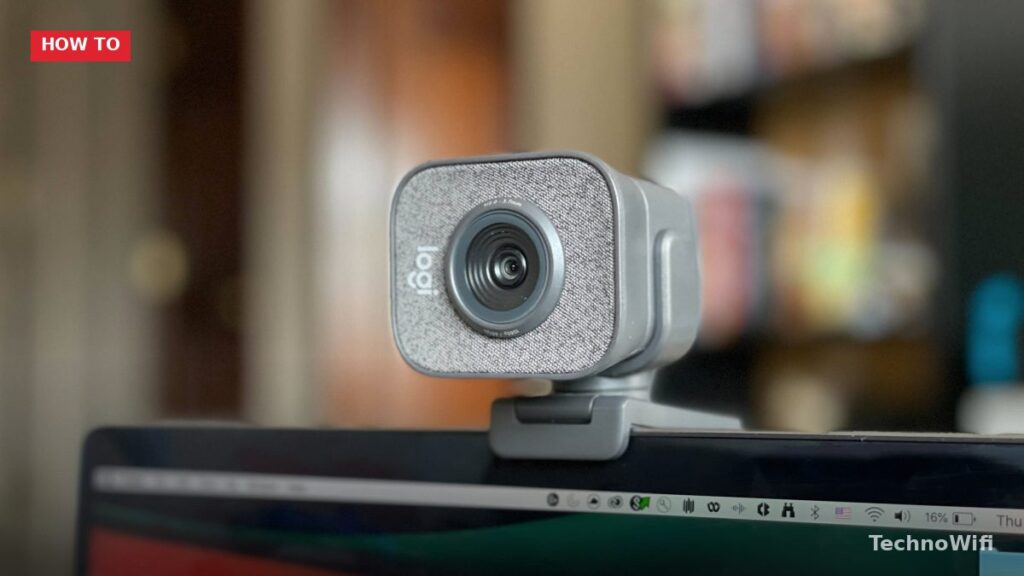
What You Need Before Getting Started
Logitech webcams are popular choices for video calls, streaming, and content creation. Whether you just picked up a Logitech C920, C922, Brio, or one of the newer StreamCam models, the setup process is quick on both Windows and macOS in 2026.
Here is what you should have ready:
- A Logitech webcam with its USB cable (USB-A or USB-C, depending on the model).
- A computer running Windows 10, Windows 11, or macOS Monterey or later.
- A stable internet connection if you plan to download Logitech’s optional software.
How to Set Up a Logitech Webcam on Windows
Follow these steps to get your Logitech webcam running on a Windows PC or laptop.
Step 1: Mount the Webcam
Place the webcam where you want it. Most Logitech models include an adjustable clip that hooks over the top edge of your monitor. Open the clip, slide it onto the monitor’s top bezel, and let the rear portion rest against the back of the screen. If you prefer a freestanding setup, unfold the base and set the camera on a flat surface, or screw the base onto a standard tripod.
Step 2: Plug In the USB Cable
Connect the smaller end of the USB cable to the webcam and the larger USB-A end to an open port on your PC. If your laptop only has USB-C, use a USB-C to USB-A adapter. Windows should detect the camera within a few seconds and install any necessary drivers automatically. You do not need a CD or manual download for basic functionality.
Step 3: Open the Camera App
Click the Start menu, type Camera, and press Enter. The built-in Camera app will open and display a live preview from the Logitech webcam. If the preview shows your laptop’s built-in camera instead, click the camera-switch icon to toggle to the Logitech device.
Step 4: Configure the Microphone
Most Logitech webcams have a built-in microphone that works without extra setup. To confirm Windows is using it:
- Open Settings (Win + I).
- Go to System, then Sound.
- Under Input, click the dropdown and select the Logitech webcam’s microphone.
- Speak into the mic and watch the volume bar to verify it picks up your voice.
Step 5: Install Logi Tune or Logitech G Hub (Optional)
Logitech offers free software that unlocks advanced controls for supported webcam models. Logi Tune lets you adjust field of view, brightness, contrast, and autofocus behavior. Logitech G Hub is geared toward streamers and adds features like camera presets and integration with streaming apps. Both are available from the Logitech support website. Installation is optional, and your webcam works fine without either one.
How to Set Up a Logitech Webcam on Mac
The process on macOS is almost identical to Windows, with a couple of Mac-specific differences.
Step 1: Mount the Webcam
Attach the webcam to the top of your display using the built-in clip, or place it on a flat surface or tripod. The same mounting tips from the Windows section apply here.
Step 2: Plug In the USB Cable
Connect the webcam’s USB cable to your Mac. Most MacBooks made after 2016 only have USB-C (Thunderbolt) ports, so you may need a USB-C adapter or dock. macOS recognizes standard UVC webcams natively and makes the device available to apps without any driver download.
Step 3: Test with FaceTime or Photo Booth
Open FaceTime from the Applications folder or Dock. You should see a live video feed from the Logitech webcam. If the Mac’s built-in camera appears instead, go to Video in the FaceTime menu bar and select the Logitech webcam. You can also test with Photo Booth, which is pre-installed on every Mac.
Step 4: Set Up the Microphone
To make sure macOS uses the webcam’s microphone:
- Click the Apple menu in the top-left corner and select System Settings (or System Preferences on older macOS versions).
- Go to Sound, then click the Input tab.
- Select the Logitech webcam from the device list.
- Speak into the mic and confirm the input level bar responds.
Step 5: Install Logi Tune (Optional)
Logi Tune is available for macOS as well. It gives you the same camera controls (zoom, brightness, field of view) that the Windows version offers. Download it from Logitech’s support page if you want finer control over image settings.
Troubleshooting Common Problems
If your Logitech webcam is not working as expected, try these fixes.
Camera Not Detected
Disconnect the USB cable, wait ten seconds, and plug it back in. Try a different USB port. If you are using a hub or adapter, connect directly to the computer to rule out a faulty hub. On Windows, open Device Manager, expand Cameras, and check whether the Logitech webcam appears. On Mac, go to About This Mac, click System Report, and look under USB for the device.
LED Light Does Not Turn On
The LED indicator only activates when an app is actively using the camera. Open the Camera app (Windows) or Photo Booth (Mac) to trigger it. If the LED still does not light up, the USB connection may be loose or the port may not be supplying enough power.
Video Feed Shows the Wrong Camera
Laptops default to the built-in camera. In your video app, open settings and manually select the Logitech webcam from the camera dropdown. This applies to Zoom, Microsoft Teams, Google Meet, and most other conferencing apps.
Audio Echo or Feedback
If participants hear an echo, your speakers may be feeding sound back into the webcam’s microphone. Use headphones or earbuds during calls to eliminate feedback. You can also lower the speaker volume or increase the distance between the webcam mic and your speakers.