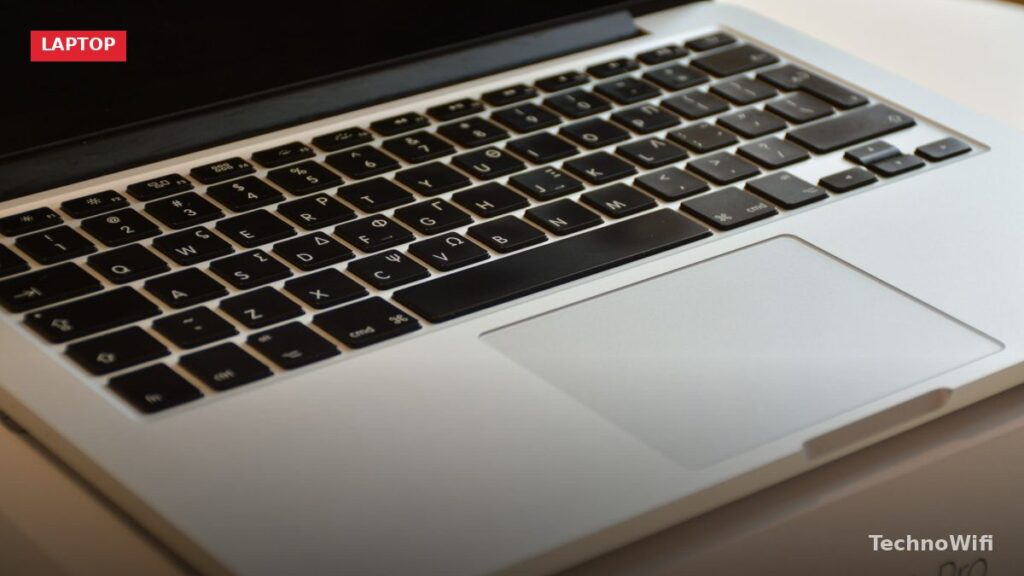
Use AirPlay to Mirror MacBook to TV
AirPlay is the built-in wireless display feature on every Mac. It works with Apple TV, and most smart TVs from Samsung, LG, Sony, Roku, and Vizio (2019 models and later).
- Make sure your MacBook and TV are on the same WiFi network.
- Click the Control Center icon in the menu bar (two toggle switches icon), then click “Screen Mirroring.”
- Select your TV from the list.
- If prompted, enter the AirPlay code shown on the TV.
- Your MacBook screen appears on the TV.
You can also click the AirPlay icon in the menu bar (rectangle with triangle) if it’s visible. On older macOS versions, look for the AirPlay icon in the menu bar directly.
Mirror vs. Extend Display
When you first connect, your MacBook mirrors its screen to the TV – both displays show the same thing. You can switch to extended display mode, which turns the TV into a second monitor.
- After connecting via AirPlay, go to System Settings, then Displays.
- Click “Arrange” (or the arrangement option).
- Uncheck “Mirror Displays” to use the TV as a separate extended display.
- Drag the display arrangement to position the TV screen relative to your MacBook (left, right, above, below).
Extended display is great for presentations – keep your notes on the MacBook while the audience sees the slides on the TV. It also works well for watching a video on the TV while working on the MacBook.
AirPlay to Apple TV
Apple TV provides the best AirPlay experience with a Mac. If both devices are signed into the same Apple ID, the Apple TV appears in the AirPlay menu automatically without any setup.
Apple TV supports AirPlay at up to 4K resolution (Apple TV 4K). The connection is responsive enough for presentations and video playback. For gaming or tasks that need real-time responsiveness, the slight wireless delay may be noticeable – a wired HDMI connection is better for those scenarios.
AirPlay to Smart TVs (Without Apple TV)
Many smart TVs support AirPlay 2 directly, no Apple TV needed.
| TV Brand | AirPlay Support |
|---|---|
| Samsung | Most 2019 and later models |
| LG | Most 2019 and later models |
| Sony | Most 2019 and later models |
| Vizio | Most 2018 and later models |
| Roku TV | Most 2019 and later 4K models |
| TCL (Roku) | Most 2019 and later 4K models |
To check if your TV supports AirPlay, look in the TV’s settings for “Apple AirPlay” or “AirPlay and HomeKit.” If the option exists, your TV supports it. Make sure AirPlay is turned on in the TV’s settings.
This topic ties into our 4K monitors for Mac Mini guide, which covers the next steps.
Stream a Specific Video Instead of Mirroring
If you only want to send a video to the TV (not your entire screen), use AirPlay from within the app or browser.
- Open the video in Safari, Chrome, or a streaming app.
- Click the AirPlay icon on the video player (rectangle with triangle).
- Select your TV.
- The video plays on the TV while your MacBook stays free for other work.
This method uses less bandwidth than full screen mirroring and usually looks better since the video streams at its native resolution. It works with YouTube, Netflix (in Safari), Apple TV+, and most web-based video players.
Adjust Resolution and Quality
By default, AirPlay matches your MacBook’s screen resolution. If the image looks blurry or doesn’t fill the TV screen properly:
- Go to System Settings, then Displays.
- Select the TV display.
- Choose a resolution that matches your TV (1080p or 4K depending on the TV).
- Adjust the refresh rate if needed (30Hz or 60Hz).
For presentations and video, 1080p at 60Hz works well on most TVs. If text looks small on the TV, try a lower resolution – the text gets larger and easier to read from across the room.
Connect With HDMI Cable (Wired Alternative)
When WiFi is unreliable or you need zero-latency display, use a cable.
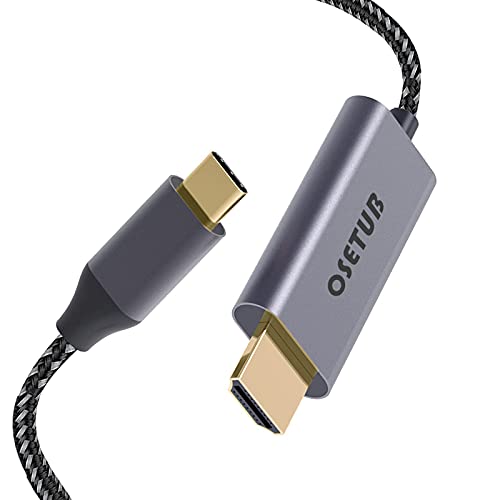
MacBook with USB-C/Thunderbolt (2016 and later): Use a USB-C to HDMI adapter or cable. Apple sells one ($69), and third-party options work well for $15 to $25. Plug the USB-C end into your MacBook and the HDMI end into the TV.
MacBook with HDMI port (MacBook Pro 14″ and 16″, 2021 and later): Connect an HDMI cable directly – no adapter needed.
Our guide on docking stations for MacBook Pro goes into more detail if you need it.
The wired connection supports 4K at 60Hz and has no latency. Audio also passes through HDMI, so the TV plays sound from your MacBook automatically.
Troubleshooting
TV not showing in AirPlay list. Verify both devices are on the same WiFi network. Restart the MacBook and TV. Check that AirPlay is enabled on the TV (look in TV settings for Apple AirPlay). Some TVs have a “Require Code” setting that may need to be set to “First Time Only” rather than a restrictive option.
Video lag or stuttering. Move the MacBook closer to the WiFi router. Switch to a 5GHz WiFi network (faster and less interference than 2.4GHz). Close other bandwidth-heavy apps. If the TV supports it, use AirPlay to stream the video directly from an app instead of mirroring – this reduces the data load.
Audio playing from MacBook instead of TV. Go to System Settings, then Sound, then Output. Select the TV as the output device. If the TV doesn’t appear, disconnect and reconnect AirPlay. You can also hold Option and click the Sound icon in the menu bar for quick output switching.
Screen mirroring shows black bars. The aspect ratio of your MacBook (16:10) doesn’t exactly match most TVs (16:9). Small black bars at the top and bottom are normal. In Display settings, adjusting the resolution to a 16:9 option eliminates the bars but slightly stretches the MacBook’s screen content.
Does AirPlay work with any TV?
AirPlay works with Apple TV (all generations with tvOS), and smart TVs from Samsung, LG, Sony, Vizio, and Roku that support AirPlay 2 (generally 2019 and later). Older TVs without AirPlay support can be made compatible by connecting an Apple TV, Roku, or Amazon Fire TV Stick to them.
Can I use the TV as a second monitor wirelessly?
Yes. After connecting via AirPlay, go to System Settings, then Displays, and uncheck “Mirror Displays.” The TV becomes a separate extended display. Drag windows between your MacBook and the TV just like using a second monitor. The wireless connection adds slight latency, so it’s best for static content like reference documents, not fast-moving tasks.
Is there a wireless option besides AirPlay?
For Macs, AirPlay is the primary wireless display option. Chromecast doesn’t natively support macOS screen mirroring (only Chrome browser tab casting). Third-party apps like JustStream and AirBeamTV offer alternatives that work with a wider range of smart TVs, but AirPlay is the most reliable and well-integrated option for Mac users.
Sources
Apple – Use AirPlay | Apple – AirPlay 2 Compatible TVs
![uni USB C to HDMI Cable, [4K, High-Speed] USB Type C to HDMI Cable for Home Office, [Thunderbolt 3/4 Compatible] with Chromebook, MacBook Pro/Air 2023, iPad Pro, iMac, XPS 17, S23-6FT](https://www.technowifi.com/wp-content/uploads/2026/08/uni-usb-c-to-hdmi-cable-4k-high-speed-usb-type-c-to-hdmi-cable-for-home-office.jpg)
![Warrky USB C to HDMI Cable 4K, 3.3ft [Braided, High Speed] Thunderbolt 3 to HDMI Adapter Compatible for New iPad, MacBook Pro/Air, iMac, Galaxy S20 S10 S9 S8, Surface, Dell, HP](https://www.technowifi.com/wp-content/uploads/2026/08/warrky-usb-c-to-hdmi-cable-4k-3-3ft-braided-high-speed-thunderbolt-3-to-hdmi.jpg)