When you purchase through links on our site, we may earn an affiliate commission. Here’s how it works.
How to Connect Canon m50 to Computer
Want to connect Canon m50 to computer for photo transfers? The Canon M50 is a popular mirrorless camera from Canon with a single-lens autofocus system and plenty of advanced features, including the ability to automatically send photos to a computer. But before you can take advantage of that feature, you’ll need to set up a connection between the camera and your Windows or Mac system.
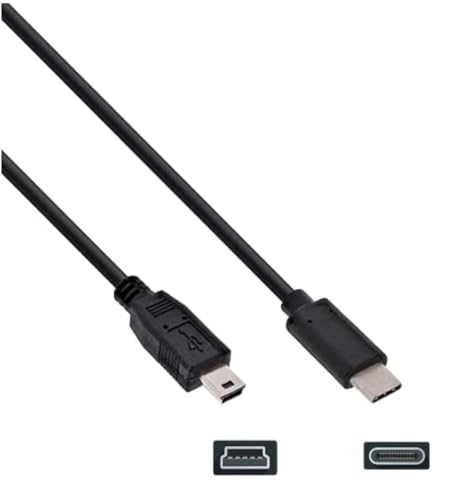
A wired connection between the Canon M50 and your computer is straightforward and dependable. Keep in mind that transferring high-resolution images and videos can be time-consuming over USB, so a high-speed USB cable is recommended for quicker transfers.
Easily connect the Canon m50 to a computer using this dual charger and connector bundle.
Steps to Connect Canon m50 to Computer Using WIFI
Connecting Canon m50 to Computer
Step 1. Connect to WiFi Network
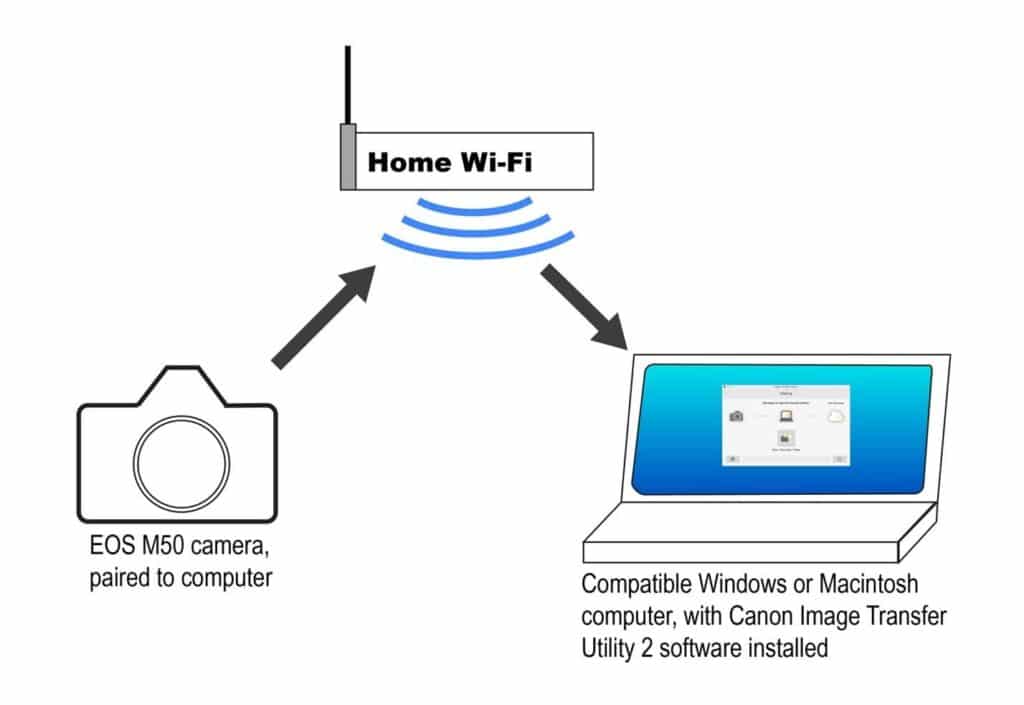
How to connect Canon m50 to Computer
The first step is to get both the Canon M50 and your computer on the same Wi-Fi network.
Turn on the Wi-Fi feature on the camera and set it up with your network. To do this, press and hold the Wi-Fi button on the camera, then press it again to scan for available networks and select your Wi-Fi network name.
For the complete picture, our Canon EOS m5 guide fills in the gaps.
Once you’re connected to the network, enable the Auto Send Images to Computer mode on the camera.
Install the Camera Connect app or the EOS Utility software on your Windows or Mac computer for a smooth connection process.
Step 2. Pair the Computer and Canon m50 Camera Before Starting the Photo Transfer
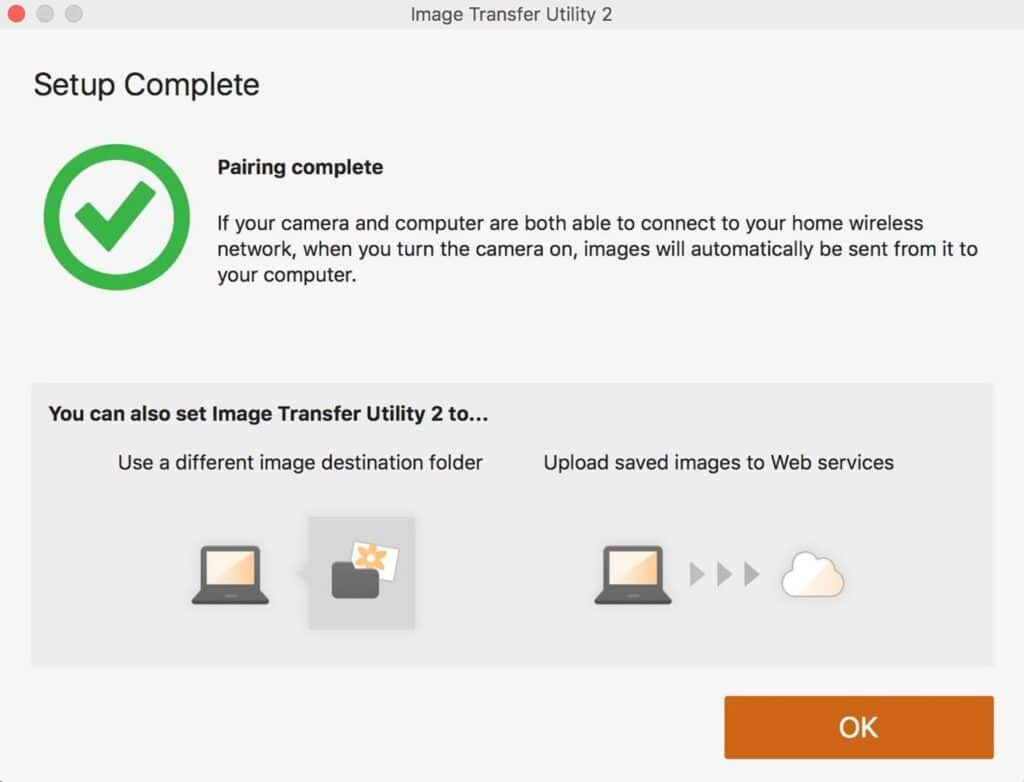
How to Connect Canon m50 to Computer – Pair the Computer and Camera before you connect Canon m50 to the computer
After connecting to Wi-Fi, you need to pair the Canon M50 camera with your computer. Open the Canon Image Transfer Utility or Camera Connect app on your computer and make sure the Wi-Fi feature is turned on.
When both devices are connected to the same network, the camera will prompt you to enter an IP address. Choose the Auto option and click ok to let the system sync the IP addresses of the Canon M50 camera and your computer. This completes the pairing process.
Step 3. Assign a Destination Folder on Your Computer
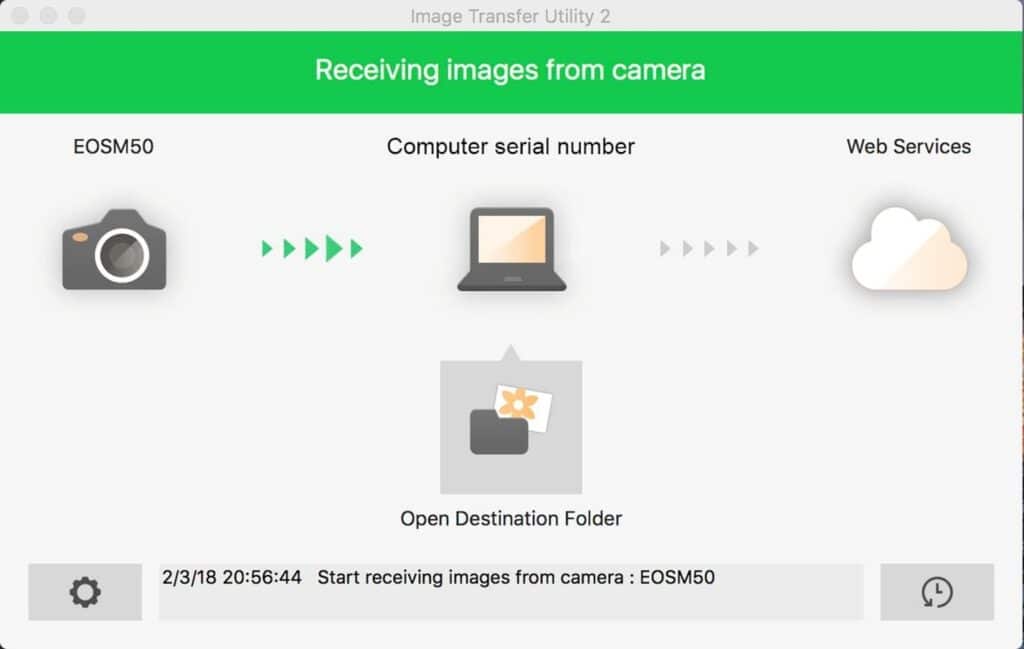
Assign Destination Folder on Your Computer Before You Start the Transfer
Once the pairing is done, pick a destination folder on your computer where the photos will be saved.
We break down Canon M50 wedding photography in a separate post that complements this one.
When the M50 camera connects, it will ask for permission to transfer photos. Before you agree, create and select a specific folder for the camera. This way, any time the camera connects to that computer in the future, photos will automatically go to that designated folder.
How to verify your Canon M50 is properly connected and photos are being transferred:
When the connection is working and the photo transfer starts, you’ll notice two things:
- The Canon M50’s indicator light blinks rapidly
- Your computer displays an estimated time for the photo and video transfer
Troubleshooting Common Connection Issues
If the camera doesn’t show up on your computer after following these steps, try restarting both devices and reconnecting to Wi-Fi. Make sure both the camera and computer are on the same Wi-Fi network and not on a guest network or different band (2.4 GHz vs. 5 GHz). Also double-check that the EOS Utility software is up to date, since older versions may not recognize the M50 properly.
For USB connections, try a different USB port on your computer if the camera isn’t being recognized. Some USB 3.0 ports can be finicky with older cables. A direct connection to your computer (not through a USB hub) tends to work most reliably.
If you’re on a Mac and the camera still isn’t detected, check your Security and Privacy settings to make sure the EOS Utility has permission to access connected devices. On Windows, you may need to install the correct USB driver from Canon’s support website.