Connect Any Bluetooth Mouse to Mac
- Turn on the mouse and put it in pairing mode. Most Bluetooth mice have a pairing button on the bottom – press and hold it until the LED blinks rapidly. Check the mouse’s manual if you’re unsure which button to press.
- On your Mac, click the Apple menu, then System Settings.
- Click Bluetooth in the sidebar.
- Make sure Bluetooth is turned on.
- Your mouse appears in the “Nearby Devices” list. Click “Connect” next to it.
- The mouse pairs and connects. The cursor starts responding immediately.
After initial pairing, the mouse connects automatically whenever you turn it on near your Mac. No need to repeat the pairing process unless you reset the mouse or remove it from your Bluetooth devices.
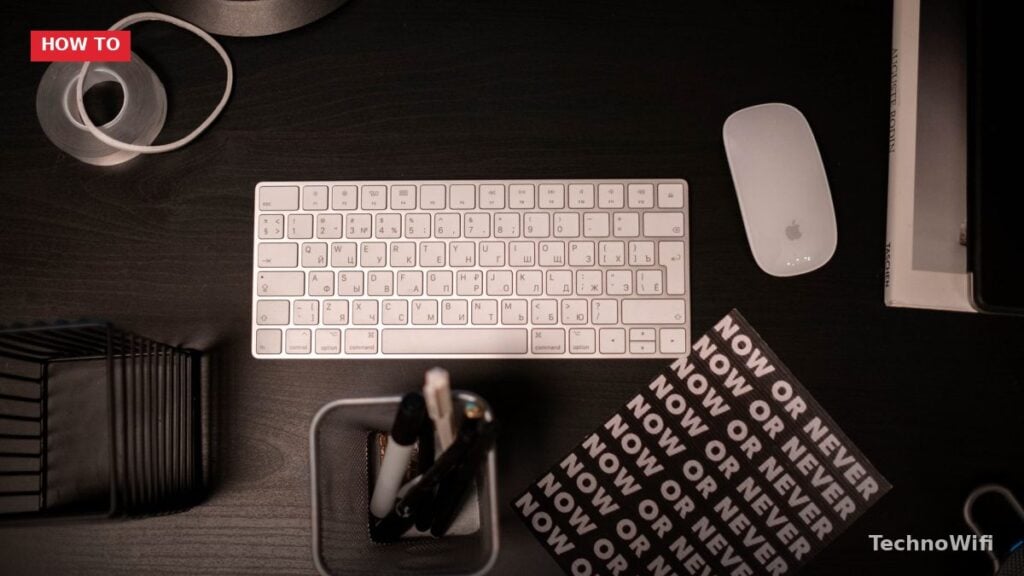
Connect Apple Magic Mouse
The Magic Mouse pairs differently than third-party Bluetooth mice.
New Magic Mouse (never paired): Connect it to your Mac with the Lightning cable (or USB-C cable for the latest model). macOS pairs and connects automatically. Unplug the cable and the mouse works wirelessly.
Magic Mouse from another Mac: Turn the mouse off (switch on the bottom), wait a few seconds, turn it back on. Go to System Settings, then Bluetooth. The Magic Mouse appears in Nearby Devices. Click “Connect.” If it doesn’t appear, turn the mouse off and on again while the Bluetooth settings screen is open.
The Magic Mouse doesn’t have a dedicated pairing button. Turning it off and on near a Mac that’s looking for Bluetooth devices is how it enters pairing mode.
Connect Logitech Bluetooth Mouse
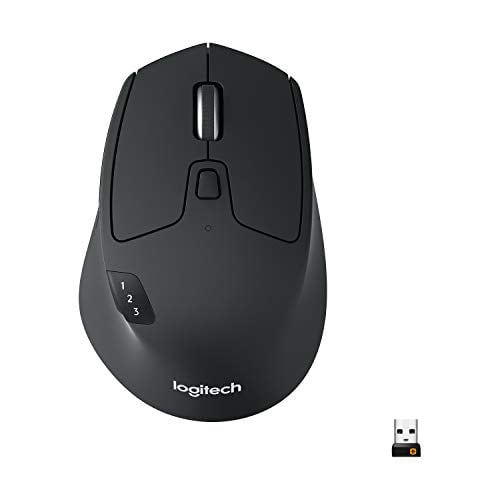
Logitech mice that support Bluetooth (like the MX Master, MX Anywhere, Pebble, or M750) have a dedicated Bluetooth pairing process.
- Turn the mouse on using the power switch.
- Press the Easy-Switch button (usually on the bottom or top of the mouse) to select a free channel (the number blinks).
- Press and hold the Easy-Switch button for 3 seconds until the channel LED blinks rapidly.
- On your Mac, open System Settings, then Bluetooth.
- Select the Logitech mouse from the Nearby Devices list and click “Connect.”
Logitech mice with Easy-Switch can pair with up to three devices. Each press of the Easy-Switch button cycles between channels 1, 2, and 3. Assign your Mac to one channel and your iPad or PC to another, then switch between them with a button press.
We walk through 4K monitors for Mac Mini step by step in a separate post.
Some Logitech mice also come with a Unifying or Bolt USB receiver. You can use either Bluetooth or the USB receiver – Bluetooth means no dongle taking up a USB port, while the receiver offers slightly lower latency and doesn’t require Bluetooth to be enabled.
Connect a Mouse That Uses a USB Receiver
Some wireless mice use a dedicated USB receiver (a small dongle) instead of Bluetooth. These include most budget wireless mice and gaming mice.
- Plug the USB receiver into your Mac’s USB port. If your Mac only has USB-C ports, use a USB-A to USB-C adapter.
- Turn on the mouse.
- The mouse connects automatically. No Bluetooth pairing needed.
USB receiver mice don’t appear in Bluetooth settings because they’re not using Bluetooth. The receiver acts as a direct wireless link. These mice typically have lower latency than Bluetooth, which matters for gaming.
Adjust Mouse Settings on Mac
After connecting, customize how the mouse behaves.
- Go to System Settings, then Mouse.
- Adjust tracking speed (how fast the cursor moves), scrolling speed, and click behavior.
- For the Magic Mouse, you can enable or disable Smart Zoom (double-tap to zoom) and swipe gestures for navigating between pages and desktops.
Natural scrolling: macOS defaults to “natural” scrolling where swiping down on the mouse scrolls the page up (like pushing paper up on a desk). This matches iPad and iPhone behavior but feels backwards if you’re coming from Windows. Toggle “Natural scrolling” off in Mouse settings if you prefer traditional scroll direction.
Right-click: The Magic Mouse has no visible right-click button, but right-click works by default. Click the right side of the mouse surface. If right-click isn’t working, go to System Settings, then Mouse, then “Secondary click,” and set it to “Click Right Side.”
You might also want to read our docking stations for MacBook Pro guide for the full picture.
Troubleshooting Bluetooth Mouse Issues
Mouse doesn’t appear in Bluetooth settings. Make sure the mouse is actually in pairing mode (LED blinking rapidly, not just solid). If the mouse was previously paired to another device, it may connect there instead. Turn off Bluetooth on the other device or remove the pairing from it first. Try turning your Mac’s Bluetooth off and on (System Settings, then Bluetooth, toggle the switch).
Mouse connected but cursor doesn’t move. Click somewhere on the desktop to make sure macOS is focused. Check the mouse battery – low battery can cause the mouse to pair but not function properly. Try removing the mouse from Bluetooth (click the info icon next to it in Bluetooth settings, then “Forget This Device”) and pairing again.
Cursor stutters or jumps. Bluetooth interference is the most common cause. USB 3.0 devices and hubs generate radio interference on the 2.4 GHz band that Bluetooth uses. Move USB 3.0 devices away from the mouse and your Mac. Also check that no objects are between the mouse and the Mac that could block the Bluetooth signal (metal objects are the worst).
Mouse keeps disconnecting. Replace or charge the batteries. Check for macOS Bluetooth updates (System Settings, then General, then Software Update). If the problem persists, reset the Bluetooth module: hold Option + Shift, click the Bluetooth icon in the menu bar, and select “Reset the Bluetooth module” (available on some macOS versions). Restart your Mac after the reset.
Can I use a mouse and trackpad at the same time?
Yes. macOS supports using a Bluetooth mouse, the built-in trackpad, and even an external trackpad simultaneously. Each input device works independently. Many users keep the trackpad for gestures (swiping between desktops, Mission Control) and use the mouse for precision cursor control.
Why does my Mac ask for a pairing code?
Some older Bluetooth mice require a pairing code. Try entering “0000” (four zeros) – this is the default code for most Bluetooth devices. If that doesn’t work, check the mouse’s documentation for its specific code. Modern Bluetooth mice use Simple Secure Pairing and don’t require a code.
How do I check the mouse battery level?
For the Magic Mouse, go to System Settings, then Mouse – the battery percentage shows at the top. You can also check from the menu bar: click the Bluetooth icon and hover over your mouse name to see the battery level. For third-party mice, install the manufacturer’s software (like Logitech Options+ for Logitech mice) to see battery status, or check the LED indicators on the mouse itself.
Sources
Apple – Connect Bluetooth Mouse to Mac | Apple – Magic Mouse Setup