Getting Started with the Canon PowerShot SX420 IS
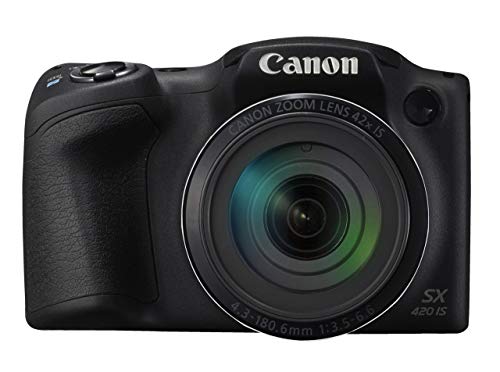
The Canon PowerShot SX420 IS is a point-and-shoot camera built around a 42x optical zoom lens. That’s a 24mm to 1008mm equivalent range in a camera that fits in a jacket pocket, which makes it a solid travel and wildlife option for anyone who doesn’t want to carry a DSLR around. It also has built-in Wi-Fi and NFC for easy photo transfers to your phone.
Whether you just bought the SX420 or you’ve had it sitting in a drawer and want to actually learn how to use it, this guide walks through the setup, every shooting mode, zoom techniques, and how to get your photos onto your phone or computer.
Initial Setup and First-Time Configuration
When you first turn on the SX420, it walks you through date/time, time zone, and language. Set the date correctly since it tags every photo with a timestamp.
Charge the NB-11LH battery fully before your first outing. It gives you about 195 shots per charge, which is decent but not amazing. Turning off Wi-Fi and reducing LCD brightness help extend battery life.
Insert an SD card before shooting. The SX420 has only 16MB of internal memory, which holds almost nothing. A 32GB Class 10 or UHS-I card is the minimum recommendation.
Shooting Modes Explained
The SX420 has a mode dial on top of the camera. Here’s what each setting does:
Auto Mode
The camera picks everything for you: shutter speed, aperture, ISO, white balance, focus. Just point and shoot. This works well in good light and for casual snapshots. The camera also activates scene detection automatically, so it adjusts settings based on whether it thinks you’re shooting a portrait, landscape, or close-up.
Program (P) Mode
This gives you more control than Auto while still handling exposure. In P mode, you can adjust ISO, white balance, exposure compensation, and metering mode. The camera still sets the shutter speed and aperture combination, but you can shift it using the control dial. If you want to learn photography without going fully manual, P mode is the place to start.
Live View Control
This is Canon’s beginner-friendly mode. Instead of showing you technical numbers, it uses sliders on the screen labeled “Dark/Light” and “Cool/Warm.” You drag the slider and see the effect in real time on the LCD. It’s a good way to experiment with exposure and color without understanding what aperture or white balance means yet.
Scene Modes
Preset scenes cover specific situations: Portrait, Landscape, Sports, Handheld Night Scene, Snow, Fireworks, and more. Sports mode bumps up shutter speed and uses continuous focus tracking. Fireworks mode uses a slow shutter and turns off the flash.
Creative Shot Mode
This takes one photo and generates several variations with different crops, filters, and effects. It’s hit or miss, but occasionally produces something you wouldn’t have tried.
Getting the Most from 42x Zoom
The 42x optical zoom is the SX420’s biggest selling point. Going from 24mm wide angle to 1008mm telephoto is a huge range. But shooting at full zoom comes with challenges.
Stability matters. At 1008mm equivalent, even tiny hand movements cause massive blur. The camera has optical image stabilization (IS) that compensates for shake, and it does a good job. But you’ll still get sharper results if you brace the camera against something solid, like a railing or a table, when shooting at maximum zoom.
Use the zoom framing assist button. At full zoom, it’s easy to lose track of your subject. The SX420 has a button on the back that temporarily zooms out so you can relocate your subject, then zooms back in when you release it. This is especially helpful for birds and wildlife.
Digital zoom degrades quality. The SX420 offers digital zoom beyond 42x, but it just crops and enlarges the image. The quality drops fast. Stick to optical zoom for the best results.
Autofocus can struggle at full zoom. At extreme telephoto, the autofocus sometimes hunts back and forth, especially in low light. Half-press the shutter to lock focus before fully pressing it. If the camera keeps hunting, try focusing on a high-contrast edge near your subject.
If you’re interested in how this camera compares for video work, take a look at our thoughts on Canon SX420 vlogging.
Image Stabilization Tips
The optical IS system in the SX420 works by shifting lens elements to counteract hand shake. It’s always active when you’re shooting in most modes. There are a few things to know:
IS works best when you’re standing still and holding the camera steady. If you’re panning to follow a moving subject, the IS can sometimes fight the motion. In Sports mode, the camera automatically adjusts IS behavior for panning.
When using a tripod, IS can actually cause problems. The system may try to correct for vibrations that don’t exist, producing slightly softer images. If you’re on a tripod, go into the menu and turn IS off.
Wi-Fi and NFC: Transferring Photos to Your Phone
The SX420 has built-in Wi-Fi and NFC, and Canon’s Camera Connect app is the bridge between the camera and your phone.
To set it up:
1. Download Canon Camera Connect on your phone (iOS or Android).
2. On the camera, press the Wi-Fi button (the one with the wireless icon on the back).
3. Select the smartphone icon.
4. The camera creates its own Wi-Fi network. On your phone, go to Wi-Fi settings and connect to the network the camera is broadcasting.
5. Open Camera Connect. It should detect the camera and connect.
6. If your phone has NFC, you can skip steps 2 through 4 by simply tapping the phone against the NFC logo on the camera. The app opens and connects automatically.
Once connected, you can browse photos on the camera, select which ones to transfer, and download them to your phone. The app also works as a remote viewfinder and shutter release for group photos or long-exposure shots.
Transfer speeds are moderate. Full-resolution JPEGs take a few seconds each. For larger batches, a card reader is faster. For more on Canon cameras, check out the Canon G7X Mark II guide.
Video Recording on the SX420
The SX420 records video at 720p (1280×720) at 25 fps. That’s the maximum. There’s no 1080p option, which is the camera’s biggest limitation for video work in 2026.
For casual video, home movies, or documenting something for reference, 720p is still usable. But if you plan to post videos online or want anything close to modern video quality, this camera will feel dated.
A few video tips for the SX420:
– You can zoom during recording, but the zoom motor is audible on the built-in microphone. Zoom slowly to reduce the noise.
– IS stays active during video, which helps a lot for handheld shooting.
– Maximum clip length is about 29 minutes and 59 seconds per recording, limited by the file system.
– Use a fast SD card (Class 10 minimum) to avoid recording errors.
Other Useful Features
Self-timer: Choose 2-second or 10-second delays, or set it to take multiple shots (up to 10) with a custom delay.
Face detection: The camera detects up to 35 faces and prioritizes focus and exposure on them.
Eco mode: Dims the screen and puts the camera to sleep faster to save battery. Turn this on for full-day outings.
Date stamp: Burns the date directly onto photos. This is permanent, so only use it when you specifically want the date visible.
Battery and Storage Tips
The NB-11LH battery is small and charges via the included wall charger. There’s no USB charging on this model, so you can’t top it off from a power bank.
If you’re traveling or shooting for a full day, pick up a spare battery. Third-party NB-11LH batteries are inexpensive and widely available. Just make sure they match the NB-11LH spec and not the older NB-11L (same size but slightly lower capacity).
For storage, a 32GB SD card holds roughly 4,000 to 6,000 photos at full resolution, depending on scene complexity. A 64GB card doubles that and gives you plenty of headroom for video clips too.